San Diego, CA
Belgium to become first EU country to ban sales of disposable e-cigarettes


Belgium will ban the sale of disposable electronic cigarettes as of Jan. 1 on health and environmental grounds in a groundbreaking move for European Union nations.
Health minister Frank Vandenbroucke said the inexpensive e-cigarettes had turned into a health threat since they are an easy way for teenagers to be drawn into smoking and get hooked on nicotine.
“Disposable e-cigarettes is a new product simply designed to attract new consumers,” he said in an interview.
“E-cigarettes often contain nicotine. Nicotine makes you addicted to nicotine. Nicotine is bad for your health. These are fact,” Vandenbroucke added.
Because they are disposable, the plastic, battery and circuits are a burden on the environment. On top of that, “they create hazardous waste chemicals still present in what people throw away,” Vandenbroucke said.
The health minister said he also targeted the disposable e-cigarettes because reusable ones could be a tool to help people quit smoking if they cannot find another way.
Australia outlawed the sale of “ vapes” outside pharmacies earlier this year in some of the world’s toughest restrictions on electronic cigarettes. Now Belgium is leading the EU drive.
“We are the first country in Europe to do so,” Vandenbroucke said.
Trying to quit vaping can be challenging but not impossible. Here are five tips to better prepare you for success.
He wants tougher tobacco measures in the 27-nation bloc.
“We are really calling on the European Commission to come forward now with new initiatives to update, to modernize, the tobacco legislation,” he said.
There is understanding about Belgium’s decision, even in some shops selling electronic cigarettes, and especially on the environmental issue.
Once the cigarette is empty, “the battery is still working. That’s what is terrible, is that you could recharge it, but you have no way of recharging it,” said Steven Pomeranc, owner of the Brussels Vapotheque shop. “So you can imagine the level of pollution it creates.”
A ban usually means a financial loss to the industry, but Pomeranc said he thinks it will not hurt too much.
“We have a lot of alternative solutions which are also very easy to use,” he said. “Like this pod system, which are pre-filled with liquid, which can just be clipped into the rechargeable e-cigarette. So we will simply have a shift of clients towards this new system.”
___
Associated Press writer Raf Casert in Brussels contributed.



Letter to the Editor: Apartment Vacancy Rates Paint an Incomplete Picture
By David Malcolm | Voice of San Diego
In last Saturday’s “Politics Report,” Will Huntsberry tackled the thorny issue of apartment vacancy rates (apparently the highest in this century) and the impact on affordability. He also correctly wrote that the city of San Diego needs “strategies beyond build, build, build.”
What’s Really Happening
My company owns and operates apartment rental complexes in San Diego County (San Marcos, Encinitas, La Jolla, El Cajon and South Bay) and in Temecula (Riverside County). Here is what we are seeing.
Base rents are stable … but offers of two months’ free rent are common. That is a de facto 16.7 percent reduction on annualized rents. Reducing base rents is not possible in the face of rent control measures and, even more importantly, bank loan covenants. Thus, concessions like two months’ free rent are not hard to find.
Read more
New study shows promising step forward in improving Parkinson’s treatment
by Nicole Abrams | Times of San Diego
A small molecule was found to increase the benefits and reduce the side effects of the standard drug for Parkinson’s disease, according to a new study from UC San Diego startup called Sinopia Biosciences.
L-dopa or levodopa is the main treatment for Parkinson’s disease, but its benefits wane over time and can cause involuntary movements called dyskinesia. About 90% of patients with Parkinson’s disease develop dyskinesia in 9 or more years of using L-dopa, and 70% develop motor fluctuations in 9 or more years of using the drug, according to the study.
Read More
San Diego, CA
EXCLUSIVE: Ignition Press Welcomes eBay Live & Revenge Of to San Diego Comic-Con Ignition Pavilion

The Ignition Press – Ignition Pavilion is leveling up in a big way for San Diego Comic-Con this year.
Following last year’s successful debut, Ignition Press is expanding its offsite with several major new partners, transforming the Ignition Pavilion into a hub for comics, collectibles, livestream shopping, food, and drinks. The free experience at the San Diego Wine & Culinary Center (200 Harbor Dr.) will now feature activations from eBay Live and Revenge Of, alongside the return of Seven Seas Roasting Company and several new fan experiences.
One of the biggest additions this year is a dedicated eBay Live selling lounge, where livestreams will broadcast throughout the convention, bringing Comic-Con to fans around the world.
Stop by throughout the week to find live sketches and signings with comic legends Bill Sienkiewicz (hosted by Big Clutch) and Jim Lee (hosted by ANZ Collects), while Storage Wars star Rene Nezhoda will showcase a rare PSA-pedigreed collection of vintage, Silver Age, and Bronze Age comics.
Fans can also tune in for the debut of an exclusive DC x eBay Live Absolute Batman & Absolute Catwoman connecting cover, shop signed Ignition Press SDCC exclusives, rare comics, and other collectibles, and catch appearances from fan-favorite creators and influencers throughout the weekend.
The Pavilion also welcomes Los Angeles lifestyle brand Revenge Of, making its San Diego Comic-Con debut with a curated comics and pop culture experience, while its sister company, FTB.Design, is handling the Pavilion’s production design.
“Both eBay Live and Revenge Of TV are going to give both fans onsite and at home the opportunity to get in on special programming and chances to get SDCC exclusive merchandise,” said Creative Director Jeremy Haun. “We’re doing something new, big, and different here at the Ignition Pavilion. You’re not going to want to miss it.”
Coffee lovers can once again grab a free drink from Seven Seas Roasting Company between 12pm-4pm, Thursday through Sunday, by signing up for the Ignition Insiders newsletter. The first 200 fans each day can redeem a voucher for coffee, espresso drinks, chai, or tea.
Later each afternoon (Thursday-Saturday, 5pm-7pm), the coffee bar transforms into the Ignition Pavilion Happy Hour, serving themed cocktails, beer, wine, mocktails, and complimentary drink tickets with qualifying purchases. Fans can also preorder a limited-edition bottle of Ignition Proof Rum, created in partnership with Los Angeles distillery The Obscure.
The Ignition Pavilion is free and open to the public at the following times:
- Wednesday, July 22: 5:00pm-9:00pm
- Thursday, July 23: 12:00pm-8:00pm
- Friday, July 24: 12:00pm-8:00pm
- Saturday, July 25: 12:00pm-8:00pm
- Sunday, July 26: 12:00pm-6:00pm

Karepango, the colorful and unapologetic brand that aims to bring a smile in the most unexpected time, is coming to Comic-Con to spread joy, and give attendees the chance to show the world they are imperfect, yet still proud.
Find them at booth #5034, located in the Hall G area of the convention center, and will have dozens of their classic bestsellers, recent products and even a brand new exclusive (and very limited) shirt.
All purchases will receive free gifts, with an extra special gift for purchases over $100.
All clothing is available in sizes XS through 2XL, but in limited quantities per size.
Let’s get shopping:
Have A Good Day Shirts – $48
Limited to 75 pieces
Purple or brown with front and back printing
100% Cotton Knit Sweaters – $88
Oversized and pre-shrunk

100% Cotton T-Shirts – $48
Various Designs
Oversized and pre-shrunk


Tote Bags, Plush Bags, Puffy Bags, IRO Bags, All Sorts of Bags – $28-$45
Various designs
Drink Holders, Mesh Pouches, Nylon Pouches, Headbands, Blind Box Toys, Plush Trinkets – $15-$25
Various designs


Caps, Bucket Hats, Plush Hats, Beanies – $28-$30
Various designs


Bags, Plush, Rugs, Scarves – $50-$80
Various designs
Stickers, Socks, Pins, Air Fresheners – $4-$15
Various designs


Seek and ye shall find:

-

 Los Angeles, Ca16 minutes ago
LADWP begins long-term repairs after West Hollywood water main rupture
-

 Detroit, MI40 minutes ago
Livestream: Mayor Sheffield, Detroit health chief to address wildfire smoke threat
-
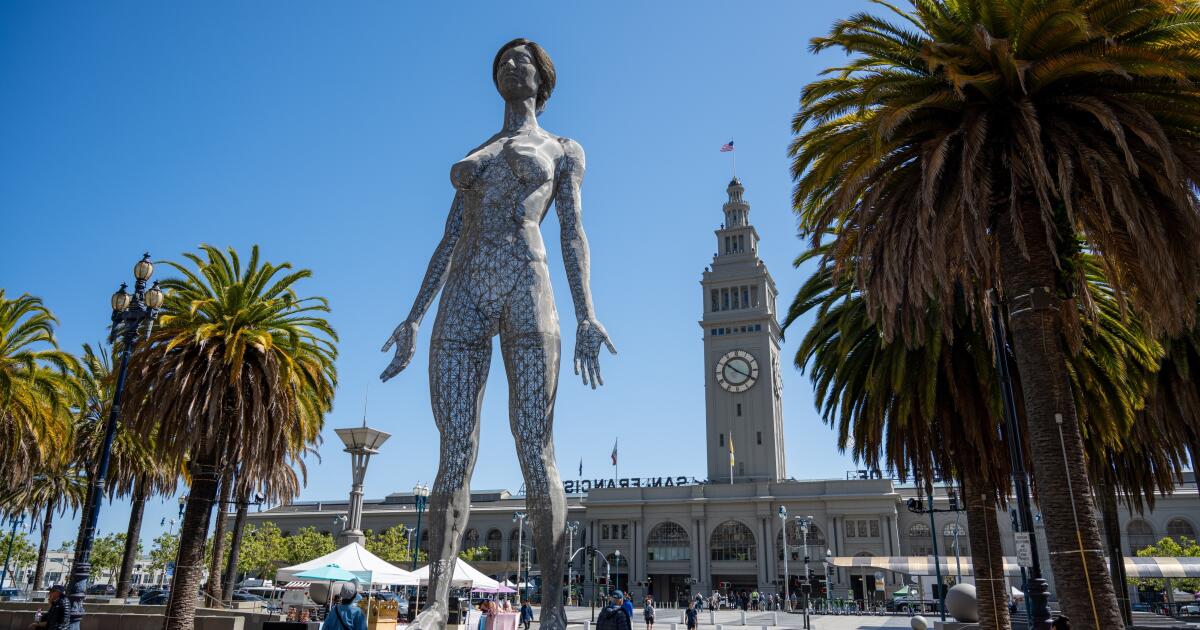 San Francisco, CA52 minutes ago
A sculpture of a giant naked woman goes on sale in San Francisco. Bring a crane
-

 Dallas, TX58 minutes ago
No ‘straight answer’: Why Pioneer Cemetery is the latest battleground at City Hall
-

 Miami, FL1 hour ago
TSA hosts news conference ahead of World Cup third place match at Miami Stadium
-

 Boston, MA1 hour ago
ICE Boston arrests Barbados national during targeted operations in Attleboro
-

 Denver, CO1 hour ago
Denver Broncos training camp is 2 weeks away
-

 San Diego, CA1 hour ago
Daily Business Report: July 17, 2026, San Diego Metro Magazine

