West
Romanian organized crime group targeting places of worship: police

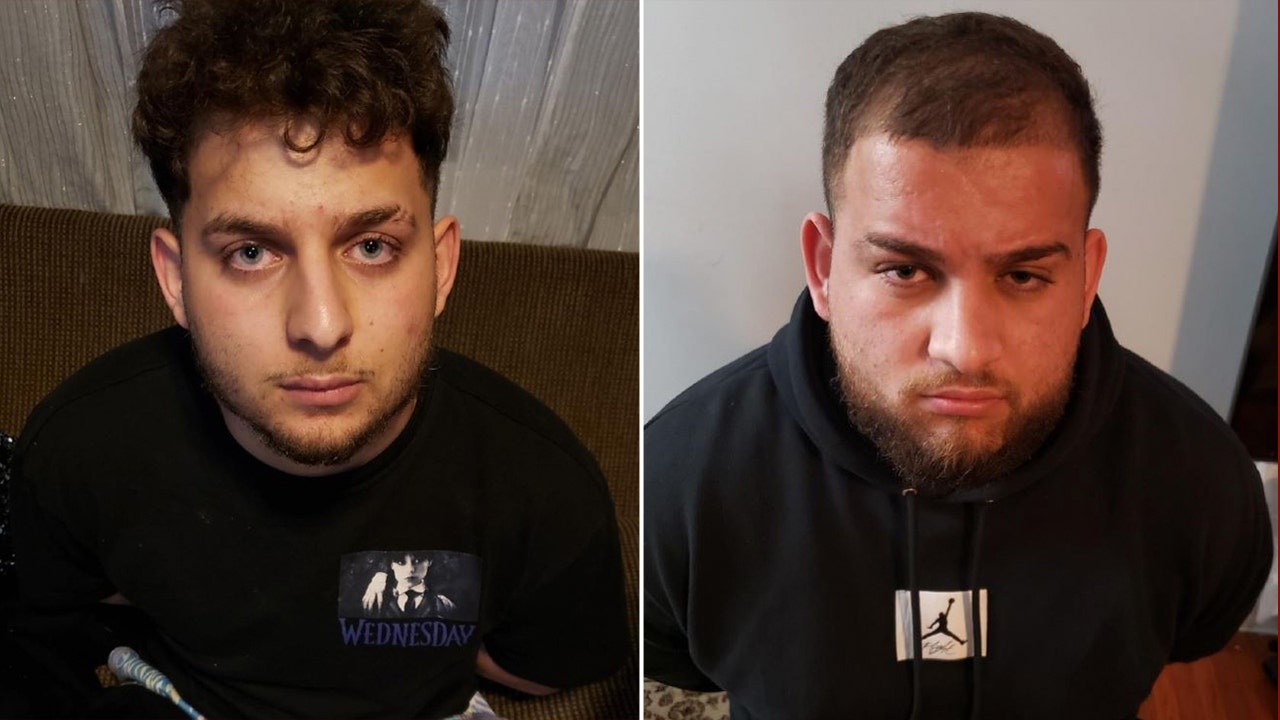
Romanian mobsters are traveling the country and targeting religious institutions in brazen daylight robberies, police suspect. In April and May, they hit two Buddhist temples, two mosques and one Hindu temple in the Washington, D.C., area, according to authorities.
Montgomery (Maryland) County Police suspect that the Romanian Organized Crime Group, who call themselves the ROMAs, targeted seven similar places in 2023, with police saying they made arrests in about half of the incidents, Fox 5 DC reported.
Since arresting group members Alex Dumitru, 23, and Natalian Dumitru, 18, in connection with two of the burglaries last month, Montgomery County Police Lieutenant Andrew Suh told Fox News Digital that no more houses of worship or residences connected to temples or churches had been targeted in the area.
But Suh said that the international group, which has a presence nationwide, has operated in the D.C. area for about a decade and for his entire career with the department — and that quelling its activity is like “cutting the heads of a hydra.”
ROMANIAN MOB IS COMING FROM YOUR DEBIT CARDS, WITH ATM-STYLE SKIMMERS NOW AT SELF-CHECKOUTS: AUTHORITIES WARN
Surveillance footage from the Wat Thai Buddhist Temple in Silver Spring, Maryland, shows a group of thieves brazenly walk into a Buddhist monk’s home while a funeral service takes place nearby and steal $20,000 in donations from a safe. (Fox 5 DC)
Evidence found in the brothers’ homes connected them to two of the crimes, the department wrote in a press release. Both were arrested on first-degree burglary charges and bailed out with $10,000 personal bonds.
Surveillance video from the Wat Thai Buddhist Temple in Silver Spring last month shows members of the crew brazenly walking inside while dozens are inside for a funeral luncheon. The thieves didn’t take off their shoes at the door in the surveillance footage, making it somewhat apparent that they weren’t members.
The suspects then snuck into resident monk Ruangrit Thaithae’s residence and allegedly snatched $20,000 in donations from a safe in the span of 20 minutes, according to local reports. The monk was reportedly planning to deposit the money from temple members the next day.
While one suspect distracted a temple member, the others are accused of making off with the safe and other valuable items.
BOTTLE-POPPING BURGLAR SIPS PROSECCO, STEALS CASH REGISTER AS HE SMASHES HIS WAY THROUGH PUB: VIDEO
“I would like to tell them that even if the law enforcement can’t catch them, the karma will,” Ruangrit Thaithae, known as Monk Jack, told Fox 5 DC. “In Buddhism, we believe in karma. Karma will catch them soon.” (Fox 5 DC)
“I would like to tell them that even if the law enforcement can’t catch them, the karma will,” Thaithae, known as Monk Jack, told the outlet. “In Buddhism, we believe in karma. Karma will catch them soon.”
“I think they’re still young, so if they stop doing these things and do the good things for their life, for their family and for people, they will be good,” Thaithae said. “They still have time. They can be a good person. For the past, that’s OK, but in the future, if they stop and do good things, because they are making people suffer.”
CALIFORNIA BURGLARIES COMMITTED BY SOUTH AMERICAN THEFT RING INVOLVE HIDDEN CAMERAS IN SHRUBBERY: AUTHORITIES
Natalian Dumitru, 18, and his brother Alex Dumitru, 23, were charged with first-degree burglary in two of the five heists on temples and other places of worship. (Montgomery County Police Department)
Although the group targeted religious hubs, Suh said that his department didn’t consider these burglaries hate crimes. Instead, they were crimes of opportunity.
“This organization is generally just focused on obtaining monetary rewards,” Suh said. “They don’t have a political motivation or a stance — they’re just focused on dollars.”
Although the group has gone quiet since the recent arrests of its members, Suh said that it had many branches, and that in all likelihood, some fraud operations were still taking place.
Another temple in Accokeek, Maryland, sent Fox 5 surveillance stills of a group of men breaking in around mid-March. Although the men damaged the door, the monks caught on to what was happening and scared them off.
Three suspects are pictured on security footage provided by one of the victimized Montgomery County, Maryland, religious institutions to Fox 5 DC. (Fox 5 DC)
“Houses of worship are upset because often they’re using their funds to help the community, right? They’re running food drives and food pantries, child support programs, supporting the elderly,” Montgomery County faith leader Kate Chance told Fox 5. “And often folks see them as easy targets because they’re just kind-hearted individuals who often don’t report these sorts of incidents.”
Chance said religious hubs should apply for an area grant that would give them up to $20,000 for security upgrades.
Chris Swecker, who served 24 years as an FBI special agent and was the former assistant director of the FBI, said that he’d never seen organized criminals target houses of worship in his career. However, he was all too familiar with the Romanian Organized Crime Group, calling them “hit-and-run artists.”
Wat Thai Washington, D.C., a Buddhist temple in Silver Spring, Maryland. (Fox 5 DC)
“As you can see, they’re pretty brazen — they know where to go to find value and they’re preying on people who are peaceful and docile,” Swecker told Fox News Digital. “They don’t expect people to do bad things and leave their gold objects in plain view that are easy to access. The congregation would never think about taking those things, but the ROMA know they can do it.”
“They’re not big, violent extortionists getting violent retribution,” Swecker explained. “They’re smart enough to know property crime won’t get them big time and won’t garner as much federal attention.”
The Romanian Mafia has footholds throughout the U.S. Earlier this year, California prosecutors warned that members were panhandling outside big-box stores, then stealing credit card information using skimmers at self-checkouts inside the stores.
Swecker noted that taking down organized crime was once a “staple” of the FBI, and that a transient group “moving from jurisdiction to jurisdiction” would be a “perfect thing for the FBI to pursue.”
But he said it seemed like the bureau had “sort of abdicated. I never hear about RICO arrests, big takedowns.”
“You just see a disjointed local effort,” Swecker added. “They do their best to coordinate between jurisdictions, but without bringing in the feds, it’s nearly impossible.”
Read the full article from Here


Oregon lawmakers have a new roadmap for tackling racism as a public health issue, and it’s packed with more than 100 recommendations for the 2027 legislative session.
According to KGW8, the Oregon Advocacy Commissions Office released the four-year report this week, built on input from more than 200 Oregonians of color and developed alongside the Oregon Health Authority. It digs into how Black, Indigenous, and other communities of color face unequal access to stable jobs, education, health care, and housing — the everyday conditions that shape locals’ lives.
“This is an opportunity for state government to earn trust with communities of color who have been historically excluded,” said executive director of the Oregon Advocacy Commissions Office, Jeff Selby, per the outlet. “The report process is a model for community engagement, as we all work together toward meaningful outcomes in community.”
State Rep. Travis Nelson said the findings have already shaped legislation, with several bills signed into law over the past two sessions covering topics like culturally specific health services and school staffing diversity. One concrete example: After residents flagged that Spanish-speaking applicants were passing the DMV’s written driving test at a rate of roughly 21%, versus 51% for English speakers, organizers connected the DMV with community groups to address the gap.
The report dates back to 2021, when Oregon lawmakers formally declared racism a public health crisis. “Racism in Oregon has left a legacy of trauma from one generation to the next, impacting Oregon tribes, Black and indigenous communities and people of color through a cumulative effect,” a section of the declaration reads.
A separate report from the Commonwealth Fund found Oregon has more severe racial and ethnic health disparities than its neighbors in the West, with Native American, Black, and Hispanic residents lagging behind white and Asian American residents on access, quality, and outcomes. Researchers warned that federal changes to Medicaid and the Affordable Care Act since 2025 could make those gaps worse, not better.
The Oregon Advocacy Commissions Office says the goal now is turning research into real policy before lawmakers reconvene — and building trust with communities that have historically been left out of the process.
The full report can be seen here.

The move gives the Aggies “instant credibility” on the recruiting trail, Bronco Mendenhall says.
(Francisco Kjolseth | The Salt Lake Tribune) The Old Main building at Utah State University in Logan on Monday, Nov. 17, 2025.

Mathematicians and statisticians from around the world descended onto Pullman to attend the regional conference of the International Biometric Society (IBS) in early June. Joining leading experts in data science and biometrics were several special guests: high school students from the Kalispel Tribe in northwestern Washington.
The eleven students from Cusick are participants in a collaborative tutoring program between the WSU Department of Mathematics and Statistics and the Camas Learning Center (CLC), an in-school and after-school program managed by the Kalispel Tribe. They were invited to the IBS conference by Regents Professor Jan Dasgupta, department chairperson and the current president of the IBS western North American region. Dasgupta saw an opportunity to share the Pullman academic experience with both leading researchers and the students tutored by her undergraduate students.
“The IBS conference includes an Access and Opportunity workshop focused on engaging local students, and we wanted them to experience WSU and see the possibilities that exist in STEM education and careers,” Dasgupta said.
Undergraduate students from the WSU “Future Teachers of Math” club typically tutor the high schoolers via one-on-one Zoom consultations, supported by CLC staff. The tutoring program has evolved since 2023, but the focus has always remained on student math preparation, for those learning and those teaching the subject. The partnership creates stronger pathways to both higher education and STEM opportunities for students in rural and tribal communities across Washington.
Integrating high school students into the IBS conference proceedings is not a new concept. In 2024, the annual conference’s Access and Opportunity Workshop invited community college students from the Denver area to network with attendees and participate in a data skills seminar. The next year, the workshop invited students from around Whistler, B.C. to the conference proceedings. This year, it was time for the students from Cusick.
Eleven students and four chaperones made the trip from Pend Oreille County to Pullman, where they stayed in Stimson Hall as an on-campus dormitory experience. While the students’ conference activities included hands-on experiences with biostatistics, data science, and biometry analysis, they were also treated to a campus facilities tour. Physics professor Guy Worthy provided a tour of the WSU Planetarium, and Squeak Meisel from the Department of Art led students on a tour of the art facilities and the Jordan Schnitzer Museum of Art at WSU. Other tour locations included the Veterinary Teaching Hospital and the University Recreation Center for some earned relaxation time in the pool.
Cross-discipline researchers also sat down for a panel discussion with the students, discussing their education, career, and life experiences. The speakers included Denise Dillard, director of the Institute for Research and Education to Advance Community Health (IREACH); Mikaela Nishida, PhD scholar in statistics from University of California, Irvine; and Courtney Meehan, Dean of the WSU College of Arts and Sciences.
“One of the most important things we can do as a university is help students see new possibilities for themselves,” said Dean Meehan. “Hosting international conferences like this on our campus creates powerful opportunities for students to interact with researchers and explore potential career paths firsthand. These connections can have a lasting impact long after they leave Pullman.”
-

 Ohio23 seconds ago
Assistant Ohio AG punched on Cincinnati street by man seeking money, police say
-
 Oklahoma5 minutes ago
10,000 texts per hour: How campaigns are reaching Oklahoma voters whether they like it or not
-
Oregon12 minutes ago
Oregon Says Racism Is a Health Crisis, Now It Has a To-Do List
-

 Pennsylvania15 minutes ago
Why are flags at half-staff today? Why they’ll stay lowered in PA
-

 Rhode Island20 minutes ago
Exclusive | Not everyone’s happy about Taylor Swift’s MSG wedding, as Rhode Island residents are left at altarÂ
-

 South-Carolina27 minutes ago
2 injured in South Carolina plane crash
-

 South Dakota30 minutes ago
South Dakota State Museum reopens three renovated rooms for America 250
-

 Tennessee35 minutes ago
Tracking heat and strong storms through the holiday weekend in Middle Tennessee


