West
Portland considers banning gas-powered leaf blowers to assuage climate concerns

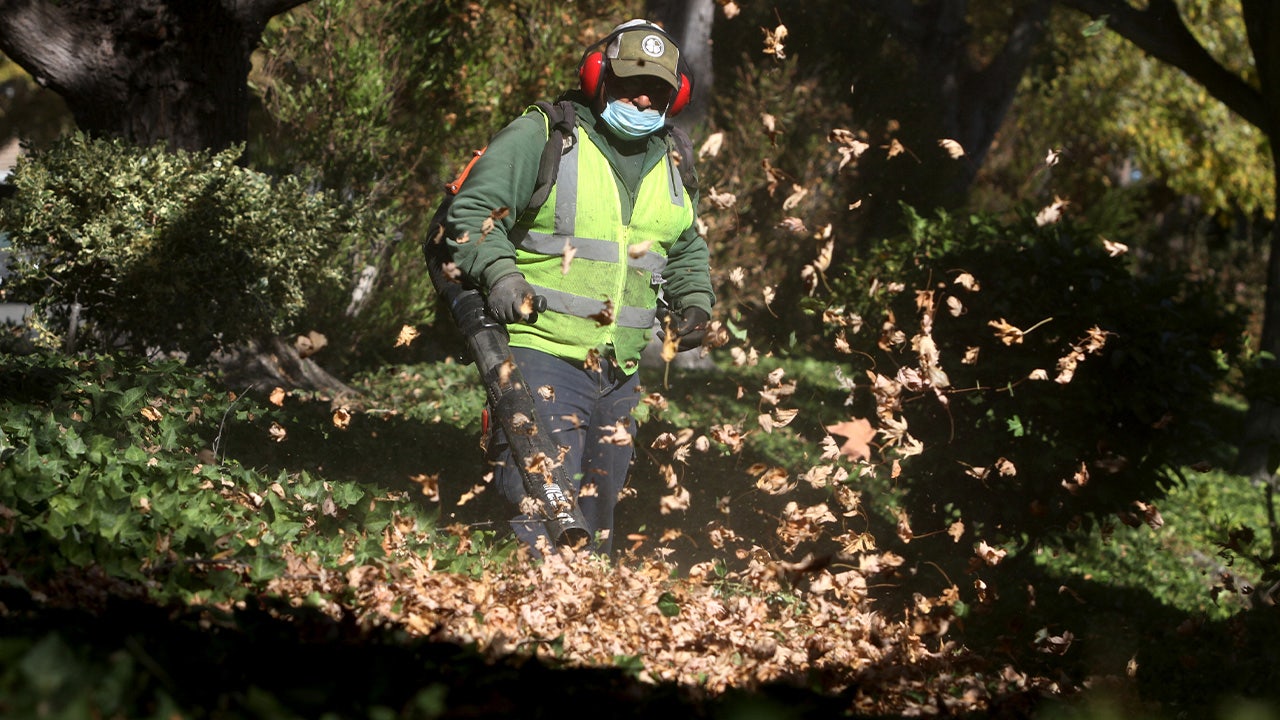
The city of Portland, Oregon, is considering a ban on gas-powered leaf blowers starting in 2026, citing health and climate concerns, air and noise pollution, as well as a disproportionate impact they have on minority and low-income communities.
The proposed ordinance out of Portland’s City Council would phase out the use of gas-powered leaf blowers starting in 2026 for all private and commercial use. If approved, Portland would join the ranks of 100 other cities in the U.S. that have limited or banned the use of gasoline leaf blowers.
“The use of gasoline leaf blowers can cause direct harm to people within the vicinity by contributing to localized air pollution, creating excessive noise, and causing other negative health impacts to their operators who disproportionately identify as Latinx or Hispanic,” the ordinance states.
Gas-powered leaf blowers cause other “negative health impacts to their operators who disproportionately identify as Latinx or Hispanic,” according to the Portland City Council. (Sarah Dussault/MediaNews Group/The Mercury News via Getty Images)
Gas-powered blowers would still be permitted through 2028 from October 1 to December 31, because the city recognizes “electric leaf blowers are not yet powerful enough to practically move wet leaves during the winter season.” Effective January 1, 2028, gasoline leaf blowers would be prohibited all year.
MEET THE DEEP-POCKETED CLIMATE NONPROFIT PUSHING GAS STOVE BAN WITH DIRECT LINE TO BIDEN ADMIN, CHINA LINKS
The city’s Leaf Blower Policy Work Group recommended the ban because of the health impacts resulting from dangerous emissions, which “fall disproportionately on hired landscape maintenance workers from communities of color, low-income communities, and other historically marginalized populations.”
Downtown Portland, Oregon on Wednesday, April 22, 2020. (Moriah Ratner/Bloomberg via Getty Images)
The city also noted that gasoline leaf blowers commonly have “two-stroke engines that incompletely combust their fuel” which results in the emission of benzene and additional carcinogenic substances.
“In 2017, the city council established a goal of meeting 100 percent of community-wide energy needs using renewable energy by 2050 to help reduce the public health impacts of climate change, which disproportionately affect vulnerable communities already facing existing socioeconomic and health inequities,” the ordinance explained.
BLUE STATE’S BAG BAN MEANT TO PROTECT ENVIRONMENT BACKFIRED AT STAGGERING RATE: STUDY
The first violation would be a warning, but for repeated violations, citizens could receive penalties of up to $1,000, according to KGW8.
Nearly 90% of people are in support of the ban, while most of the opposition has been over potential cost increases and the short time frame to transition to electric equipment, KGW8 reported. Eligible businesses would be able to receive a rebate through Multnomah County, which would enforce the ban, to replace gasoline equipment with electric blowers.
Over 100 other cities in the U.S. have limited or banned the use of gasoline leaf blowers. (MediaNews Group/The Mercury News via Getty Images / Contributor)
“The phase out of gasoline powered leaf blowers will hopefully mark the beginning of a new chapter in our work on climate,” Multnomah County’s Sustainability Director John Wasiutynski told KGW8.
WHITE HOUSE CLIMATE CZAR MET PRIVATELY WITH ECO GROUP PUSHING GAS STOVE BANS
Local landscaper Malik Hopkins, who owns and operates his own business, said he isn’t opposed to making changes to help curb climate concerns, but explained he still relies on gas-powered blowers, the local outlet reported. He called the move a “pro-con” thing, because electric batteries don’t last as long as a tank of gas and that the electric blowers are not as powerful as gas-powered.
“It’s going to affect a lot of people, especially people who cannot afford it (like) guys that are starting out,” he said. “Those batteries will go for about two or 300 bucks.”
Read the full article from Here


MISSOULA, Mont. — The Missoula County Public Schools Board of Trustees voted unanimously Tuesday night to appoint London Meservy to a vacant trustee seat previously held by former Chairwoman Wilena Old Person.
Board Chairwoman Arlee Walker Andrews said this comes during a period of high turnover for the board, which she said has seen a rotation of 19 different faces over the past two years.
Meservy, a parent of four students across the district, will be sworn in Friday and hold the seat until the May election. He told the board he plans to run for the position in the spring.
“I was sad to see the former chairperson go but excited for the opportunity,” Meservy said. “I want to help continue the upward trajectory of the Missoula School District.”
The board also heard an update from the Facilities Planning Committee, part of an ongoing review of district-owned properties. The committee’s work builds on months of public engagement that included building tours, surveys and meetings with more than 200 community members and partners such as the City of Missoula and the University of Montana.
Trustee Jenny Walsh said the district’s goal is to manage its facilities responsibly without overburdening taxpayers.
“What we’re really doing is reorganizing our public assets to steward them better for the public. We’re not giving up any public assets,” she said. “I think there’s a bit of public perception that we’re like after money, but really we’re just trying to be really responsible stewards for our taxpayers, which are our teachers and our parents and our families.”
Superintendent Micah Hill clarified that any proceeds from property sales would go into district funds with flexible spending authority. Those dollars are free to be expended in any way the board sees fit, he said.
The next MCPS board meeting is on January 27.

LAS VEGAS (KSNV) — One person was found dead after crews extinguished a brush fire that broke out and spread to a home in Henderson Wednesday morning, according to the fire chief.
Flames could be seen pouring out of the Whitney Mesa area near Sunset Road and Arroyo Grande Boulevard, just west of Stephanie Street.
Firefighters received a report about an outside fire around 4:30 a.m., Henderson Fire Chief Scott Vivier told reporters. By the time crews arrived, the fire had grown to 2-3 acres, damaged one home and spread to the landscaping of a second home.
“Because the call occurred early in the morning, most residents were asleep, and that’s what allowed the fire to grow to the size before it was recognized,” the chief said. “Residents initially woke up seeing it, and they started to self-evacuate.”
Two alarms were called for the response, according to Vivier. Crews contained the fire to the area of origin and extinguished it with no further damage. Clark County and Bureau of Land Management firefighters provided assistance.
During a primary search of the area, authorities found one person dead. The cause of death is unknown, and Henderson Police are investigating.
About 50 residents in the neighborhood were asked to evacuate because of the heavy smoke, Vivier said. They have since been allowed to return to their homes. He added that the Henderson Fire Department has preexisting plans for evacuating residents in response to any fires in the Whitney Mesa area.
The cause of the fire is unknown at this time, the chief said, and remains under investigation as well. Crews were expected to remain on scene throughout the day to clean up the space and make sure there were no flare-ups. There was no estimate on when Whitney Mesa Park could reopen to the public.
The Bureau of Land Management has been requested to provide assistance. Vivier said their expertise would be used to remove dangerous brush and trees that had been damaged in the fire.
Green Valley High School is also located nearby, off Arroyo Grande and Warm Springs Road. A Clark County School District spokesperson said the school began classes at their normal start times.
The Whitney Mesa area last suffered a significant brush fire in 2016, when amateur fireworks from a Fourth of July celebration in the Nature Preserve sparked large flames. No injuries were reported in that incident.
New Mexico
A 900K-acre land sale just made LA Rams owner Stan Kroenke the nation’s largest private landowner

The purchase of a New Mexico ranch nearing 1 million acres tipped the scales for Stan Kroenke, who is now the largest private landowner in America.
Kroenke, 78, topped Land Report’s annual list of the country’s 100 largest landowners, leading a pack of billionaires eager to beef up their rural portfolios.
Kroenke is worth an estimated $26.8 billion, according to Bloomberg, largely thanks to his ownership of sport franchises like the Los Angeles Rams, the Denver Nuggets and the UK’s Arsenal Football Club — as well as several of the teams’ sports arenas.
Kroenke, a Missouri native, is married to Walmart heiress Ann Walton Kroenke.
Kroenke recently acquired more than 937,000 acres of noncontiguous New Mexico ranchland, rounding out his total land holdings to more than 2.7 million acres across the American West and Canada.
Land Report confirmed the December deal, which spans four New Mexico counties. The off-market transaction is the largest single land purchase in the US since 2011.
The price of Kroenke’s New Mexico purchase remains under wraps, but Land Report estimated the former value of his ranch holdings at $3.9 billion.
Kroenke made headlines in 2016 when he snapped up Texas’ historic Waggoner Ranch — the 535,000-acre property is largest piece of unbroken ranchland in the Lone Star State. Other acquisitions include massive ranches in Montana and Nevada.
In addition to rolling rural plains, Kroenke owns an estimated 60 million square feet of commercial holdings, the New York Times reported, including sports venues in California and Denver.
The investor’s busy two decades of ranch acquisitions has set him far above other high-profile billionaires like Jeff Bezos and Bill Gates.
Bezos’ holdings ranked 21st in Land Report’s report, spanning close to half a million acres largely concentrated in Texas. Gates trailed behind in 44th place, whose prolific farmland purchases span roughly 275,000 acres.
An uptick in rural land grabs among billionaires over the past decade was hastened along in recent years by the lockdowns of the COVID-19 pandemic and the so-called “Yellowstone Effect.”

Above-ground sensors help Maine Turnpike Authority plan, respond to winter storms

High stakes for Gov. Moore as Maryland General Assembly starts legislative session – WTOP News

Michigan rules on killing coyotes change after months of pressure from hunters

How did Damon, Affleck, Fallon handle Cape Cod town names trying to recite all 351 in MA?

Minnesota Wild Recalls Defenseman David Špaček From Iowa | Minnesota Wild

Florida High School Football Rankings: Top 25 teams – Oct. 21

Cleary's 21 help Le Moyne down Central Connecticut State 69-64 in OT

How old is Bo Nix? What to know about Oregon quarterback ahead of 2024 NFL Draft

99th annual Pony Swim held in Virginia

Video: ‘It Didn’t Have to Happen This Way:’ U.Va. Faculty Call for Review of Police Response to Protests

Republicans light cigars, cigarettes on burning photos of Khamenei to show support for Iranian protesters

EU Parliament questions defence loan’s ‘€17 billion gift’ to Hungary

Trump administration sends letter wiping out addiction, mental health grants

Video: Clashes With Federal Agents in Minneapolis Escalate

Venezuela releases multiple American citizens from prison following military operation
-

 Montana4 days ago
Service door of Crans-Montana bar where 40 died in fire was locked from inside, owner says
-

 Technology1 week ago
Power bank feature creep is out of control
-

 Delaware5 days ago
MERR responds to dead humpback whale washed up near Bethany Beach
-

 Dallas, TX6 days ago
Anti-ICE protest outside Dallas City Hall follows deadly shooting in Minneapolis
-

 Dallas, TX1 week ago
Defensive coordinator candidates who could improve Cowboys’ brutal secondary in 2026
-

 Virginia4 days ago
Virginia Tech gains commitment from ACC transfer QB
-

 Education1 week ago
Video: This Organizer Reclaims Counter Space
-

 Iowa1 week ago
Pat McAfee praises Audi Crooks, plays hype song for Iowa State star