West
Plane crash near California’s South Lake Tahoe kills 2 after flight was reported ‘overdue’
A plane crashed near California’s South Lake Tahoe Thursday afternoon, killing two people on board after it was reported “overdue.”
Alpine County Sheriff’s deputies were notified of the overdue aircraft around 1 a.m. local time.
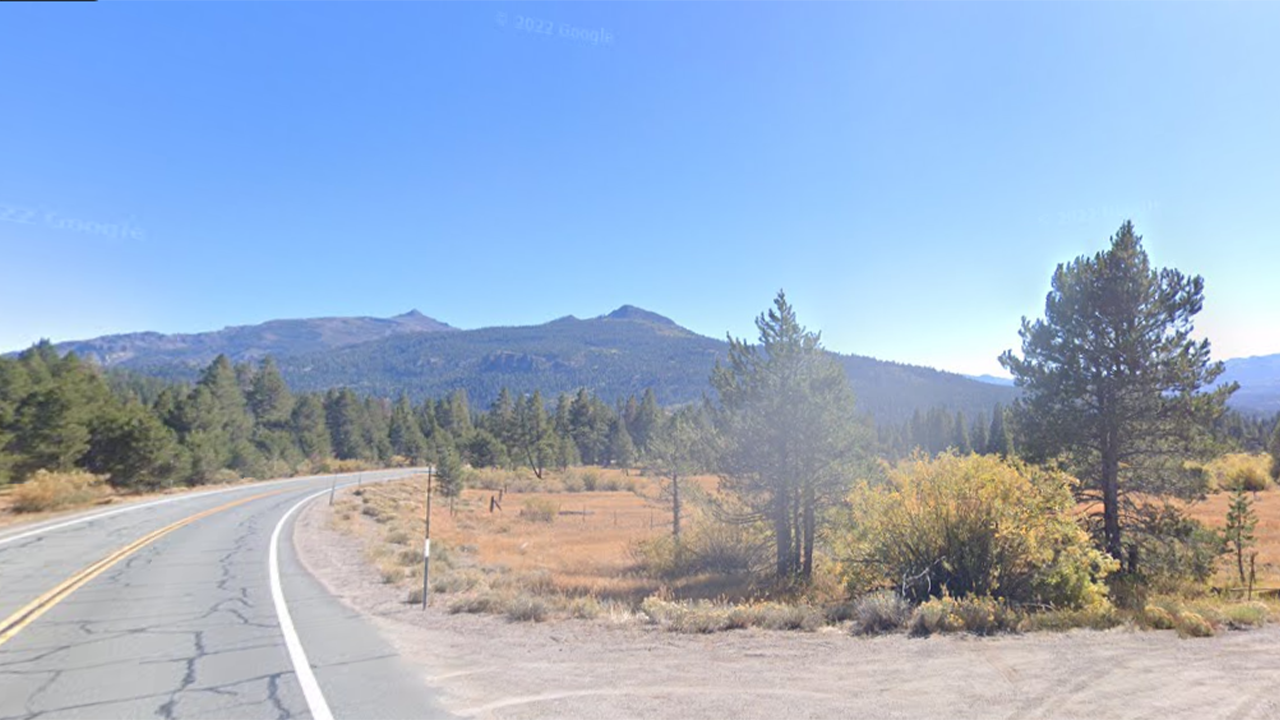
The aircraft’s GPS transponder was plotting in the Willow Creek area near Luther Pass, the sheriff’s office said in a social media post.
Deputies responded to the area and located a crashed single-engine aircraft adjacent to Willow Creek Road. Two people were found on board and pronounced dead.
TRUCK DRIVER KILLED IN FIERY PHILADELPHIA I-95 CRASH MADE CRITICAL MISTAKE, FED SAYS
Authorities say the missing plane was tracked near Luther Pass, just south of South Lake Tahoe in Northern California. (Google Maps)
The Federal Aviation Administration (FAA) said search crews found the wreckage of a single-engine Luscombe 8A around 5:30 a.m.
The plane departed from Lodi Airport Wednesday afternoon, the FAA said.
The identities of the deceased are being withheld until their families are notified, police said.
Alpine County Sheriff’s deputies are overseeing the coroner’s investigation. The National Transportation Safety Board, the U.S. Department of Agriculture Forest Service and the FAA are investigating.
Read the full article from Here

Hawaii
Hawaiian Airlines Is Gone. Travelers Just Lost The Airline That Knew Hawaii Best.
Hawaiian Airlines ended as an independently functioning airline on April 22, but what it built didn’t end with it. The parts that, in hindsight, made Hawaiian feel ahead of everyone else are the same ones Alaska is now stepping into and scaling.
Just days before the flight code disappears, it is easier to see the shape of what Hawaiian actually was. It was not just the airline that could not make the numbers work; it was the airline that kept getting the future right earlier than almost everyone else around it.
Hawaiian Airlines saw premium differently.
Beat of Hawaii editors have both been flying the Pacific on Hawaiian for nearly a half-century. And we saw it at (mostly its best) firsthand, on the second-to-last HA1 from Los Angeles to Honolulu. The 787 was not trying to copy what other U.S. carriers were doing. It was trying to reset expectations entirely, and for a regional Hawaii airline, that meant more than it would have anywhere else. Hawaiian repeatedly won top-rated U.S. airline recognition year after year, for operational performance and service.
The Adient Ascent business class suites we experienced were one example. Hawaiian backed it early, before any other U.S. airlines had committed to something comparable. At the time, that looked like a risk for a carrier already on borrowed time and with little room for error. Now it looks like it was a blueprint.
Alaska’s new international business class uses the exact same business-class platform. The headlines now belong to Alaska, but the decision to believe in that suite, when it was still unproven, belongs exclusively to Hawaiian Airlines.
Hawaiian largely built a product that reflected the emotional aspects of Hawaii flights. TEAGUE designed the interior around Hawaii, with Polynesian navigation references overhead in the ceiling, Hawaiian touches throughout, and materials tied directly to the place in a way no U.S. airline even attempts. The seat, the layout, the feel of the cabin all reflected that, in some ways at least, perfectly.
We covered that in detail in Hawaiian Airlines Dreamliner First Class Review. When the Dreamliner arrived, nothing about that experience felt like a legacy airline barely holding on. It felt like something big, maybe just getting started.
Hawaiian moved first on what travelers actually use.
Before most U.S. airlines could stabilize their hodgepodge of largely poor-quality, expensive WiFi deployments, Hawaiian moved to Starlink across its fleet, putting very fast, free connectivity on all its trans-Pacific A330S and A321neos. It simply worked from gate to gate. No falderal, no log-in, no loyalty program or credit card.
Note: Unfortunately, Hawaiian was never able to achieve WiFi certification on its Dreamliners, and Alaska is just now in the process of obtaining that.
Starlink WiFi was not a small upgrade. It changed how Hawaii flights felt, especially for travelers who were used to paying for something slow or unreliable, if it existed at all. We cannot tell you how many times we’ve flown with other airlines that promised WiFi to and from Hawaii, only to find it didn’t work or didn’t work well. Hawaiian made the right call early, and it made it across two aircraft fleets already in service, not just on new plane deliveries.
Hawaiian identified the parts of the experience that travelers actually cared about, and it moved before anyone else did. Alaska now inherits that advantage. It does not have to explain why it counts or prove that it works, since all that came and went. Hawaiian already did its part, as have others since. Alaska has also decided to deploy Starlink WiFi across its entire network that BOH editors enjoyed on a brand new Alaska 737 MAX 8 about a week ago.
Hawaiian built a brand that traveled well: Pualani.
For decades, Hawaiian showed up in Australia, Japan, Korea, and New York City (pictured) with something that already had great meaning. And that too was not an accident, nor is it easy to replicate.
The Pualani brand was consistent. The identity was tied to our iconic home in a way that translated well internationally, especially in Japan, where airline brand perception still carries weight in purchasing decisions. Travelers were not just choosing a seat or a fare. They were choosing what the airline represented.
A national branding study ranked Hawaiian first among U.S. airlines for brand effectiveness, with a score of 123 out of 200 for logo recognition, brand attribution, and consistency. Alaska scored 74 and ranked ninth. We covered that gap about Hawaiian’s reach in How Hawaiian Airlines Pualani Branding Took Aloha Global. The difference was clearly not about marketing budgets. It was about what the brand stands for when it enters a market far from home.
We have previously explored what happened to that identity. The answer is not simple, and it is not finished. Alaska can keep parts, but it can never recreate the conditions that originally built it.
Hawaiian reached further than it was capable of.
Hawaiian ordered the 787 with plans that extended well beyond Asia, including potentially London and Singapore. It also kept flying routes that did not earn their keep and never figured out how to price its product the way the rest of the industry had learned to.
What it did not have was the corporate financial structure to keep it working when conditions tightened the way they did, and its ambitions outran the balance sheet years before Alaska ever stepped in.
The failure was not Hawaiian’s vision.
That part has already been told, and it does not need to be repeated here. We covered it in Why Hawaiian Airlines Failed: A Story of Planes, Promises, And Pride.
The timing, the cost structure, and the other breakdowns, both COVID-related and around the Saber-to-Amadeus migration in 2023, and other events, all seemed to come crashing down at once.
The leadership payouts that followed only sharpened the contrast. Peter Ingram at $13.2 million, Shannon Okinaka at $4.9 million, Jonathan Snook at $5.4 million, and Aaron Alter at $4.2 million. Those numbers landed hard with many when the airline itself couldn’t remain viable.
Hawaiian needed Alaska. This was not a strategic pairing of equals, as it was once called; it was a rescue.
Alaska gets the part Hawaiian could not finish.
Alaska inherits the aircraft decisions, product direction, connectivity upgrades, and early bets Hawaiian made when it still had room to maneuver. It gets to scale them across a far larger network, and with its stronger financial base.
It also inherits the harder question. What happens to the parts of Hawaiian that were not just operational decisions, but identity?
What Hawaii loses is harder to measure for residents and kamaaina.
Hawaiian was never the biggest airline serving the islands, nor the most profitable or efficient. What it was, for a long time, was the airline that understood uniquely what a Hawaii flight was supposed to feel like.
That was demonstrated in small ways and big ones. It showed up in how the cabin felt when you boarded, the unique Hawaii-based service provided, in how the brand translated overseas, in the decisions that put traveler experience ahead of short-term gain, and even good sense.
Those choices didn’t keep the airline alive. But they shaped what the airline became and what Alaska now has to work with. Hawaiian did not survive as an independent airline, and it did not disappear, exactly.
What does Hawaiian’s legacy mean to you now that the airline itself is no longer on its own, and does seeing Alaska build on what Hawaiian started change how you look at either one?
Lead Photo © Beat of Hawaii attending the inaugural HNL-JFK route celebration in New York City at Grand Central Station.
Get Breaking Hawaii Travel News
Idaho
Idaho Belles & Chimes club teams with Starbelly School of Dance for Girls’ Day Out
BOISE, Idaho (CBS2) — An afternoon of free-play pinball and a belly dancing lesson took place at the Boise as the Idaho Pinball Museum’s Girls’ Day Out.
The Idaho Pinball Museum is an interactive collection of pinball machines and educational exhibits with a mission to cultivate curiosity in science, art, and the history of pinball and vintage mechanical gaming while showcasing American culture.
Girls’ Day Out featured the Idaho Belles & Chimes club, which meets monthly to encourage everyone to play pinball. In May, the group is paying tribute to the art style seen on many machines featuring belly dancing costumes.
The event included a free belly dancing lesson from Starbelly School of Dance, along with an optional Women’s Division pinball tournament.
The Idaho Pinball Museum is located at 1104 N. Cole Road in Boise, between Emerald and Fairview. The main entrance is in the courtyard.
Montana
Montana’s Underrated Beach State Park Has Sandy Shorelines, Swimming, And Birding – Islands
Imagine a long expanse of pristine sand slipping into calm, lapping, crystal-clear waters. The occasional chunk of driftwood juts out as mountains cut an elegant outline in the distance. Forced to guess which state you’re in, you might draw a blank — the mountains are a bit of an anomaly. Yet such a place exists in Montana. It’s called Somers Beach State Park, an underrated gem sitting on the northwest shore of Flathead Lake. Its sandy shorelines and wide-open space provide plenty of room for swimming, birding, and a few trails.
The 106-acre beach rests along Flathead Lake, one of the largest freshwater lakes in the U.S. The 200-square-mile blue gem has been lauded by visitors and sites like Lake.com as being the 10th-cleanest lake in the country, earning a spot on the list of U.S. lakes that are unbelievably clean and clear. The surroundings aren’t that bad either. Visitors who hit the beach often relish its view of the Swan Mountains stretching across the horizon. The park is still evolving: Montana acquired the property in 2021, opened the beach a year later, and has been building up its facilities and amenities ever since.
The key to visiting Somers Beach State Park is timing. Because its size changes with Flathead Lake’s water levels, many visitors have come away confused, underwhelmed, or plain old angry to find a rocky, windy stretch of shoreline. Fair enough, since Somers Beach’s sandy shores have a knack for disappearing in the summer. Instead, they emerge when Flathead Lake’s water dips between fall and spring, only to rise up with the temperatures.
Swim, hike, bird, and scope out the surroundings
For those looking to take a dip in Somers Beach’s waters, there comes a compromise. You can have warm waters — or you can have a sandy shore. You can’t have both. How much swimming you actually get done while there will depend on when you visit. During the summer, the shallow portion of the beach can stretch for several hundred yards, leaving you wading through waist-deep water for an interminably long time. “It’s fun because the lake isn’t as high and there’s quite a long stretch of beach to play in the water or just bask in the sun,” one local wrote in a Google review. “It’s a beautiful place to see Flathead Lake and the mountains.” Visiting outside the summer carries its own set of issues, as Flathead Lake’s water temperature tends to plummet. Bring hiking boots and binoculars instead.
As a relatively young state park, Somers Beach doesn’t have a formal trail system. All the better, as you then have a chance to just wander about. The nearby town of Somers contains plenty to see to the west, while to the east are wetlands and a grassy area north of the shore. Birders will have plenty to enjoy as well. The Flathead Lake Waterfowl Production Area east of the beach provides habitat for over 200 species of birds. (Authorities close off access to the area during nesting season, between March and July.) If you time your visit right, you can spend a day with sand between your toes. The drop in water level creates a half-mile expanse of sandy shoreline worthy of a peaceful stroll.
The logistics of visiting Somers Beach State Park
Flathead Lake’s proximity to Glacier National Park makes Somers Beach accessible by several modes of transportation. Glacier Park International Airport is only half an hour’s drive away. While the beach alone may not justify a long-haul flight, it pairs well with other destinations around the lake. That includes Yellow Bay State Park, a crowd-free paradise surrounded by cherry orchards. Together, they can fill an entire weekend with adventure.
Unfortunately, you can’t pitch a tent right on the beach; the state park is day-use only. Fortunately, finding a place to sleep nearby isn’t much of a hassle. A ring of accommodations orbits Flathead Lake, including luxury cabins costing several hundred dollars per night. The highly-rated Somers Bay Cabin Lodging is minutes away as well, with log cabins that have lake views, ranging in size from studios to two-bedroom units. Despite the rustic exterior, the interiors still have all the modern conveniences you’d expect, from Wi-Fi to heating.
The beach’s home alongside Flathead Lake makes it adjacent to several must-see areas, chief among them Flathead Valley. The unexpectedly up-and-coming wine region — yes, a wine region in Montana — with its excellent wineries and nearby orchards, provides an ideal bookend for a trip to Somers Beach. If you visit during the warmer months, be sure to bring bug spray to keep the mosquitoes at bay. If you plan on hauling a boatload of supplies with you — inflatables, coolers, or chairs — bring a wagon. The jaunt from the parking area to the beach can be longer than it looks.
-
Connecticut53 seconds agoScammers use AI images of injured pets to target owners, Blumenthal warns Connecticut residents
-
Delaware7 minutes agoBrazen Daytime Robbery Reported At Newark Store
-
Georgia19 minutes agoKalitta Goes Quick As Big Georgia Crowd Looks On – SPEED SPORT
-
Hawaii25 minutes agoHawaiian Airlines Is Gone. Travelers Just Lost The Airline That Knew Hawaii Best.
-
Idaho31 minutes ago
Idaho Belles & Chimes club teams with Starbelly School of Dance for Girls’ Day Out
-
Illinois37 minutes agoMan found dead near Chicago Executive Airport may have been killed in crash: police
-
Indiana43 minutes agoIndiana football to visit White House, Fernando Mendoza may skip
-
Iowa49 minutes agoFord’s walk-off slam lifts Cyclones in must-win thriller