Oregon
This cozy bakery on the Oregon coast serves incredible pastries just steps from the beach


Tucked away in the quieter neighborhood streets on the south side of Cannon Beach, just one block from the ocean, Sea Level Bakery + Coffee makes a strong case for the title of best bakery on the Oregon coast.
Opened in 2014 by couple Jason and Liz Menke, the cozy, modern cafe (which was remodeled in 2023) offers fresh-baked bread, sandwiches and bowls in addition to its well-stocked pastry case where there are no bad choices.
On a recent visit, the case was stocked with sticky buns, biscuits, scones, banana bread, kouign amann, Danish, pound cake, muffins and five kinds of cookies. There was also something called tide truffles, a vegan and gluten free treat that sells in packs of three. In a neighboring case were loaves of fresh-baked bread, as well as baguettes, ciabatta and slices of focaccia.
Offerings rotate seasonally, sometimes even weekly, based on available ingredients and the whims and experimentations of the staff bakers.
On a recent visit, we ate a raspberry pistachio scone with lemon glaze that was sweet and delicious. A soft biscuit, dusted with cinnamon sugar and loaded with marionberry jam, was a great accompaniment. I made a mental note to pick up a baguette on our next beach day.
Sea Level Bakery + Coffee is tucked away in the Tolovana Park neighborhood of Cannon Beach, about a mile from the main drag.Jamie Hale/The Oregonian
People walk the sand on the south end of Cannon beach, near Tolovana Beach State Recreation Site on the north Oregon coast.Jamie Hale/The Oregonian
A biscuit with marionberry jam at Sea Level Bakery + Coffee in Cannon Beach.Jamie Hale/The Oregonian

Jason Menke said he grew up going to French boulangeries with his grandmother, where he fell in love with the idea of serving a community through food. When the couple opened Sea Level, in the old Waves of Grain bakery space, they wanted to bring that boulangerie culture to the Oregon coast.
“We felt like it needed to be both a cafe, coffee ship and a bakery,” Menke said of the business. “We just know that people need better food options, particularly at the beach.”
Grab a table on the covered patio outside and you might feel like you’re joining the Cannon Beach community. On our visit, a local woman introduced us to her dog, who stared hungrily at our pastries. We eavesdropped on a group of surfers nearby. A family of sleepy tourists shuffled in and plopped down around a table with cups of coffee. The indoor seating, which consists of a few smaller tables, is crucial for the rainy season, but when the weather is nice the patio is idyllic.
Sea Level, which is nestled into the Tolovana Park neighborhood, is a surprisingly peaceful place given the commotion all around it. The main drag of Cannon Beach, which is choked with tourists in the summer, is only a mile to the north. And only two blocks south is the busy Tolovana Beach State Recreation Site, which attracts upwards of 1.2 million visitors each year.
“When we first started it seemed like a curse to be in that part of town, because it was quiet down there,” Menke said. But after a couple of years, once business caught on, the couple grew to appreciate their place in Cannon Beach.
“We like to say that we’re Tolovana proud,” he said.
With their major remodel still fresh in the rearview mirror, the couple finds it hard to think too much about the future. But when pressed, Jason Menke said they’ve been dreaming about adding yet another offering to their cafe: pizza. After a successful one-time pizza night last year, the couple has been toying with the idea of making it happen monthly or even weekly.
That would only be another extension of their mission to provide good food to the community on the north Oregon coast.
“There’s definitely not enough good food at the beach,” Menke said.
The takeaway: Sea Level offers everything you could want from an Oregon coast bakery: great pastries, good coffee, ample seating and a quick walk to the beach.
Sample menu: A biscuit and jam ($4.25), a seasonal scone ($4.25) and espresso ($4).
Drinks: Coffee and espresso from Portland’s Heart Coffee Roasters, with tea and a rotating menu of seasonal drinks.
Details: Counter service with indoor and outdoor seating. ADA accessible with parking spot, ramp and restroom. Open 7 a.m.-2 p.m., Monday-Thursday; 3116 S. Hemlock St., Cannon Beach; 503-436-4254; sealevelbakery.com.


PORTLAND, Ore. (KATU) — The Oregon Zoo has welcomed a second red panda to their ranks this month, as 6-year-old Liu gets settled in to the habitat.
Liu comes to Portland from the Toledo Zoo as part of the Association of Zoos and Aquariums’ Species Survival Plan for red pandas.
He arrived just weeks after Enoki, a female red panda, and caregivers will soon introduce the duo in the hopes that they may eventually help add to the population of the endangered species.
PAST COVERAGE | Enoki the red panda joins Oregon Zoo, ‘exploring, snacking & napping’ in new habitat
For those coming to see the pandas, they should be easy to tell apart. Liu has a blonde tail, and Enoki is much smaller with a darker coat.
“He’s very handsome,” said Dr. Carlos Sanchez, the zoo’s director of animal health, who stopped by Liu’s habitat to observe, a red panda plushy tucked under one arm. “His tail is so blond — surfer blond.”
Liu was born on June 28, 2019 at Prospect Park Zoo in Brooklyn. His name means “willow” in Mandarin Chinese, a nod to his mother, whose name is also Willow.
Enoki is nearly three years old, and is of the refulgens subspecies of red panda, known for having darker faces and more prominent tail rings.
“These two represent a species in trouble,” said Kelly Gomez, who oversees the zoo’s red panda area. “In the past 25 years, habitat loss, poaching and the illegal wildlife trade have wiped out nearly half the world’s red panda population. Hopefully, we can help inspire a new chapter in the conservation of this incredible species.”
The duo joins the Oregon Zoo family more than a year after the death of Moshu, the zoo’s previous resident red panda who was dubbed “Sir Snacks-a-Lot.” Moshu was 14 years old.
More info from the Oregon Zoo.

Summer is in full swing, and across the country, the songs of birds and the cheeps of baby chicks are filling the air. While birdwatching season is happening just about everywhere right now, the Pacific Northwest offers something truly special: the chance to see puffins along the Oregon Coast. If you’re wondering when, where and how to see puffins in Oregon, you’re in the right place.
Few wildlife sightings feel as magical as spotting a Tufted Puffin (Fratercula cirrhata) in the wild. These beloved seabirds return to the Oregon Coast each year during their breeding season, drawing birdwatchers, photographers and nature lovers hoping for a glimpse of their bright orange beaks, expressive faces and unmistakable charm. For many visitors, seeing puffins in their natural habitat is a heartwarming coastal experience that captures the spirit of the Pacific Northwest.
Because puffins are seasonal migratory birds that nest in specific coastal areas, timing and location are key. With a bit of planning—and a little luck—you can witness one of Oregon’s most iconic wildlife moments along its rugged coastline. Here are the best places to see puffins on the Oregon Coast.
What Are the Best Places to See Puffins in Oregon?
If you’re wondering where you can you see these cute creatures, there are three spots that are worth going to and are hailed as the best places to see puffins in Oregon.
Haystack Rock, Cannon Beach
Haystack Rock is a popular place where puffins nest in Oregon.Getty Images Big5 Studio
Few wildlife encounters feel as effortless as spotting puffins right from shore, and Haystack Rock at Cannon Beach is one of the rare places where that’s possible.
This towering sea stack isn’t just an Oregon landmark, it’s also a seasonal nesting site for Tufted Puffins, who return here each year to raise their young on the rocky ledges. From the beach, visitors can often catch glimpses of puffins flying to and from the rock or resting along its cliffs, especially during the warmer months when activity peaks.
Because it requires no boat or hike to access, Cannon Beach remains one of the most rewarding and beginner-friendly places to experience puffins in the wild.
Face Rock State Scenic Viewpoint (Bandon)
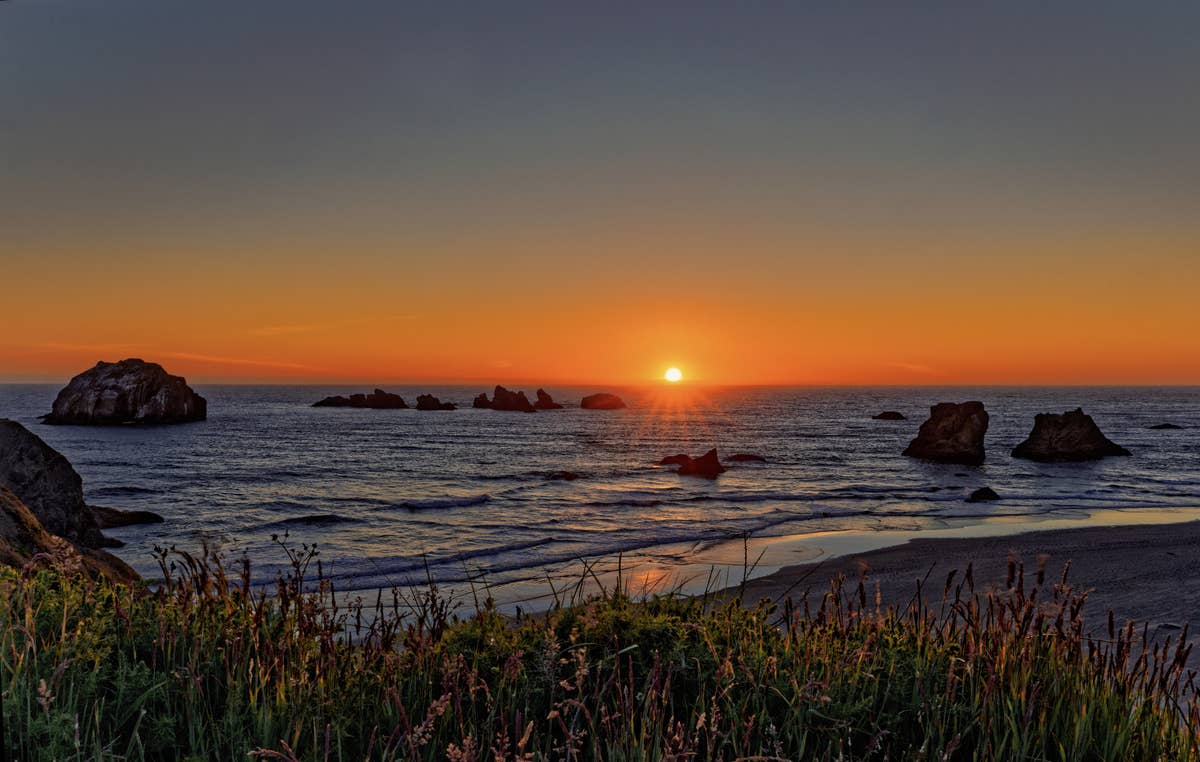
Image via Getty Images/Moelyn Photos
For a quieter, more immersive coastal experience, Face Rock in Bandon offers a different kind of puffin viewing.
Here, the focus shifts from crowds to coastline where Tufted Puffins and other seabirds nest along offshore rocks just beyond the shoreline. The setting is calmer than Cannon Beach, making it ideal for visitors who want to slow down and scan the horizon for wildlife activity.
Every Saturday and Sunday from now until July 26, Face Rock Wildlife Interpreters will host on-site sessions at Face Rock Wayside from 9 am to 11 am, where guests will get to look out for puffins nesting on Face Rock with the wildlife interpreters’ help. Whether you go puffin-peeping on your own or with a group, be sure to bring binoculars!
Three Arch Rocks National Wildlife Refuge
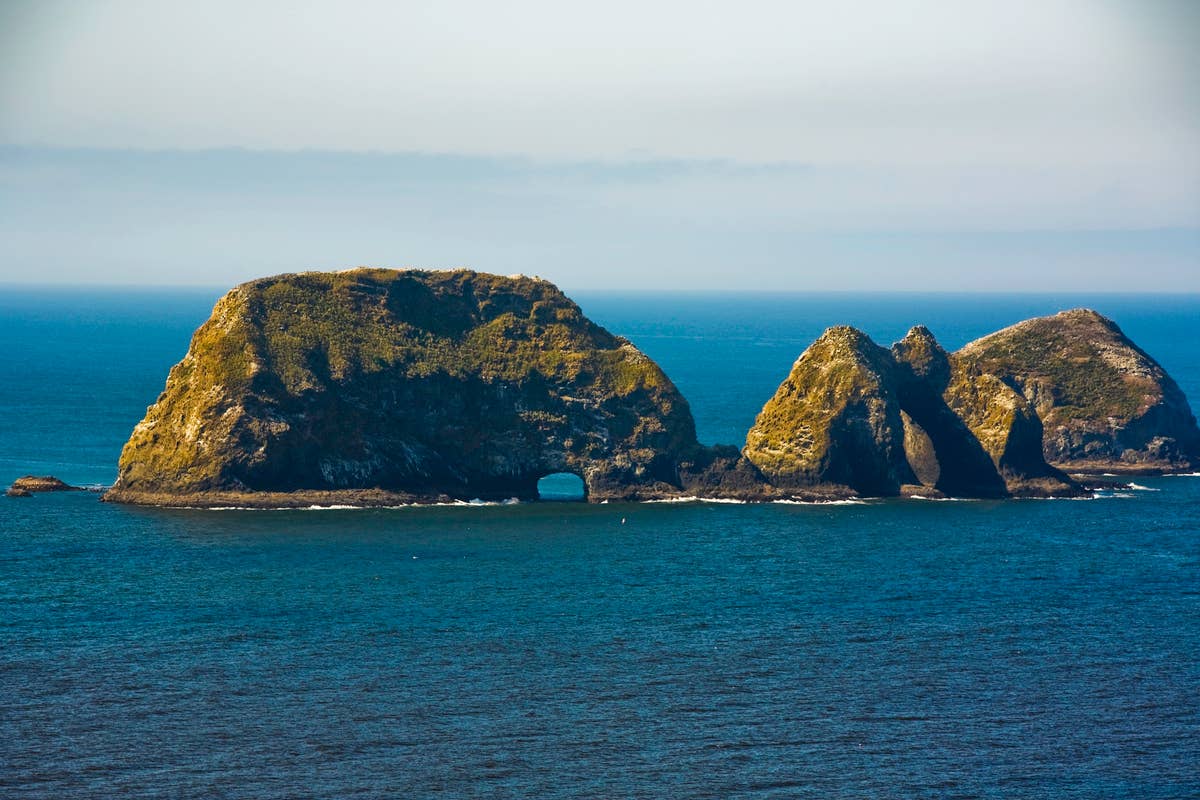
Image via Getty Images/Bob Stefko
If looking for something a little closer to Portland, Three Arch Rocks is home to the largest breeding colony of Tufted Puffins in Oregon. A trip to Three Arch Rocks National Wildlife Refuge is sure to be a treat for any lovers of the Pacific Northwest’s coastal wildlife.
Not only is it one of the top places in Oregon to spot nesting puffins over the summer, but it is also the only pupping site on the North Oregon coast for the federally-threatened Steller sea lion, one of two sea lion species native to Oregon. Incidentally, the Steller sea lion’s pupping season, which runs from mid-May to mid-July, coincides with the first half of the Tufted Puffin’s nesting season, so right now is the perfect time of year for a visit!
When Do Puffins Arrive on the Oregon Coast?
For a large part of the year, Tufted Puffins live far out at sea across the North Pacific Ocean (in fact, they can be found as far eastward as Japan). However, from right now through August, Tufted Puffins are making their way back to coastal islands along the Oregon coastline to create their nests and raise their young until they are strong enough to join them out at sea. Therefore, if you want to catch a glimpse of them, now’s the perfect time.
What’s the Best Time of Day to See Puffins in Oregon?
These birds don’t follow a predictable shoreline schedule, which is part of what makes spotting them such a rewarding experience. So when’s the best time to see puffins in Oregon? Throughout the day during the breeding season, they move between offshore feeding areas and nesting sites on rocky cliffs and sea stacks. However, early morning and late afternoon often offer the most consistent viewing opportunities, when bird activity around colonies tends to increase and lighting conditions make movement easier to spot from shore.
For visitors hoping to increase their chances, choosing calm, clear days can make distant movement easier to detect against the waves.
What Do Puffins Eat and Why Do They Come to Oregon?
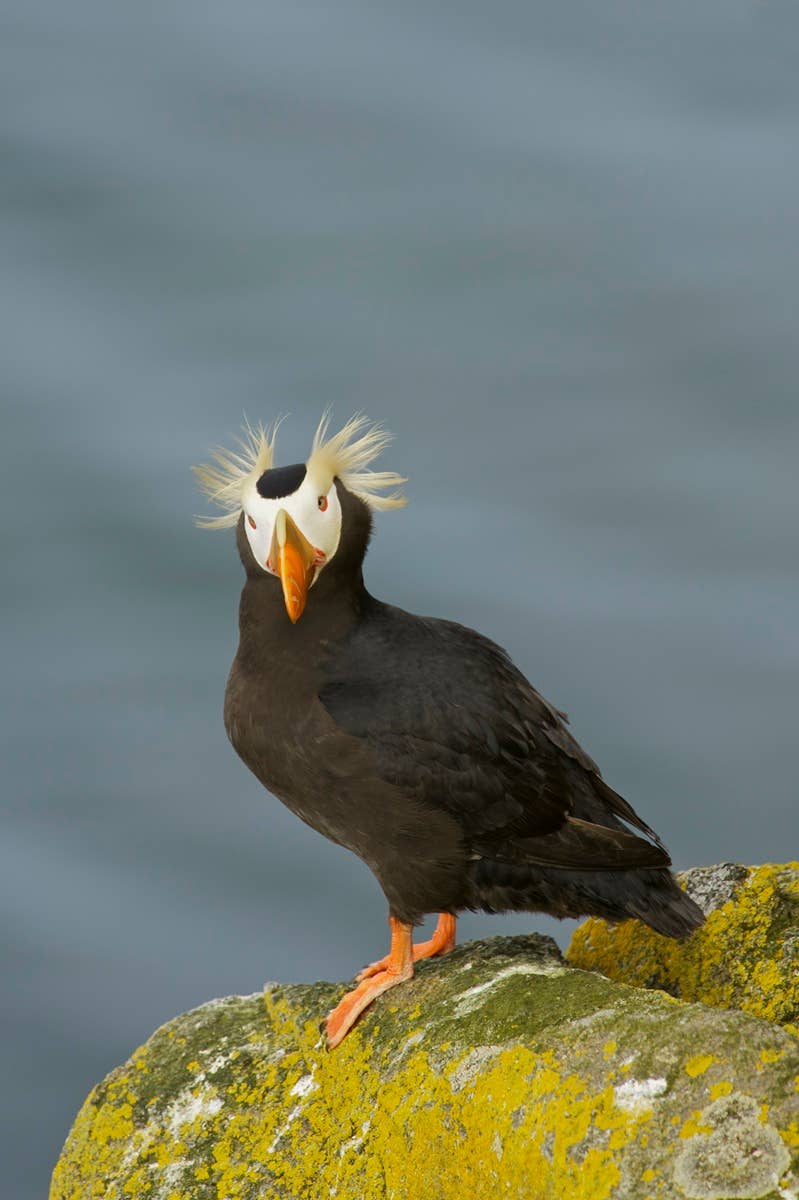
Tufted Puffins return to the Oregon Coast each summer.Getty Images Enrique Aguirre Aves
The presence of puffins along the Oregon Coast is closely tied to the health of the surrounding ocean ecosystem.
Oregon’s offshore waters provide an especially productive feeding environment thanks to cold currents that bring nutrients to the surface, supporting large fish populations. After all, Tufted Puffins rely on small schooling fish such as sand lance, anchovies and herring, which they catch by diving underwater and carry multiple fish back to feed both themselves and their chicks during the nesting season.
Combined with nearby rocky islands that offer protected nesting sites, the region creates an ideal seasonal habitat for breeding puffins and is what brings them back each year. It’s also why Oregon remains one of the most important puffin-viewing regions on the West Coast.
Tips for Spotting Puffins in Oregon
At one point, the Tufted Puffin’s distribution in North America stretched from northern California to British Columbia and the Aleutian Islands of Alaska. However, starting in the 1990s, the North American Tufted Puffin population plummeted in numbers, and now only a few thousand visit the Pacific Northwest every summer, including only a little over 500 puffins in Oregon. If you want the best odds at spotting these rare birds in Oregon, there are a few things you should keep in mind.
Puffins are easiest to spot when you know what to look for—and where to focus your attention. Bring binoculars and scan rocky cliffs and offshore waters, especially during calm mornings or late evenings when the sea is quieter. Watch for quick, low flights over the water or brief pops of movement near the surface as they dive for fish. Patience pays off, since puffins often appear suddenly and disappear just as quickly.
Why Puffin Sightings in Oregon is Special
Puffin sightings along the Oregon Coast are special because they’re both seasonal and fleeting. These seabirds spend most of their lives far offshore, only returning briefly to coastal nesting areas. That short window makes each sighting feel rare, especially when you catch them diving, flying, or gathering near rocky shorelines. Their bright beaks and energetic behavior make even a quick glimpse feel memorable.
Sources:

CURRY COUNTY, Ore. (KPTV) – A Texas man wanted for child sex crimes was arrested in Curry County on Tuesday afternoon.
The Curry County Sheriff’s Office says Kenneth Leatherwood of Bastrop, Texas, was arrested with the help of Oregon State Police and U.S. Marshals just after 12:30 p.m.
Leatherwood, who is accused of sex-related crimes involving a child in Texas, was reportedly found camping in a heavy wooded area near Lucas Lodge in Agness.
Investigators say Leatherwood has been on the run from Curry County law enforcement since June 16 after reports that he had been seen with a stolen car in the Agness area.
Leatherwood was also believed to have stolen weapons with him.
His dog was also found and returned to the suspect’s family in good shape, according to the sheriff’s office.
Copyright 2026 KPTV-KPDX. All rights reserved.
-

 San Francisco, CA4 minutes ago
No tolerance for hate or crime at SF Pride this weekend, officials say
-

 Dallas, TX9 minutes ago
Alanna Smith injury update: Dallas Wings player in concussion protocol
-

 Boston, MA19 minutes ago
Boy, 13, hospitalized after being found unresponsive in swimming pool at Beverly home
-

 Denver, CO24 minutes ago
Denver Nuggets draft Trevon Brazile in the second round of the NBA Draft – Denver Stiffs
-

 Seattle, WA31 minutes ago
Council eyes street barricades in fight against violence, sex trafficking in north Seattle
-

 San Diego, CA34 minutes ago
What Travon Garrison brings to San Diego State’s 2027 recruiting class
-

 Milwaukee, WI39 minutes ago
Cincinnati Reds Fall to Milwaukee Brewers, Get Swept at Home for First Time Since 2024
-

 Atlanta, GA46 minutes ago
Grading The Atlanta Hawks Selection of North Carolina C Henri Veesaar At Pick No. 52

