Oregon
Oregon voter rolls case highlights national confusion over American Samoans’ citizenship status


The unique situation of American Samoans has caused confusion across several U.S. states, including Oregon, where officials inadvertently registered nearly 200 American Samoan residents to vote when they obtained driver’s licenses under the state’s motor-voter law.
Of those, 10 cast ballots in an election, according to the Oregon Secretary of State’s office. Officials there determined the residents had not intended to break the law and no crime was committed.
“We pay taxes, we do exactly the same as everybody else that are U.S. citizens,” said Tupe Smith, an American Samoan charged in a similar case in Alaska. “It would be nice for us to have the same rights as everybody here in the states.”
The situation in Oregon reflects broader national confusion stemming from the legal classification of American Samoans as U.S. nationals rather than U.S. citizens — the only U.S. territory whose people are not granted birthright citizenship.
A sign supporting citizenship for American Samoans is posted outside the Log Cabin Gifts store on the waterfront in Whittier, Alaska, May 13, 2025.
Mark Thiessen / AP
American Samoans are entitled to U.S. passports and can serve in the military. Men must register for the Selective Service. They can vote in local elections in American Samoa but cannot hold public office in the U.S. or participate in most U.S. elections.
The legal and cultural questions around this status also resonate within Oregon’s American Samoan community.
Siniva Bennett, board chair of the Samoa Pacific Development Corporation, a Portland-based nonprofit, explained why many in the territory have grown wary of birthright citizenship.
“We’ve been able to maintain our culture, and we haven’t been divested from our land like a lot of other indigenous people in the U.S.,” Bennett said, referring to the potential threat to communal land ownership laws if citizenship were imposed.
Trump administration challenges Oregon over voter rolls in lawsuit
Although supporters of automatic citizenship say it would benefit the estimated 150,000 to 160,000 American Samoan nationals living in states such as California, Hawaii, Washington, Oregon, Utah and Alaska, others worry about unintended consequences. The debate reflects a broader tension between equal rights and cultural preservation.
In Alaska, confusion leads to criminal charges
The legal ambiguity continues to surface in unexpected places, like Whittier, Alaska, a cruise-ship stop squeezed between glacier-packed mountains and Prince William Sound. It’s so small that nearly all of its 260 residents live in the same 14-story condo building — yet it became the unlikely setting of an unprecedented noncitizen voter fraud case.
The 14-story Begich Tower is seen in Whittier, Alaska, May 13, 2025. A majority of the town’s residents live in the condo.
Mark Thiessen / AP
Alaska prosecutors are pursuing felony charges against 11 residents of Whittier, most of them related to one another, saying they falsely claimed U.S. citizenship when registering or trying to vote. The defendants, all born in American Samoa, say they believed they were eligible.
“To me, I’m an American. I was born an American on U.S. soil,” said firefighter Michael Pese, one of those charged in Whittier. “American Samoa has been U.S. soil, U.S. jurisdiction, for 125 years. According to the supreme law of the land, that’s my birthright.”
The case began in 2023 when Pese’s wife, Tupe Smith, ran unopposed for a local school board seat. After winning with about 95% of the vote, she was arrested and charged.
Oregon elections officials refer cases of possible noncitizen voting to state DOJ
She explained to officers that she knew she wasn’t allowed to vote in U.S. presidential elections, but thought she could vote in local or state races. She said she checked a box affirming that she was a U.S. citizen at the instruction of elections workers because there was no option to identify herself as a U.S. national, court records say.
“When they put me in cuffs, my son started crying,” Smith told The Associated Press. ”He told their dad that he don’t want the cops to take me or to lock me up.”
Later, Pese and eight relatives — along with one man from their village in American Samoa — were also charged. Advocates say they were targeted despite a lack of criminal intent.
“There is no question that Ms. Smith lacked an intent to mislead or deceive a public official in order to vote unlawfully when she checked ‘U.S. citizen’ on voter registration materials,” Neil Weare, one of Smith’s attorneys and co-founder of the Washington-based Right to Democracy Project, wrote in a brief to the Alaska Court of Appeals last week, after a lower court judge declined to dismiss the charges.
Michael Pese and his wife, Tupe Smith, pose for a photo with their son Maximus and daughter Cataleya in Whittier, Alaska, May 13, 2025.
Mark Thiessen / AP
Critics argue the prosecutions are politically motivated amid false claims from President Donald Trump and others that noncitizen voter fraud is widespread. Even state-level investigations have found voting by noncitizens to be exceptionally rare.
In Hawaii, American Samoans have faced similar confusion.
Sai Timoteo, who was born in American Samoa, ran for the state Legislature in 2018 before learning she wasn’t allowed to hold public office or vote. She had always considered it her civic duty to vote, and the form on the voting materials had one box to check: “U.S. Citizen/U.S. National.”
“I checked that box my entire life,” she said.
She also avoided charges, and Hawaii subsequently changed its form to make it more clear.
A simple truth is at the root of many false election claims: Voter rolls are imperfect
In Alaska, the confusion reached such a level that the Pacific Community of Alaska reached out to the Alaska Division of Elections in 2021 and 2022 to ask whether American Samoans could vote in state and local elections.
Neither time did it receive a direct answer, said Tafilisaunoa Toleafoa with the organization.
“It is my hope that this is a lesson learned, that the state of Alaska agrees that this could be something that we can administratively correct,” Toleafoa said. “I would say that the state could have done that instead of prosecuting community members.”
Legacy of colonialism and exclusion
The root of the issue stretches back to the colonial legacy of American Samoa.
In the 19th century, the U.S. secured part of the Samoan archipelago as a naval refueling station. Over time, Puerto Rico, Guam, the U.S. Virgin Islands and the Northern Mariana Islands gained birthright citizenship — but American Samoa did not.
FILE – A sailing ship is seen in the harbor at Pago Pago, American Samoa, in July 2002.
David Briscoe / AP
Congress considered it for American Samoa in the 1930s, but declined. Some lawmakers cited financial concerns during the Great Depression while others expressed patently racist objections, according to a 2020 article in the American Journal of Legal History.
In 2021, the 10th U.S. Circuit Court of Appeals declined to extend automatic citizenship to those born in American Samoa, saying it would be wrong to force citizenship on those who don’t want it. The Supreme Court declined to review the decision.
Several jurisdictions across the country, including San Francisco and the District of Columbia, allow people who are not citizens to vote in certain local elections.
___
Bohrer reported from Juneau, Alaska, and Johnson from Seattle. Claire Rush in Portland, Oregon, and Jennifer Sinco Kelleher in Honolulu contributed to this report.


PORTLAND, Ore. (KATU) — The Oregon Zoo has welcomed a second red panda to their ranks this month, as 6-year-old Liu gets settled in to the habitat.
Liu comes to Portland from the Toledo Zoo as part of the Association of Zoos and Aquariums’ Species Survival Plan for red pandas.
He arrived just weeks after Enoki, a female red panda, and caregivers will soon introduce the duo in the hopes that they may eventually help add to the population of the endangered species.
PAST COVERAGE | Enoki the red panda joins Oregon Zoo, ‘exploring, snacking & napping’ in new habitat
For those coming to see the pandas, they should be easy to tell apart. Liu has a blonde tail, and Enoki is much smaller with a darker coat.
“He’s very handsome,” said Dr. Carlos Sanchez, the zoo’s director of animal health, who stopped by Liu’s habitat to observe, a red panda plushy tucked under one arm. “His tail is so blond — surfer blond.”
Liu was born on June 28, 2019 at Prospect Park Zoo in Brooklyn. His name means “willow” in Mandarin Chinese, a nod to his mother, whose name is also Willow.
Enoki is nearly three years old, and is of the refulgens subspecies of red panda, known for having darker faces and more prominent tail rings.
“These two represent a species in trouble,” said Kelly Gomez, who oversees the zoo’s red panda area. “In the past 25 years, habitat loss, poaching and the illegal wildlife trade have wiped out nearly half the world’s red panda population. Hopefully, we can help inspire a new chapter in the conservation of this incredible species.”
The duo joins the Oregon Zoo family more than a year after the death of Moshu, the zoo’s previous resident red panda who was dubbed “Sir Snacks-a-Lot.” Moshu was 14 years old.
More info from the Oregon Zoo.

Summer is in full swing, and across the country, the songs of birds and the cheeps of baby chicks are filling the air. While birdwatching season is happening just about everywhere right now, the Pacific Northwest offers something truly special: the chance to see puffins along the Oregon Coast. If you’re wondering when, where and how to see puffins in Oregon, you’re in the right place.
Few wildlife sightings feel as magical as spotting a Tufted Puffin (Fratercula cirrhata) in the wild. These beloved seabirds return to the Oregon Coast each year during their breeding season, drawing birdwatchers, photographers and nature lovers hoping for a glimpse of their bright orange beaks, expressive faces and unmistakable charm. For many visitors, seeing puffins in their natural habitat is a heartwarming coastal experience that captures the spirit of the Pacific Northwest.
Because puffins are seasonal migratory birds that nest in specific coastal areas, timing and location are key. With a bit of planning—and a little luck—you can witness one of Oregon’s most iconic wildlife moments along its rugged coastline. Here are the best places to see puffins on the Oregon Coast.
What Are the Best Places to See Puffins in Oregon?
If you’re wondering where you can you see these cute creatures, there are three spots that are worth going to and are hailed as the best places to see puffins in Oregon.
Haystack Rock, Cannon Beach
Haystack Rock is a popular place where puffins nest in Oregon.Getty Images Big5 Studio
Few wildlife encounters feel as effortless as spotting puffins right from shore, and Haystack Rock at Cannon Beach is one of the rare places where that’s possible.
This towering sea stack isn’t just an Oregon landmark, it’s also a seasonal nesting site for Tufted Puffins, who return here each year to raise their young on the rocky ledges. From the beach, visitors can often catch glimpses of puffins flying to and from the rock or resting along its cliffs, especially during the warmer months when activity peaks.
Because it requires no boat or hike to access, Cannon Beach remains one of the most rewarding and beginner-friendly places to experience puffins in the wild.
Face Rock State Scenic Viewpoint (Bandon)
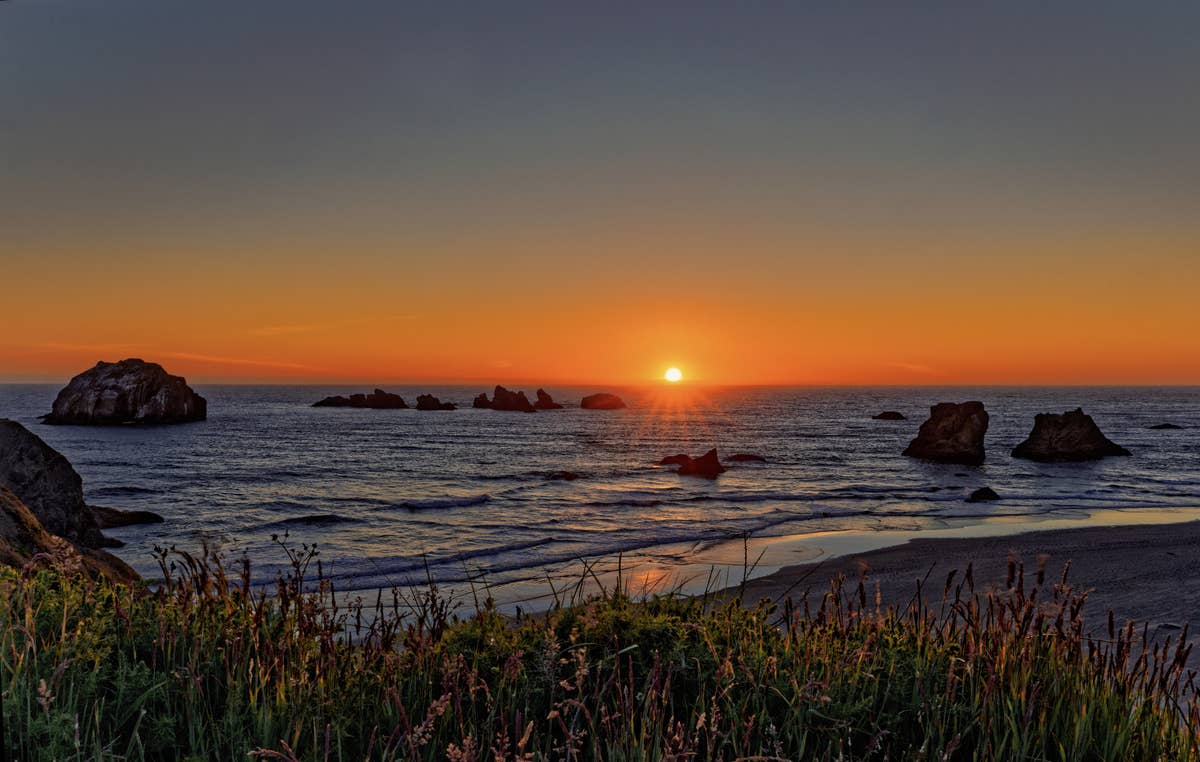
Image via Getty Images/Moelyn Photos
For a quieter, more immersive coastal experience, Face Rock in Bandon offers a different kind of puffin viewing.
Here, the focus shifts from crowds to coastline where Tufted Puffins and other seabirds nest along offshore rocks just beyond the shoreline. The setting is calmer than Cannon Beach, making it ideal for visitors who want to slow down and scan the horizon for wildlife activity.
Every Saturday and Sunday from now until July 26, Face Rock Wildlife Interpreters will host on-site sessions at Face Rock Wayside from 9 am to 11 am, where guests will get to look out for puffins nesting on Face Rock with the wildlife interpreters’ help. Whether you go puffin-peeping on your own or with a group, be sure to bring binoculars!
Three Arch Rocks National Wildlife Refuge
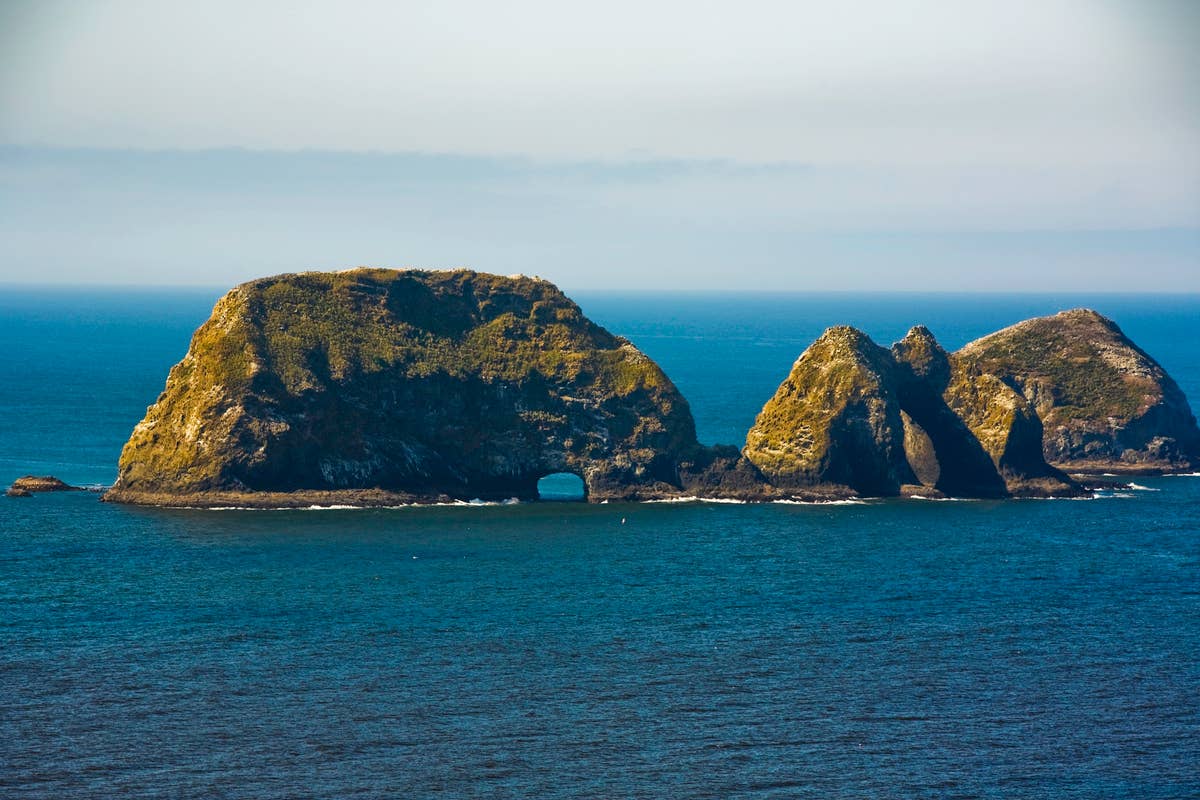
Image via Getty Images/Bob Stefko
If looking for something a little closer to Portland, Three Arch Rocks is home to the largest breeding colony of Tufted Puffins in Oregon. A trip to Three Arch Rocks National Wildlife Refuge is sure to be a treat for any lovers of the Pacific Northwest’s coastal wildlife.
Not only is it one of the top places in Oregon to spot nesting puffins over the summer, but it is also the only pupping site on the North Oregon coast for the federally-threatened Steller sea lion, one of two sea lion species native to Oregon. Incidentally, the Steller sea lion’s pupping season, which runs from mid-May to mid-July, coincides with the first half of the Tufted Puffin’s nesting season, so right now is the perfect time of year for a visit!
When Do Puffins Arrive on the Oregon Coast?
For a large part of the year, Tufted Puffins live far out at sea across the North Pacific Ocean (in fact, they can be found as far eastward as Japan). However, from right now through August, Tufted Puffins are making their way back to coastal islands along the Oregon coastline to create their nests and raise their young until they are strong enough to join them out at sea. Therefore, if you want to catch a glimpse of them, now’s the perfect time.
What’s the Best Time of Day to See Puffins in Oregon?
These birds don’t follow a predictable shoreline schedule, which is part of what makes spotting them such a rewarding experience. So when’s the best time to see puffins in Oregon? Throughout the day during the breeding season, they move between offshore feeding areas and nesting sites on rocky cliffs and sea stacks. However, early morning and late afternoon often offer the most consistent viewing opportunities, when bird activity around colonies tends to increase and lighting conditions make movement easier to spot from shore.
For visitors hoping to increase their chances, choosing calm, clear days can make distant movement easier to detect against the waves.
What Do Puffins Eat and Why Do They Come to Oregon?
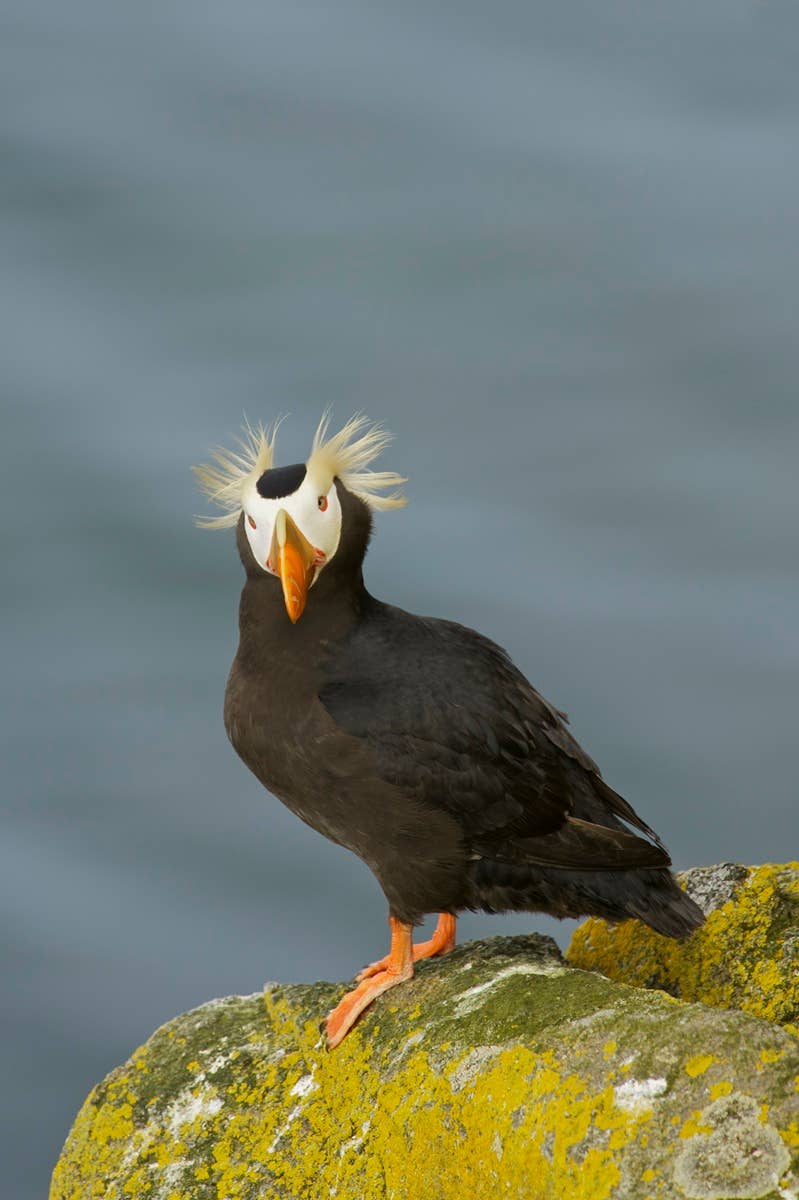
Tufted Puffins return to the Oregon Coast each summer.Getty Images Enrique Aguirre Aves
The presence of puffins along the Oregon Coast is closely tied to the health of the surrounding ocean ecosystem.
Oregon’s offshore waters provide an especially productive feeding environment thanks to cold currents that bring nutrients to the surface, supporting large fish populations. After all, Tufted Puffins rely on small schooling fish such as sand lance, anchovies and herring, which they catch by diving underwater and carry multiple fish back to feed both themselves and their chicks during the nesting season.
Combined with nearby rocky islands that offer protected nesting sites, the region creates an ideal seasonal habitat for breeding puffins and is what brings them back each year. It’s also why Oregon remains one of the most important puffin-viewing regions on the West Coast.
Tips for Spotting Puffins in Oregon
At one point, the Tufted Puffin’s distribution in North America stretched from northern California to British Columbia and the Aleutian Islands of Alaska. However, starting in the 1990s, the North American Tufted Puffin population plummeted in numbers, and now only a few thousand visit the Pacific Northwest every summer, including only a little over 500 puffins in Oregon. If you want the best odds at spotting these rare birds in Oregon, there are a few things you should keep in mind.
Puffins are easiest to spot when you know what to look for—and where to focus your attention. Bring binoculars and scan rocky cliffs and offshore waters, especially during calm mornings or late evenings when the sea is quieter. Watch for quick, low flights over the water or brief pops of movement near the surface as they dive for fish. Patience pays off, since puffins often appear suddenly and disappear just as quickly.
Why Puffin Sightings in Oregon is Special
Puffin sightings along the Oregon Coast are special because they’re both seasonal and fleeting. These seabirds spend most of their lives far offshore, only returning briefly to coastal nesting areas. That short window makes each sighting feel rare, especially when you catch them diving, flying, or gathering near rocky shorelines. Their bright beaks and energetic behavior make even a quick glimpse feel memorable.
Sources:

CURRY COUNTY, Ore. (KPTV) – A Texas man wanted for child sex crimes was arrested in Curry County on Tuesday afternoon.
The Curry County Sheriff’s Office says Kenneth Leatherwood of Bastrop, Texas, was arrested with the help of Oregon State Police and U.S. Marshals just after 12:30 p.m.
Leatherwood, who is accused of sex-related crimes involving a child in Texas, was reportedly found camping in a heavy wooded area near Lucas Lodge in Agness.
Investigators say Leatherwood has been on the run from Curry County law enforcement since June 16 after reports that he had been seen with a stolen car in the Agness area.
Leatherwood was also believed to have stolen weapons with him.
His dog was also found and returned to the suspect’s family in good shape, according to the sheriff’s office.
Copyright 2026 KPTV-KPDX. All rights reserved.
-

 San Francisco, CA4 minutes ago
No tolerance for hate or crime at SF Pride this weekend, officials say
-

 Dallas, TX9 minutes ago
Alanna Smith injury update: Dallas Wings player in concussion protocol
-

 Boston, MA19 minutes ago
Boy, 13, hospitalized after being found unresponsive in swimming pool at Beverly home
-

 Denver, CO24 minutes ago
Denver Nuggets draft Trevon Brazile in the second round of the NBA Draft – Denver Stiffs
-

 Seattle, WA31 minutes ago
Council eyes street barricades in fight against violence, sex trafficking in north Seattle
-

 San Diego, CA34 minutes ago
What Travon Garrison brings to San Diego State’s 2027 recruiting class
-

 Milwaukee, WI39 minutes ago
Cincinnati Reds Fall to Milwaukee Brewers, Get Swept at Home for First Time Since 2024
-

 Atlanta, GA46 minutes ago
Grading The Atlanta Hawks Selection of North Carolina C Henri Veesaar At Pick No. 52

