Oregon
No. 1-ranked OT Jordan Seaton announces transfer destination


It was a long and drawn-out transfer portal process for former Colorado Buffaloes OT Jordan Seaton, but after the extended recruitment, the No. 1-rated pass-blocker has finally made his decision.
On Friday night, Seaton announced his transfer to the LSU Tigers, choosing them over the Oregon Ducks.
Seaton will be a huge pick up for LSU, acting as the third top-5 ranked transfer that Lane Kiffin has landed since taking over in Baton Rouge.
The Ducks were among the leaders to land Seaton out of the portal, but ultimately, he chose to go elsewhere. After the 2025 season, Oregon will have to replace both offensive tackles, with Isaiah World and Alex Harkey out of eligibility. They are expected to call on the likes of Fox Crader and Gernorris Wilson at the positions, though they also added Yale transfer Michael Bennett via the transfer portal.
After spending the weekend in Baton Rouge with Lane Kiffin, Seaton cancelled his reported visit to Eugene, with Dan Lanning and A’lique Terry flying out to Atlanta to see him for an in-home visit. There was some buzz that this could have swung the recruitment, but in the end, it wasn’t enough to land Seaton.
Contact/Follow @Ducks_Wire on X (formerly Twitter) and like our page on Facebook to follow ongoing coverage of Oregon Ducks news, notes, and opinions.



F-15C Eagle flies in honor of the outgoing commander’s fini flight at Portland Air National Guard Base, Portland, Ore., on Dec. 6, 2024. The outgoing commander, Col. Michael B. Kosderka, has served the Oregon Air National Guard for twenty-four years of service. (U.S. Air National Guard Photo by Staff Sgt. Nichole Sanchez)

Oregon lawmakers have a new roadmap for tackling racism as a public health issue, and it’s packed with more than 100 recommendations for the 2027 legislative session.
According to KGW8, the Oregon Advocacy Commissions Office released the four-year report this week, built on input from more than 200 Oregonians of color and developed alongside the Oregon Health Authority. It digs into how Black, Indigenous, and other communities of color face unequal access to stable jobs, education, health care, and housing — the everyday conditions that shape locals’ lives.
“This is an opportunity for state government to earn trust with communities of color who have been historically excluded,” said executive director of the Oregon Advocacy Commissions Office, Jeff Selby, per the outlet. “The report process is a model for community engagement, as we all work together toward meaningful outcomes in community.”
State Rep. Travis Nelson said the findings have already shaped legislation, with several bills signed into law over the past two sessions covering topics like culturally specific health services and school staffing diversity. One concrete example: After residents flagged that Spanish-speaking applicants were passing the DMV’s written driving test at a rate of roughly 21%, versus 51% for English speakers, organizers connected the DMV with community groups to address the gap.
The report dates back to 2021, when Oregon lawmakers formally declared racism a public health crisis. “Racism in Oregon has left a legacy of trauma from one generation to the next, impacting Oregon tribes, Black and indigenous communities and people of color through a cumulative effect,” a section of the declaration reads.
A separate report from the Commonwealth Fund found Oregon has more severe racial and ethnic health disparities than its neighbors in the West, with Native American, Black, and Hispanic residents lagging behind white and Asian American residents on access, quality, and outcomes. Researchers warned that federal changes to Medicaid and the Affordable Care Act since 2025 could make those gaps worse, not better.
The Oregon Advocacy Commissions Office says the goal now is turning research into real policy before lawmakers reconvene — and building trust with communities that have historically been left out of the process.
The full report can be seen here.

PORTLAND, Ore. (KOIN) — A former Oregon corrections officer received a lifetime hunting ban on Wednesday after pleading guilty to several poaching-related charges.
Christopher Mason, 49, of Umatilla, was sentenced in two separate court cases to 24 months of probation and 300 hours of community service. He was also fined over $114,000 and was required to forfeit his firearms.
Oregon State Police said they began investigating Mason in 2024 after receiving information that he had been poaching big game animals.
“In February 2025, OSP served a search warrant, and multiple big game animals and firearms were seized as evidence. Sixty-seven criminal charges were referred for prosecution,” officials said. “The charges spanned multiple counties.”
Mason pleaded guilty to four counts of unlawful take of buck deer and three counts of unlawful take of black bear on June 18. In a separate case on June 26, he pleaded guilty to unlawful possession of a short-barreled rifle, unlawful possession of a silencer, unlawful possession of multiple wildlife and unlawful take of mule deer.
“This is another example of serial poaching which rises to the level of felony conduct based solely on the repeated poaching conduct and impact of one individual on Oregon’s game mammals,” prosecutor Jay Hall said. “The conduct across the several counties amounts to one of the highest damage amounts done to Oregon wildlife by any singular actor.”
-

 Technology5 minutes ago
New sodium-ion battery could reshape grid storage
-
 Business12 minutes ago
Home insurer surcharges for wildfires is legal, judge rules
-
 Entertainment15 minutes ago
California designates Bruce Lee Day, first such honor for a Chinese American
-
 Lifestyle20 minutes ago
Ahead of America’s 250th birthday, a photographer finds unity in tarnished state quarters
-
 Politics27 minutes ago
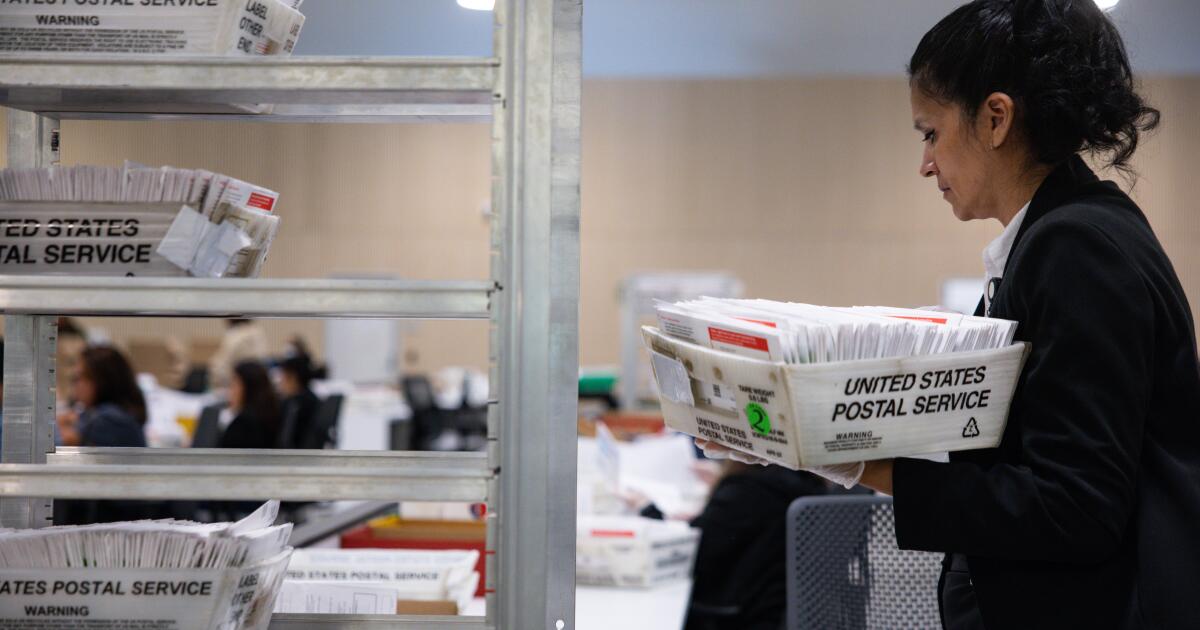
Facing setbacks and resistance, Trump presses bid to reshape elections on multiple fronts
-
 Sports35 minutes ago
Dodgers overcome Roki Sasaki’s poor performance to rout Padres
-

 World45 minutes ago
Watch: Following the money—the EPPO investigation into defunct far-right EU group
-

 News1 hour ago
Bessent on Trump’s crypto earnings: “I don’t think there’s an appearance problem”

