Oregon
More than 1 million acres burned across Oregon, firefighters making some progress


Wildfires across Oregon have so far burned over one million acres. Although milder weather has brought some relief to firefighters, officials say they still have a long way to go.
Firefighters battle the Chalk Fire in this supplied photo from Sunday, July 28, 2024.
Courtesy of U.S. Forest Service via InciWeb
As of Tuesday, there have been over 100 active fires reported across the state, 36 of them are large fires burning 100 acres or more. There are also five “megafires” currently burning over 100,000 acres.
Jessica Neujahr, a public affairs officer with the Oregon Department of Forestry, says the recent dip in temperature has provided some relief and allowed firefighters, especially in northern Oregon, to be proactive.
“We’ve had a little bit of rain and that allowed them to boost up some containment on some of those fires,” said Neujahr.
Firefighters battling the Durkee Fire, which is the state’s largest wildfire, have it 51% contained as of Tuesday. New mapping shows the fire has burned more than 290,000 acres. The Lone Rock Fire in Morrow County also saw an increase in its containment lines as officials reported was 77% contained Tuesday.
Despite the recent cool weather, Neujahr says crews still have a long way to go as wildfire season typically peaks in August. Temperatures are expected to rise, and dry conditions are likely to return by the end of the week, she said.
According to Neujahr, this wildfire season has seen a significant rise in human-caused wildfires. Statewide, there have been 567 human-caused fires which have burned over 170-thousand acres. About 357 fires were caused by lightning strikes.

A comfort dog visits the Oakridge Fires incident command post recently in this supplied photo.
Courtesy of U.S. Forest Service via InciWeb
“The best thing that people can do right now is to check their local fire restrictions to make sure that they’re not bringing a potential fire hazard onto the landscape,” said Neujahr.
Being extra careful and mindful of potential fire starters like avoiding driving over dry grass will help prevent new fires, Neujahr added.
Oregon, along with most of the Pacific Northwest region, remains on a national preparedness level five status, meaning the state has the potential to exhaust most, if not all, its firefighting resources.
Neujahr says officials have been pulling any available resources granted to them through the state’s emergency declaration ordered by Gov. Tina Kotek earlier this month.
This week, ODF pulled additional resources from the Oregon National Guard including ordering four hand crews and two medevac helicopters.
Type a location, such as Oregon or Washington, in the search box at the top right of the graphic below to see the latest on fires in the region:
“It is good for us that we’ll get more resources, “said Neujahr. “But it doesn’t change the fact that resources are still strained across the board.”
ODF and other firefighting agency partners have pulled nearly 10,000 firefighters from more than 20 states to help crews battle wildfires in Oregon.
“We’re really trying to protect our firefighters and our incident management teams,” Neujahr said. “This is very exhaustive work and they’re working immensely hard at trying to keep these fires as small as possible … We’re working towards longevity.”
Get the latest updates at the State of Oregon Fires and Hotspots Dashboard.
Durkee Fire
Location: Baker County
Size: 293,390 acres
Containment: 51%
Injuries: 3
Residences Destroyed: 4
Other structures Destroyed: 19
Falls Fire
Location: Harney County
Size: 142,307 acres
Containment: 69%
Injuries: 11
Fatalities: 1
Residences Destroyed: 13
Other structures Destroyed: 15
Lone Rock Fire
Location: Gilliam County
Size: 137,214 acres
Containment: 80%
Injuries: 7
Residences Destroyed: 3
Other Structures Destroyed: 90
Cow Valley Fire
Location: Malheur County
Size: 133,490 acres
Containment: 99%
Injuries: 1
Residences Destroyed: 2
Other structures Destroyed: 5
Monkey Creek Fire
Location: Umatilla County
Size: 110,414 acres
Containment: 10%
Injuries: 5
Residences Destroyed: 4
Other structures Destroyed: 6



DESCHUTES COUNTY, Ore. — Oregon State Police are asking for additional witnesses to come forward after a three-vehicle crash on Highway 20E in Deschutes County left two people seriously injured.
Troopers responded at 12:47 p.m. Friday, July 10, to the crash near milepost 41. A preliminary investigation found a westbound 2013 black Chevrolet Silverado pickup truck pulling a single-axle utility trailer attempted to pass a black Dodge 4500 towing a trailer. Police said an eastbound Hyundai Elantra tried to avoid a collision with the Chevrolet, lost control in the gravel on the eastbound shoulder, veered into the westbound lane and collided with the trailer pulled by the Dodge 4500.
The driver and passenger of the Hyundai were flown by air medic to a local hospital with serious injuries.
The crash affected traffic for about five hours. The driver of the Chevrolet was cited for careless driving and unsafe passing.
OSP is asking anyone who may have seen the Chevrolet driving westbound on Highway 20 at the moment of, or prior to, the collision to contact the OSP Northern Command Center dispatch at 800-442-0776 or *OSP (*677) from a mobile phone. Callers should reference case number SP26-255130.

The Oregon Supreme Court on Thursday declined to review the Oregon Court of Appeals’ decision upholding Multnomah County’s ban on flavored tobacco and nicotine products.
Legal challenges have so far delayed the ordinance from taking effect since it was passed four years ago. It was not immediately clear when the ban would go into effect.
“Flavors are one of Big Tobacco’s biggest tricks to hook the next generation of Oregonians on their deadly products,” Christina Bodamer, who leads the Western states region of the American Heart Association, said following the court’s decision.
The Board of County Commissioners originally approved the ordinance banning flavored tobacco and nicotine products in December 2022 to take effect Jan. 1, 2024. But the ordinance hit a roadblock: a court challenge by the 21+ Tobacco and Vapor Retail Association of Oregon, e-cigarette retailer No Moke Daddy LLC, and vape shop owner Paul Bates.
It has been working its way through the state court system since. The Multnomah County Circuit Court upheld the ban in September 2023. The state Court of Appeals continued the pause on implementation February 2024, before upholding the ban in an April 2025 decision. The Supreme Court’s denial of review marks the end of the saga.
The Supreme Court rejected a challenge to a similar restriction in Washington County in May. That now sets up both ordinances to go into effect, which will together ban flavored tobacco and nicotine for one-third of Oregonians. A similar ban failed in the Oregon Legislature in 2025, dying in committee.
Tobacco use is the top cause of preventable death and disease in Oregon, according to the Oregon Health Authority. More than 8,000 Oregonians die from tobacco use each year.
Supporters of the ban argue that flavored tobacco acts as a gateway for underage use. According to Flavors Hook Oregon Kids, a coalition of more than 60 organizations that support the ban, 81% of Oregonian kids who’ve used tobacco started with flavored products. And flavored products are much more popular among kids and young adults than older adults, OHA says.
Richard Burke, executive director of the 21+ Tobacco and Vapor Retail Association of Oregon, tells WW the group is disappointed that the Supreme Court did not take up the case. He argues that banning flavored tobacco “has effectively granted a monopoly to the black market,” where flavored products are often laced with more dangerous substances.
“We agree with the goal of keeping these products out of the hands of minors,” Burke says. “But this is an overcorrection that will result in unintended consequences as has been shown by attempts to institute flavor bans in other parts of the country.”
Willamette Week’s reporting has real-life impact that changes laws, forces action by civic leaders, and drives compromised politicians from public office.
Support WW.

Oregon Attorney General Dan Rayfield and attorneys general from 11 other states filed a lawsuit Monday seeking to block Paramount Skydance Corp.’s proposed $110 billion acquisition of Warner Bros. Discovery, arguing the merger would reduce competition and ultimately raise costs for consumers.
The lawsuit, filed in the U.S. District Court for the Northern District of California, alleges the merger violates the Clayton Act by substantially lessening competition in the film and television industries.
California, Arizona, Colorado, Connecticut, Massachusetts, Minnesota, Nevada, New Jersey, New Mexico, New York and Washington are the other states involved in the lawsuit.
The coalition said it is prepared to seek a temporary restraining order if the companies do not pause the deal as the case moves forward.
“If this massive corporate merger is allowed to go through, Oregonians will pay the price – through higher bills, fewer jobs, less choice at the box office, and fewer editorial voices,” Rayfield said in a press release on Monday. “Despite the federal regulators rubber-stamping this bad deal, we’re stepping up to protect families, small businesses, and Oregon’s film industry.”
READ ALSO | Warner Bros shareholders back $81B Paramount takeover in preliminary vote
According to the lawsuit, the combined company would control nearly one-third of U.S. theatrical film distribution and basic cable programming. The states argue the merger would eliminate competition between two of Hollywood’s five major film distributors and two of the nation’s five largest basic cable companies.
The complaint alleges the merger would reduce competition in theatrical film distribution, blockbuster movie releases and licensing basic cable television channels.
The filing follows Oregon’s investigation into the proposed merger. In early July, Rayfield asked a Multnomah County judge to compel Paramount to produce records the state said it had sought since June, including documents related to the company’s lobbying of the White House and U.S. Department of Justice.
“Paramount has already shown that they think they’re above the law by refusing to comply with Oregon’s investigation,” Rayfield said. “This litigation is the next step to protect Oregonians before irreparable harm is done.”
The U.S. Justice Department isn’t challenging the deal — and instead released an unusually lengthy statement in support, maintaining a Paramount-Warner combo would “increase competition across the media and entertainment ecosystem, with benefits for American consumers and workers,” according to a report from the Associated Press.
In a statement sent out on Monday, Paramount said the lawsuit “distorts settled antitrust law” and maintained its merger would create a “stronger competitor against dominant streaming and technology platforms who have harmed the market for theatrical exhibition and jobs in the entertainment industry.” Paramount went on to say it will “vigorously defend” the transaction.
-
 Entertainment4 minutes ago
‘Hail Satan? Not me.’ Charley Crockett fires satanic duo Twin Temple, so Jack White hires them
-
 Lifestyle10 minutes ago
It’s time for the night trip to the beach — the grunion are running
-
 Politics16 minutes ago
After lawsuit, ICE pauses construction of Bay Area detention facility
-
 Science22 minutes ago
Anger grows in Boyle Heights as warehouse fire leaves stench, flies and vermin in its wake
-
 Sports28 minutes ago
Spain delivers surprise rout of France, clinches berth into World Cup final
-

 World40 minutes ago
US says latest Iran strike wave over, IRGC claims damage to US Naval HQ
-
 News1 hour ago
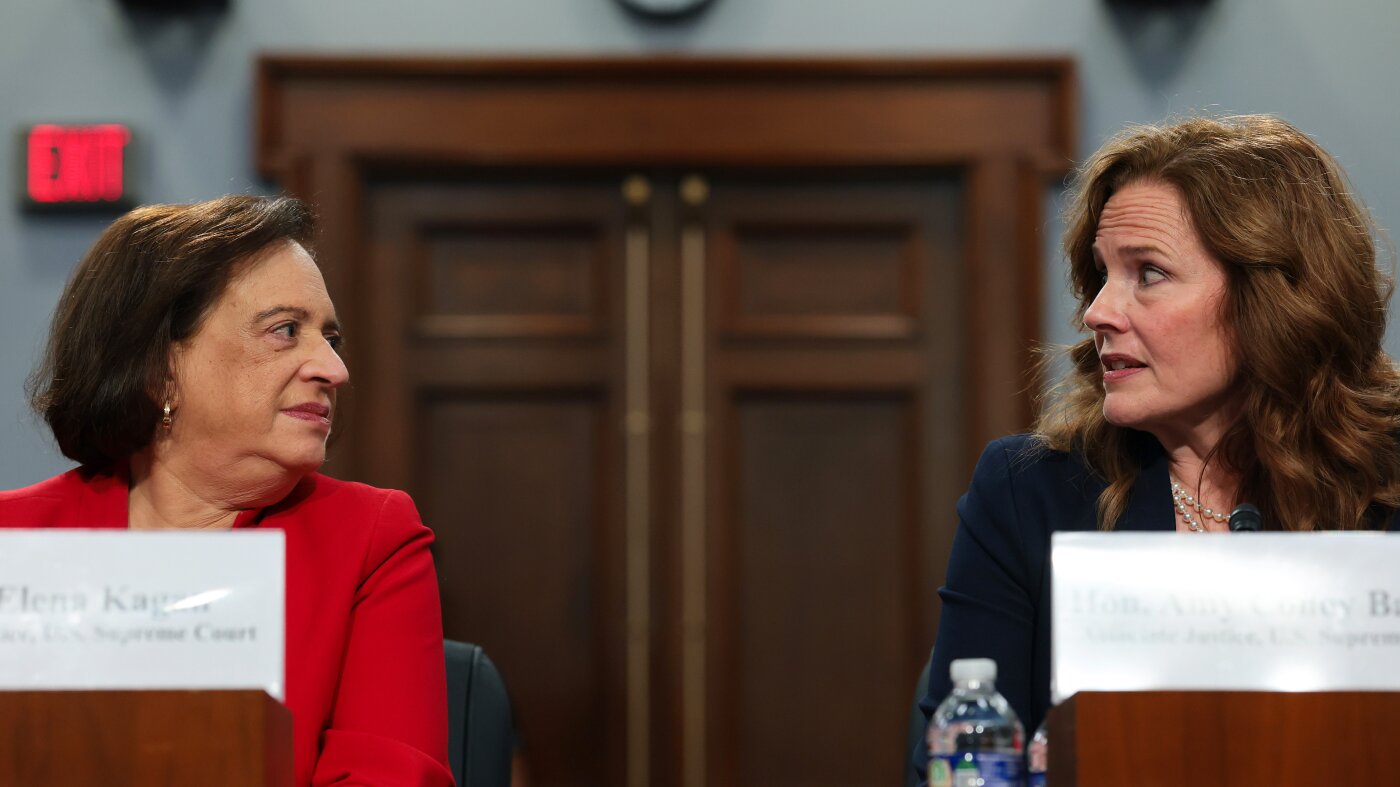
Supreme Court Justices give chilling accounts of threats to their safety
-

 Los Angeles, Ca3 hours ago
Stabbing at Chino Hills liquor store ends in attempted murder arrest

