Oregon
Could Quarterback Dante Moore Be Oregon Ducks’ Next Bo Nix?


Losing a starting quarterback is likely a death sentence for any college football team. For example, last season’s Florida State Seminoles’ season quickly imploded after quarterback Jordan Travis suffered a season-ending leg injury. The Seminoles went from National Title hopeful to College Football Playoff rejectee in one play, culminating with a 63-3 loss to Georgia in the Orange Bowl.
While the Oregon Ducks would love to keep the Heisman frontrunner Dillon Gabriel upright all season… Here is a case that Oregon will be in great hands if they have to test the depth of the quarterback room. Out of all the magic Oregon Ducks coach Dan Lanning worked this offseason in the portal and on the recruiting trail, signing transfer quarterback Dante Moore may have been his biggest get.
Moore was a heralded five-star recruit from Detroit, Michigan. The No. 4 overall recruit from 247Sports 2023 recruiting class was committed to Oregon up until the very end. UCLA pried Moore away, presumably with playing time promises that Oregon couldn’t offer to him as a freshman.
Moore wasn’t the full-time starter, but appeared in nine games for the Bruins in 2023. His freshman struggles forced then UCLA coach Chip Kelly to play musical chairs at the quarterback position throughout the season. Moore finished the year with 1,610 passing yards, 11 touchdowns, and nine interceptions.
Following his up-and-down freshman year, Moore decided to enter the transfer portal. Even after sixth-year quarterback Dillon Gabriel joined Oregon, Moore did what he wouldn’t do out of high school: commit to the Ducks despite staring at a backup role.
Did Moore’s struggles in Westwood make him realize he needed a year to learn and develop? Did Oregon offer him enough NIL money to embrace his new role? It’s unclear why the quarterback took his talents to Eugene this time around. What is clear, however, is that the Ducks will be in good hands if he’s needed this season.
Oregon may have its best backup quarterback ever in Moore. Had he committed to the Ducks out of high school, he would have been one of the highest-rated recruits in school history. I don’t think that freshman-year struggles should change the narrative on him. Playing the position as a freshman, in a talented Pac-12 Conference, often with inferior talent surrounding him, is an extreme challenge for anyone.
Now, Moore gets a fresh start in Eugene and can learn from a sixth-year quarterback in Dillon Gabriel and his offensive coordinator / quarterbacks coach, Will Stein. He can do it all without the urgency of starting day one.
“Overall, going through fall camp, I’m way more comfortable,” said Moore, “Checking calls, checking protections — I’m just feeling more comfortable from what Coach Stein has taught us.”
“He’s still learning and growing in our system,” Stein said.”But he’s at a point now where I feel really good about his progress.”
Former Oregon Ducks quarterback Bo Nix began his career in similar fashion as Moore. Like Moore, Nix was a 5-star recruit thrust into action right away against elite competition and faced some struggles at Auburn. Nix blossomed as a Duck to become a Heisman Trophy finalist and NFL first round draft pick. Moore certainly has enough talent to duplicate that level of success.
Oregon may have secured its long-term quarterback of the future and the most talented backup quarterback it has ever had in Moore.
MORE: Oregon Ducks vs. Ohio State Game Time Released, Prime Time Big Ten Matchup
MORE: Bill Belichick: Rookie Bo Nix And Denver Broncos Coach Sean Payton Look Like Perfect Fit
MORE: Marcus Mariota Sharing ‘Gold’ With Washington Rookie Quarterback Jayden Daniels
MORE: Former College Football Coach Regrets Letting Dan Lanning Take New Job
MORE: Chip Kelly’s Ohio State Offense Radically Different Than His Oregon Ducks’ Blur Offense
MORE: Former Oregon Ducks Quarterback Signs Deal With Buffalo Bills


PORTLAND, Ore. (KOIN) — The Oregon Department of Human Services is asking for help finding a 2-year-old boy who is believed to be in danger.
Armani Andrews disappeared on June 17 and is thought to be with someone in the Portland area, officials said.
He’s about two feet tall with brown hair and brown eyes and African American/mixed race, ODHS said.
-

Armani Andrews (file, courtesy Oregon Department of Human Services). -
Armani Andrews (file, courtesy Oregon Department of Human Services).


Locations around Portland that the child may have frequented include the Rose Haven shelter on Northwest Glisan Street, the Multnomah County Central Library on Southwest 10th Avenue and Southeast Portland between 82nd and 103rd avenues.
People who have any information about Andrews’ whereabouts are asked to call 911.

Every year, there are always a few recruiting races that are anything but normal. Twists and turns should be expected on the recruiting trail, but you can still always count on a surprise or two.
The Oregon Ducks have already landed four commitments along the offensive line in the 2027 recruiting cycle, most recently scoring three-star Lex Mailangi. The Ducks are still pushing for one more, however, and it’s the biggest of them all.
Five-star offensive lineman Ismael Camara has taken several visits to Eugene, including one earlier in the spring. However, the Texas star canceled his tour of official visits to finish high school early and give Gilmer High School his best effort on the field in the fall.
Those plans changed quickly when he opted to take unofficial visits to SMU and Texas in June. After once appearing to push his recruitment to the fall and commit closer to early signing day, it’s clear that Camara is now open for business, and he could be moving quickly toward a decision.
When Camara left Eugene in the spring, the Ducks were perceived as a favorite in the race. However, after spending time away and connecting with programs in his home state of Texas, Rivals’ Sam Spiegelman believes Texas is now in the lead, and was told by one of Camara’s family members that a commitment could be coming soon.
While the Longhorns are in charge, SMU, LSU, Texas A&M and Oregon all still remain involved. While he has been able to tour the Texas programs this month, Camara has remained in touch with the Ducks over FaceTime.
“Just fantastic coaches and options all around,” Camara’s guardian, Todd Robison, told Rivals. “We are also in touch regularly with Tennessee, LSU, A&M, and Alabama. He also has had very well-attended FaceTime calls with the entire staff at Oregon. He feels the love for sure.”
The Ducks still appear to be in good standing with Camara, but the inability to get him on campus this month is a big setback. Even if Camara does commit over the summer, the Ducks will likely push hard to get him back to Eugene in the fall for another visit. Don’t expect Oregon to give up on this race until pen hits paper on signing day.
Contact/Follow @Ducks_Wire on X (formerly Twitter) and like our page on Facebook to follow ongoing coverage of Oregon Ducks news, notes, and opinions.

Editor’s note: In 2016, WW expanded its Cheap Eats guide to include a road trip. We identified nine diners, food trucks and one boat worth a pit stop when journeying through Oregon. Since then, a few things have changed: Two of our picks have closed, as noted below, and you don’t need to travel to Medford to find an In-N-Out Burger. But maybe you should!
This list first appeared in the March 23, 1016, edition of WW.
TAQUERIA GUERRERO
508 E 1ST ST., NEWBERG.
Half tienda, half taco spot, Guerrero serves its street tacos and huge mojado burrito ($8.95) with handmade tortillas that shame almost anything in Portland.
JOE’S DONUT SHOP
39230 PIONEER BLVD., SANDY.
This 40-year-old candy-striped dough den offers a ridiculously rich cronut—that’s a fried croissant—fast service, and always-fresh doughnuts. It’s arguably the best doughnut shop in the state.
THE DINER
2580 SE STRATUS AVE., MCMINNVILLE.
The Diner makes one of the state’s greatest sandwiches—a fried-chicken club in which each layer is seasoned and housemade, and the middle slice of bread is replaced by the satisfying crunch of fried chicken.
EASTWIND DRIVE IN
395 WANAPA ST., CASCADE LOCKS.
The Eastwind is where Cheryl Strayed first tasted civilization after ending her long, long walk. The soft-serve ice cream is good enough for you, too, motherfucker.
BOWPICKER FISH & CHIPS
1634 DUANE ST., ASTORIA.
At this 28-foot converted gillnet boat, there are always 12 old men waiting in line for beautifully fresh-caught, hand-battered albacore tuna served with a raft of fries. Join them.
LOCAL BOYZ HAWAIIAN CAFE
1425 NW MONROE AVE., CORVALLIS.
A sweet shoyu chicken plate lunch will fill you up until dinner tomorrow. But broke high-school kids will buy rice for $1.50 just so they can douse it in the magical ginger-garlic-shoyu sauce.
IN-N-OUT
1970 CRATER LAKE HIGHWAY, MEDFORD.
With an address that already sounds like a road trip, the magnificent double-double has punctured the state line. Even from as far away as Portland, it beckons.
NOW CLOSED:
FAT FREDDY’S
6320 PACIFIC AVE., PACIFIC CITY.
After a brief hiatus best forgotten, Pacific City’s beachfront home of towering burgers and equally towering Tillamook ice-cream milkshakes returned two years ago to the sound of hardening arteries.
CORNBREAD CAFE
1290 W 7TH AVE., EUGENE.
It’s arguably Eugene’s best restaurant, and it’s also a perfect fit for the town—a vegan version of an old-school diner, complete with barbecued seitan and outrageously good greens.
Willamette Week’s reporting has real-life impact that changes laws, forces action by civic leaders, and drives compromised politicians from public office.
Support WW.
-
 Lifestyle37 minutes ago
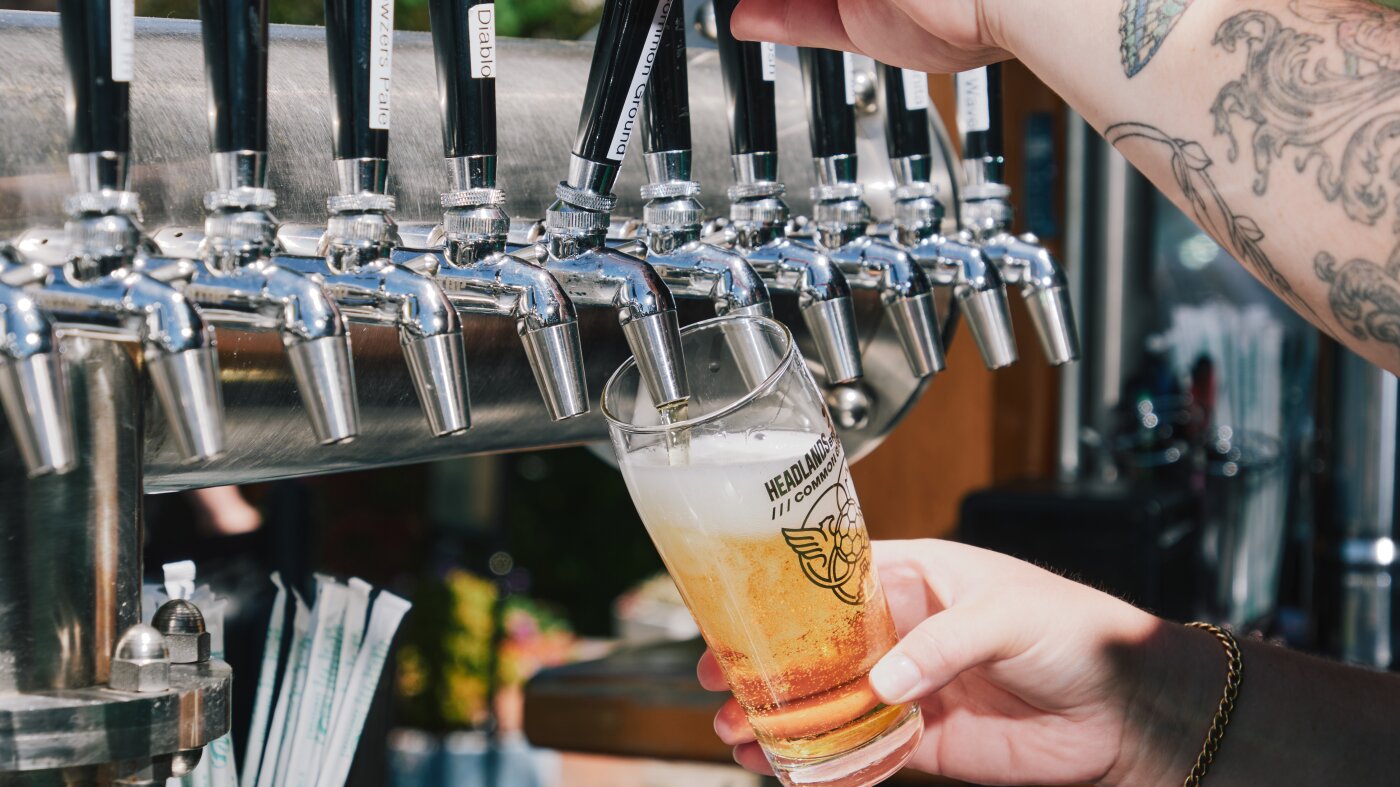
3 World Cup rivals find ‘Common Ground’ in a cross-border beer
-

 Technology49 minutes ago
The Flipper Zero creators’ Busy Bar productivity display will go on sale next month
-

 World52 minutes ago
Families watch in horror as skydiving plane crashes in France, killing all 11 aboard
-

 Politics57 minutes ago
DOJ launches grand jury probe into Marxist mogul Neville Roy Singham’s funding of leftist groups
-

 Health1 hour ago
America’s lifespan has doubled since 1776 — experts reveal what changed
-

 Sports1 hour ago
Thekla embarrasses Stardom’s Starlight Kid after retaining AEW World Women’s Championship at Forbidden Door
-

 Technology1 hour ago
AI may spot deadly heart risk in a routine ECG
-
 Business1 hour ago
SpaceX IPO sparks race for luxury housing in Southern California

