New Mexico
Border wall blasting begins on New Mexico’s Mount Cristo Rey, cherished by Catholics


A stretch of of the US-Mexico border near Sunland Park, New Mexico, is being cleared to make way for an extension of Trump’s border wall.Gaby Velasquez/Puente News Collaborative
This story was originally published by Inside Climate News in partnership with Puente News Collaborative and is reproduced here as part of the Climate Desk collaboration.
On a Saturday morning in March, high school students, mountain bikers and soldiers from a nearby Army base climbed the winding path up Mount Cristo Rey. From the summit, they could see most of El Paso, the sprawling city that dominates a stretch of desert where New Mexico, Texas and the Mexican state of Chihuahua meet.
They paused to trace the line of the Rio Grande, where it divides Mexico and the United States, and then touched the smooth tiles lining the base of the Christ the King statue, a cherished monument that gives the mountain its name.
Two days later, on a Monday morning, explosions rattled the same site. Contractors were blasting the south side of Mount Cristo Rey to prepare the terrain for construction of the border wall President Donald Trump has long promised would run from San Diego in California to Brownsville in Texas.
After the explosions, US Customs and Border Protection (CBP) uploaded a video of the blasts to social media. One earlier post boasted the mountain was getting a “face lift” to “secure a historically challenging terrain.”
The sarcasm didn’t sit well with thousands of residents from both sides of the border, who looked forward to the annual Good Friday pilgrimage to the mountain summit. This year, they would be walking above an active construction zone.
Walls have long separated El Paso and Sunland Park, New Mexico, from the Mexican metropolis of Ciudad Juárez. But building a wall on the rugged slopes of Mount Cristo Rey was long considered impractical. Eventually, the mountain’s slopes became the only significant gap without an imposing border fence in the binational metro area of more than 2.5 million people.

In recent years, Sunland Park and the area around Mount Cristo Rey saw high numbers of unauthorized crossings. Migrant deaths in the nearby desert soared. In lieu of a wall, Border Patrol agents blanketed the mountain and stationed themselves, along with surveillance equipment, on nearby roads.
Border crossings in the El Paso sector slowed during the final year of the Biden administration and have plummeted since Trump returned to office. The second Trump administration is intent on sealing every border gap.
SLSCO, a Texas company based in Galveston, has a $95 million contract to build a 1.3-mile wall on Mount Cristo Rey and two other barriers near El Paso. CBP waived environmental and historical preservation laws in June 2025, clearing the way for a border wall on the mountain. Over the objections of the local Catholic diocese, which owns most of the mountain, work began at the site in January.
Robert Ardovino, a business owner in Sunland Park, is no stranger to the traffic of Border Patrol vehicles and undocumented migrants crossing into New Mexico. But he was appalled to see the side of the mountain being shaved off. “Electronics would have made more sense than destroying a whole mountain,” Ardovino said on a recent afternoon. “But they’re doing what they’re doing.”
He predicted that when the Good Friday pilgrims ascended the mountain, many would be shaking their heads at the destruction. “There is no accountability,” he said. “And the damage will be irreparable.”
“CBP has environmental monitors present during these activities to ensure construction best management practices are being followed and implemented by the construction contractor,” an agency spokesperson said.
An environmental summary report, completed in lieu of an environmental impact assessment, is not available to the public, the spokesperson said.
Mount Cristo Rey is where the land border between the US and Mexico ends and the Rio Grande becomes the dividing line. This point, for centuries called Paso del Norte—the northern pass—has been a crossroads for Indigenous peoples, Spanish colonizers and later settlers traveling west on the early transcontinental railroads.
Once the railroad reached El Paso in 1881, the city grew quickly. A brick company opened on the flanks of Mount Cristo Rey, and a quarry was carved into the mountainside. Later, a copper smelter rose in its shadow. Mexican American workers lived nearby in a company town called Smeltertown.
A priest at Smeltertown’s Catholic church first proposed building a statue on the mountaintop. The 29-foot limestone statue of Christ was dedicated in 1939. The mountain, previously known as Cerro de los Muleros, or Mule Driver’s Mountain, was renamed Mount Cristo Rey.
Smeltertown was demolished in the 1970s. But descendants of several families who lived there still volunteer with the Mount Cristo Rey Restoration Committee, which maintains the trail and monument. They keep a watchful eye on the thousands of people, the religious and the secular, who join the Good Friday walk.

During the first Trump administration, in 2019, a group called We Build the Wall, that included Steve Bannon, tapped private donations to build a half-mile wall on the eastern side of Mount Cristo Rey. Fisher Sand and Gravel, which has received billions of dollars in border wall construction contracts under the Trump administration, built this section of wall on private property. CBP cut a dirt road across the south side of the mountain.
Bannon later pleaded guilty to defrauding donors. Lights illuminating the wall, which separates Mexico from the United States and El Paso from New Mexico, were turned off when the builders’ bank accounts were frozen.
Border wall construction largely stopped during the Biden administration. But once Trump returned to office, Mount Cristo Rey became a priority. Then-Homeland Security Secretary Kristi Noem waived more than two dozen laws on June 3 to expedite construction of the wall across the mountain. The REAL ID Act of 2005 granted DHS the authority to “waive all legal requirements” necessary to expedite construction of border barriers. Among the laws waived were the National Environmental Policy Act and the National Historic Preservation Act.
Geologist Eric Kappus considers Mount Cristo Rey one of the premier sites anywhere for geology education.
CBP announced plans for a 30-foot-high barrier that would run along the south side of the mountain and loom over the Anapra neighborhood in Ciudad Juárez. Agency plans state the wall will consist of steel bollards spaced four inches apart. It will require drainage gates and access roads.
Funding for CBP’s El Paso Anapra 16-4 Wall Project, which includes Mount Cristo Rey, dates back to DHS 2020 border wall appropriations. Since then, the agency has received 224 written statements about the proposal. According to the summary, 211 comments opposed the wall.
Notably, the Roman Catholic Diocese of Las Cruces urged the agency to exclude Mount Cristo Rey from its barrier plans. In its comments, the diocese referred to the mountain as a place “where faith transcends borders.”
“A grant of entry onto land [the diocese] owns for CBP purposes, whether temporary or permanent, would deter those pilgrims and migrants from exercising their religion as they have done for almost one hundred years,” wrote the Diocese’s general counsel, Kathryn Brack Morrow. “A place of hope, faith, and communion would become a place of fear, exclusion and division.”
Morrow wrote that the Diocese had received multiple requests for access to its property from the Department of Justice, which were denied.
The trail to the summit has not been disturbed by construction. But last year, the area along the border in Sunland Park and at Mount Cristo Rey was designated a National Defense Area, part of the US Army’s Fort Huachuca. People who enter a National Defense Area can be charged with trespassing.
Contractors are blasting the mountain along a 60-mile strip of federal property known as the Roosevelt Reservation. The City of Sunland Park also owns property on the mountain. A city spokesperson said Sunland Park has no jurisdiction over the area where construction is occurring.
The construction company JOBE also owns property on the mountain and declined to comment.

To the untrained eye, Mount Cristo Rey, like many Chihuahuan Desert locales, can appear desolate. A local CBP spokesperson compared it to a “moonscape” in a local news interview. “It’s just rock and sand.”
But for geologists like Eric Kappus, Mount Cristo Rey is a “treasure.”
Kappus discovered a series of dinosaur footprints at Mount Cristo Rey in 2002 while he was a graduate student at the University of Texas at El Paso. The prints were formed between 80 and 100 million years ago when Iguanodons and theropods plodded through mud on the edge of what was then a vast sea.
Kappus said he spent thousands of hours exploring Mount Cristo Rey, looking for fossils and prints. After working as an exploratory geologist and teaching across the country, he still considers it one of the premier sites anywhere for geology education.
“I could teach 75 to 80 percent of an introductory geology class in the field at Mount Cristo Rey,” he said. “It’s like a giant chalkboard.”
“The border wall is quite disrespectful to a lot of work that’s been undertaken by numerous government agencies.”
The prints, preserved in sandstone, were exposed during excavation for the brick yard. The site was later donated to the non-profit INSIGHTS El Paso Science Center. The dinosaur tracks site is not threatened by border wall construction.
William Lukefahr, an INSIGHTS tour guide, led a group down a rocky trail to the dinosaur tracks on a warm March morning. He slowed down to look for plants and animals. He pointed out a Black-spined prickly pear cactus and a Mormon Tea shrub. Then he spotted a spider web encasing a cocoon-like structure made of debris—the home of a desert shrub spider. “This mountain is very unique,” he said. “But there hasn’t been a lot of scientific research done here.”
Other creatures commonly seen on Mount Cristo Rey include coyotes, canyon wrens, and the greater earless lizard. Scruffy sotol and creosote shrubs dot the mountainside. Lukefahr explained that Mount Cristo Rey creates a corridor connecting the mountains in Juárez with those on the western and northern flanks of El Paso.
In their public comments to CBP, more than 80 people expressed concern for Mount Cristo Rey’s prized environment. The agency’s summary statement, in response, explained that a biological survey yielded no federally listed threatened or endangered species. The survey deemed that the habitat has a “low to moderate” suitability for wildlife.
“CBP has also determined there is minimal impact to vegetation and behavioral patterns of wildlife since the project area is flanked by existing barrier and an active patrol road,” the agency wrote.
Ardovino, the local business owner, said that wildlife activity in Sunland Park diminished after Border Patrol was “unleashed” to drive across the desert and carve new roads.

Years ago, he said, there were 18 pairs of burrowing owls, a diminutive variety, on his property. That was until Border Patrol vehicles repeatedly disrupted their habitat. “They’re gone now,” he said. “Concern for the environment is last on [the CBP] list.”
Myles Traphagen coordinates the borderlands project of the Wildlands Network, a nonprofit advocacy group. He said building the border wall will counteract federal efforts to foster endangered species, including the Mexican gray wolf.
US and Mexican government biologists collaborate on wolf reintroduction, with pups from New Mexico transported to Northern Mexico to grow the population and increase genetic diversity. “The border wall is quite disrespectful to a lot of work that’s been undertaken by numerous government agencies,” he said.
In 2017, Traphagen tracked the movements of a Mexican gray wolf outfitted with a GPS collar. The wolf traveled north from Chihuahua into New Mexico, then followed the Rio Grande to Mount Cristo Rey, where it crossed back into Mexico.
He said the border wall will close off this wildlife crossing point.
Ardovino owns property less than a half mile from the blast site. He said his interactions with local Border Patrol agents have always been respectful, although he was not notified before the blasting began. The boom of an unexpected explosion signaled that construction was underway.
The neighborhood of Anapra in Juárez is just feet away from the blast site. Warning signs were posted in the neighborhood in January.
Morrow, the attorney for the Diocese, said she has yet to receive notification from federal agencies of the blasting. Neither has Ruben Escandon Jr., spokesperson for the Mount Cristo Rey Restoration Committee. “Hopefully,” blasting would not occur during the Good Friday walk, he said.

The CBP spokesperson said landowners would be notified, but that there are no landowners in the blast zone.
The Wildlands Network’s Traphagen said that contractors at Mount Cristo Rey are defying common blasting protocols. Blast impact goes well beyond the thin strip of land where construction is underway, he said, and nearby residents and landowners should be notified for safety.
Construction activities are so far limited to the government’s Roosevelt Reservation. But it is unlikely the wall can be built without access to the diocese’s property on the mountain. The Diocese’s attorney was adamant the church will not sell.
The CBP spokesperson said that if the agency is unable to purchase property for border wall construction through voluntary sales, the Department of Justice can use eminent domain.
In public comments, the diocese attorney said attempts to seize the land would violate religious freedom and the right to worship, protected by the First Amendment and the Religious Freedom Restoration Act.
For now, the diocese is holding on to its sacred space. On Good Friday, thousands of people would climb Mount Cristo Rey, as they have every year going back almost a century.
But blast by blast, border wall construction is coming for Mount Cristo Rey.


Enter your email and we’ll send a secure one-click link to sign in.
KRQE NEWS 13 is provided by Nexstar Media, Inc., and uses the My Nexstar sign-in, which works across our media network.
Learn more at nexstar.tv/privacy-policy.
KRQE NEWS 13 is provided by Nexstar Media, Inc., and uses the My Nexstar sign-in, which works across our media network.
Nexstar Media, Inc. is a leading, diversified media company that produces and distributes engaging local and national news, sports, and entertainment content across its television and digital platforms. The My Nexstar sign-in works across the Nexstar network—including The CW, NewsNation, The Hill, and more. Learn more at nexstar.tv/privacy-policy.
New Mexico
Think New Mexico Hosts Four 2026 Summer Leadership Interns To Assist In Researching And Developing Policy Proposals – Los Alamos Daily Post

Gathered for a luncheon Tuesday at La Plazuela at La Fonda Tuesday in Santa Fe, front row from left, Think New Mexico 2026 Summer Leadership Intern Viviana Ornelas, Board President Roberta Ramo and Intern Marly Fisher. Back row from left, Think New Mexico Field Director Noah Apodaca, Intern Ian Hernandez, Think New Mexico Board Secretary Liddie Martinez, Intern Awlen Salazar and Healthcare Reform Director Lauren Leland. Courtesy/TNM
 Gathered Tuesday at La Plazuela at La Fonda in Santa Fe, front row from left, Think New Mexico 2026 Summer Leadership Intern Viviana Ornelas, Board President Roberta Ramo and Intern Marly Fisher. Back row from left, Think New Mexico Intern Ian Hernandez, Think New Mexico Board Secretary Liddie Martinez and Intern Awlen Salazar. Courtesy/TNM
Think New Mexico News:
Each summer Think New Mexico offers four paid Leadership Internship positions to college or graduate students. Interns have the opportunity to meet with Think New Mexico board members and leaders in state government, as well as to assist Think New Mexico’s staff in researching and developing policy proposals.
The 2026 Summer Leadership Interns include:
Marly Fisher grew up in Albuquerque and graduated from Albuquerque Academy in 2023. As a senior in high school, she and three peers spearheaded a successful effort to pass a bill implementing period products in New Mexico’s public schools. She has since interned for Representatives Melanie Stansbury and Gabe Vasquez. Fisher is a senior in the dual degree program between Sciences Po Paris and Columbia, majoring in Political Philosophy and History, and serving as Senior Editor of the Columbia Political Review. She is passionate about improving education in New Mexico.
Ian Hernandez was born and raised in Santa Fe and graduated in the top 1% of his class from the MASTERS Program Early College Charter School. He was a 2023 recipient of the Davis New Mexico Scholarship, which allowed him to attend and graduate from the University of Denver this past June. Hernandez earned his B.A. in Socio-Legal Studies and History and hopes to begin law school in the fall of 2027. As an undergraduate, He interned with U.S. Sen. Michael Bennet (D-CO). He also worked as a teen journalist for the Santa Fe New Mexican, and as a teacher and tutor for Breakthrough Santa Fe. Hernandez hopes to use his education and life experiences to improve the lives of as many people living in New Mexico and the American Southwest as possible.
Viviana Ornelas is a Santa Fe native who graduated as Valedictorian of her Capital High School class. She received Davis and LANL scholarships to study at the University of Chicago, where she is earning a B.A. in Psychology and Public Policy with a minor in Education and Society. In high school, Viviana led a chapter of the New Mexico Dream Team. As an undergraduate student, she has worked as a research assistant in Dr. Levine’s Cognitive Development Lab where she helped conduct studies to understand the relationship between solving math word problems and spatial skills. Ornelas has also worked as a tutor for the Neighborhood Schools Program in Chicago and a teacher for Breakthrough Santa Fe. She hopes to return to New Mexico to pursue a career in education policy.
Awlen Salazar is a graduate of New Mexico State University (NMSU), where he earned a B.A. in Political Science with minors in Public Administration & Policy and Public Law. He is pursuing a Master of Public Policy at the University of New Mexico. Throughout his time at NMSU, Salazar was a part of the Associated Students of NMSU, where he held roles in the legislative and executive branches as public relations officer and as one of three standing committee chairs for the Senate. At the start of his senior year, Salazar re-chartered the NMSU College Democrats after the club’s two-year hiatus, and he served as President of the club until his graduation in May 2026. Since then, he continues to be involved in the Young Democrats of New Mexico, where he now serves as National Committee Representative. Off campus, Salazar worked closely with nonprofit sector leaders throughout Doña Ana County. In the summer of 2025, he interned for the Doña Ana County Resilience Leaders, where he helped advocate for policies to mitigate adverse childhood experiences (ACE’s) and expand access to affordable housing. Salazar also worked with NM Comunidades en Accion y De Fé (NM CAFé) as Social Media Associate.
Think New Mexico is New Mexico’s think tank – a results-oriented think tank whose mission is to improve the lives of all New Mexicans, especially those who lack a strong voice in the political process. It fulfills this mission by educating the public, the media, and policymakers about some of the most serious challenges facing New Mexico and by developing and advocating for enduring, effective, evidence-based solutions.
Its approach is to perform and publish sound, nonpartisan, independent research. Unlike many think tanks, Think New Mexico does not subscribe to any particular ideology. Instead, because New Mexico is at or near the bottom of so many national rankings, its focus is on promoting workable solutions that will lift all New Mexicans up.
Consistent with its nonpartisan approach, Think New Mexico’s board is composed of Democrats, Independents, and Republicans. They are statesmen and stateswomen, who have no agenda other than to see New Mexico succeed. They are also the brain trust of this think tank.
Think New Mexico began its operations Jan. 1, 1999. It is a tax-exempt organization under section 501(c)(3) of the Internal Revenue Code. In order to maintain its independence, Think New Mexico does not accept state government funding. However, contributions from individuals, businesses, and foundations are encouraged, appreciated, and tax-deductible.
As an independent, statewide, results-oriented think tank, Think New Mexico measures its success based on changes in law or policy that it helps to achieve.
Think New Mexico’s results include:
- Making full-day kindergarten accessible to every child in New Mexico;
- Repealing the state’s regressive tax on food and successfully defeating efforts to reimpose it;
- Creating a Strategic Water Reserve to protect and restore New Mexico’s rivers;
- Establishing New Mexico’s first state-supported Individual Development Accounts to alleviate the state’s persistent poverty;
- Redirecting millions of dollars a year out of the state lottery’s excessive operating costs and into college scholarships
- Reforming title insurance to reduce closing costs for homebuyers and homeowners who refinance their mortgages
- Winning passage of three constitutional amendments to professionalize and streamline New Mexico’s Public Regulation Commission
- Modernizing the state’s regulation of taxis, limos, shuttles, and moving companies
- Creating a one-stop online portal to facilitate business fees and filings
- Establishing a user-friendly health care transparency website where New Mexicans can find the cost and quality of common medical procedures at any hospital in the state
- Enacting the New Mexico Work and Save Act to make voluntary state-sponsored Individual Retirement Accounts accessible to New Mexicans who lack access to retirement savings through their jobs;
- Making the state’s infrastructure spending transparent by revealing the legislative sponsors of every capital project;
- Ending predatory lending by reducing the maximum annual interest rate on small loans from 175% to 36%;
- Repealing the tax on Social Security for middle and lower-income New Mexicans with incomes under $100,000 as individuals or $150,000 as married couples;
- Enhancing the training and transparency of local school boards;
- Leading a campaign to make financial literacy a high school graduation requirement, now in place in 46 districts reaching nearly 48% of New Mexico students; and
- Establishing a $2 billion permanent trust fund for Medicaid.
Think New Mexico is headquarters in the historic Greer House at 505 Don Gaspar in Santa Fe, at the corner of Paseo de Peralta and Don Gaspar, directly across the street from the state Capitol. To learn more, visit thinknewmexico.org.

-

 Los Angeles, Ca1 hour ago
LADWP begins long-term repairs after West Hollywood water main rupture
-

 Detroit, MI2 hours ago
Livestream: Mayor Sheffield, Detroit health chief to address wildfire smoke threat
-
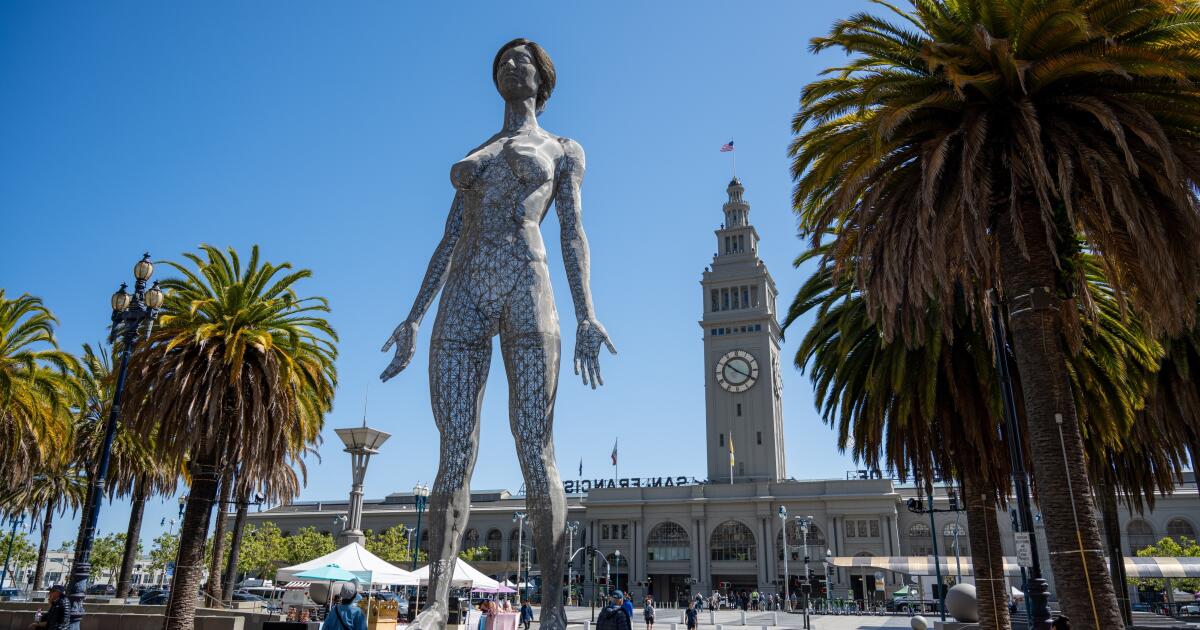 San Francisco, CA2 hours ago
A sculpture of a giant naked woman goes on sale in San Francisco. Bring a crane
-

 Dallas, TX2 hours ago
No ‘straight answer’: Why Pioneer Cemetery is the latest battleground at City Hall
-

 Miami, FL2 hours ago
TSA hosts news conference ahead of World Cup third place match at Miami Stadium
-

 Boston, MA2 hours ago
ICE Boston arrests Barbados national during targeted operations in Attleboro
-

 Denver, CO2 hours ago
Denver Broncos training camp is 2 weeks away
-

 San Diego, CA3 hours ago
Daily Business Report: July 17, 2026, San Diego Metro Magazine

