Nevada
Nevada DMV receives nearly 21,000 reports of illegal drivers in two months


LAS VEGAS (KTNV) — The Nevada Department of Motor Vehicles has received nearly 21,000 complaints about illegal drivers through its new online reporting portal in just two months, with more than 83 percent of those reports coming from Clark County.
The Registration Spotter tool, launched in October on the DMV’s website, allows residents to report vehicles with no plates, expired or invalid registration, or illegal out-of-state plates. The initiative was part of an effort to address what officials call a pervasive problem affecting road safety and contributing to rising car insurance costs.
WATCH | Plenty of reports, not enough action — what’s the deal?
Nevada DMV receives nearly 21,000 reports of illegal drivers in two months
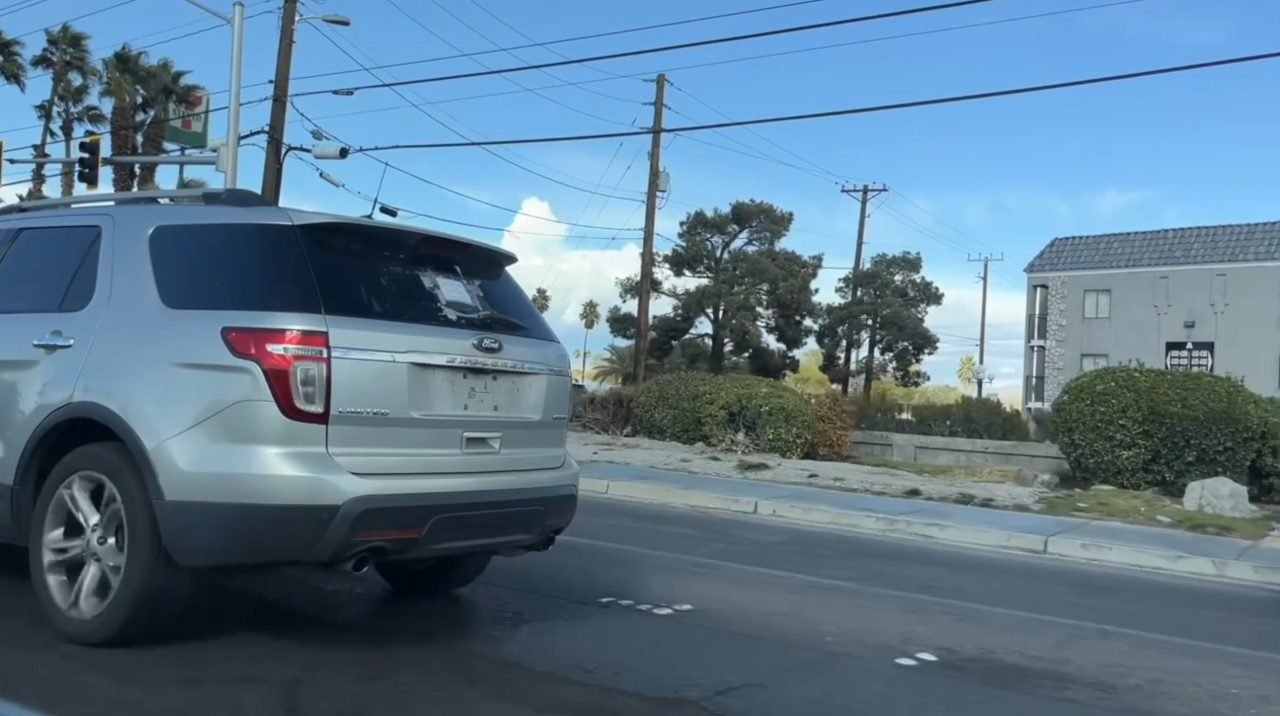
“It’s everywhere all the time,” said J.D. Decker from the DMV’s Compliance Enforcement Division during a February ride-along.
However, some residents who have filed reports are questioning the effectiveness of the system, like Las Vegas resident Paul who emailed to ask, “Darcy, what’s the deal?”
“I reported a car without plates over two months ago and I still see it parking where I live. Why don’t they investigate? I also see so many cars on the road without plates and even see cops that don’t stop them. Why don’t police stop them?” Paul asked.
KTNV
DMV officials acknowledge that enforcement is lacking. DMV spokesperson Hailey Foster said the agency agrees “this is certainly an issue we, the DMV, would like to see be enforced more.”
The DMV admits it’s still working to distribute data from the online portal to other agencies and cannot guarantee specific action on reports. Foster explained that if a vehicle is parked in someone’s driveway and not being operated, that’s technically legal. Officers need to see the car being driven on streets to issue a citation.
“This takes everybody, and there’s so much of it right now, and it’s going to take all of Nevada law enforcement to address,” Decker said.
KTNV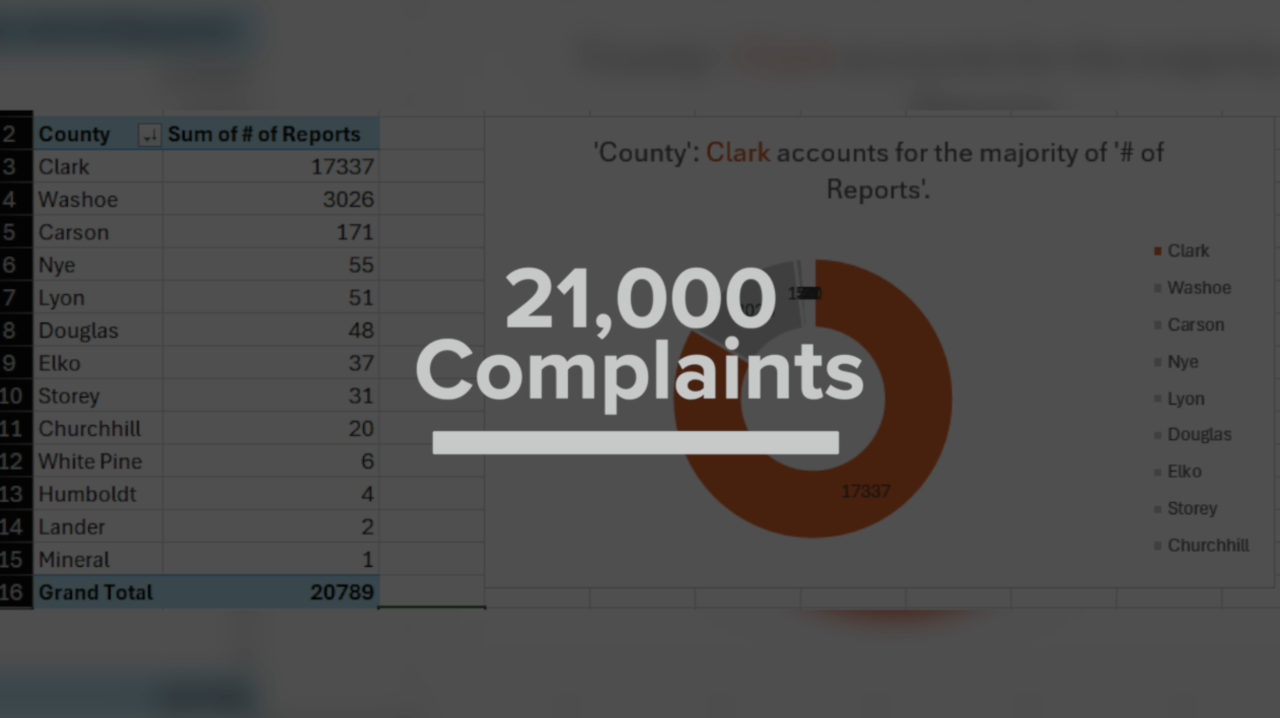
The DMV does not track enforcement statistics based on whether action comes from patrol, investigation or complaints submitted by residents, making it impossible to determine how many Registration Spotter tips have led to enforcement action.
But, traffic enforcement overall is increasing. Las Vegas Metropolitan Police made about 82,000 traffic stops this year, according to a Dec. 16 social media post.
A newly formed multi-agency traffic task force, which we told you about on Dec. 8, has logged 26 registration violations and 14 insurance violations since its formation, though their primary focus is on dangerous driving.
KTNV
We also asked other agencies for their enforcement statistics over the last two months. North Las Vegas Police said, “While NLVPD does not receive or track the individual public-submitted reports sent directly to the DMV as part of that program, we are able to provide our department’s registration-related enforcement statistics during the same general timeframe.
For the period October 1, 2025 through December 18, 2025, North Las Vegas Police Department officers issued:
- 557 citations
- 601 total offenses related to registration and license plate violations
These offenses include, but are not limited to:
- Failure to possess or surrender certificate of registration
- Improper display of license plates
- Operating a vehicle without valid Nevada vehicle registration
Henderson Police citations from 10/01/2025 – 12/17/2025:
Operate vehicle w/expired registration or plates: 214
Operate unregistered vehicle-trailer or semi trailer: 84
Display fictitious vehicle registration/plate/title: 8
Fail to obtain and properly display permit to operate unregistered vehicle: 3
Operate unregistered moped: 1
Rear license plate lamp violation: 1
License plates improperly displayed: 1
Nevada State Police was only able to provide citation information for the month of October.
Nevada Highway Patrol statewide citation information:
Total citations issued: 12,962
Registration-related citations: 1,475
All other citations: 11,487
Statement from the Department:
“The Nevada State Police Highway Patrol Division recognizes public interest related to unregistered vehicles and has and will continue to enforce all traffic laws on Nevada’s roadways, including laws related to vehicle registration. Enforcement of unregistered vehicles has long been part of routine traffic enforcement efforts statewide. As with all enforcement activity, the Nevada Highway Patrol prioritizes public safety and responds based on observed violations, calls for service, and operational considerations, including impaired driving and other serious safety concerns. Traffic enforcement is continuous and ongoing, and troopers take appropriate enforcement action when unregistered vehicles are encountered during patrol or traffic stops. The Nevada Highway Patrol strongly encourages drivers to ensure their vehicles are properly registered in accordance with Nevada law.”
The DMV is asking each law enforcement agency in the state to increase enforcement of the types of violations reported through Registration Spotter. DMV officials say the best outcome would be for each agency to conduct their own enforcement patrols and crack down on these violations.
Wondering what the deal is with something happening in the valley? Reach out to Darcy Spears at Darcy.Spears@ktnv.com.

This story was reported on-air by a journalist and has been converted to this platform with the assistance of AI. Our editorial team verifies all reporting on all platforms for fairness and accuracy.





Reno rules for parking near neighbors
Learn about Reno’s parking rules near neighbors – it’s legal on public streets, but with restrictions. Find out more!
As Nevadans are getting ready for family and friend cookouts and summer parties, they may be looking for a place to park in residential areas. It may be tempting to park near your neighbor’s driveway, but people should first know what’s allowed.
After all, as annoying as it is to have to park far away from your destination, a large fine and a tow is far more inconvenient.
Here’s what the Nevada law says about parking in front of your neighbor’s house, near their driveway, and on a public street.
Can I park in my neighbor’s driveway?
No. Unless you are a United States Postal Service worker, it is prohibited in Nevada to park “within 5 feet of a public or private driveway.”
Can you park in front of your neighbor’s house in Nevada?
Unless a permit is required or other official signage on a street notes special parking requirements, it is legal to park on any public street. That includes in front of your neighbor’s house, as long as it is not blocking their driveway.
Can you park in front of your neighbor’s house?
Unless a permit is required or other official signage on a street notes special parking requirements, it is legal to park on any public street. That includes in front of your neighbor’s house, as long as it is not blocking or less than five feet from their driveway.
Can I sell my car from my yard?
As long as you keep the number of vehicles you sell from your yard to three personally-owned vehicles per year, it is legal. If you exceed that amount and don’t have a dealer’s license, you could be reported to the Nevada DMV.

The Nevada Division of Forestry and the Nevada Section of the Society for Range Management are inviting high school-aged students from around the Silver State to participate in the 2026 Nevada Youth Range Camp essay competition.
“The Nevada Youth Range Camp is a yearly educational opportunity that has been held each summer in central Nevada since 1961,” stated a press release. “Last year, eight students were awarded scholarships and received a certificate of achievement.”
Selected essays will receive up to $250 to register for this year’s Youth Range Camp. Students must be between ages 14 and 18 in order to apply. Parental consent is also required. Essays that are flagged for plagiarism or that utilize AI will be disqualified.
“Range Camp has served Nevada’s youth for 65 years. It is a great opportunity for anyone interested in natural resources to learn basic rangeland and resource management skills,” said Kelcey Hein, Conservation Education lead at the Nevada Division of Forestry, in a statement.
According to the application form, this year’s essay prompt is:
“In your own words, tell a story or a few stories of when you were able to connect with a natural space such as a park, your backyard, a farm, a field, a forest, a beach, or so on. Please incorporate three (3) key words from the key word list that you noticed of that ecosystem into your response. Explain what you noticed about these aspects that drew your attention in that space. How did this influence you and your goals as a future steward of Natural Resources?”
Visit bit.ly/RangeCamp2026 for submission forms, essay instructions and the full rules. The contest is open until April 30.
For more information about the Nevada Division of Forestry, visit forestry.nv.gov.
Visit nevada.rangelands.org for more information about the Nevada Section of the Society for Range Management.
Contact reporter Elijah Dulay at edulay@pvtimes.com
Nevada Youth Range Camp: June 21 through June 27
“We invite high school youth to enjoy a week of fun, camping, and learning about rangelands and natural resource management,” states the Nevada Section of the Society for Range Management website. “This year the camp headquarters will be located in the Timber Creek Campground area Northwest of McGill, NV. This area provides a splendid setting for learning and recreation.”
“The week is filled with many learning opportunities. Instructors teach various subjects through group investigations. Camp instructors and counselors are trained specialists from the University of Nevada, Reno; Nevada State Parks; Natural Resources Conservation Service; Bureau of Land Management; Forest Service; Nevada Division of Forestry; Nevada Division of Conservation Districts; Nevada Division of Wildlife; and others,” the Nevada Section of the Society for Range Management website continues.
“Campers arrive by noon on Sunday and break camp the following Saturday morning. Campers register and form groups with an adult counselor and assistant youth counselor. The weeklong program runs from 7:00 a.m. to 9:00 p.m., and includes instruction, projects, rest, meals, and recreation,” the Nevada Section of the Society for Range Management website reads further. “Adult supervision occurs throughout the entire week. Parents and sponsors are welcome to visit the camp any time and are especially invited for the Friday night awards program. The evening programs are geared more for enjoyment and personal interest and include map and compass orientation, conservation skill workshops, wildlife presentations, and campfires.”

Four flag football players with ties to Southern Nevada have been named to USA Football’s 2026 women’s flag national team initial roster.
Former high school standouts Akemi Higa (Desert Oasis), Kaylie Phillips (Liberty), Maci Joncich (Coronado) and Brooklin Hill (Desert Oasis) were named to the 24-person roster.
Higa just completed her senior season with Desert Oasis where she was a first-team All-Southern Nevada selection and led the state with 5,764 passing yards. She is committed to play college flag football at Nevada State University.
Hill and Phillips currently play for Nevada State. Joncich graduated from Coronado in 2024 and was on the 2025 national team.
After a training camp that will determine the traveling roster and alternates, the team will compete in the 2026 International Federation of American Football flag football world championships in Germany this August.
Contact Alex Wright at awright@reviewjournal.com. Follow @AlexWright1028 on X.

‘The Madison’ adds to Taylor Sheridan’s ‘Yellowstone’ legacy — ‘Marshals’ not so much

Bluetti’s Sora 500 solar panel is incredibly powerful for its size

Russian man who assaulted woman during Barron Trump FaceTime call sentenced to 4 years

Dem senators dodge crucial question on illegal alien accused of killing Chicago college student

Giant golden spiders could spread this summer; experts downplay health risk

Florida High School Football Rankings: Top 25 teams – Oct. 21

How old is Bo Nix? What to know about Oregon quarterback ahead of 2024 NFL Draft

Cleary's 21 help Le Moyne down Central Connecticut State 69-64 in OT

99th annual Pony Swim held in Virginia

Indiana Members Credit Union announced as new anchor tenant at Bottleworks District
Dem senators dodge crucial question on illegal alien accused of killing Chicago college student

EU Parliament unblocks key political hurdle in digital euro talks

Man arrested in plot to firebomb Palestinian activist’s home after undercover op

WATCH: Senate hearing goes silent after Angel Father confronts top Dem over daughter’s death

US diplomat Marco Rubio denounces settler violence, tolls in Hormuz strait
-

 Detroit, MI1 week ago
Drummer Brian Pastoria, longtime Detroit music advocate, dies at 68
-

 Movie Reviews1 week ago
‘Youth’ Twitter review: Ken Karunaas impresses audiences; Suraj Venjaramoodu adds charm; music wins praise | – The Times of India
-

 Sports7 days ago
IOC addresses execution of 19-year-old Iranian wrestler Saleh Mohammadi
-

 New Mexico5 days ago
Clovis shooting leaves one dead, four injured
-
 Business1 week ago
Disney’s new CEO says his focus is on storytelling and creativity
-

 Technology6 days ago
YouTube job scam text: How to spot it fast
-

 Tennessee4 days ago
Tennessee Police Investigating Alleged Assault Involving ‘Reacher’ Star Alan Ritchson
-

 Texas1 week ago
How to buy Houston vs. Texas A&M 2026 March Madness tickets