Nevada
COMMENTARY: Solar development, conservation must go hand in hand in Nevada


Early in 2023, the Bureau of Land Management released the draft Public Lands Rule, a groundbreaking, once-in-a-generation proposal to restore balance to its management of 245 million acres of public land across the American West. America’s public land includes 48 million acres in Nevada, of which an overwhelming majority are currently open to oil and gas leases.
After 40 years of prioritizing extractive industries, the BLM now has the opportunity to balance its multiple use mission by putting conservation, cultural lands protection, recreation, access to nature, wildlife and climate change mitigation on equal footing with America’s energy needs.
What does this mean for Nevada, where 63 percent of the state is federal public lands managed by the BLM? After more than a year of growing support in public meetings and a formal public comment period that yielded more than 90 percent of comments in favor of the rule, the final regulation is poised to be rolled out in the next few months. Once finalized, local communities — which have long called for a more sustainable approach to land management — can begin working with local BLM field offices to rebalance conservation and recreation with resource extraction and development.
Importantly, the BLM is also working to ensure that public lands do their part in meeting our nation’s renewable energy goals. In Nevada, that means a carefully constructed solar energy plan that is built with the dual purpose of clean, safe electricity to Nevada communities while developing solar projects in a way that protects wildlife, landscapes and the health of the Nevada desert.
The Public Lands Rule is one of several proposals announced recently by the BLM. Another includes an update to its 2012 Western Solar Plan. The Solar Programmatic Environmental Impact Statement will identify reasonable areas available for solar development, without interrupting the processing of existing solar energy applications. In fact, it will help accelerate implementation of national clean energy goals. The proposal will steer solar development to more appropriate landscapes, using criteria such as proximity to transmission infrastructure while avoiding protected lands, designated critical habitat and areas where important cultural resources exist.
If I have learned anything from my time in nature, it’s that things must coexist in order to thrive and be successful. Our planet and we as inhabitants will not survive by focusing only on biodiversity loss or the need to transition to a clean energy economy to reduce and slow down the impact of climate change. We need a holistic approach that fully analyzes the impacts and creates a collective path forward.
The forthcoming Public Lands Rule and updated Western Solar Plan can and should go hand in hand to ensure that we can simultaneously combat climate change and the biodiversity crisis — achieving our clean energy goals while protecting important landscapes and habitats in a “smart from the start” planning approach.
Diverse supporters from across the country have recognized the opportunity the BLM’s new rule presents and have raised their voices in support, including individuals who weighed in during the public comment period, endorsements from the outdoor industry, members of Congress, local elected officials, legal scholars, scientists, attorneys general, former BLM officials, hunters and anglers and more than 100 businesses. The process to finalize and implement the solar plan is no different, and the BLM will be hosting public meetings during the comment period, which runs through April 18, to provide information and answer questions.
As the world faces staggering nature loss and disappearance of biodiversity, these BLM lands are vital “connective tissue” across the western United States, providing critical migration and habitat corridors for wildlife between big wilderness areas and national conservation areas and monuments, and smaller private, state and county lands. The BLM and Biden administration must be commended for recognizing the importance of our nation’s public lands to our environment, local economies and renewable energy future. The Public Lands Rule and an update to the Western Solar Plan are long overdue, especially for the future of the American West.
Jocelyn Torres is co-interim executive director of the Conservation Lands Foundation, a nonprofit organization dedicated to protecting and expanding America’s national conservation lands.



INCLINE VILLAGE, Nev. – Kitchen of Kindness is on a mission to give back to the community. The nonprofit is a volunteer-driven program through Chabad Cares Nevada and aims to assist those in need including seniors, hospitalized individuals and families by providing meals, support, and connection.
When asked how the idea for the program first came to fruition, Executive Director of Chabad Cares Nevada, Rabbi Moshe Cunin, said “The inspiration for the idea was from my wife and her family. Unfortunately, her dad died from cancer, but he had been helped for many years by members of their community bringing food to them.”
After receiving kindness and support from others, Cunin’s wife Doba, and Doba’s mother, decided it was time to give back. Thus, Kitchen of Kindness was created last June and has been picking up the pace ever since.
A major avenue to their funding is through selling homemade challah bread and pastries at the Incline Village Farmers Market which is scheduled to open this summer on Thursday, May 21.

“It’s been amazing,” said Cunin. “We just popped up at the Incline Village Farmers Market and we sold out every week. What’s really cool is that some of the bread is being sold, but the money from that bread sold is going to fund the rest of it getting delivered that week to family members of people in the hospital, people in need, or a new mom with a baby.”
Cunin delivers the food himself, along with other program volunteers, and their goal for distribution is to get the fresh food out as quickly as possible.
While serving a wide range of Northern Nevada, including Lake Tahoe, Cunin wants to continue to grow Kitchen of Kindness. Already, the community kitchen offers assistance in family events, team building, birthday parties, and ways to prevent food waste. They even provide hot meals and companionship as part of their senior engagement, and partner with larger nonprofits such as Eddy House Youth Homeless Shelter in Reno.
“Our dream would be to up the scale of the amount of events we do, the amount of volunteers, and the amount of people we can help,” said Cunin who notes that although they are borrowing a local kosher kitchen space through a jewish school and synagogue, his vision is to have a dedicated space to be used full-time.
As Kitchen of Kindness’s mission unfolds, Cunin says the Torah’s teachings of anonymous, selfless charity is a key factor in its importance, where the giver feels no arrogance and the receiver feels no embarrassment.
“There’s so many that want to give and be generous, and may not have a ton of money to give away, but they have time,” said Cunin. “Time itself is such a value and this is such a great opportunity for people that have time and can partner together with us and use their time and turn it into giving.”
Stop by their bake sale booth at Incline Village Farmers Market this summer for an oppertunity to support their cause.
To learn more about Kitchen of Kindness or Chabad Cares Nevada, as well as ways to get involved, visit https://www.chabadcaresnevada.com/kitchen.

Nevada Secretary of State Francisco Aguilar reported a decrease of 99,628 active registered voters during the month of March 2026 as compared to February 2026. The total number of active registered voters in Nevada is 2,040,752, a decrease of (-4.66%).
Officials say the decrease in active registered voters is due in large part to list maintenance activities conducted by the Clark County Election Department. The office sent 117,650 notices to voters and inactivated approximately 104,945 voters who did not respond to the notice.
The report indicates nonpartisan active registered voters decreased by 36,904 (-4.55%). Republican Party active registered voters statewide decreased by 24,261 (-4.08%). Democratic Party active registered voters statewide decreased by 30,179 (-5.08%). Independent American Party active registered voters decreased by 5,145 (-5.68%), and Libertarian Party of Nevada active registered voters decreased by 939 (-6.26%).
Active registered voters from a compilation of “other” minor political parties decreased by 2,200 (-6.44%).
Of the 2,040,752 active registered voters in Nevada:
- 774,669 are Nonpartisan (37.96%)
- 570,951 are Republicans (27.98%)
- 563,733 are Democrats (27.62%)
- 85,369 are members of the Independent American Party (4.18%)
- 14,051 are members of the Libertarian Party of Nevada (0.69%)
- 31,979 are members of other minor political parties (1.57%)
The latest voter registration breakdown can be found under the Elections tab or by clicking here.


Report: Wisconsin transfer John Blackwell down to six schools, not two
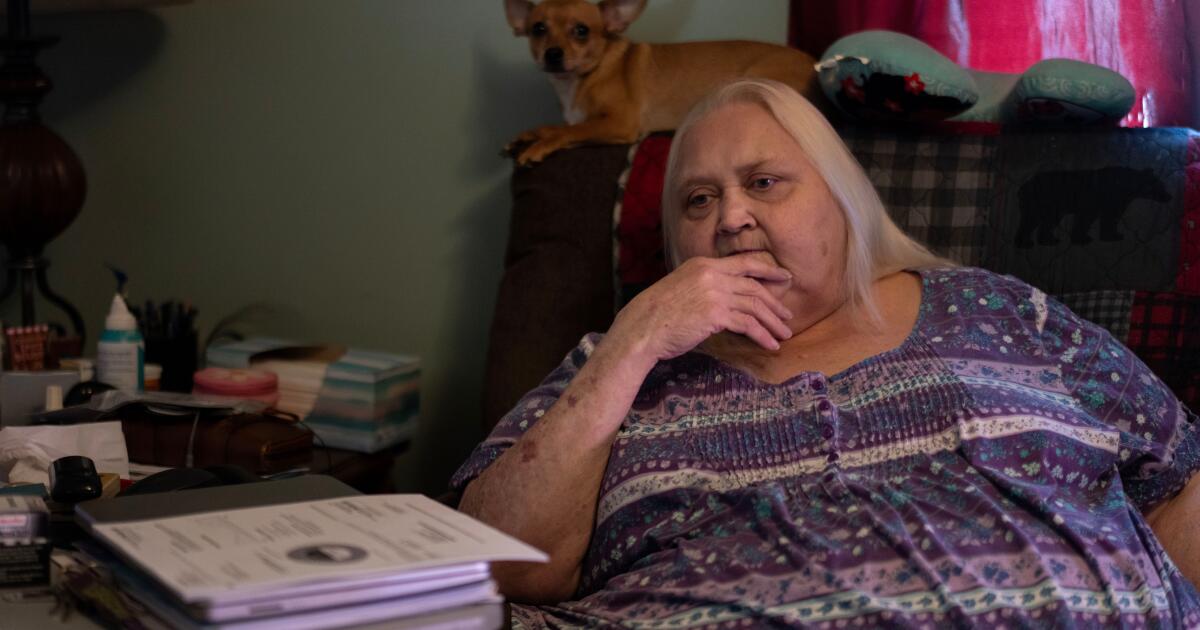
Trump promised to cut electric costs in half. In energy-rich West Virginia, bills now top mortgages

Keenan Morgan to run for House District 58 seat

OKX Invests in Vietnam Exchange CAEX Ahead of Crypto Pilot

Opinion: Teaching kids how to manage money is now a reality in New Hampshire – Concord Monitor

Florida High School Football Rankings: Top 25 teams – Oct. 21

How old is Bo Nix? What to know about Oregon quarterback ahead of 2024 NFL Draft

Cleary's 21 help Le Moyne down Central Connecticut State 69-64 in OT

99th annual Pony Swim held in Virginia

Indiana Members Credit Union announced as new anchor tenant at Bottleworks District

Trump adversary running for Senate borrows his filibuster playbook

Russian propaganda unit targets Hungary’s elections

WATCH: Artemis II astronauts splash down on Earth

Swalwell’s former female staffer drops bombshell allegations of sexual assault, exposing himself: report

NASA’s Artemis II prepares for splashdown on Earth
-

 Atlanta, GA6 days ago
1 teenage girl killed, another injured in shooting at Piedmont Park, police say
-

 Education1 week ago
Video: Toy Testing with a Discerning Bodega Cat
-

 Movie Reviews1 week ago
Vaazha 2 first half review: Hashir anchors a lively, chaos-filled teen tale
-

 Georgia4 days ago
Georgia House Special Runoff Election 2026 Live Results
-

 Pennsylvania5 days ago
Parents charged after toddler injured by wolf at Pennsylvania zoo
-

 Arkansas20 hours ago
Arkansas TV meteorologist Melinda Mayo retires after nearly four decades on air
-
 Milwaukee, WI5 days ago
Potawatomi Casino Hotel evacuated after fire breaks out in rooftop HVAC system
-
 Entertainment1 week ago
Inside Ye’s first comeback show at SoFi Stadium