Montana
The path to a better tuberculosis vaccine runs through Montana


A team of Montana researchers is playing a key role in the development of a more effective vaccine against tuberculosis, an infectious disease that has killed more people than any other.
The BCG (Bacille Calmette-Guérin) vaccine, created in 1921, remains the sole TB vaccine. While it is 40% to 80% effective in young children, its efficacy is very low in adolescents and adults, leading to a worldwide push to create a more powerful vaccine.
One effort is underway at the University of Montana Center for Translational Medicine. The center specializes in improving and creating vaccines by adding what are called novel adjuvants. An adjuvant is a substance included in the vaccine, such as fat molecules or aluminum salts, that enhances the immune response, and novel adjuvants are those that have not yet been used in humans. Scientists are finding that adjuvants make for stronger, more precise, and more durable immunity than antigens, which create antibodies, would alone.
Eliciting specific responses from the immune system and deepening and broadening the response with adjuvants is known as precision vaccination. “It’s not one-size-fits-all,” said Ofer Levy, a professor of pediatrics at Harvard University and the head of the Precision Vaccines Program at Boston Children’s Hospital. “A vaccine might work differently in a newborn versus an older adult and a middle-aged person.”
The ultimate precision vaccine, said Levy, would be lifelong protection from a disease with one jab. “A single-shot protection against influenza or a single-shot protection against COVID, that would be the holy grail,” Levy said.
Jay Evans, the director of the University of Montana center and the chief scientific and strategy officer and a co-founder of Inimmune, a privately held biotechnology company in Missoula, said his team has been working on a TB vaccine for 15 years. The private-public partnership is developing vaccines and trying to improve existing vaccines, and he said it’s still five years off before the TB vaccine might be distributed widely.
It has not gone unnoticed at the center that this state-of-the-art vaccine research and production is located in a state that passed one of the nation’s most extreme anti-vaccination laws during the pandemic in 2021. The law prohibits businesses and governments from discriminating against people who aren’t vaccinated against COVID-19 or other diseases, effectively banning both public and private employers from requiring workers to get vaccinated against COVID or any other disease. A federal judge later ruled that the law cannot be enforced in health care settings, such as hospitals and doctors’ offices.
In mid-March, the Bill & Melinda Gates Medical Research Institute announced it had begun the third and final phase of clinical trials for the new vaccine in seven countries. The trials should take about five years to complete. Research and production are being done in several places, including at a manufacturing facility in Hamilton owned by GSK..
Known as the forgotten pandemic, TB kills up to 1.6 million people a year, mostly in impoverished areas in Asia and Africa, despite its being both preventable and treatable. The U.S. has seen an increase in tuberculosis over the past decade, especially with the influx of migrants, and the number of cases rose by 16% from 2022 to 2023. Tuberculosis is the leading cause of death among people living with HIV, whose risk of contracting a TB infection is 20 times as great as people without HIV.
“TB is a complex pathogen that has been with human beings for ages,” said Alemnew Dagnew, who heads the program for the new vaccine for the Gates Medical Research Institute. “Because it has been with human beings for many years, it has evolved and has a mechanism to escape the immune system. And the immunology of TB is not fully understood.”
The University of Montana Center for Translational Medicine and Inimmune together have 80 employees who specialize in researching a range of adjuvants to understand the specifics of immune responses to different substances. “You have to tailor it like tools in a toolbox towards the pathogen you are vaccinating against,” Evans said. “We have a whole library of adjuvant molecules and formulations.”
Vaccines are made more precise largely by using adjuvants. There are three basic types of natural adjuvants: aluminum salts; squalene, which is made from shark liver; and some kinds of saponins, which are fat molecules. It’s not fully understood how they stimulate the immune system. The center in Missoula has also created and patented a synthetic adjuvant, UM-1098, that drives a specific type of immune response and will be added to new vaccines.
One of the most promising molecules being used to juice up the immune system response to vaccines is a saponin molecule from the bark of the quillay tree, gathered in Chile from trees at least 10 years old. Such molecules were used by Novavax in its COVID vaccine and by GSK in its widely used shingles vaccine, Shingrix. These molecules are also a key component in the new tuberculosis vaccine, known as the M72 vaccine.
But there is room for improvement.
“The vaccine shows 50% efficacy, which doesn’t sound like much, but basically there is no effective vaccine currently, so 50% is better than what’s out there,” Evans said. “We’re looking to take what we learned from that vaccine development with additional adjuvants to try and make it even better and move 50% to 80% or more.”
By contrast, measles vaccines are 95% effective.
According to Medscape, around 15 vaccine candidates are being developed to replace the BCG vaccine, and three of them are in Phase III clinical trials.
One approach Evans’ center is researching to improve the new vaccine’s efficacy is taking a piece of the bacterium that causes TB, synthesizing it, and combining it with the adjuvant QS-21, made from the quillay tree. “It stimulates the immune system in a way that is specific to TB and it drives an immune response that is even closer to what we get from natural infections,” Evans said.
The University of Montana center is researching the treatment of several problems not commonly thought of as treatable with vaccines. They are entering the first phase of clinical trials for a vaccine for allergies, for instance, and first-phase trials for a cancer vaccine. And later this year, clinical trials will begin for vaccines to block the effects of opioids like heroin and fentanyl.
The University of Montana received the largest grant in its history for anti-opioid vaccine research. It works by creating an antibody that binds with the drug in the bloodstream, which keeps it from entering the brain and creating the high.
For now, though, the eyes of health care experts around the world are on the trials for the new TB vaccines, which, if they are successful, could help save countless lives in the world’s poorest places.
2024 KFF Health News. Distributed by Tribune Content Agency, LLC.
Citation:
The path to a better tuberculosis vaccine runs through Montana (2024, April 29)
retrieved 29 April 2024
from https://medicalxpress.com/news/2024-04-path-tuberculosis-vaccine-montana.html
This document is subject to copyright. Apart from any fair dealing for the purpose of private study or research, no
part may be reproduced without the written permission. The content is provided for information purposes only.



BUTTE — Butte’s annual Montana Folk Festival is drawing crowds to six stages set up across Uptown Butte, bringing art, food and music — along with some high temperatures.
WATCH: Heat can’t stop the Montana Folk Festival in Butte
Montana Folk Festival brings heat along with music, food, and art
Reggae artist Prezident Brown and his band iSound are among the performers taking the heat in stride. Brown said the dry mountain climate is nothing compared to what he’s used to back home.
“I can honestly say hundred degrees in Jamaica is a whole different story.”
When asked how he’s staying cool, Brown kept it simple.
“Yeah! I just do what I do. I drink water…orange juice!”
The Legendary Ingramettes, a gospel group from Virginia, are also finding Butte’s climate agreeable.
“We have a lot of humidity, and Butte does not. So, I’m enjoying the heat! The dry air!!”
MTN NEWS
With temperatures peaking around 90 degrees, food vendors are feeling the warmth more directly. Bozeman-based vendor Vickie Backus is working over a hot grill, serving pierogies, a food originating in Eastern Europe.
I ask her how she is keeping cool.
“You know? I’m not. I’m drinking lots of water. I have sunscreen on and I’m just leaning into it.”
Festival-goers wandering between the six stages are largely dressed for the heat — big hats, long sleeves, and sunglasses. At least one person is going barefoot —first-time festival attendee Sean Villere from Missoula says the pavement doesn’t phase him.
MTN NEWS
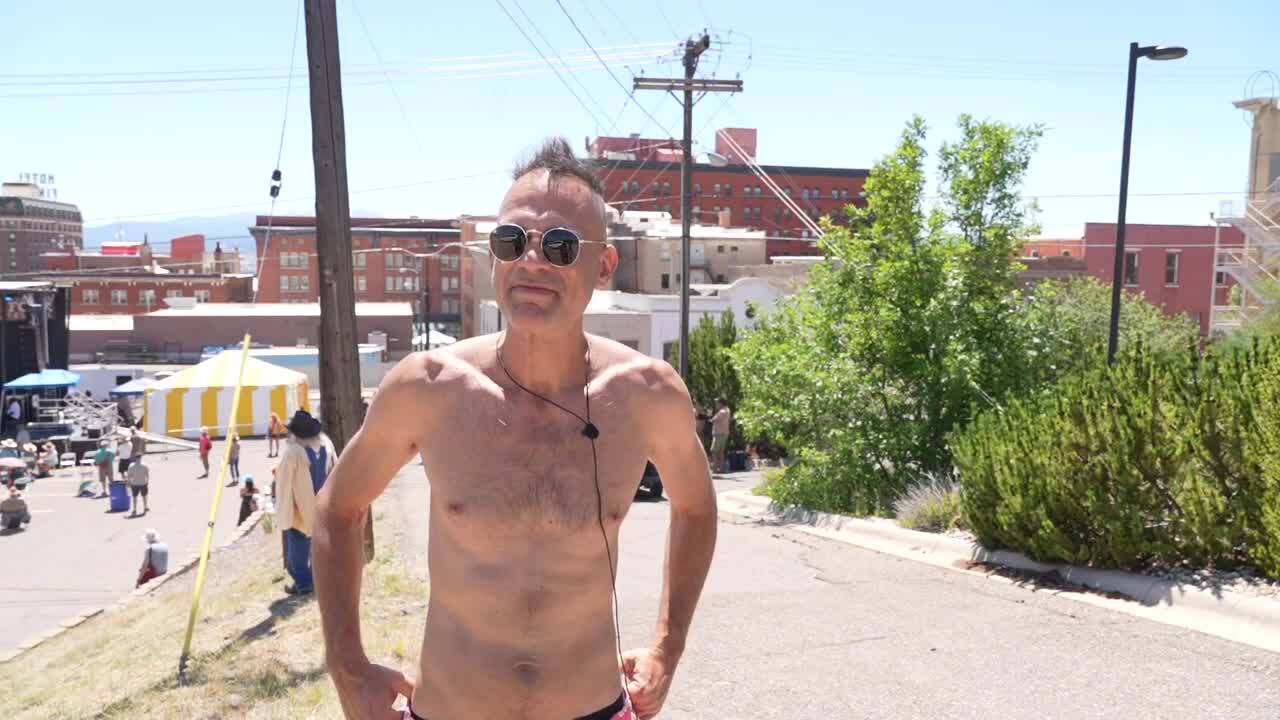
“It’s not that hot yet. I think it might get hotter, but it’s okay right now.”
Villere said he hasn’t worn shoes in a couple of years, including through two winters, and the callouses he’s built up protect his feet from the hot pavement.
Over the years, extreme weather has impacted festival attendance, but this year most people seem comfortable with the conditions.
This story was reported on-air by a journalist and has been converted to this platform with the assistance of AI. Our editorial team verifies all reporting on all platforms for fairness and accuracy.
The Montana Lottery offers multiple draw games for those aiming to win big.
Here’s a look at July 10, 2026, results for each game:
Winning Mega Millions numbers from July 10 drawing
02-39-44-46-56, Mega Ball: 23
Check Mega Millions payouts and previous drawings here.
Winning Big Sky Bonus numbers from July 10 drawing
10-13-23-30, Bonus: 02
Check Big Sky Bonus payouts and previous drawings here.
Winning Millionaire for Life numbers from July 10 drawing
14-42-46-47-57, Bonus: 05
Check Millionaire for Life payouts and previous drawings here.
Feeling lucky? Explore the latest lottery news & results
When are the Montana Lottery drawings held?
- Powerball: 8:59 p.m. MT on Monday, Wednesday, and Saturday.
- Mega Millions: 9 p.m. MT on Tuesday and Friday.
- Lucky For Life: 8:38 p.m. MT daily.
- Lotto America: 9 p.m. MT on Monday, Wednesday and Saturday.
- Big Sky Bonus: 7:30 p.m. MT daily.
- Powerball Double Play: 8:59 p.m. MT on Monday, Wednesday, and Saturday.
- Montana Cash: 8 p.m. MT on Wednesday and Saturday.
- Millionaire for Life: 9:15 p.m. MT daily.
Missed a draw? Peek at the past week’s winning numbers.
This results page was generated automatically using information from TinBu and a template written and reviewed by a Great Falls Tribune editor. You can send feedback using this form.
-

 Movie Reviews2 minutes ago
Movie Review: Black Teen faces the trials of being a “Mississippi Scholar”
-
World10 minutes ago
Disney’s live-action ‘Moana’ crashes to shore with an underwhelming splash at the box office
-

 News17 minutes ago
Map: 4.1-Magnitude Earthquake Shakes Southern California
-
 Lifestyle55 minutes ago
Sunday Puzzle: Two words, same number of letters, matching first and last letters
-

 Technology1 hour ago
Apple’s failed self-driving car program left a legacy of powerful AI chips
-

 World1 hour ago
New Germany sex-crime figures reignite migration fight as exploitation probe expands
-

 Politics1 hour ago
Graham’s death ignites GOP scramble for Senate seat as Trump hints he already has a favorite
-

 Health1 hour ago
Man turns tragic loss of best friend to suicide into urgent outreach to lonely strangers


