Montana
State budget draft passes initial House vote with bipartisan support


Bipartisan support propelled Montana’s next state budget through an initial vote in the House on a 60-39 margin Wednesday, putting an initial stamp of legislative approval on approximately $16.6 billion of spending for the two-year financial cycle that starts July 1.
While some state spending will be authorized by other bills or existing laws, the budget bill, traditionally numbered House Bill 2, represents the single largest spending measure lawmakers will consider this year, funding agency programs and initiatives intended to serve residents across the state.
As debate on the budget bill opened on the House floor Wednesday, House Appropriations Chair Llew Jones said he was pleased with where the measure stands.
“It represents a balanced, responsible, and sustainable budget,” Jones said.
Democrats, most of whom voted for the bill, struck a lukewarm tone, with House Minority Leader Katie Sullivan, describing it in a press briefing following the floor debate as “OK.”
The current bill spends about $7,300 per resident per year, with 44% of its spending coming from federal funding rather than tax dollars collected at the state level. Another 22% comes from special-purpose revenues such as hunting license fees, and most of the remainder will be pulled from the state General Fund, which is filled primarily with income tax dollars.
Because of the budget’s size and complexity, lawmakers typically split it into five sections as they work through its pieces. Here’s how the budget stands following Wednesday’s debate section by section:
GENERAL GOVERNMENT
The Legislature’s catch-all budget section includes spending for agencies such as the Department of Administration, Department of Revenue, the governor’s office and the Legislature itself. Those and similar agencies represent a relatively small slice of the budget pie, at 10% of spending.
Among the expenditures included in this portion of the budget are $229,000 to help the state Commissioner of Political Practices improve its semi-functional lobbyist database and $400,000 to improve the legislative website.
Lawmakers voted 60-39 Wednesday to remove $12.9 million a year that had been allocated to the governor’s office for a recruitment and retention fund for state employees. Supporters had argued the money, which would have been administered by the governor’s budget director, would have provided state government resources to help maintain staffing for hard-to-fill positions like engineering and health care roles. Critics argued that agencies have other ways to address their staffing needs and worried about centralizing that authority with the governor’s office as opposed to distributing it across agencies.
HEALTH AND HUMAN SERVICES
The health and human services portion of the budget includes more than $7 billion in total spending for programs under the Department of Public Health and Human Services. That amount, 44% of the overall state budget, includes about $5 billion in federal funding.
Major health spending in the budget includes more than $100 million in additional funding for operations and bed space at the Montana State Hospital, a 3% rate increase for Medicaid and community service providers and $111 million for the department’s information technology systems.
Some of those spending items were added to the budget by a bipartisan group of lawmakers as it was reviewed by the House Appropriations Committee last week. Fiscal conservatives made several attempts Wednesday, most of them unsuccessful, to wind those increases back, pushing to remove funding for a 14% rate increase for vocational rehabilitation trainers; more than a million dollars toward increasing in-state psychiatric bed capacity; and $2 million in transfers from the state’s Temporary Assistance for Needy Families (TANF) account to food banks and after-school programs.
Several of those amendments were drafted at the request of Rep. Bill Mercer, R-Billings. Speaking about the additional funding for food banks and after-school programs, Mercer called the TANF fund “a bit of a shiny object” but urged lawmakers to resist reallocating dollars that come with strict requirements from the federal government.
“There are many recipients of those benefits or those programs that are not TANF-eligible,” Mercer said. “We have no way of ensuring, from a compliance perspective, that the individuals that are actually benefiting from those dollars are TANF-eligible.”
Democrats criticized the attempts to cut that funding, as well as other Republican belt-tightening measures.
Most of the Republican-sponsored cost-cutting amendments failed by margins of more than 20 votes. The one successful amendment, brought by Rep. Ed Buttrey, R-Great Falls, struck a shift for hospital taxes that Buttrey described as unnecessary.
Democrats also made unsuccessful attempts to add money to the health and human services portion of the budget, including additional funding for vocational rehabilitation staffing, special clinics that evaluate and diagnose children with disabilities, and community crisis beds. Those amendments failed on narrower margins than those brought by Republicans.
NATURAL RESOURCES AND TRANSPORTATION
Agencies funded through this budget section include Montana Fish, Wildlife and Parks, the Montana Department of Transportation, the Department of Livestock, the Department of Natural Resources and Conservation and the Department of Environmental Quality. This section represents 18% of the overall budget.
The budgets for most of those agencies are supported by state and federal collections funneled into specific programs and initiatives, as opposed to money from the state General Fund. Such collections include hunting and fishing license sales, permitting fees for regulated industries, revenue from timber sales and mineral leases, and taxes on gas, marijuana, guns and ammunition.
Rep. Jerry Schillinger, a Republican from Circle who worked on the natural resources and transportation budget section, argued that the agencies that maintain Montana’s highways, manage its public lands and wildlife, and administer its environmental regulations have been “impacted pretty heavily” by tourism, recreation and the state’s swelling population.
The version of the budget bill endorsed by the House on Wednesday includes $3.8 million for mine reclamation, $1.1 million for a veterinary lab at Montana State University, IT support for water management databases, and 23 new FWP positions, seven of which are game wardens.
It also includes 10 new positions dedicated to bridge upgrades at a cost of $2 million, an additional $3.5 million for operating and repairing water storage projects, and four positions tied to the state’s effort to encourage competition in the meatpacking industry. Both FWP and DEQ asked for and received a funding bump for additional legal staff totaling about $824,000.
Rep. Marilyn Marler, D-Missoula, introduced an amendment to support in-person hunter education programming. Both Republican and Democratic lawmakers urged support for a “suffering” volunteer-assisted program that has become heavily reliant on online instruction. Marler’s amendment passed the chamber 58-40.
The House voted down three amendments seeking to reduce funding for additional transportation engineers, a federal electric vehicle initiative developed under the Biden administration and inflationary increases FWP requested for the department’s flagship publication, Montana Outdoors magazine.
COURTS AND PUBLIC SAFETY
The Montana budget’s public safety section includes the state Department of Justice, as well as state prisons managed through the Department of Corrections and the state’s court system, which handles both criminal cases and civil litigation. It also includes Montana’s utility regulation board, the Public Service Commission. Combined, those and other public safety agencies represent about 7% of the state budget.
Notable inclusions in the current public safety budget include $1.7 million to add two new judges in Yellowstone County.
Several parts of the public safety budget drew significant debate on the House floor Wednesday. Among them was a successful motion to add money to the budget for hiring two additional railroad safety inspectors under the auspices of the Public Service Commission.
Democrats also made unsuccessful motions to strip out $1 million a year in litigation funding included in the DOJ budget, add more money for the Office of the State Public Defender, and cut about $12 million a year for housing 360 state inmates at for-profit prisons in Arizona and Mississippi.
Republicans defended the out-of-state prison placements by arguing they are the best option for relieving prison overcrowding until the state can build additional publicly owned facilities.
EDUCATION
At $3.5 billion in expected spending, education represents about 21% of the overall budget. About three-quarters of that money is flagged for Montana’s Office of Public Instruction and the public K-12 school system it oversees.
Among the notable changes are a $53 million inflationary increase to the state’s share of school funding and $109 million to increase starting teacher pay through House Bill 252. Better known as the STARS Act, HB 252 has so far drawn strong bipartisan support and is backed by Republican Gov. Greg Gianforte along with various statewide education agencies. The proposed OPI budget also features a $5.5 million reduction by eliminating the TEACH Act, a precursor to HB 252 that will likely be preempted by the new measure. Other alterations included $5 million to help implement revised statewide math standards and $2 million in one-time funding for OPI’s languishing database modernization project, which to date has largely been paid for with now-expired federal COVID-19 relief money.
The education budget also includes $754 million for the agency that oversees Montana’s universities, as well as funding for the Montana State Library and the Montana School for the Deaf and the Blind, among others. Many of those portions of the budget feature modest increases to existing operations. A few exceptions include $122,000 to help recruit and train educational interpreters at MSDB, and $2.2 million to expand the university system’s “One-Two-Free” program to community and tribal colleges, which covers the cost of up to three college courses for dual-credit students on those campuses.
Fiscal hawks led by Rep. Terry Falk, R-Kalispell, made two unsuccessful attempts to trim education funding via floor amendments Wednesday. The first amendment proposed cutting $2 million from a state assistance program to help local school districts pay off debt, and the second sought to eliminate $180,000 in funding for an administrative position directing oversight of state-owned university buildings. Falk withdrew the first after resistance from Rep. David Bedey, R-Hamilton. His second amendment was rejected on a 70-28 vote, with Rep. John Fitzpatrick, R-Anaconda, calling it “penny wise, pound foolish.”
THE PROCESS
The budget bill started its life in the form of Gianforte’s November budget proposal, which was picked apart by budget committee lawmakers over the first half of the session before being voted to the floor by the House Appropriations Committee last week.
Following Wednesday’s floor vote, the budget bill faces a final vote in the House before advancing to the state Senate, where it will undergo further consideration and more rounds of amendments. The House and Senate must agree on the budget’s final form before returning it to the governor for his signature.



The Montana Lottery offers multiple draw games for those aiming to win big.
Here’s a look at July 9, 2026, results for each game:
Winning Big Sky Bonus numbers from July 9 drawing
08-21-24-29, Bonus: 16
Check Big Sky Bonus payouts and previous drawings here.
Winning Millionaire for Life numbers from July 9 drawing
02-15-22-54-58, Bonus: 04
Check Millionaire for Life payouts and previous drawings here.
Feeling lucky? Explore the latest lottery news & results
When are the Montana Lottery drawings held?
- Powerball: 8:59 p.m. MT on Monday, Wednesday, and Saturday.
- Mega Millions: 9 p.m. MT on Tuesday and Friday.
- Lucky For Life: 8:38 p.m. MT daily.
- Lotto America: 9 p.m. MT on Monday, Wednesday and Saturday.
- Big Sky Bonus: 7:30 p.m. MT daily.
- Powerball Double Play: 8:59 p.m. MT on Monday, Wednesday, and Saturday.
- Montana Cash: 8 p.m. MT on Wednesday and Saturday.
- Millionaire for Life: 9:15 p.m. MT daily.
Missed a draw? Peek at the past week’s winning numbers.
This results page was generated automatically using information from TinBu and a template written and reviewed by a Great Falls Tribune editor. You can send feedback using this form.

A restraining order has been issued that blocks the Montana Republican Party from enacting new bylaws intended to drive nonconformists…
A restraining order has been issued that blocks the Montana Republican Party from enacting new bylaws intended to drive nonconformists out of the party ranks.
Lewis and Clark County District Judge Michael F. McMahon issued the restraining order Wednesday morning. The order had been requested by county precinct committees and officers suing the state party organization over the new bylaws. The plaintiffs are the Yellowstone County Republican Central Committee, the Choteau County Republican Central Committee, and individual committee members Jeff Essmann, Ted Kronebusch, James Wilson and state Rep. Brad Barker, R-Red Lodge.
At issue are bylaws passed during MTGOP’s June platform convention that the litigating party members say amount to “fraudulent and corrupt practices.” The new bylaws require members to pay $20 in annual membership dues and pledge a loyalty oath, and subject members to removal from elected party positions for nonpayment of dues or for “conduct deemed inconsistent with party purposes,” as determined by executive party party officers. The new bylaws allow charges for removal to be brought by any 20 official Republican Party members.
Montana Republican Party Chairman Art Wittich, the only official spokesperson for the state party, has not responded to voicemails and texts sent to his cell phone Wednesday. Wittich, elected party chairman in June 2025, has long been emphatic about exposing “Democrats disguised as Republicans” — for Wittich a now decade-old battle that spun into a bitter multimillion-dollar war between party hardliners and relative centrists in this spring’s Republican legislative primaries.
The centrists drew the ire of the hardliners in 2025 by collaborating with Republican Gov. Greg Gianforte and legislative Democrats to pass a balanced state budget and key pieces of legislation, including increased taxes on second homes and property tax reductions for primary residences and small businesses.
What constitutes disqualifying conduct isn’t fully spelled out in the bylaws, but they do specify that “collaborating with Democrats” in the Legislature, the governor’s office, the courts, or elections can get members disciplined or removed.
The lawsuit alleges that “The 2026 bylaws empower a small group within the party to revoke Republican affiliation from candidates or office holders, undoing primary nominations by the electorate.”
The plaintiffs argue that Montana voters, not party bylaws, should determine who represents the Republican Party in general elections and who represents voting precincts on the publicly elected county-level Republican committees that coordinate local political activity.
The Montana Legislature in 2019 passed a bill protecting publicly elected party precinct committee officers from being arbitrarily removed from office and defined attempts to do so as “fraudulent and corrupt practices.” That law, sparked by Republican Party infighting 10 years ago, is the foundation of the current lawsuit.
There has been a surge of public interest in Republican precinct-level politics following a perceived lack of support by party hardliners for Republican candidates in conservative strongholds like Flathead County, where more than 60 new precinct committeemen and committeewomen were elected in June. That wave of new officers was preceded by Flathead County Republican Central Committee members considering an endorsement of Libertarian Sid Daoud for Kalispell mayor over Republican Kisa Davison in late 2025. The Kalispell mayor’s race is nonpartisan, but Republicans have gone to court to secure the party’s right to endorse candidates in nonpartisan races.
Wittich’s own campaign for precinct committeeman representing Whitefish was a casualty of that new wave of public interest. He lost to Republican Giuseppe “G-man” Caltabiano, who serves on the Whitefish City Council.
Caltabiano’s wife, Roxanne Ross, defeated Candace Wittich, wife of the Republican chair, in the same election.
State law gives precinct officers two-year terms and specifies that they can be removed only for death, written resignation or loss of residency. The new bylaws state that participation in party governance, including service as a precinct official, “is a privilege of association, not a right conferred by public office or candidacy. Members must act in good faith to support the Party’s purpose and must not engage in conduct materially inconsistent with the Party’s interests, including conduct that undermines its platform, policy positions, election operations, or internal governance.”
The recent changes to the party bylaws allow precinct officeholders to be suspended from voting in party matters and replaced by party leadership for noncompliance. Empty precinct seats can be filled by the Republican Party chair.
“Every Republican candidate sells their version of Republicanism to the people in a primary campaign, and the voter chooses which version to buy,” the lawsuit states. “The party cannot dictate what brands of Republicanism are on the market.”
Former MTGOP chair Jeff Essmann, a plaintiff who is also a long-serving precinct officer, said in his affidavit that members of the Republican State Central Committee weren’t given a required notification about attempts to amend the bylaws. He said he would have attended the platform convention and argued against amending the bylaws if he had known.
“The 2026 Bylaws empower any twenty members of the Party to recommend any other member of the Party for expulsion from the party, to be determined by the State Central Committee, even people who do not reside in Yellowstone County and who have never met me,” Essmann said in the affidavit.
Other central committee members produced pre-convention emails about potential changes to the bylaws, but no details about the amendments.
In issuing the order, McMahon indicated that Republicans challenging the bylaws are likely to succeed. He set a July 13 hearing on whether to make the order permanent.
“Plaintiffs have shown a likelihood of success on the merits of their claims that the challenged provisions are inconsistent with Montana election law and constitutional protections governing candidacy, nomination, speech, association, due process, and elected precinct committee representatives,” McMahon ruled.
___
This story was originally published by Montana Free Press and distributed through a partnership with The Associated Press.
Copyright
© 2026 The Associated Press. All rights reserved. This material may not be published, broadcast, written or redistributed.
The Montana Lottery offers multiple draw games for those aiming to win big.
Here’s a look at July 8, 2026, results for each game:
Winning Powerball numbers from July 8 drawing
12-29-37-43-55, Powerball: 18, Power Play: 4
Check Powerball payouts and previous drawings here.
Winning Lotto America numbers from July 8 drawing
17-26-31-32-37, Star Ball: 01, ASB: 02
Check Lotto America payouts and previous drawings here.
Winning Big Sky Bonus numbers from July 8 drawing
03-13-16-17, Bonus: 10
Check Big Sky Bonus payouts and previous drawings here.
Winning Powerball Double Play numbers from July 8 drawing
06-27-33-44-69, Powerball: 23
Check Powerball Double Play payouts and previous drawings here.
Winning Montana Cash numbers from July 8 drawing
08-16-17-22-27
Check Montana Cash payouts and previous drawings here.
Winning Millionaire for Life numbers from July 8 drawing
16-18-43-48-50, Bonus: 01
Check Millionaire for Life payouts and previous drawings here.
Feeling lucky? Explore the latest lottery news & results
When are the Montana Lottery drawings held?
- Powerball: 8:59 p.m. MT on Monday, Wednesday, and Saturday.
- Mega Millions: 9 p.m. MT on Tuesday and Friday.
- Lucky For Life: 8:38 p.m. MT daily.
- Lotto America: 9 p.m. MT on Monday, Wednesday and Saturday.
- Big Sky Bonus: 7:30 p.m. MT daily.
- Powerball Double Play: 8:59 p.m. MT on Monday, Wednesday, and Saturday.
- Montana Cash: 8 p.m. MT on Wednesday and Saturday.
- Millionaire for Life: 9:15 p.m. MT daily.
Missed a draw? Peek at the past week’s winning numbers.
This results page was generated automatically using information from TinBu and a template written and reviewed by a Great Falls Tribune editor. You can send feedback using this form.
-

 Georgia3 minutes ago
Georgia cops’ alleged misuse of Flock license plate tracking data fuels privacy concerns
-

 Hawaii6 minutes ago
3 candidates to be considered for District 18 seat
-
 Idaho11 minutes ago
“We won’t insure you”: Robie Creek homeowners struggle to get home insurance due to wildfire risks
-

 Illinois18 minutes ago
After recent Illinois lightning strikes, officials share safety tips
-

 Indiana21 minutes ago
Kelsey Mitchell winner completes Fever comeback against Mercury, without Caitlin Clark
-

 Iowa26 minutes ago
McKeever’s 7′3″ frame made Iowa the ‘obvious choice’ in the transfer portal
-
 Kansas33 minutes ago
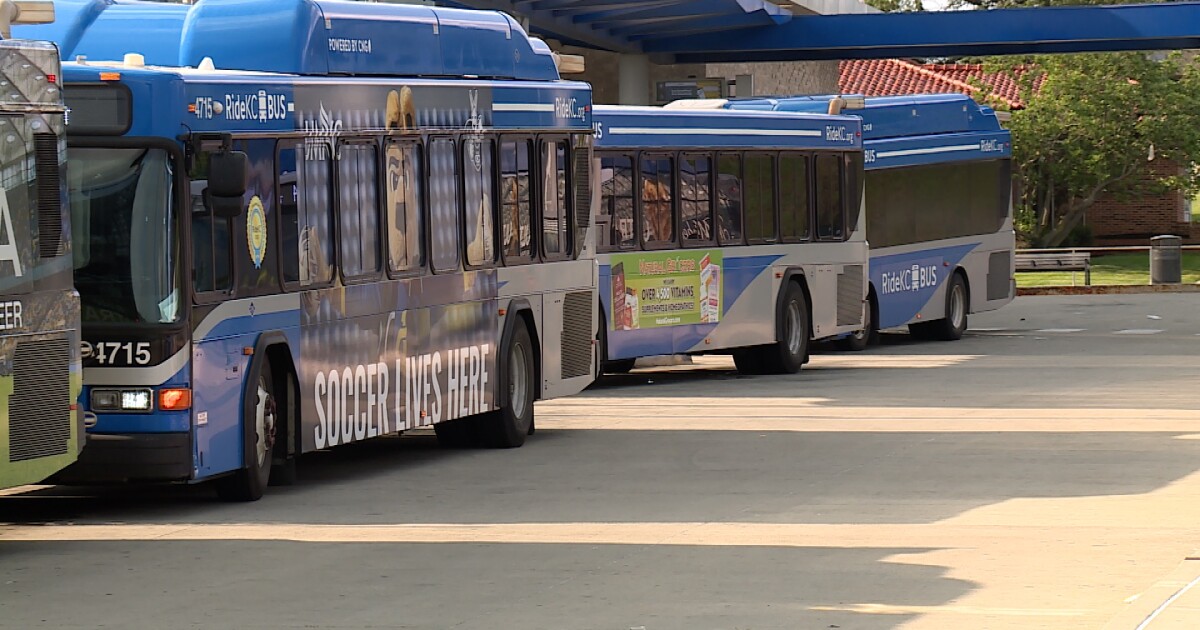
Kansas City to reduce bus transit frequency, extended hours after World Cup matches end
-

 Kentucky36 minutes ago
Public Health Student Hollie Hagan found her calling in rural Kentucky

