Montana
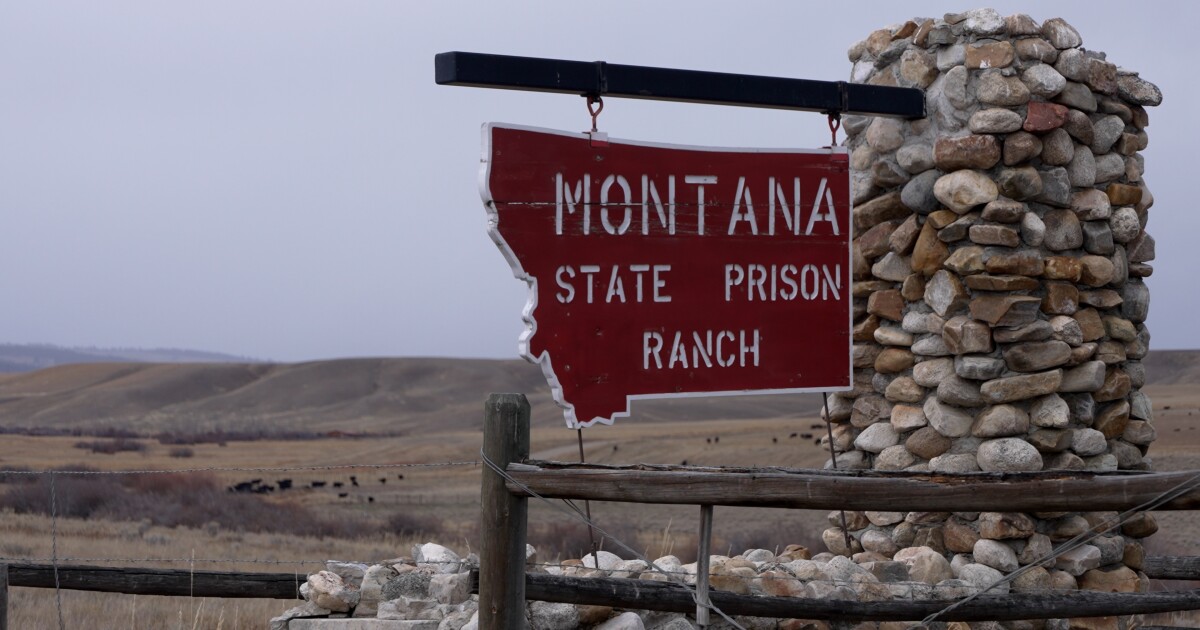
Montana State Prison water routinely positive for coliform bacteria


Montana State Prison’s drinking water has routinely tested positive for coliform, a bacteria found in fecal matter, and the facility has received numerous drinking water violations over the past three decades, according to the state’s Safe Drinking Water Information System.
Publicly available drinking water tests from the Department of Public Health and Human Service’s Environmental Lab show the prison’s aging and troubled system tested positive for coliform 11 times in 2025 and eight times in 2024.
Questions about water quality have come to the surface since a reported water pipe break at the prison 10 days ago that left inmates without consistent drinking water and in some cases not enough water, according to an inmate and family members.
But water quality at the prison appears to be a longstanding issue. The Department of Corrections said it takes those concerns seriously.
“The safety of inmates and staff members at Montana State Prison (MSP) is paramount, and any safety concerns brought to the department’s attention are addressed immediately,” Department of Corrections spokesperson Carolynn Stocker wrote in an email to the Daily Montanan. “The Department works closely with the Department of Public Health and Human Services (DPHHS) and the Department of Environmental Quality (DEQ) to ensure the safety of water.”
The facility has received seven “individual violations” since 2022. When inspections reveal issues, there is a set notification process. The violations, which follow testing, were over E. coli monitoring, multiple consumer confidence violations — a mandated water quality reporting process by the Environmental Protection Agency — as well as notifications about copper and lead.
“DEQ has informed the DOC that lead and copper values are less than federal action levels,” Stocker wrote in an email.
When there is an issue with water that requires public notification, it’s called a violation. Even things like not responding to a correction or repair request within a certain time period can be considered a violation, according to a DEQ reference sheet on federal rules surrounding coliform.
Following that notification, water facilities are asked to come back into compliance.
In an email late Monday, the Department of Corrections did not directly answer a question regarding consumer confidence report violations the Daily Montanan sent Friday. The DOC referred those questions to the Montana Department of Environmental Quality, which did not respond to the Daily Montanan by press time.
There have been about 50 tests for coliform, a different bacteria than E. coli, over the past year, according to the data set.
During those coliform tests the state also tests for E. coli. None of the E. coli tests showed the presence of that pathogen, and prison water hasn’t tested positive for that bacteria since 2000, and even then it was in non-potable water, the Department of Corrections said in an emailed response to questions from the Daily Montanan.
On Monday, inmates were handed a notification dated Oct. 10, saying that there were questions about the quality of the water supply, in this case, potentially from the infrastructure problems at the prison. Amanda McKnight, who has been advocating for inmates during the water crisis, said her husband, who is an inmate, read the statement and she transcribed it.
“Our water system recently experienced a loss of pressure, which could have resulted in contamination of the water supply,” the statement reads. “Because of the loss of pressure, it is unknown if contaminants could have infiltrated the distribution system.”
The statement goes on to say water from the prison’s supply should be boiled before usage.
“Inadequately treated water may contain disease-causing organisms, including bacteria, viruses, and parasites, which can cause nausea, cramps, diarrhea, and headaches,” the statement reads.
The DOC did not immediately respond to a request late Monday for comment on the boil order notification.
McKnight said her husband had severe stomach issues for six months after entering the prison. Even before the current water crisis, she was sending him extra money for bottled water, she said, and that’s been a consistent worry.
“It’s devastating to know that my husband and 1,600 other human beings along with the staff who work there are being forced to live in conditions we wouldn’t tolerate for animals,” McKnight, who shared the violations with the Daily Montanan, wrote in a message. “Clean water is a basic human right. The State has known about these water issues for years and has done nothing. This isn’t an accident, this is neglect.”
The testing data goes back decades, and prison water has tested positive for coliform 37 times since 2001. Coliform bacteria aren’t necessarily harmful, though their presence in drinking water can indicate pathogens are in the water.
Following a water sample, bacteria is grown in a petri dish overnight, said Ben Rigby, the executive director of Montana Rural Water Systems.
If it’s a “hit” or when a sample tests positive for a specific pathogen, they’ll take several more samples, Rigby said.
Rigby was previously the Water Treatment Superintendent city of Helena’s water system and said there’s always a possibility of false positives too. Reporting out any water issues is paramount to public trust, he said.
“That’s kind of rule number one, as an operator in a public water supply,” Rigby added.
There are significant federal regulations around water quality, including the Revised Total Coliform Rule.
“Total coliforms are a group of closely related bacteria that are natural and common inhabitants of soil and surface waters,” the rule states. “Their presence in drinking water suggests that there has been a breach or failure in the water system (for example, a hole in the pipe); and pathogens, which are disease-carrying organisms, may have entered the drinking water.”
It was unclear how high the levels were of coliform bacteria. Positive tests for coliform at the prison date back to 1981, state records show. A test on Sept. 23 of this year showed the presence of coliform in the drinking water.
In an email, the Daily Montanan asked the DOC to explain the severity of the test results and its response. A DOC spokesperson explained the process the DOC uses to meet standards but did not elaborate on the positive results for coliform.
The state samples water at the facility about three times per month, Stocker wrote in an email. Those samples are delivered to the DPHHS environmental division, which then reports the results to the Department of Environmental Quality.
“If there are any concerns with the results, Corrections works with DEQ to identify and address any problems and to ensure water meets the requirements of the federal Safe Drinking Water Act and state laws,” Stocker wrote. “This could include, but is not limited to, mitigation strategies such as boil advisories. The DOC continues to work with DEQ until a negative test result is achieved and the water is confirmed free from the contaminant. When public notice is required, MSP posts that information in all public areas at the facility for staff and in the communal areas in the prison units for inmate access.”
Sewer and water issues aren’t new at the prison, and last year, Montana Public Radio reported a sewage backup lasted for days.
“As a wife, it breaks me to know that my husband — and every man inside those walls — has been drinking, showering, and living in contaminated water for years,” said Ariana Smith, whose husband is also in the facility, said in a statement last week.
The National Guard has delivered thousands of gallons of water to the prison from the city of Deer Lodge. The prison is also drawing from two on-site wells, Lee Newspapers reported on Monday.

But there’s been major issues with the city of Deer Lodge’s water system as well. One of the city’s three public wells shut down following a 2013 violation for arsenic contamination.
“The two remaining wells are also susceptible to arsenic contamination due to the proximity of the Clark Fork River,” a 2024 Department of Natural Resources and Conservation environmental assessment states. “Having only two remaining production wells poses a severe risk to the City’s ability to provide reliable water service due to lack of redundant water supply.”
Deer Lodge — and the state prison — both lie within the Anaconda Company Smelter Superfund Site.
Milling and smelting operations produced high concentrations of arsenic, lead, copper, cadmium and zinc that contaminated soil and groundwater.
Last week, the Department of Corrections said it was going to take $21 million in appropriated money from 2025 budget legislation to “modernize” the prison’s water system following the break. This work is expected to take from 60 to 90 days, the DOC said in an Oct. 18 press release.
DOC officials said they have tried to find the source of the problem, calling in multiple water experts, the state’s National Guard and a Department of Natural Resources and Conservation command team. Last week, the DOC announced in a press release that water had been restored to the Secure Adjustment Unit and units 1 and 2 on the high-security side of the facility.
Work to stabilize water access continued over the weekend, the agency said in an Oct. 18 press release. On Monday, 13 plumbers were expected to be on site, DOC Director Brian Gootkin said in a statement. A leak was found outside the A unit in the low security side of the prison, and the DOC said maintenance staff believe repairing that will help with water pressure in units A, B and C.
Some work to excavate pipes at the prison has to be done by hand, according to the DOC.
“It seems like every time we fix one leak, another one pops up affecting the system in a different way,” Gootkin said in a press release.
The Department of Corrections also said a Department of Public Health and Human Services sanitarian inspected the prison last week and provided technical assistance on the safety and adequacy of the facility’s temporary water system.
“The temporary water system inspected today meets the highest standards to ensure the health and safety of MSP inmates and staff,” DPHHS sanitation Jenna Fisher stated in a DOC press release.
A DOC release said Fisher confirmed that the facility is supplying necessities — including portable restrooms, showers, and bottled water — in quantities they said exceed levels recommended by the Federal Emergency Management Agency.
On Friday, the Department of Corrections announced potable water trucks supplied the prison’s food factory, allowing that facility’s cooking operations to resume.
Additionally, the DOC said Fisher observed that the prison’s kitchen is maintaining safe sanitation — water is being boiled, the release said — and laundry facilities remain fully operational.
Construction planning is also progressing, with plans to replace the failing water system to begin this week, the agency said.




MISSOULA, Mont. — In this week’s Amazing America, NBC Montana is highlighting smokejumpers and their efforts to keep our communities safe during wildfire season.
NBC Montana caught up with a current and a former smokejumper to learn more about the work they do and how the job has changed throughout the years.
Jim Kitchen was a smokejumper for 20 seasons, fought over 100 fires and raised his three daughters on a smokejumper base, where he served as base commander.
Kitchen says he’ll never forget his first jump, when he started training in Fairbanks, Alaska, in 1987.
“I went, ‘That was amazing,’ and he goes, ‘Yeah,’ and I go, ‘Have you ever done anything as amazing in your life? I mean, we just made our first jump,” said Kitchen.
Kitchen told NBC Montana when he laughed his crew had to do 50 pushups.
Kitchen saw several changes during his career, including women entering a historically male-dominated field. He told NBC Montana Deanne Shulman, the first woman smokejumper, paved the way for the industry.
He recalled a time when he was on a trip to Washington, D.C. , in the early ’90s to coordinate emergency response, when a U.S. Department of State official asked him a question.
“He goes, ‘I didn’t realize men were smokejumpers.’ And I had to go, ‘Peter, I’ll have you know, there’s quite a few of us, and actually, it’s the women that are rare,’” said Kitchen “The early ladies in smokejumping, they always met and exceeded the bar, and they were instrumental in doing these winter details.”
Another change he oversaw as base commander, was moving from round parachutes used in World War II, to the ones used today.
“Ram-Air parachutes that inflate make the shape of the wing and they actually have about a 20 mph forward speed. And so you can you can fly those in much windier conditions, higher elevations,” said Kitchen.
Kitchen says the job requires you to roll with the punches and make quick decisions on the fly.
He said while training new jumpers, he taught them early to prepare and never hesitate.
“The only thing that we ask of you is that you take all the information that you can and then make a decision,” said Kitchen.
Nick Holloway, a current Missoula smokejumper, who’s been working for 14 seasons, says it’s important to rely on your training, stay positive and persevere.
“Having done this for a few years, it’s just trying to know that essentially every season is a marathon, it’s not a sprint. Just stay healthy, stay focused and keep having a good time,” said Holloway.
NBC Montana asked both men what they were most proud of during their time jumping.
Kitchen recalled fighting a fire near the Grand Canyon, when he and his crew decided to manage a fire instead of suppressing it when they ponderosa pine trees.
The crew let the fire burn to a plateau, “The Ponderosa pine has about a 20 to 30-year fire return interval in that area,” said Kitchen. “That’s one of the high points as far as land stewardship of my career is seeing fire on a landscape escape and not necessarily suppressing it but allowing it to burn, because then you’re saying it’s good for decades after that.”
Holloway told NBC Montana, while he has “too many to count,” he’s most proud that recently he jumped a 3- to 5-acre fire at Yellowstone National Park.
The fire grew to 8 acres, “So seven days later we got around everything, put it all out and essentially with a good product upon departure. So it’s just a classic example of a smokejumper fire.”
Holloway says staying fit for annual trainings, regardless of experience, is critical to staying fire-ready.
“Pushups, pullups, sit-ups, a certain amount and then a mile and a half in a certain time as well,” said Holloway.
Kitchen told NBC Montana he still does his pullups, pushups and sit-ups.
“Many of my colleagues are still in really fit shape even in their 60s, 70s and 80s,” he said.

Without federally planned public meetings about planned repeal of the 2001 policy, organizations host events in Bozeman and across the state
By Jen Clancey STAFF WRITER
As more residents arrived to a Gallatin County Fairgrounds building on March 12, organizers unfolded and added chairs to rows of people ready to listen or offer public comment about the planned repeal of the 2001 Roadless Rule. The meeting was led by a group of organizations creating public input opportunities about the rescission of the conservation policy, and Bozeman was the second to last meeting location in a series of seven across the state.
In June 2025, the U.S. The Department of Agriculture Secretary Brooke Rollins announced intentions to repeal the Roadless Rule. Adopted under the Clinton Administration, the law banned construction, re-construction and timber harvesting on more than 58 million acres of public land. In Montana, six million acres are protected as roadless.
Hilary Eisen, the federal policy director at Wild Montana, explained that a group of public land advocates collected over 4,000 signatures and petitioned the chief of the U.S. Forest Service to hold public meetings regarding the Roadless Rule repeal, but the USFS did not respond. Thirteen organizations decided to group together and plan public meetings themselves instead.
“It needs to happen, like there needs to be community conversations about this very impactful change,” Eisen told Explore Big Sky. “So we’re hoping that maybe by demonstrating to the Forest Service how this works, that they will change their mind and they’ll hold meetings, but at the very least we are hoping that we can at least provide that opportunity.”
The event, centering on the Custer-Gallatin National Forest, began with a short panel with Ryan Callahan, CEO and president of Backcountry Hunters and Anglers, Lisa Stoeffler, former Bozeman Ranger District leader with decades of forest management experience, and Vasu Sojitra, a professional mountain athlete, filmmaker and adaptive sports advocate.
Stoeffler described how protection has become more important since the Roadless Rule’s implementation, including threats of wildfire, water scarcity and climate change.
“There’s simply no good reason to upend the good work done at a local level with no rationale for doing so,” Stoeffler said. While the USFS has stated that roads promote access to fighting wildfires, research as reported by Robert Chaney in Mountain Journal, has shown that fire starts happen more frequently when in proximity to a road. In the meeting, Stoeffler shared that there are ways to improve the roadless rule, but warned against broad changes in lieu of carefully weighing site-specific solutions.
Sojitra also shared his perspective as an outdoors advocate with a disability.
“One of the biggest things for folks with disabilities is that we don’t need more roads to get places,” Sojitra said. “ We just need more programming to get to places.”
Sojitra also explained that through adaptive programming, he was able to fall in love with the outdoors, like many in the room, and that protecting the environment and wilderness is vital to health.
Public comment began later, and residents lined up one after the other to share what the Roadless Rule means to them, whether or not they support it, and why. Bozeman resident Karissa Wedman shared her experience working in conservation and wildland firefighting. She described her appreciation for protected public lands and noted that as a 25-year-old, the Roadless Rule has been in place her entire life.
“I would like to say something for people my age and younger,” Wedman said. “It’s that we don’t wanna lose this. We love this, and it’s scary to think of the rest of our lives without it.”
-

Karissa Wedman on March 12. PHOTO BY JEN CLANCEY -
Residents line up to give public comment. PHOTO BY JEN CLANCEY -
Residents pack the Gallatin County Fairgrounds building. PHOTO BY JEN CLANCEY


Another Bozeman resident, Scott Bischke, described his connection with outdoor spaces in Montana.
“ We looked at the map today—just of all the road areas in Montana—and [I’m] confident to say that we have either recreated in each one of them or at the minimum been adjacent to them, fishing, hunting, enjoying the outdoors, all the different things that we do,” he said.
He then directed his comments about the current administration and urged leadership to use the Roadless Rule to protect further lands “for the critters that live there and for future Americans to explore.”
Other commenters included a Gallatin Gateway resident speaking to protect forests for future generations, including his 8-year-old granddaughter, and an Ennis resident and board member of the Montana Logging Association, who argued that the Roadless Rule needs deep reform.
The USFS is expected to release its proposed rule and draft environmental impact statement in late March or early April. When it’s released, Wild Montana will compile all of the comments collected in meetings, both verbal and written, and send the comments to the USFS. There will be hundreds, as attendance at meetings across the state was robust, Wild Montana Organizing Director Kascie Herron said.
“I’ve been blown away personally by the amount of community response that we’ve seen in each of these towns [where] we’ve held these meetings,” Herron said. She described comments from people on both sides of the argument, and noted that it was important to host meetings that promoted the democratic process typically seen in major land management decisions.
Helena was the final meeting location after Bozeman, and the coalition will now focus on communicating with attendees and preparing for the public comment stage.
The Montana Lottery offers multiple draw games for those aiming to win big.
Here’s a look at March 17, 2026, results for each game:
Winning Mega Millions numbers from March 17 drawing
04-11-18-38-50, Mega Ball: 24
Check Mega Millions payouts and previous drawings here.
Winning Big Sky Bonus numbers from March 17 drawing
08-11-13-23, Bonus: 16
Check Big Sky Bonus payouts and previous drawings here.
Winning Millionaire for Life numbers from March 17 drawing
03-04-09-48-55, Bonus: 02
Check Millionaire for Life payouts and previous drawings here.
Feeling lucky? Explore the latest lottery news & results
When are the Montana Lottery drawings held?
- Powerball: 8:59 p.m. MT on Monday, Wednesday, and Saturday.
- Mega Millions: 9 p.m. MT on Tuesday and Friday.
- Lucky For Life: 8:38 p.m. MT daily.
- Lotto America: 9 p.m. MT on Monday, Wednesday and Saturday.
- Big Sky Bonus: 7:30 p.m. MT daily.
- Powerball Double Play: 8:59 p.m. MT on Monday, Wednesday, and Saturday.
- Montana Cash: 8 p.m. MT on Wednesday and Saturday.
- Millionaire for Life: 9:15 p.m. MT daily.
Missed a draw? Peek at the past week’s winning numbers.
This results page was generated automatically using information from TinBu and a template written and reviewed by a Great Falls Tribune editor. You can send feedback using this form.

A rogue AI led to a serious security incident at Meta

Neither the US nor Israel will ‘succeed in replacing the Iranian regime,’ retired US general says

4 House Dems vote against Women’s History Museum bill over biological women-only amendment, Republican claims

One daily habit may help you fight stress and think more clearly, study suggests

Former Wyoming volleyball star reveals how the SJSU trans scandal permanently ruined friendships on her team

Florida High School Football Rankings: Top 25 teams – Oct. 21

How old is Bo Nix? What to know about Oregon quarterback ahead of 2024 NFL Draft

Cleary's 21 help Le Moyne down Central Connecticut State 69-64 in OT

99th annual Pony Swim held in Virginia

Indiana Members Credit Union announced as new anchor tenant at Bottleworks District
4 House Dems vote against Women’s History Museum bill over biological women-only amendment, Republican claims

Iran attacks cut 17% of Qatar’s LNG capacity for up to 5 years: QatarEnergy

Cursive is back. But should students be learning the skill?

State Department to ask for bonds of up to $15,000 for visa applications from a dozen more countries

Russian tanker drifting in the Mediterranean Sea may explode
-

 Oklahoma5 days ago
Family rallies around Oklahoma father after head-on crash
-

 Michigan1 week ago
Operation BBQ Relief helping with Southwest Michigan tornado recovery
-

 Nebraska6 days ago
Wildfire forces immediate evacuation order for Farnam residents
-

 Southeast1 week ago
‘90 Day Fiancé’ alum’s boyfriend on trial for attempted murder over wild ‘Boca Bash’ accusations
-

 Detroit, MI16 hours ago
Drummer Brian Pastoria, longtime Detroit music advocate, dies at 68
-

 Georgia3 days ago
How ICE plans for a detention warehouse pushed a Georgia town to fight back | CNN Politics
-

 Connecticut1 week ago
Exclusive | Ex-CBS anchor Josh Elliott back on Connecticut dating scene after ugly Liz Cho split
-

 Massachusetts1 week ago
Massachusetts community colleges to launch apprenticeship degree programs – The Boston Globe