


BOZEMAN — The clock hit zeroes and “If You’re Gonna Play in Texas” by Alabama blared throughout Bobcat Stadium.
Defensive end Jake Vigen and defensive tackle Alec Eckert dumped a bucket of Powerade on Montana State head coach Brent Vigen (Jake’s father). Fans stormed the field in celebration of the full circle moment.
After coming up short in the FCS national championship in 2021, No. 1 MSU booked a return trip to Frisco, Texas, with a 31-17 win over No. 4 South Dakota Saturday at Bobcat Stadium.
The Bobcats will face No. 2 North Dakota State in the FCS title game on Jan. 6.
MSU has ended its season against Missouri Valley Football Conference teams each of the last three seasons, with NDSU in the 2021 title game, South Dakota State in the 2022 semis and NDSU again in the 2023 second round.
People are also reading…
Now the Bobcats are “back where we belong,” MSU quarterback Tommy Mellott said. Defensive end Brody Grebe added that he’s glad the opponent will be NDSU because the Bobcats have “something to prove.”
“It’s absolutely a blessing to keep playing football into January,” Mellott said. “That’s what we’re all about here at Montana State.”
Montana State quarterback Tommy Mellott talks to reporters after the Bobcats’ 31-17 win over South Dakota in the semifinals of the FCS playoffs Saturday, Dec. 21, 2024, at Bobcat Stadium in Bozeman.
Brent Vigen called it a complete “team win,” with MSU making plays in all three phases. Despite giving up two explosive plays in the first half — rushing touchdowns of 55 and 45 yards, respectively — and only scoring once in the second half, MSU “ultimately found a way” to stave off USD.
Montana State head football coach Brent Vigen talks to reporters after the Bobcats’ 31-17 win over South Dakota in the semifinals of the FCS playoffs Saturday, Dec. 21, 2024, at Bobcat Stadium in Bozeman.
Punter Brendan Hall — who Mellott said has “a bazooka for a leg” — flipped the field with five punts, averaging 54 yards per punt.
MSU finished with 356 total yards (222 rushing, 134 passing) and USD had 371 yards (236 passing, 135 rushing). Mellott had 125 rushing yards and two TDs on 17 carries, and went 8 of 17 for 134 yards and a TD passing.
From left, South Dakota fullback Travis Theis, head football coach Bob Nielson and defensive back Dennis Shorter talk to reporters after the Coyotes’ 31-17 loss to Montana State in the semifinals of the FCS playoffs Saturday, Dec. 21, 2024, at Bobcat Stadium in Bozeman.
Vigen said if Mellott — a Walter Payton Award finalist — isn’t the most impactful player in FCS, it will be decided on the field in the title game against NDSU QB Cam Miller, a fellow Walter Payton top-three finalist.
Mellott got to work quickly with a pass to wide receiver Taco Dowler for a 20-yard gain. Dowler also capped off the opening drive with a 34-yard touchdown.
TACO TIME TACO TIME 🌮🌮@DowlerTaco x @Tommy_Mellott
📺 ABC#BobcatBuilt | #CATS pic.twitter.com/HuyoCB2QTj
— Montana State Football (@MSUBobcats_FB) December 21, 2024
Dowler led MSU with four catches for 94 yards.
“He’s a stud,” Mellott said. “We got to find ways every single week to get him the ball, and I think we’ve done a really good job of that.”
Coyotes running back/fullback Travis Theis broke several tackles en route to the end zone on a 55-yard TD run. Safeties Dru Polidore and Rylan Ortt initially missed, followed by linebacker Neil Daily missing and colliding with defensive back Andrew Powdrell.
Theis for the Tie! 🙌@SDCoyotesFB RB breaks loose for a 55-yard touchdown to even the score!#FCSPlayoffs x 🎥 ABC pic.twitter.com/oShCPoukkx
— NCAA FCS Football (@NCAA_FCS) December 21, 2024
Theis finished with 110 rushing yards on 14 carries, along with seven catches for 80 yards.
“We had a heck of a time with Theis,” Vigen said, adding, “That was something we anticipated, that he was going to be one of the better players that we’ve seen all year.”
MSU regained the lead with a 5-yard TD run by Mellott.
BUTTE BUILT 😤
📺 ABC@Tommy_Mellott | #BobcatBuilt pic.twitter.com/F6rbcIjbD8
— Montana State Football (@MSUBobcats_FB) December 21, 2024
The Coyotes opened the second quarter with another big run — this time a 45-yard TD scamper by RB Charles Pierre Jr. It’s the first time the Bobcats have surrendered multiple runs of 45-plus yards in a single game this season.
Pierre Powers Ahead 🏃♂️
Charles Pierre Jr. takes it 45 yards to the house!#FCSPlayoffs x 🎥 ABC / @SDCoyotesFB pic.twitter.com/ptvbHqoItq
— NCAA FCS Football (@NCAA_FCS) December 21, 2024
That run also put USD over 100 rushing yards. But the Coyotes were held to 45 rushing yards the rest of the game. Pierre finished with 57 yards on four carries.
“We knew we had to get those (explosive plays) out because besides that, they weren’t having a ton of success,” Grebe said, adding, “And that’s going to happen in those heavy personnels.
“But getting those big plays stopped, those explosive plays, that’s what helped us in the second half ultimately close out that game.”
Montana State defensive end Brody Grebe talks to reporters after the Bobcats’ 31-17 win over South Dakota in the semifinals of the FCS playoffs Saturday, Dec. 21, 2024, at Bobcat Stadium in Bozeman.
MSU rattled off a 12-play, 74-yard scoring drive to regain the lead. After a defensive holding call on USD, RB Scottre Humphrey scored a 1-yard TD.
MSU kicker Myles Sansted added a 28-yard field goal with 8 seconds left in the first half to make it 24-14 MSU at the break.
The Bobcats led in total yardage (269-183) and in time of possession (20:28-9:32) at halftime. Mellott also surpassed 1,000 career playoff rushing yards (1,006) and the Bobcats broke their single-season rushing record (4,428) in the first half.
While he would’ve liked a TD to end the first half — as well as better offensive efficiency in the second half — Vigen said controlling time of possession was critical, especially in the first half. MSU ultimately won 32:04-27:56.
“We were just trying to bring it home,” Vigen said. “And ultimately we were able to do that.”
Mellott got MSU back to midfield on a 26-yard scramble. He later bobbled the snap on a third-and-1, burst up the middle, hurdled USD’s Josiah Ganues and scored a 41-yard TD to put MSU up 31-14.
UNBELIEVABLE 😱
TOMMY MELLOTT IS HIM.
📺 ABC@Tommy_Mellott | #BobcatBuilt pic.twitter.com/hUWw85AtgA
— Montana State Football (@MSUBobcats_FB) December 21, 2024
Vigen said it might be the craziest play he’s seen from Mellott, a product of a “fortuitous bounce” and taking advantage of chaos.
“That play, the unscripted, the competitive nature, he certainly could have gone down on that play,” Vigen added. “Somehow he kept his balance and I’m sure they were wondering what the heck just happened.”
The Coyotes later kicked a 46-yard FG to make it 31-17.
USD had two potential scoring drives in the fourth quarter snuffed out by the MSU defense. The Coyotes lost 11 yards on a botched snap. On a fourth-and-13, tight end JJ Galbreath was knocked out of bounds short of the line to gain by MSU DB Tayden Gray.
On the second drive, Grebe and DE Kenneth Eiden IV bull-rushed Bouman for a sack on a third-and-5. Cornerback Simeon Woodard broke up a pass intended for USD’s Carter Bell in the end zone on fourth-and-10.
Vigen said the Bobcats defended the pass well all game, largely holding the Coyotes to check downs. Bouman went 20 of 29 for 236 yards, with three completions of 20-plus yards.
“We did not give them the home run, and they were going after the home run over and over again,” Vigen said, adding, “We got ourselves in some one-on-ones and we were able to make those plays and really challenge them.”
Montana State quarterback Tommy Mellott (4) flips the ball out of his hands after scoring against South Dakota during an FCS semifinal game Saturday at Bobcat Stadium.
Grebe also pointed to the win over UC Davis, when the Aggies nearly overcame a 30-8 deficit in the fourth quarter. On Saturday, the Bobcats were once again in danger of losing momentum.
“Today, we were able to get those stops, and that was huge for our team to keep a little comfort there, that we could finish out the game with the two-score lead,” Grebe added.
The last gasp for USD came on an attempted hook-and-ladder from Galbreath to Quaron Adams. But Adams couldn’t handle the lateral and Grebe recovered the fumble. Mellott kneeled it out to seal the win.
Montana State’s Brody Grebe recovers a South Dakota fumble with 1:41 left to secure the Bobcats’ 31-17 victory, which earned them a trip back to the FCS championship.
It was the same fashion MSU punched its ticket to Frisco in 2021, with then-DE Daniel Hardy recovering the ball to beat SDSU 31-17.
“There’s nothing like that,” Grebe added. “And I’m so happy that I was able to go out this way in Bobcat Stadium.”
After the game felt “pretty surreal” for Grebe, who still remembers playing throughout the 2021 playoff run as a freshman alongside seniors he admired. Mellott said he was overwhelmed during that run and trying to take every game one at a time.
Now, the Bobcats have the built-in experience for another run at a national title. Vigen said his team will “not leave a stone unturned” as they look toward a rematch against the Bison.
“We’re going to have to prepare like crazy over the next couple weeks to put ourselves in position,” Vigen added. “But I think that we’re gonna go down there with a team that’s going to be right in the fight.”
The Montana State football team runs out before its game against South Dakota in the semifinals of the FCS playoffs Saturday, Dec. 21, 2024, at Bobcat Stadium in Bozeman.
Photos: Montana State Bobcats beat South Dakota Coyotes in FCS semifinals

Montana State running back Adam Jones (23) looks ahead while wide receiver Taco Dowler (14) blocks during an FCS semifinal game against South Dakota Saturday at Bobcat Stadium.
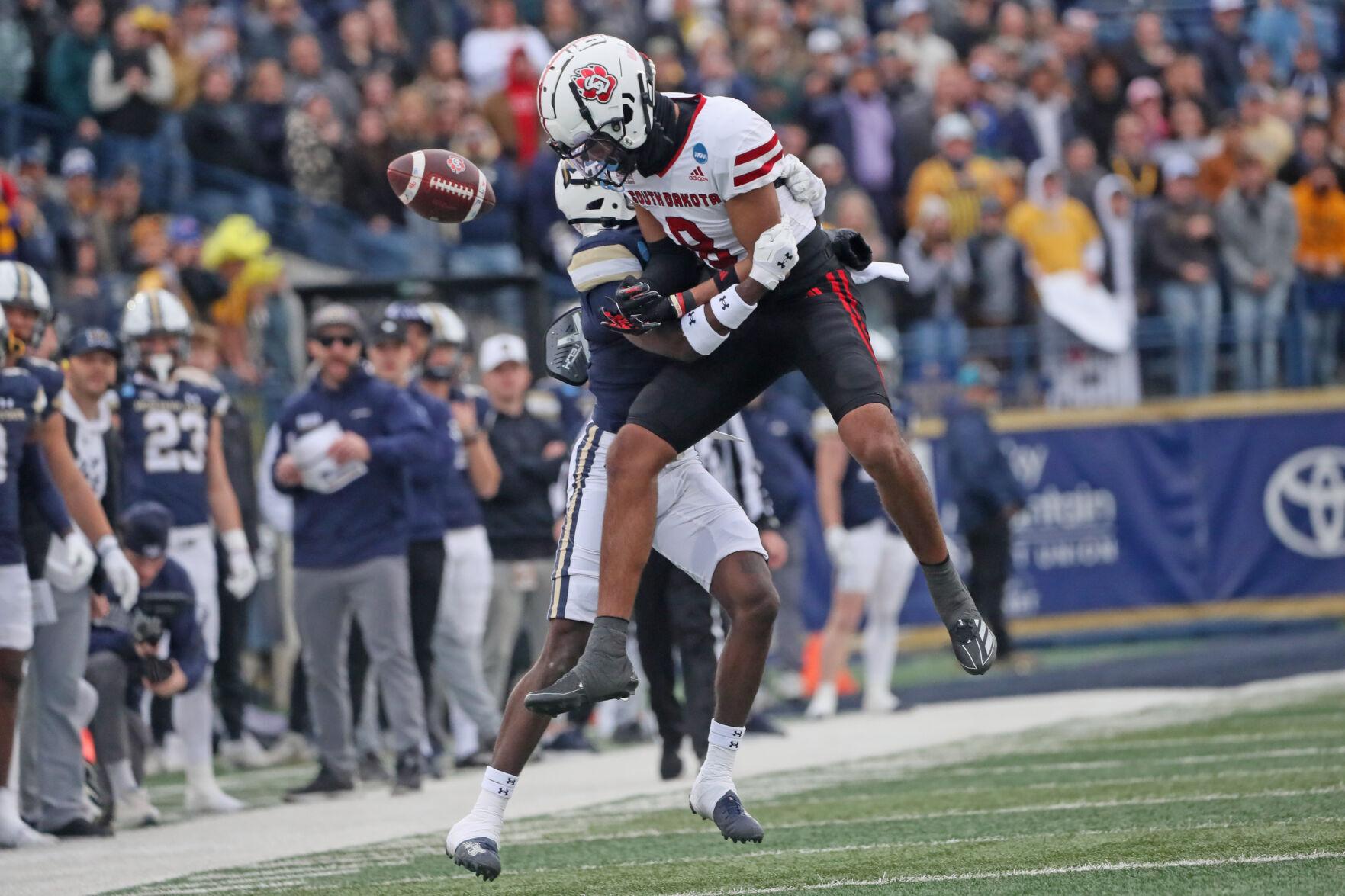
Montana State cornerback Jon Johnson (4) breaks up a pass intended for South Dakota’s Javion Phelps (8) during an FCS semifinal game Saturday at Bobcat Stadium.

Montana State quarterback Tommy Mellott (4) flips the ball out of his hands after scoring against South Dakota during an FCS semifinal game Saturday at Bobcat Stadium.

Montana State’s Kenneth Eiden IV (11) and Paul Brott (96) celebrate a stop during an FCS semifinal game against South Dakota Saturday at Bobcat Stadium.

Montana State quarterback Tommy Mellott scrambles during an FCS semifinal game against South Dakota Saturday at Bobcat Stadium.

South Dakota’s Charles Pierre Jr. (3) runs away from the Montana State defense en route to the end zone in an FCS semifinal game Saturday.

South Dakota’s Charles Pierre Jr. (3) runs away from the Montana State defense en route to the end zone in an FCS semifinal game Saturday.

Montana State defensive end Brody Grebe (41) fights through a block during an FCS semifinal game against South Dakota Saturday at Bobcat Stadium.

The Montana State student section and Champ the mascot quarterback Tommy Mellott (4) set up the offense during an FCS semifinal game against South Dakota Saturday at Bobcat Stadium.

Montana State’s McCade O’Reilly (43) and Brody Grebe (41) pursue South Dakota’s Travis Theis (5) during an FCS semifinal game Saturday at Bobcat Stadium.

Montana State quarterback Tommy Mellott (4) tries to evade South Dakota’s Dennis Shorter (2) during an FCS semifinal game Saturday at Bobcat Stadium.

The Montana State student section and Champ the mascot watch quarterback Tommy Mellott (4) set up the offense during an FCS semifinal game against South Dakota Saturday at Bobcat Stadium.

Montana State cornerback Jon Johnson (4) breaks up a pass intended for South Dakota’s Javion Phelps (8) during an FCS semifinal game Saturday at Bobcat Stadium.

Montana State wide receiver Taco Dowler makes a catch during an FCS semifinal game against South Dakota Saturday at Bobcat Stadium.

Montana State defensive end Brody Grebe (41) pursues South Dakota running back Travis Theis (right) during an FCS semifinal game Saturday at Bobcat Stadium.

Montana State’s Jhase McMillan (12) tackles South Dakota’s Keyondray Logan-Jones (7) on a kickoff return during an FCS semifinal game Saturday at Bobcat Stadium.

Montana State quarterback Tommy Mellott (4) handles the snap from center Cole Sain (56) during an FCS semifinal game against South Dakota Saturday at Bobcat Stadium.

Montana State’s Adam Jones (23), fullback Rohan Jones (8) and wide receiver Taco Dowler (14) celebrate a touchdown during an FCS semifinal game against South Dakota Saturday at Bobcat Stadium.

Montana State’s Jhase McMillan (12) tackles South Dakota’s Keyondray Logan-Jones (7) on a kickoff return during an FCS semifinal game Saturday at Bobcat Stadium.

Montana State quarterback Tommy Mellott (4) attempts to hurdle South Dakota’s Dennis Shorter (2) during an FCS semifinal game Saturday at Bobcat Stadium.

Montana State quarterback Tommy Mellott (4) attempts to hurdle South Dakota’s Dennis Shorter (2) during an FCS semifinal game Saturday at Bobcat Stadium.

Montana State quarterback Tommy Mellott (4) attempts to hurdle South Dakota’s Dennis Shorter (2) during an FCS semifinal game Saturday at Bobcat Stadium.

Montana State wide receiver Taco Dowler makes a catch during an FCS semifinal game against South Dakota Saturday at Bobcat Stadium.

Montana State head coach Brent Vigen looks on during an FCS semifinal game against South Dakota Saturday at Bobcat Stadium.

Montana State wide receiver Taco Dowler (14) tries to evade South Dakota defenders during an FCS semifinal game Saturday at Bobcat Stadium.

Montana State quarterback Tommy Mellott (4) fires a pass while pressured by South Dakota’s Nick Gaes (54) during an FCS semifinal game Saturday at Bobcat Stadium.

Montana State running back Adam Jones (23) fights through a tackle against South Dakota during an FCS semifinal game Saturday at Bobcat Stadium.

Montana State wide receiver Taco Dowler makes a catch during an FCS semifinal game against South Dakota Saturday at Bobcat Stadium.

Montana State’s Unterrio Latin-Henley celebrates beating South Dakota in the semifinals and the Bobcats going to Frisco, Texas, for the FCS National Championship on Saturday, Dec. 21 at Bobcat Stadium.

Montana State fans rush the field after beating South Dakota in the FCS semifinals on Saturday, Dec. 21 at Bobcat Stadium.

Montana State fans rush the field after beating South Dakota in the semifinals on Saturday, Dec. 21 at Bobcat Stadium.

Montana State’s Logan Fredericksen hugs a teammate in the celebration on the field after beating South Dakota and advancing to the FCS Championship on Saturday, Dec. 21 at Bobcat Stadium.

Montana State’s Hunter Provience (88) hugs Rylan Schlepp in the celebration on the field after beating South Dakota to advance to the FCS Championship on Saturday, Dec. 21 at Bobcat Stadium.

Montana State’s Rylan Schlepp (88) hugs Montana State President Waded Cruzado after the Bobcats beat South Dakota and advanced to the FCS Championship on Saturday, Dec. 21 at Bobcat Stadium.

Montana State’s Colter Petre high fives fans as he leaves the field on Saturday, Dec. 21, at Bobcat Stadium.

Montana State’s Ty McCullouch hugs a loved one as defensive line coach/co-defensive coordinator Shawn Howe (right) after advancing to the FCS Championship on Saturday, Dec. 21 at Bobcat Stadium.

Montana State’s McCade O’Reilly hugs a loved one after the Bobcats beat South Dakota and advanced to the FCS Championship on Saturday, Dec. 21, at Bobcat Stadium.

Montana State’s McCade O’Reilly smokes a cigar after after the Bobcats beat South Dakota and advanced to the FCS Championship on Saturday, Dec. 21 at Bobcat Stadium.

Montana State’s Brendan Hall signs fans’ hats after the Bobcats beat South Dakota and advanced to the FCS Championship on Saturday, Dec. 21, at Bobcat Stadium.

A Montana State fan rests on his father’s shoulder on the field after the Bobcats beat South Dakota and advanced to the FCS Championship on Saturday, Dec. 21 at Bobcat Stadium.

Montana State fans gather on the field to celebrate after the Bobcats beat South Dakota and advanced on Saturday, Dec. 21, at Bobcat Stadium.

Montana State’s Carson Williams celebrates beating South Dakota in the FCS semifinals Saturday at Bobcat Stadium.

Montana State fans celebrate the defense stopping South Dakota on Saturday, Dec. 21 at Bobcat Stadium.

Montana State’s Tommy Mellott runs the ball during the semifinal game against South Dakota on Saturday, Dec. 21 at Bobcat Stadium.

Montana State’s Spirit of the West cheer the football team on during the semifinal game against South Dakota on Saturday, Dec. 21, at Bobcat Stadium.

Montana State’s Bryce Grebe defends a pass to South Dakota’s JJ Galbreath during the semifinal game on Saturday, Dec. 21 at Bobcat Stadium.

Montana State fans celebrate the defense stopping South Dakota on Saturday, Dec. 21, at Bobcat Stadium.

Champ crowd surfs during the semifinal game against South Dakota on Saturday, Dec. 21, at Bobcat Stadium.

Montana State fans celebrate the defense stopping South Dakota on Saturday, Dec. 21 at Bobcat Stadium.

Montana State’s spirit squad celebrates the team going to Frisco for the FCS National Championship on Saturday, Dec. 21 at Bobcat Stadium.

Montana State’s Unterrio Latin-Henley celebrates beating South Dakota in the semifinals and the team going to Frisco for the FCS National Championship on Saturday, Dec. 21, at Bobcat Stadium.

Montana State’s Carson Williams celebrates a tackle of South Dakota’s Keyondray Jones-Logan during the semifinal game on Saturday, Dec. 21 at Bobcat Stadium.

Montana State’s Ty McCullouch runs past South Dakota’s Nick Gaes as Rylan Schlepp (88) blocks during the semifinal game on Saturday, Dec. 21 at Bobcat Stadium.

The Montana State’ fans motion to a Bobcat first down during the semifinal game against South Dakota on Saturday, Dec. 21 at Bobcat Stadium.

Montana State’s Taco Dowler catches and runs with the ball as South Dakota’s Josiah Ganues (6) pursues during the semifinal game on Saturday, Dec. 21 at Bobcat Stadium.

Montana State’s Tommy Mellott catches a snap from Cole Sain (56) during the semifinal game against South Dakota on Saturday, Dec. 21 at Bobcat Stadium.

Montana State’s Tommy Mellott runs for a touchdown during the semifinal game against South Dakota on Saturday, Dec. 21, at Bobcat Stadium.

Montana State’s Tommy Mellott scores a touchdown during the semifinal game against South Dakota on Saturday, Dec. 21 at Bobcat Stadium.

Montana State fans cheer on the team during the semifinal game against South Dakota on Saturday, Dec. 21 at Bobcat Stadium.

Montana State fans cheer on the team during the semifinal game against South Dakota on Saturday, Dec. 21 at Bobcat Stadium.

Montana State fans cheer on the team during the semifinal game against South Dakota on Saturday, Dec. 21, at Bobcat Stadium.

Montana State’s Tommy Mellott throws a pass during the semifinal game against South Dakota on Saturday, Dec. 21 at Bobcat Stadium.

The Montana State’s Lonyatta Alexander Jr. gets tackled by a South Dakota defender on Saturday, Dec. 21 at Bobcat Stadium.

The Montana State’s Lonyatta Alexander Jr. runs a route against South Dakota on Saturday, Dec. 21 at Bobcat Stadium.

The Montana State’s Tommy Mellott jumps over South Dakota’s Dennis Shorter during the semifinal game against South Dakota on Saturday, Dec. 21 at Bobcat Stadium.

Montana State’s Lonyatta Alexander Jr. celebrates a touchdown from Scottre Humphrey (22) during the semifinal game against South Dakota on Saturday, Dec. 21 at Bobcat Stadium.

Montana State’s Zac Waible celebrates a touchdown during the semifinal game against South Dakota on Saturday, Dec. 21 at Bobcat Stadium.

Montana State’s spirit squad performs on the sidelines during the semifinal game against South Dakota on Saturday, Dec. 21 at Bobcat Stadium.

Montana State fans celebrate the defense stopping South Dakota on Saturday, Dec. 21 at Bobcat Stadium.

From left, Montana State senior captains Tommy Mellott, Justus Perkins, Rylan Ortt and Brody Grebe hold hands as they head out for the coin toss before their game against South Dakota on Saturday, Dec. 21 at Bobcat Stadium.

Montana State’s Taco Dowler catches a touchdown pass during the semifinal game against South Dakota on Saturday, Dec. 21 at Bobcat Stadium.

Montana State’s Myles Sansted kicks an extra point during the semifinal game against South Dakota on Saturday, Dec. 21 at Bobcat Stadium.

Montana State’s Jhase McMillan (12) and other Bobcats tackle South Dakota’s Keyondray Jones-Logan during the semifinal game on Saturday, Dec. 21 at Bobcat Stadium.

Montana State rodeo team prepares to run onto the field to kick off the semifinal game against South Dakota on Saturday, Dec. 21 at Bobcat Stadium.

The Montana State ROTC Team carries the flag onto the field before the semifinal game against South Dakota on Saturday, Dec. 21 at Bobcat Stadium.

Montana State fans stand for the national anthem before the semifinal game against South Dakota on Saturday, Dec. 21 at Bobcat Stadium.

A Montana State salutes during the national anthem before the semifinal game against South Dakota on Saturday, Dec. 21 at Bobcat Stadium.

Montana State Spirit Squad members hug before their final home game of the 2024 season at Bobcat Stadium.

Montana State Spirit Squad hugs before their final home game of the 2024 season at Bobcat Stadium.

Aidan Garrigan (85) and other member of the Montana State football team runs out onto the field before the semifinal game against South Dakota on Saturday, Dec. 21 at Bobcat Stadium.

Montana State quarterback Tommy Mellott braces for impact during an FCS semifinal game against South Dakota Saturday at Bobcat Stadium.

Montana State’s Zac Crews (36) and Paul Brott (96) rush the South Dakota offense during an FCS semifinal game Saturday at Bobcat Stadium.

Montana State running back Adam Jones runs down the sideline during an FCS semifinal game against South Dakota Saturday at Bobcat Stadium.

Montana State running back Adam Jones runs down the sideline during an FCS semifinal game against South Dakota Saturday at Bobcat Stadium.

Montana State running back Adam Jones (23) runs while wide receiver Taco Dowler (14) during an FCS semifinal game against South Dakota Saturday at Bobcat Stadium.

Montana State running back Adam Jones (23) runs down the sideline during an FCS semifinal game against South Dakota Saturday at Bobcat Stadium.

Montana State head coach Brent Vigen looks on during an FCS semifinal game against South Dakota Saturday at Bobcat Stadium.

Montana State quarterback Tommy Mellott eyes the South Dakota defense during an FCS semifinal game Saturday at Bobcat Stadium.

The Montana State Bobcats took on the South Dakota Coyotes in the semifinals of the FCS playoffs at Bobcat Stadium on Saturday, December 21, 2024.

Montana State defensive end Brody Grebe (41) comes off a block during an FCS semifinal game against South Dakota Saturday at Bobcat Stadium.

Montana State punter Brendan Hall (93) punts during an FCS semifinal game against South Dakota Saturday at Bobcat Stadium.

Montana State quarterback Tommy Mellott runs against South Dakota during an FCS semifinal game Saturday at Bobcat Stadium.

Montana State captains Brody Grebe (41), Rylan Ortt (26), Justus Perkins (65) and Tommy Mellott (4) walk out for the pregame coin toss ahead of an FCS semifinal game against South Dakota Saturday at Bobcat Stadium.

Montana State’s Cole Sain (56) and Burke Mastel (64) line up before a play against South Dakota in an FCS semifinal game Saturday at Bobcat Stadium.

Montana State center Justus Perkins (65) runs out with the Montana state flag ahead of an FCS semifinal game against South Dakota Saturday at Bobcat Stadium.

Montana State offensive lineman Titan Fleischmann (66) and Taco Dowler (14) celebrate in the end zone during an FCS semifinal game against South Dakota Saturday at Bobcat Stadium.

Montana State’s Cole Sain (56), Burke Mastel (64) and Conner Moore (72) line up before a play against South Dakota in an FCS semifinal game Saturday at Bobcat Stadium.

Montana State quarterback Tommy Mellott looks downfield to pass during an FCS semifinal game against South Dakota Saturday at Bobcat Stadium.

Montana State quarterback Tommy Mellott (4) eyes the South Dakota defense during an FCS semifinal game Saturday at Bobcat Stadium.

Montana State quarterback Tommy Mellott looks for the snap during an FCS semifinal game against South Dakota Saturday at Bobcat Stadium.

Montana State center Justus Perkins (65) runs out with the Montana state flag ahead of an FCS semifinal game against South Dakota Saturday at Bobcat Stadium.

Montana State center Justus Perkins runs out with the Montana state flag ahead of an FCS semifinal game against South Dakota Saturday at Bobcat Stadium.

Montana State offensive line coach Al Johnson (center) talks to offensive linemen Titan Fleischmann (66), Burke Mastel (64) and Conner Moore (72) during an FCS semifinal game against South Dakota Saturday at Bobcat Stadium.

Montana State running backs coach Sam Mix (left) and offensive assistant Sean Chambers (center) signal from the sideline during an FCS semifinal game Saturday at Bobcat Stadium.

Montana State quarterback Tommy Mellott runs up the middle against South Dakota State during an FCS semifinal game Saturday at Bobcat Stadium.

Montana State center Justus Perkins (65) yells before an FCS semifinal game against South Dakota Saturday at Bobcat Stadium.

Montana State’s Lonyatta Alexander Jr. (2), Ryan Lonergan (87) and Scottre Humphrey (22) pose in the end zone during an FCS semifinal game against South Dakota Saturday at Bobcat Stadium.




![Best Of Hannah Montana [Clear LP]](https://www.rollingstone.com/wp-content/uploads/2026/03/best-of-hannah-montana-lp.jpg?w=1024)

![Hannah Montana 2 (Original Soundtrack)[Color Splatter LP]](https://www.rollingstone.com/wp-content/uploads/2026/03/hannah-montana-2.jpg?w=1024)





