


Miley Cyrus Claims Dad Billy Ray Once Smoked Pot on ‘Hannah Montana’ Set
Montana
Indian Education for more


The MT Lowdown is a weekly digest that showcases a more personal side of Montana Free Press’ high-quality reporting while keeping you up to speed on the biggest news impacting Montanans. Want to see the MT Lowdown in your inbox every Friday? Sign up here.
Montana’s K-12 public schools are constitutionally required to recognize the “distinct and unique cultural heritage of American Indians,” and districts receive annual funding from the state to enact that mandate. But plaintiffs in an ongoing lawsuit allege a majority of Montana school districts don’t properly implement the pedagogy known as Indian Education for All.
In the class action lawsuit, brought by a group of Montana students, families and tribes against the state Office of Public Instruction and Montana Board of Public Education, plaintiffs argue that school districts have improperly used funds meant to support Indian Education for All efforts.
In a victory for tribes and other advocates, the Montana Board of Public Education recently reached a settlement agreement, promising to improve how the state teaches Native American history and culture. Despite the settlement, however, the lawsuit continues against the Office of Public Instruction — the agency generally responsible for providing state funding, including for Indian Education for All.
When Joseph Hammar, manager of the new media arts program at Poplar Middle School, heard news of the settlement, his first thought was, “It’s about time.”
“It’s pretty obvious that there’s not a whole lot of schools that are implementing this,” he told Montana Free Press in a recent interview.
Located on the Fort Peck Reservation in northeast Montana, Poplar Middle School serves about 243 students, ranging from fifth to eighth grade.
Hammar and his colleague Jacob Turcotte, an English teacher at the middle school, say incorporating Indian Education for All into curricula is vital not just for student success, but for instilling a sense of pride and belonging.
Turcotte manages the school’s Buffalo Unity Project, a two-week curriculum each fall where students learn from knowledge-keepers about Assiniboine and Sioux culture and participate in a buffalo harvest. Turcotte says the students use geometry to set up tipis. In science class, they learn about genetics. In Hammar’s media arts program, students produce short films on topics like the significance of long hair in Native cultures or the importance of smudging.
During the project, Turcotte said attendance is at its highest and behavioral issues decrease. Last fall, the school invited students from Culbertson, a majority-white community, to participate, too.
Prior to launching the project, Turcotte said he could tell students struggled with identity.
“A lot of our students here, they’re from Fort Peck, the home of the Assinibione and Sioux people, but we would ask students what kind of Indian they were and they couldn’t answer that question,” he said. “That was very alarming. These kids know they’re Indian but don’t know what tribe they come from. … By reconnecting our people to who they are and where they come from, it gives them something to be proud of.”
It’s not just majority-Native schools that stand to benefit from Indian Education for All, Turcotte said, adding that Montana is home to seven reservations and 12 tribes.
“It’s important that non-Native students understand how things were, how things played out with the Native Americans and to teach the truth,” he said. “Don’t teach the whitewashed version. … When we teach truth, I think we’re less likely to repeat it.”
Turcotte and Hammar know it can be difficult for non-Native teachers, in particular, to teach others about Indigenous history and culture.
“My advice to them is reach out, ask questions,” Turcotte said. “I know it’s kind of scary and intimidating for a non-Native to ask certain questions, but honestly, if you ask with your heart in the right place, nobody will be offended because what people are trying to do is educate. … Just reach out. Reach out to the tribal cultural department. Reach out to the Office of Public Instruction. There are resources out there, just don’t be afraid to ask.”
READ MORE: Under settlement, Montana Board of Public Ed vows to improve how state teaches Native American history and culture.
—Nora Mabie
Wildlife Watch 🐻
Gov. Greg Gianforte and Montana Fish, Wildlife and Parks this week traveled to south-central Montana’s Ruby Valley to highlight the state’s work to mitigate conflicts with grizzly bears.
Heart of the Rockies, a Missoula-based conservation nonprofit, plans to work alongside 12 landowner-led groups, two tribes and about 10 communities to deploy conflict prevention tools, including electric fencing, range riders, carcass disposal programs and bear-resistant garbage cans. The work is supported by a $2.25 million grant from the U.S. Interior Department and the National Fish and Wildlife Foundation.
Six formal agreements with landowner-led groups are in place, according to a press release the governor’s office issued Tuesday highlighting Gianforte’s trip to the Barnosky Ranch in Madison County to talk about the state’s partnership with Heart of the Rockies.
“Montana ranchers are on the front lines of wildlife conflict, and they need the resources to safely prevent contact before it happens,” Gianforte said in the release. “With grizzly bears on the move again this spring, Montana landowners and local partners are utilizing investments to prepare and protect livestock across 1.2 million acres.”
If all goes according to plan, the program will allow for the installation and maintenance of approximately 40,000 feet of electric fencing and the deployment of about 3,000 bear-resistant garbage cans.
Next year, the livestock loss board administered by the Montana Board of Livestock will distribute approximately $525,000 to make mitigation measures such as livestock guard dogs and carcass compost programs available to agricultural producers. The board’s hope is that preventing conflicts on the front end will reduce the need for payments made for cattle or sheep losses attributed to grizzly predation.
For now, grizzlies remain federally protected under the Endangered Species Act, though the Trump administration’s interest in maintaining the bruins’ protected status remains unclear.
—Amanda Eggert
Tough Nut to Crack 🌰
The committee tasked with overseeing the transfer of patients with Alzheimer’s disease, dementia and traumatic brain injuries out of the Montana State Hospital met this week to assess just how improbable achieving that mandate is before a July deadline.
The Transition Review Committee — which includes state lawmakers, health care experts and patient representatives — launched after a bipartisan group of legislators passed House Bill 29 in 2023. The bill, sponsored by then-Rep. Jennifer Carlson, R-Manhattan, directed the state health department to move this difficult-to-care-for group of patients out of the adult psychiatric facility and into settings that can provide more appropriate care for people with severe memory and cognitive conditions.
Gov. Greg Gianforte originally vetoed the bill, calling its 2025 deadline for transferring patients “unworkable.” The 2023 Legislature later overrode that veto, a maneuver that requires a two-thirds majority from the combined House and Senate chambers.
This week, after nearly two years of work, state hospital and health department representatives from Gianforte’s administration indicated that the bill’s mission is still inherently Sisyphean.
“There are some [people] that you’re just not going to be able to place,” said Dr. Kevin Flanigan, the Montana State Hospital CEO, during a Wednesday presentation to the committee. “I can’t just turn them out. They’re not ready to be out in the community … We’ll have to figure out: How do we help these patients? Where are they best served?”
The puzzle, as described by Flanigan and other Montana health care experts who testified to the committee Wednesday, is akin to solving a Rubik’s cube with one hand. Typically, state hospital staff appeal to a nursing home or assisted living facility with the memory or behavioral health expertise necessary to care for a particular patient. Those facilities, in turn, often ask the state to give them additional Medicaid reimbursements to cover a higher level of care. The add-on payments sometimes get denied, leading local facilities to turn down new patients.
Flanigan said his team was still striving to achieve the metrics laid out in HB 29. In January, the hospital had roughly 15 patients who fell under the legislation’s definitions. As of Wednesday, Flanigan said the number had decreased to eight.
He had only general suggestions of where the remaining patients might go, not to mention any new patients who might fall under HB 29’s directive. Perhaps private nursing homes at the community level. Perhaps the Montana Mental Health Nursing Care Center in Lewistown. Perhaps, even, other parts of the state hospital.
In that scenario, Flanigan said, some patients who continue to stay at the hospital may be regularly monitored by two dedicated staffers, a setup he described as an “enormous cost.” As to what unit the patients would live on? Flanigan said he wasn’t sure.
“We’d have to design that operational plan to be sure that we still fall within the intent of HB 29 and not just become a long-term placement facility for patients with dementia. That’s a slippery slope. You could slip back to that, and that is something we absolutely have to design intentionally not to regress to that,” Flanigan said.
Other dysfunctional parts of the state hospital make patient discharge more complicated. Ongoing construction means patients are already being moved around various units, including a leased facility in Helena that the health department has christened Grasslands. Staffing continues to be inadequate, with temporary contract staff cycling through open positions.
Committee members on Wednesday also asked about the ongoing efforts to secure a vendor to create an electronic health records system for Warm Springs. The hospital’s medical records and note system is largely paper-based, a fact that has long hampered continuity of care for newly admitted and recently discharged patients.
“Electronic records are at the center of a modern communicating set of agencies and a coordinating plan … I would consider that one of the highest priority bullets coming out of this,” said Sen. Chris Pope, D-Bozeman during the meeting. “They’re still using computers that are from 1980.”
The committee added that topic to its agenda for its next and last meeting, which is scheduled for July.
—Mara Silvers
Follow Up ⤴️
Gov. Greg Gianforte found success this year in shepherding most of the provisions of his November budget proposal through the state Legislature — with prison expansion funding, teacher pay boosts, a hefty income tax cut and a landmark property tax relief package making it to his desk.
One item that didn’t pass muster with lawmakers, though? A further cut to the state’s business equipment tax, a property tax that applies to high-value equipment like tractors and industrial machinery.
Historically, the business equipment tax was a hearty slice of Montana’s property tax pie, about 13% of the state’s property tax base in 1996, according to archival figures from the state Department of Revenue. However, that share has since shrunk by about two-thirds, both as the state has shifted from equipment-heavy natural resource industries toward backpack-heavy scenery ones and as Democratic and Republican governors alike have cut the equipment tax, arguing it poses a drag on small businesses.
Under current law, the first $1 million of equipment owned by each business is exempt from the tax, something that keeps many smaller businesses from paying it entirely. Gianforte had proposed pushing that exemption threshold up to $3 million.
A bill implementing that increase, sponsored by Sen. Josh Kassmier, R-Fort Benton, was scaled back to a $1.5 million exemption threshold before passing the Senate with bipartisan support. It then stalled at the House Appropriations Committee.
The committee’s senior Democrat, Rep. Mary Caferro of Helena, criticized the cut’s $2.5-million-a-year price tag shortly before the April 23 vote where the bill was voted down.
“If we’re looking for a place to save General Fund [money], I would say this would be the place to do it,” Caferro said. “They don’t need it and they’re doing business anyway — and at a certain point we might as well eliminate the whole business equipment tax.”
In a Thursday email to MTFP, Gianforte spokesperson Kaitlin Price credited the governor for successfully advocating for prior business equipment cuts in 2021 and 2023, raising the exemption threshold up from $100,000 when he took office.
“The governor is disappointed some legislators didn’t share his commitment to help small business owners and family farmers and ranchers by further reforming the burdensome business equipment tax,” Price wrote, “though he is grateful to those who did support that pro-jobs, pro-business, pro-investment policy.”
—Eric Dietrich
Closeup 📸

Gov. Greg Gianforte posted a video May 7 theatrically announcing his veto of a bill that would have required Montana restaurants to phase out single-use polystyrene — aka Styrofoam — food containers. The governor called the bill “costly government overreach.”
“Like many Montanans, I enjoy hot coffee in a Styrofoam cup because it keeps it hot. And this bill is a hot mess,” Gianforte said in the video before sipping from a Styrofoam cup emblazoned with the word “VETO” in bold red letters.
As of May 8, Gianforte, a Republican, has vetoed five of the 805 bills passed by the Legislature this year. In 2023, Gianforte successfully vetoed 22 bills, roughly 3% of the 804 transmitted to his desk. Four of the governor’s vetoes two years ago were overridden by a two-thirds majority of the Legislature, which retains its ability to overrule vetoes by mail polls even after the session concludes.
It’s not uncommon for governors to use vetoes as occasions for political theater. In 2011, for example, then-Gov. Brian Schweitzer, a Democrat, used a branding iron to veto bills in front of the Capitol.
Bill signings offer governors a similar opportunity to make public statements. On April 24 Gianforte signed an education investment bill in a classroom at Prickly Pear Elementary in East Helena. Some bill vetoes and signings, though, are conducted without fanfare. In late March, for example, Gianforte signed a bill continuing Medicaid expansion without a ceremony or press release.
—Zeke Lloyd
Highlights ☀️
In other news this week —
School levy votes delivered mixed outcomes for Montana’s largest school districts. Kalispell voters passed a high school general fund levy for the first time in nearly two decades.
President Trump’s budget proposal would cut federal spending on public land management, shifting some responsibilities to states. The proposal, which is subject to congressional approval, would also consolidate federal wildland firefighting efforts under the Department of the Interior.
State and federal efforts have for years sought to address the disproportionate rate at which Native Americans in Montana are reported missing or killed by violent crime. As May 5, the National Day of Awareness for Missing and Murdered Indigenous People, came this year, groups led marches, panels, protests and other events in Montana and across the nation.
On Our Radar
Alex — With my eyes no longer fixed on the Legislature’s MPAN feed every day, I’ve gotten absolutely hooked on Seth Rogen’s new Hollywood satire “The Studio.” An old-fashioned sitcom at heart, the AppleTV show throws slapstick humor and a barrage of cameos in a blender in its relentless quest to poke fun at the franchise-obsessed nature of modern filmmaking.
Brad — It was a happenstance of a recent room rearrangement that led me to read a Kurt Vonnegut novel for the first time in 20 years, an unread copy of “Mother Night” that’s been following me around in cardboard moving boxes for ages. So I finally read it, and whadddya know, its deceptively offhand and easy-reading moralism feels as contemporary as anything on the New Releases shelf — or in the national news, for that matter. I don’t have the same hope for the 1996 film based on the book, but now I feel duty-bound to find out.
Jacob — I’ve been on quite a journey with my great-grandmother’s century-old cast-iron pans. After inheriting these family heirlooms recently — the same ones that cooked every meal for my grandfather as a kid — I decided they needed a full restoration. This guide convinced me that soaking them in oven cleaner inside garbage bags was the way to go, but I wildly underestimated the timeline. After nearly a month of countless disappointing checks and scrubbing sessions, the faint factory polishing marks absent from today’s mass-produced cast iron are finally emerging, leaving these treasures ready for their next century of service just in time for Mother’s Day.
Holly — My mom told me to read this book years ago. I should have listened (and read) sooner.
Zeke — Alongside beer-drinkers across the country, I’ve been saving my last can of Busch Light Apple, also known as Bapple, since the promotional product was discontinued after the summer of 2022. (Busch Peach, introduced in the interim, served as a delicious reminder of what we were missing.) But the wait for a resupply is over. Bapple is back.
Mara — I’ve been celebrating the end of the Legislature by listening to Jonathan Haidt’s book, “The Anxious Generation,” on Audible (shamelessly acquired with a family member’s book credit, which I’m sure they had other plans for). It’s been revelatory for me — and now I can’t stop telling anyone and everyone about the power of “discover mode” and unstructured play for children.
Eric — Spring is in the air. Here’s a cat romping through a field of flowers.
*Some stories may require a subscription. Subscribe!


The Big Hole River, a blue-ribbon fishery that’s become a focal point in a years-long debate over nuisance algae growth, is poised to receive an impairment designation.
At an open-house meeting in Divide on Tuesday, the Montana Department of Environmental Quality announced that the Big Hole, a mellow freestone river critical to southwest Montana’s outdoor recreation and agriculture economies, is struggling as a result of ecologically detrimental nutrient loading.
The term DEQ is using in its discussion of the Big Hole is eutrophication, which describes the link between algae growth and excess nutrients such as nitrogen and phosphorus. When there’s too much algae in a river or lake, dissolved oxygen falls, imperiling fish and the aquatic life they feed on.
Algal growth is also unpopular with members of the recreating public because it can make wade-fishing a slipperier — and therefore more perilous — endeavor. And it drives down biodiversity in the macroinvertebrate population, which has repercussions for fish and other species higher up the aquatic food web. Andy Ulven, who leads DEQ’s water quality division, told Montana Free Press on Tuesday that a eutrophication listing would “formalize that there is an issue on the mainstem” of the Big Hole. He added that the agency proposal is still in draft stage and he doesn’t anticipate a final designation for the Big Hole until 2027 at the earliest.
The pending impairment designation is notable for a couple of reasons. In addition to establishing a new regulatory framework for the Big Hole, the designation creates a template that DEQ can use to determine if other medium-sized rivers popular with wading anglers are eligible for a eutrophication impairment.
DEQ’s Darrin Kron, who oversees the agency’s water-quality monitoring and assessment, explained that a eutrophication impairment designation would trigger regulations to reduce the inputs that contribute to poor water quality. Those standards are called Total Maximum Daily Loads, or TMDLs, and they’re often likened to a “pollution diet” for a compromised waterway.
In the case of the Big Hole, DEQ could develop TMDLs for nitrogen and phosphorus, as well as temperature-related standards to minimize new introductions of unnaturally warm water, which suppresses dissolved oxygen levels and contributes to algae growth.
Ulven anticipates that a eutrophication designation will increase the public funding that conservation groups like the Big Hole Watershed Committee and Trout Unlimited can apply for and put toward river-restoration initiatives. Projects those groups could work on — and are currently working on, if at a smaller scale — could include planting willows to add shade cover and reduce streambank erosion as well as intercepting nitrogen and phosphorus before they reach the river. Fertilizer runoff and livestock manure are common sources of nutrient pollution in agricultural valleys like the Big Hole.
The river’s algae issues have been well documented. Groups like Upper Missouri Waterkeeper, Save Wild Trout and the Big Hole River Foundation (which has since merged with Save Wild Trout) have been taking water-quality measurements and photographing summertime algae blooms on the river for six years to spur DEQ to rein in the nitrogen and phosphorus that are contributing to the algal blooms.
Guy Alsentzer with Upper Missouri Waterkeeper says the agency is playing “political hot potato” with impairment designations instead of acting with urgency to improve conditions on the Big Hole.
“It seems to be very disingenuous because it’s trying to avoid in any way, shape or form admitting that the key issue is that there are unhealthy and unnatural nutrient loading into the Big Hole River,” Alsentzer told Montana Free Press in a Wednesday morning interview. “A world-class, blue-ribbon stream for wild trout is on its knees. It has 40-year historic lows for trout recruitment.”
Alsentzer has long argued that the most proactive and scientifically sound way to reduce algal growth is to use numeric standards for nitrogen and phosphorus. But the Montana Legislature and DEQ disagree with him on this point, insisting that narrative, more subjective standards will suffice.
Last year, the Republican-controlled Legislature passed House Bill 664, which prohibits DEQ from using numeric nutrient standards. Proponents of HB 664 argued that it will result in more achievable and more affordable standards for the entities — water-treatment plants, mines and refineries, for example — that discharge nutrient-laden waters into Montana rivers.
HB 664 is the subject of an ongoing lawsuit Upper Missouri Waterkeeper filed in federal district court in January, maintaining that it doesn’t comply with the Clean Water Act, an environmental law Congress passed in 1972 to clean up polluted waterways. Alsentzer told MTFP that he anticipates the court will order a hearing on the matter at the tail end of this year and issue a ruling sometime in 2027.
Judge Brian Morris’ decision could determine whether DEQ can continue working with the eutrophication designation or whether it will be forced to return to numeric nutrient standards.
Water-quality concerns are likely to be exacerbated by the meager water supply currently in the Big Hole basin. The region received one of its worst snowpacks on record, and anxiety over a dismal summer forecast is a rare point of agreement among those who attended the Tuesday night open house.
Erik Kalsta, who ranches in the Big Hole Valley and is a longtime member of the Big Hole Watershed Committee, said he doesn’t anticipate the eutrophication-related impairment designation will drive significant changes to how he manages his land and water.
“I think the bigger worry for me is the messaging around this, especially on a bad drought year,” Kalsta told MTFP at the open house. He said he wouldn’t be surprised if the Big Hole goes dry in the next four or five weeks. That hasn’t happened since the late 1980s, and it spurred local irrigators to form the Big Hole Watershed Committee in search of cooperative water-management solutions.
“Our (irrigation) ditch right now is running about half of what it can carry,” Kalsta said. “That’s already forcing us to make choices about where we’re putting water, what kind of crops (we plant), what kind of summer we’re going to have.”
Brian Wheeler, executive director of Save Wild Trout, said the Big Hole is currently flowing at about one-quarter of its usual volume for this time of year. “It almost peaked in March, which is insane,” he added.
“If you can’t make more of it,” Wheeler said, “you can at least make sure what you have is clean.”
Montana
‘Hannah Montana’ Alum Mitchel Musso Reveals Why He Missed 20th Anniversary Special With Miley Cyrus

Hannah Montana star Mitchel Musso was noticeably absent from the show’s 20th anniversary special earlier this year — and now he’s revealing why.
“Of course they asked me [to be in it],” Musso, 34, revealed on the “Joe Vulpis Podcast” on Wednesday, June 24. “But, it wasn’t presented correctly [to me].”
Musso appeared in more than 70 episodes of the classic Disney Channel comedy series, playing Miley Stewart’s (Cyrus) best friend Oliver Oken alongside Emily Osment’s Lilly Truscott.
The star explained to host Joe Vulpis that he truly valued the opportunity to play Oliver again since he’d mostly been living outside the spotlight for the past decade. Instead, Disney opted for a retrospective look back at Hannah Montana.
Mitchel Musso, Emily Osment and Miley Cyrus on “Hannah Montana.” Joel Warren / Disney Channel / Courtesy Everett Collection
“I’ve been waiting ten years,” he stressed. “The people, they say, 20. My break’s been 10. It’s too long of a wait to do it in a way that isn’t even close to, in my opinion, correct.”
The Hannah Montana 20th Anniversary Special aired in March and featured Cyrus, 33, looking back on memorable moments from the show, alongside host Alex Cooper and celebrity guests such as Chappell Roan and Selena Gomez.
In his new interview, Musso said he would relish the chance of actually getting to play Oliver again in a proper Hannah Montana episode.
“I need a wig,” he joked. “I’d want the hair, which is fine. I’ve worn [wigs] plenty of times on Disney. I’ve worn plenty of wigs. … I’d want to feel the part again. I’d want to put on that little polo again, and wear the … plaid shorts with the goofy shoes.”
The actor went on, “I’d want to play the character, yeah. Once I saw myself doing it, I’d say, ‘Oh, there you are!’ Let’s get out there and let’s do it.”
Musso was not the only major Hannah Montana cast member missing from the anniversary special, as Osment, 34, could not appear due to her filming obligationa on CBS sitcom Georgie & Mandy’s First Marriage.
“We’re at Georgie & Mandy … and that’s why I was not able to be part of the 20-year reunion, because we are here shooting our show,” she said in a social media video at the time. “But I wanted to say hello and thank you to everybody that has stuck by us for all these years. I’m so grateful that you guys all still love the show. I’m so proud to be a part of it.”
Ahead of the Hannah Montana 20th Anniversary Special airing in March, Musso paid tribute to the show with his own Instagram post.

Miley Cyrus is still fielding questions about Hannah Montana more than a decade after its end — and she has some hilarious memories to share. During the Thursday, June 19, episode of her mom Tish Cyrus and sister Brandi Cyrus’ “Sorry We’re Cyrus” podcast, the Grammy winner, 32, opened up about a moment that never […]
“Hannah Montana wrapped around my heart and never really let go. We literally grew up with ya’ll — long days, crazy schedules, learning lines, cracking up between takes, and figuring out life while the cameras rolled,” he wrote. “It taught me so many wonderful values, but the most important ‘to me’ is that laughter can get you through the tough days. That confidence still sticks with me every single day.”
He also shouted out his costars, writing, “Miley, Emily, Jason [Earles], Billy Ray [Cyrus], Moises [Arias], and the whole crew at Disney — you became my family through all the real, messy, beautiful moments. Thank you for believing in a goofy kid from Texas who wore some questionable outfits with a haircut like that. To all of you, thank you for welcoming me into your homes and hearts 20 years ago and still allowing me to be here today. I’m honored we get to share all of this together.”
Hannah Montana originally aired for four seasons between 2006 and 2011. Classic episodes, as well as the Hannah Montana 20th Anniversary Special, can be streamed via Disney+.

ELK PARK — A father and his four sons reported missing near Elk Park were found safe after their vehicle became disabled, according to Butte-Silver Bow County Sheriff Ed Lester.
They were found walking along a roadway around 5 p.m. north of Maney Lake, according to Lester.
Rescuers from 15-90 Search and Rescue, the United States Marshals Service, the United States Forest Service, and the Bureau of Land Management (BLM) were able to reach the group and transport them to safety.
“We are very happy that everyone is safe. We appreciate the hard work of the rescuers and the coordination among Jefferson, Anaconda-Deer Lodge, Powell, and Silver Bow counties,” Lester said in a statement.
(original report) Law enforcement and search and rescue teams are searching for a missing father and his four sons near Elk Park, just off Interstate 15, after the group failed to return from a fishing trip north of Butte.
The group has been missing for nearly 24 hours. Three of the four boys are Type 1 diabetics in need of insulin.
WATCH: Law enforcement and search and rescue teams near Butte, Montana are searching for a missing father and four sons. Three of the boys are Type 1 diabetics in urgent need of insulin
Search expands for missing Butte family as friend reveals 3 of 4 boys are Type 1 diabetics
Courtney Mosier, a family friend who drove from Helena to assist in the search, said the urgency of the situation is critical.
“There (are) four little boys that range from ages 14 to 10. Three of the little boys are Type 1 diabetics. They need their insulin. They need their sugar. They need to be found immediately,” Mosier said.
Mosier has known the father, Paul Klimpel, her whole life and said his outdoor experience is a reassuring factor.
“Paul is an avid outdoorsman. Like I said, I’ve known him my whole life. If the truck broke down, Paul would be able to fix it. So, luckily they’re with a really, really, really good adult. We just need to find these children,” Mosier said.
Meagan Thompson
According to a press release from Butte Sheriff Ed Lester, police are searching for the group in the Brown’s Gulch, American Gulch, Flume Gulch, and Bernice area north of Butte. Officials are also searching the Homestake and Delome Lake areas.
The last known location of the group came from a cell phone ping near Maney Lake.
“The last ping from one of the little boys’ cell phone was up near Maney Lake so that’s where the family is at currently right now,” Mosier said.
Butte-Silver Bow County Sheriff’s Office Butte-Silver Bow Sheriff’s Office

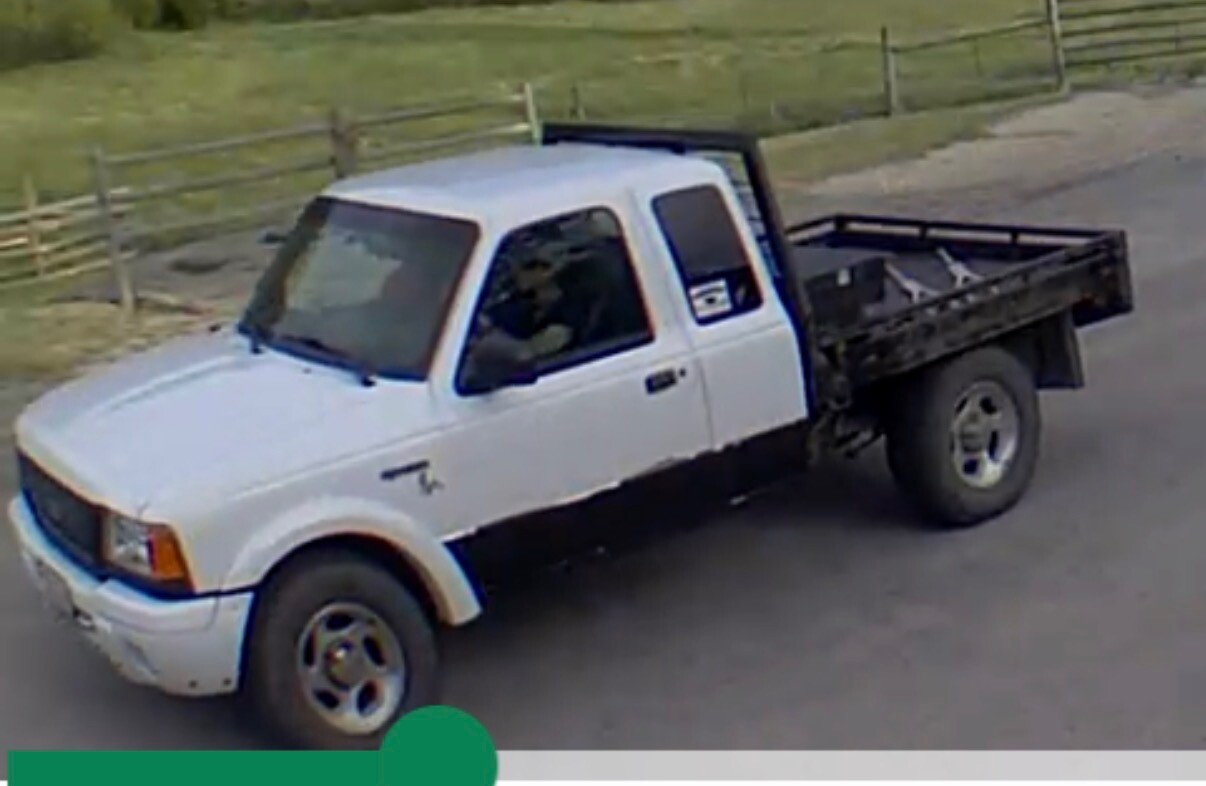
Anyone who spots a white Ford Ranger flatbed pickup is encouraged to call law enforcement at 406-497-1120.
This story was reported on-air by a journalist and has been converted to this platform with the assistance of AI. Our editorial team verifies all reporting on all platforms for fairness and accuracy.
-

 Los Angeles, Ca47 minutes ago
Jury says it is deadlocked in trial of man accused in Palisades Fire
-

 Detroit, MI1 hour ago
Scene active as police shoot, kill man on Detroit’s west side
-

 San Francisco, CA1 hour ago
Civil grand jury report warns of wildfire risk at SF’s Glen Canyon Park
-

 Dallas, TX1 hour ago
Ivory Coast advances at World Cup, how to buy Ivory Coast tickets
-

 Miami, FL1 hour ago
Men used fake credentials to enter Brazil vs. Scotland match at Miami Stadium, deputies say
-

 Boston, MA2 hours ago
3 arrested after trying to break into downtown building, Boston police say – The Boston Globe
-

 Denver, CO2 hours ago
RTD to bring back BroncosRide bus service after 5-year suspension
-

 Seattle, WA2 hours ago
FOLLOWUP: Sound Transit Board finalizes $400+ million spending installment for West Seattle light rail

