West
Missing helicopter with 5 Marines on board found; search for aircrew continues
Helicopter carrying Marines missing in California
Senior national correspondent William La Jeunesse reports on weather and logistical issues hampering search and rescue efforts for a missing helicopter carrying five Marines to Marine Corps Air Station Miramar.
Authorities have located a U.S. military helicopter carrying five U.S. Marines that went missing on a flight from Nevada to California Tuesday.
First responders are continuing to search for the aircrew, according to the U.S. Marine Corps.
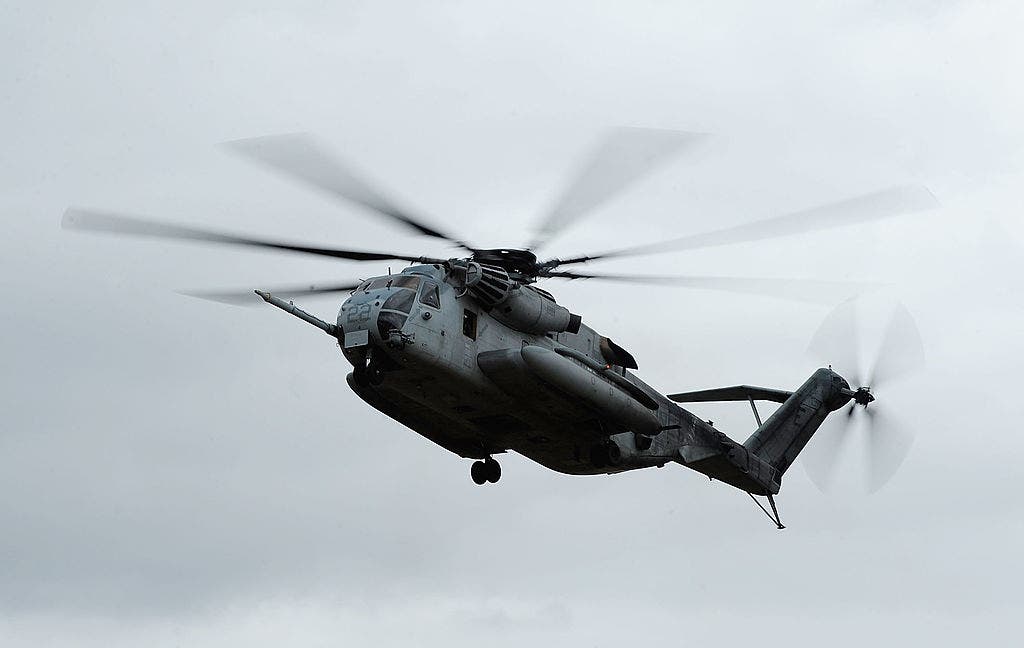
“The U.S. Marine Corps is searching for five U.S. Marines assigned to Marine Heavy Helicopter Squadron 361, Marine Aircraft Group 16, 3rd Marine Aircraft Wing,” Marine Corps Air Station Miramar said in a statement Thursday. “The Marines were flying a CH-53E Super Stallion helicopter from Creech Air Force Base to Marine Corps Air Station Miramar on Feb. 6, 2024, when the aircraft was reported overdue.
“The aircraft was located by civil authorities in Pine Valley, California, at 9:08 a.m. PST on February 7, 2024,” the statement continued. “The 3rd Marine Aircraft Wing is managing search and rescue efforts through the Wings Operations Command Center and using ground and aviation assets to locate the aircrew in coordination with the San Diego County Sheriff’s Department and multiple federal, state and local agencies. The most up-to-date information will be released as soon as it becomes available.”
MAINE FAMILY LOOKING TO BUILD WORLD’S TALLEST FLAGPOLE, PROJECT RECEIVING BACKLASH FROM LOCALS
A CH-53E Super Stallion helicopter like the one pictured here went missing during a flight from Nevada to San Diego with five U.S. Marines aboard. (Getty Images )
The Marines say they are in contact with the San Diego County Sheriff’s Office and are coordinating search efforts. The CH-53E Super Stallion helicopter had departed Creech Air Force Base in Nevada en route to Marine Corps Air Station Miramar near San Diego Tuesday night.
The San Diego County Fire Department is assisting the U.S. Forest Service, U.S. Border Patrol, San Diego County Sheriff’s Department and California Civil Air Patrol with a search effort. (San Diego County Fire)
First responders have requested additional resources to assist with the search effort due to heavy snow near Pine Valley, the San Diego County Fire Department said.
A map shows Creech Air Force Base in Indian Springs, Nev., where a military helicopter took off for Marine Corps Air Station Miramar in San Diego. The helicopter with five on board had been missing. (Fox News)
Local first responders were first contacted regarding the incident early Wednesday morning. The San Diego Sheriff’s Office attempted to send a helicopter to begin the search immediately, but the aircraft was called off due to the “atmospheric river” storm hitting the area.
Cal Fire officials responded to the helicopter’s last known location over the Cleveland National Forest, but nothing was found.
US MILITARY IDENTIFIES ALL 8 CREW MEMBERS OF DEADLY AIR FORCE OSPREY CRASH NEAR JAPAN
The Marine helicopter went missing roughly two months after a U.S. Air Force Osprey crashed off the coast of Japan in December. All eight crew members aboard the craft were killed in the incident. (Kyodo News via AP)
White House press secretary Karine Jean-Pierre said Wednesday that President Biden has been briefed on the situation.
National Security Council spokesman John Kirby added the White House is “watching this closely.”
“Obviously, our hopes are of the best here,” Kirby told reporters.
The incident comes roughly two months after a U.S. Air Force Osprey crashed off the coast of Japan in December. All eight crew members aboard the craft were killed in the incident.
Another Osprey crashed in August 2023 with over 20 Marines aboard. Three service members were killed in that incident and about 20 were injured.
Read the full article from Here

Alaska
A tiny Arctic village in Alaska is trying to revive its polar bear tourism industry
ANCHORAGE, Alaska — Late every summer, hulking white bears gather outside a tiny Alaska Native village on the edge of the continent, far above the Arctic Circle, to feast on whale carcasses left behind by hunters and to wait for the deep cold to freeze the sea.
It’s a spectacle that once brought 1,000 or more tourists each year to Kaktovik, the only settlement in the Arctic National Wildlife Refuge, in a phenomenon sometimes called “last chance tourism” — a chance to see magnificent sights and creatures before climate change renders them extinct.
The COVID-19 pandemic and an order from the federal government halting boat tours to see the bears largely ended Kaktovik’s polar bear tourism amid concerns that the tiny village was being overrun by outsiders.
But Kaktovik leaders are now hoping to revive it, saying it could be worth millions to the local economy and give residents another source of income — provided the village can set guidelines that protect its way of life and the bears themselves.
“We definitely see the benefit for tourism,” said Charles Lampe, president of the Kaktovik Inupiat Corp, which owns 144 square miles (373 square kilometers) of land. “The thing is, it can’t be run like it was before.”
Visitors overwhelm a tiny village
As far back as the early 1980s, anyone in Kaktovik with a boat and knowledge of the waters could take a few tourists out to watch the bears as they lumbered across the flat, treeless barrier islands just off the coast or tore into the ribs of a bowhead whale left by subsistence hunters.
Tourism in Kaktovik soared in the years after federal officials declared polar bears a threatened species in 2008. The rapid warming of the Arctic is melting the sea ice that the bears use to hunt seals, and scientists have said that most polar bears could be wiped out by the end of the century.
This photo provided by Roger MacKertich shows polar bears lying on a barrier island Sept. 18, 2019, near Kaktovik, Alaska. Credit: AP/Roger MacKertich
As visitation boomed, the federal government imposed regulations requiring tour operators to have permits and insurance, and that began to squeeze locals out of the industry, Lampe said. Larger out-of-town operators moved in, and before long, crowds of tourists were coming to Kaktovik — a village of about 250 people — during the six-week viewing season.
The town’s two hotels and restaurants lost out on some business when large operators began flying tourists in from Fairbanks or Anchorage for day trips. Locals complained that tourists gawked at them or traipsed through their yards.
Small plane capacity became an issue, with residents sometimes battling tourists to get on flights to or from larger cities for medical appointments, forcing those left stranded in the cities to get expensive hotel rooms for the night.
Renewing polar bear tourism, with changes
When the pandemic struck, Kaktovik paused visitation. Then in 2021, the federal government, which manages polar bears, halted boat tours, mostly over concerns about how tourists were affecting bear behavior and overrunning the town.
Charles Lampe, president of the Kaktovik Inupiat Corporation, poses for a portrait outside his home in Kaktovik, Alaska, Wednesday, Oct. 16, 2024. Credit: AP/Lindsey Wasson
Alaska Native leaders are now in talks with the U.S. Fish and Wildlife Service to address those concerns and reignite the industry, perhaps as early as 2027. The agency told The Associated Press in a statement that it’s working with Kaktovik “to ensure that any future opportunities are managed in a way that prioritizes visitor safety, resource protection, and community input.”
Among the changes Kaktovik leaders want to see is a limit on how long a boat can sit in the water near the bears. Too long, Lampe said, and the bears get used to humans — making for a dangerous situation when bears wander into town looking for food.
During the height of the tourism boom, it became tougher to haze bears out of town, even with the town’s bear patrol shooting at them with nonlethal rounds. The patrol had to kill about three or four bears per year, compared with maybe one per year before the boom, Lampe said.
“Our safety was at risk,” Lampe said.
In 2023, a 24-year-old woman and her 1-year-old son were killed in a polar bear attack in Wales, in far western Alaska. It was the first fatal polar bear attack in nearly 30 years in Alaska, the only U.S. state home to the species.
Since the boat tours in Kaktovik were halted, the bears once again seem more fearful of humans, Lampe said.
Encouraging respectful visits in the Arctic
Polar bear tourism coincides with Kaktovik’s subsistence whaling season. When a crew lands a whale, it’s usually butchered on a nearby beach. While the community encourages visitors to watch or even help, some were recording or taking pictures without permission, which is considered disrespectful, Lampe said.
Sherry Rupert, CEO of the American Indigenous Tourism Association, suggested that Kaktovik market itself as a two- or three-day experience.
Native communities that are ready for tourists “want them to come and be educated and walk away with a greater understanding of our people and our way of life and our culture,” she said.
Roger and Sonia MacKertich of Australia were looking for the best spot on the planet to view polar bears in the wild when they came to Kaktovik in September 2019. They spent several days in the village, took a walking tour led by an elder and bought souvenirs made by local artists, including a hoodie featuring a polar bear.
For Roger MacKertich, a professional wildlife photographer based in Sydney, the highlight was the boat tours to see bears roaming on the barrier islands or taking a dip in the water. The bears paid them no attention.
“That’s nearly as good as it gets,” he said.
Arizona
Saints draft Arizona State receiver Jordyn Tyson, brother of Cavaliers’ Jaylon Tyson
James Harden and Jordyn Tyson attend the game between Arizona State and the Arizona Wildcats in January.
METAIRIE, La. (AP) — The New Orleans Saints selected Arizona State receiver Jordyn Tyson with the eighth pick in the NFL draft on Thursday night, adding a potential playmaker to a position group that could use one.
“I’m ready to hit the ground running right now,” Tyson said. “I keep getting better. I just want to continue on that track. Work works.”
The 6-foot-2, 203-pound Tyson — whose brother, Jaylon Tyson, plays in the NBA with Cleveland — was the second receiver drafted behind Ohio State’s Carnell Tate, who went fourth overall to Tennessee.
The 21-year-old receiver said his name was called in the draft around the same time he he saw his brother hit a 3-pointer in Cleveland’s 126-104 Game 3 playoff loss against Toronto.
Now, Tyson joins a Saints receiver corps that was headlined by four-year veteran Chris Olave in 2025, but had little depth behind him after Rashid Shaheed was traded to eventual Super Bowl champion Seattle.
“This is a great add to that group,” Saints coach Kellen Moore said, highlighting Tyson’s ability to make plays on deep balls as a wideout, as well as his ability to play as a slot receiver.
Tyson said he met Olave during a pre-draft visit to New Orleans and bonded well with him.
“It’s going to be amazing to take pressure off each other, make our jobs easier,” Tyson said. “I feel like us, (covered) one on one — shoot — it’s going to get ugly.”
The Saints entered the draft with their most apparent needs at receiver, edge rusher and defensive back.
Last season, Tyson played in nine games at Arizona State, catching 61 passes for 711 yards and eight touchdowns in a campaign shortened by a hamstring injuries in both legs.
He had his best season statistically in 2024, catching 75 passes for 1,101 yards and 10 TDs.
But more than his statistics, it was Tyson’s knack for making clutch plays and the knowledge of football he exhibited in meetings with staff in New Orleans is what sold the Saints on him.
“You felt the football junkie in him,” Moore said. “He’s got a really smart head to him as far as football acumen and awareness about what’s going on in this league.”
Tyson’s injury history also includes torn knee ligaments — requiring reconstructive surgery — when he played at Colorado in 2022. He played in just three games in 2023 with Arizona State because of a broken collar bone.
But he dismissed concerns about his health going forward, and said his recent training with former NFL receiver Hines Ward, a receivers coach at Arizona State, has helped him learn how to maintain his body like a pro football player should.
“I’m going to give myself the best opportunity to stay on the field and be as healthy as possible,” Tyson said. “I’m going to do everything in the weight room, do everything with nutrition, I’m going to have a chef. I’m going to get a massage on the same day every week.”
Moore didn’t sound too concerned, either.
“Guys are going to go through things they have to navigate,” Moore said. “He battled through it and that’s a credit to him. … This guy’s a really tough football player. He’s battled some things — and that’s a positive.”
California
Fuel shortages from the Iran war have spread to Europe, but the pain is hitting California and the West Coast as well—and help is years away | Fortune
Europe is facing more widespread fuel shortages heading into the summer as the war in the Middle East drags on, but shortfalls—especially for jet fuel—will soon spread to California and the broader West Coast as the global energy supply shock ripples across the world.
While the U.S. leads the world in crude oil production, California is not able to enjoy the bounty as much as the rest of the country. The Golden State—the fourth-largest economy in the world—essentially operates as an island sandwiched between the Pacific Ocean on one side and mountainous terrain on the other. That makes it difficult and expensive to build oil and fuel pipelines. A tougher regulatory environment and heightened fuel standards have also made the state’s refineries less economical over the years.
The bottom line is California must import a lot of its oil, gasoline, diesel, and jet fuel from Asia—a region that is itself currently struggling with shortages because of its reliance on Middle Eastern supplies.
And, in something of a perfect storm of unfortunate timing, the Iran war coincides with the recent shuttering of the Phillips 66 Los Angeles refinery and the April closure of Valero Energy’s Benicia refinery near San Francisco. The two complexes combined for nearly 20% of California’s oil-refining capacity. Valero also is weighing the future of its Wilmington refinery near Los Angeles.
“It’s real terrible timing for California to see the loss of two refineries at a time when Asia is struggling with oil supplies of its own,” said Patrick De Haan, head of petroleum analysis at GasBuddy.
“If we don’t have some concrete [peace] deal here in the next three weeks, then I’m really nervous for the West Coast this summer in terms of jet fuel,” De Haan told Fortune. “That’s not going to be great for California’s economy.”
Norse Atlantic Airways announced this week the cancelation of all its summer flights from Los Angeles International Airport (LAX). Delta Air Lines is canceling a handful of U.S. flights for now from Detroit to New York. Air Canada cut some flights to New York. United Airlines CEO Scott Kirby said in his April 22 earnings call that United is raising fares up to 20% and proactively canceling flights at off-peak times and days. And struggling Spirit Airlines—pushed over the cliff by the spike in fuel prices—may need a federal bailout to survive.
The biggest headline in Europe this week was German airliner Lufthansa axing 20,000 flights through October.
“It’s not so much gasoline supply on the West Coast that I’d be worried about yet, but it’s jet fuel out of LAX, San Francisco, Seattle, and then it’s diesel,” De Haan said, arguing that nationwide reductions, especially of new flight routes, are likely in order to conserve fuel. “I would look for a lot of route cancellations potentially this summer.”
Refineries primarily churn out gasoline to meet passenger vehicle demand, so supply shortages of refined products typically hit jet fuel first and then diesel. Washington, Oregon, Arizona, Nevada, Hawaii, and Alaska all stand to be among the most impacted as well.
Plans for new fuel and refined products pipelines into California are underway, including from Phillips 66, but the earliest those would come online is 2029.
The California Energy Commission told Fortune that jet fuel stocks remain adequate and within historic norms, although supplies are admittedly tight. For West Coast travelers, the near-term risks are sustained higher prices and airline schedule adjustments—not the physical shortfalls that Europe is facing.
But would that remain the case in June if the Strait of Hormuz energy chokepoint is still blocked? “Our analysis is thorough and ongoing, but we can’t provide a definitive answer on that kind of forecasting,” the CEC said.
One partially saving grace is the Trump administration’s decision to temporarily waive the 106-year-old Jones Act, which requires cargo ships moving between U.S. ports to be U.S. built, flagged, and manned, reducing the number of vessels available to move crude oil and refined products between domestic ports.
The waiver allowing more ships, for instance, to move fuel from the U.S. Gulf Coast through the Panama Canal and up to California to help alleviate shortfalls. The CEC confirmed the waiver is bringing incremental supply to the state.
Looking ahead for relief
While the White House previously touted the Jones Act waiver as a move to lessen the spikes in fuel prices—that impact is minimal—the bigger difference it’s making is the eased logistical movement of supplies to needier domestic areas.
A White House official said California and Alaska count among the biggest beneficiaries of jet fuel deliveries from the Jones Act waiver. And the 60-day waiver could be extended.
Otherwise, California must compete internationally for more expensive and increasingly scarce fuel imports from Asia. The state leans on South Korea, Singapore, Japan, India, and the Middle East for more of its oil and fuel.
“The risk is California has to compete on price to get those barrels, and what’s an already expensive market becomes really expensive,” said oil forecaster Dan Pickering, founder of Pickering Energy Partners consulting and research firm.
While the rest of the country is worried about fuel prices and not physical shortages, California is a “different animal,” Pickering said, “The risk in California is both its price and its availability. And, because availability is tough, the price goes up even more.”
Already, California’s gasoline prices are 45% above the national average. The national average on April 23 for a gallon of regular unleaded was $4.03, while it’s a U.S.-leading $5.85 in California. And there’s a $2 gap between diesel prices in California compared to the national average, $7.49 per gallon versus $5.47.
Despite the geographical and regulatory challenges of building new fuel pipelines to California, several projects have popped up to help fill the gaps left by the refinery closures.
Phillips 66 and Kinder Morgan plan to build the Western Gateway Pipeline System from Texas to Phoenix and southern California. Pipeline developers ONEOK and HF Sinclair are both weighing competing projects.
But the Western Gateway project isn’t slated for completion until 2029, so bridging that gap will prove to be the challenge, De Haan said.
“It’s great news for California because they’ll have better-connected markets,” De Haan said. “California will be a little bit less of a petro island.”
Kinder Morgan CEO Kim Dang said on the company’s earnings call this week that the war in the Middle East highlights the need for the project.
“California has to import some of its supply, and that makes it subject to the variability in global markets,” Dang said. “Instead of bringing in a fair amount of product over the water, they’ll now be bringing in supply from Texas and from the eastern United States. The other thing it does is it serves the Phoenix market, which is also right now reliant on the California refining capacity.
“I think it’s a great solution for California and for Arizona to be able to access domestic supply, as opposed to having to be reliant on the international market,” Dang added.
In the immediacy though, Pickering fears the world is still “dangerously complacent” about the war and the greatest energy supply shock in history. Oil and fuel shortages are almost guaranteed at least through the end of this year, and Pickering doesn’t see a peace deal occurring overnight.
“If they don’t [make a deal], in a month or two, the problems that we’re seeing in Asia are going to be everywhere,” Pickering said. And, if June is when shortages really kick in, well, “June is a day closer every day.”
-
Indianapolis, IN5 minutes agoSaints lose third in a row in Indianapolis
-
Pittsburg, PA11 minutes agoThe Steelers’ Makai Lemon whiff is sadly emblematic of the state of the franchise
-
Augusta, GA17 minutes agoAugusta Tech receives $6.8 million to complete Jim Hudson Automotive Institute
-
Washington, D.C23 minutes agoTrump says he’ll renovate ‘filthy’ reflecting pool on National Mall
-
Cleveland, OH29 minutes agoNike FreezeFest | October 24, 2026 | Greater Cleveland Sports Commission
-
Austin, TX35 minutes agoAustin ISD is under state investigation for celebrating Pride Week
-
Alabama41 minutes agoRams make surprise first-round move, take Alabama QB Ty Simpson
-
Alaska47 minutes ago
A tiny Arctic village in Alaska is trying to revive its polar bear tourism industry