Idaho
The reactor race has begun


There’s been a sea change in the nuclear energy industry.
On Thursday, U.S. Energy Secretary Chris Wright greeted private developers at Idaho National Laboratory. He looked at the resident developers’ small modular reactors, or SMRs, then joined INL’s staff for a celebration of “The Golden Era of Nuclear Power” in Idaho Falls’ Mountain America event center.
The next generation of advanced reactors is a diverse bunch: some are large, some are small, some look like they could be part of a “Star Trek” episode, and others are reminiscent of large crab-boil pots.
Despite differences in structure and capacity, their designers and investors have two things in common: They promise their designs will scale, and each has been helped by the federal government’s priority of speeding up the rate of nuclear innovation.
Creating reactors on a factory line, they say, will turn nuclear power from a project to a product.
President Donald Trump signed four executive orders last May, with the overarching goal of quadrupling the country’s nuclear energy capacity to 400 gigawatts by 2025. In addition to the DOE’s $17.5 billion loan to 10 large reactors on Tuesday, the Trump administration is investing time into deregulating SMR production.
An unrealistic goal?
Sitting at a long conference table at the national lab on Wednesday, INL director John Wagner told press that he initially thought the goal seemed cool but unrealistic. He was specifically wary of the demand that three new nuclear reactors reach criticality by July 4, 2026.
“I love goals that focus resources and attention, but I didn’t think it was possible,” he said.
The biggest impediments, in Wagner’s opinion, would be Department of Energy authorization and whether they would be able to collect the uranium and fuel material necessary.
Wagner’s initial skepticism was well founded. For the last 50 years, it has been monumentally difficult to build large-scale nuclear power. Bogged down by heavy-handed regulations and permitting, the few nuclear projects that made it across the finish line were wildly late and over budget.
However, “when you have the will of federal policy and the will of the people, these things can absolutely happen,” Wagner said.

The impending Fourth of July deadline
Last June, the DOE selected 10 companies to participate in the Nuclear Reactor Pilot Program to fast-track small modular reactor development. Currently, the world’s only operating SMRs are in China and Russia.
A week ahead of the deadline, two of the 10 companies have reached criticality, the point at which a nuclear reactor achieves a self-sustaining nuclear chain reaction.
Antares Nuclear, which built its reactor on site at INL, reached criticality on June 4, and Valar Atomics, which built its reactor in Orangeville, Utah, reached criticality on June 18. Valar’s reactor, the Ward250, is currently generating 100 kilowatts.

Speaking to thousands of INL staff after Wright’s tour, Wagner said he fully anticipates achieving the president’s goal and suspects developers will exceed it.
“This is a goal that people thought was not possible, and I stand before you just days before the Fourth of July, saying that I believe we will absolutely achieve it,” Wagner said. “And that’s not the end. Several more will follow shortly thereafter. What we are witnessing is not one milestone; it’s a cascade — a cascade that is happening now.”

The president’s challenge “galvanized” the U.S. nuclear energy industry, Wagner said.
Aalo Atomics and Deployable Energy, both of which are developing their reactors on INL property, expressed deep optimism to the Deseret News they would reach criticality before the Fourth of July. On Thursday, Wright signed the approval for Aalo to move its reactor toward criticality.

Unleashing nuclear requires unleashing the market
Radiant Nuclear’s COO Tori Shivanandan led press through INL’s Demonstration of Microreactor Experiments, or DOME, on Wednesday.
“About three years ago, there were 50-some companies that applied for residency in the DOME,” she explained. The massive steel-and-concrete containment dome is designed to contain any unexpected radiological event during testing. It’s the world’s first microreactor test bed, and INL finished its construction in March, a full year ahead of schedule.
Radiant began its roughly yearlong residency in the facility following the test bed’s completion.

“The entire reason you spend a lot of capital on a multi-month test campaign is to find the unknown unknowns. When you do that in a facility that is especially equipped to handle the worst case scenario of the unknown unknowns, you’re able to proceed with a degree of additional assurance that even on the worst day, if something were to go horribly wrong, the general public is still safe,” Shivanandan said.
In addition to the DOME, INL gave Radiant space in a connecting building just to the south. This facility was constructed in the late ’50s and houses the old manual controls for the Experimental Breeder Reactor-II (EBR-II), which has since been dismantled and decommissioned.

Radiant’s computers sit in rows between the roped off and glass-enclosed levers. The 50-year gap in the technology made the stagnation of the nuclear energy market visible.
Shivanandan referenced the visual contrast. “I think it’s an illustrative viewpoint of like, this is what America has historically been proud of and the opportunity of where we’re going,” she said. “Your phone got smaller and smaller over time. Computers got smaller and smaller over time. The sources we create for energy need to get smaller and smaller over time. And that’s really what Radiant is pursuing.”

The federal government aligning with market forces is what is pushing the nuclear energy industry forward, Wagner said during his conversation with the press Wednesday.
“The old way was that federal dollars did almost everything, or nothing got done,” he said. “That started to evolve when we asked, ‘Why is it happening?’”
The same question has been asked in other science-heavy fields. Why have we not returned to the moon? Why aren’t we splitting atoms?
With the federal government’s new positioning on nuclear energy, “market forces are aligned with national security imperatives, which are aligned with federal and state policy,” Wagner said. “That alignment has brought the private sector and private dollars to the table.”
He continued, “For a lot of these companies, money is not their problem. They’re in a race to compete for the market.”
Companies look to run SMRs autonomously

To streamline operations at scale, Radiant Nuclear, Antares, and others are figuring out how to run their reactors autonomously.
Jason Andrus, the director of licensing at Antares, told the Deseret News that the company plans to eventually go autonomous.
“Ultimately, if you think about the systems that are on the small scale here, you either have to go to a fleet model, which is one operator for many reactors, or you have to go autonomous,” Andrus said.
In the DOME on Wednesday, Shivanandan said Radiant Nuclear will attempt going autonomous during its upcoming testing schedule.

After running its reactor continuously for 150 hours, “Radiant will attempt autonomous operations,” Shivanandan said. “We believe our commercial product can be autonomously operated, but we need to do it first in a very controlled and understood manner.”
Shivanandan said both INL employees and Radiant’s staff will observe the reactor as it goes through autonomous operations.
Energy Department will continue the small reactor surge through a new program

To keep the splitting-atoms momentum going, the DOE has created the Nuclear Energy Launch Pad to follow the Nuclear Reactor Pilot Program.
In the same way the pilot program did, the launch pad will streamline a path for private developers to accelerate the commercial deployment of their reactors. INL will help companies with fuel fabrication, enrichment and reprocessing, as well as advanced reactor development.
Every country I visit asks about the next generation of American nuclear technology.
— Energy Secretary Chris Wright
Applications for the launch pad are currently open and will close on July 8.
Ted Garrish, the DOE’s assistant secretary for nuclear energy, said the next big success will be selling the reactors.
“We have had incredible inquiries for these pilot projects,” Garrish said, referencing interest from Europe and from the American defense industry. “These are going to go like hotcakes,” he said.

Wright added, “Every country I visit asks about the next generation of American nuclear technology.”
“I’ve invited folks from Singapore, from multiple European countries, from Asia — they’re like, ‘We want to see it. We want that.’ The interest in what we talked about today, these small modular reactors, is unbelievable. This will be a massive American export a decade from now,” Wright said.
The nuclear vibe shift
Brazilian model Isabelle Boemeke joined the small group of press present at INL on Thursday.

Wearing a black cowboy hat emblazoned with the word “NUCLEAR,” Boemeke brought along a crew of documentarians hoping to chronicle the resurgence of nuclear energy and the rise of SMRs.
In her 2025 book “Rad Future,” Boemeke debunks fears and misconceptions about nuclear power, instead describing it as a sustainable and safe energy source. Between Instagram and X, Boemeke has nearly 150,000 followers. She represents a growing affinity for nuclear.
Nationwide, support for nuclear energy has grown significantly over the past decade. In 2025, about 60% of Americans supported more nuclear reactors being built in the country.

Polling done by the Deseret News/Hinckley Institute of Politics showed this demographic divided by age group. Gen Xers were the most likely to support nuclear energy in the state, and baby boomers were the least likely.
Wagner said he’s seen increased interest in nuclear energy firsthand over the past decade.
“I have to say, I’ve been around this for a while. You know, 10 years ago, I couldn’t have dreamed of having this much activity in this space, and it just keeps getting more and more,” Wagner said. “So now we have challenges with capacity on facilities.”
The next day, Wagner walked on stage at the Mountain America event center to “Thunderstruck” by AC/DC. In the dim audience light, INL employees hollered and cheered. Wagner laughed when they settled down and said, “I never thought I’d be able to walk out to music like ‘Thunderstruck.’”

“I am so excited to be with you all at this moment,” he told his INL employees and the private industry partners they work with. “I look around this Mountain America center, and it is so gratifying.”
He continued, “I am so proud of you, and I am so inspired by you. In the past 12 months, this ecosystem rewrote what American nuclear can do, rewrote what is possible, and rewrote expectations about what we can achieve in nuclear energy. Reactors have gone critical. Many more will follow shortly.”




We recognize you are attempting to access this website from a country belonging to the European Economic Area (EEA) including the EU which
enforces the General Data Protection Regulation (GDPR) and therefore access cannot be granted at this time.
For any issues, contact webmaster@journalnet.com or call 208-232-4161.

An Idaho reservoir known for its bright blue waters, miles of open water for boating, and excellent Kokanee salmon fishing is just a short drive from Boise. Anderson Ranch Reservoir, located just northeast of Mountain Home, holds over 475,000 acre-feet of water — perfect for fishing, water skiing, and boating. Here, visitors can enjoy about […]

NORTHWEST BOISE, Idaho — The Boise River is considered the heart of the city for many folks — floating, fishing and the gorgeous scenery on the greenbelt all rely on the waterway.
That’s why the City of Boise closely monitors the river’s water quality and the treated wastewater returned to the river from its water renewal facilities.
“The biggest question we get from people who are pedestrians and bicyclists is what are you trying to catch?,” said Bryan Dufosse, Senior Environmental Specialist with the City of Boise.
He and his team are often seen on the bridges over the Boise River with a unique crane looking contraption that they use to collect a series of water samples across the river.
WATCH | See how the city’s enviromental team tests the water quality of the Boise River
How the City of Boise tests water samples to ensure the Boise River runs clean
The city collects samples from locations upstream and downstream from Boise’s water renewal plants to ensure their treatment systems are working properly.
“We’re from the beginning of the pipe to the end of the pipe, making sure that we’re not putting anything into the river that takes away from the river’s water quality,” Dufosse said.
He says the majority of the time their samples come back nice and clean.
“We don’t see heavy pollutants fortunately here. Normally the Boise river is pretty clean, it’s pretty clean because the city citizens and the City Of Boise care about the River,” Dufosse said.
The city still conducts extensive testing to monitor for pollutants and other contaminants like heavy metals or nutrients. Samples collected from the river are brought to a portable water testing lab they built inside a camper before they’re taken to the city’s full size lab.
“Now we are splitting the samples so we can take them back to the water quality lab and then Alex and the rest of the team will test them for heavy metals and pH and all that kind of stuff,” said Corrine Smith, Water Quality Environmental Technician with the City of Boise.
If unusually high levels of metals or pollutants are detected, the city reports the findings to the Idaho Department of Environmental Quality and works to identify the source.
The city’s water quality team tests the Boise River 52 weeks a year to ensure the water remains clean and healthy.
This story was initially reported by a journalist and has been, in part, converted to this platform with the assistance of AI. Our editorial team verifies all reporting on all platforms for fairness and accuracy.
Send tips to neighborhood reporter Allie Triepke
Have a story idea from your neighborhood? Share it with Allie below —
-

 Los Angeles, Ca1 hour ago
LADWP begins long-term repairs after West Hollywood water main rupture
-

 Detroit, MI2 hours ago
Livestream: Mayor Sheffield, Detroit health chief to address wildfire smoke threat
-
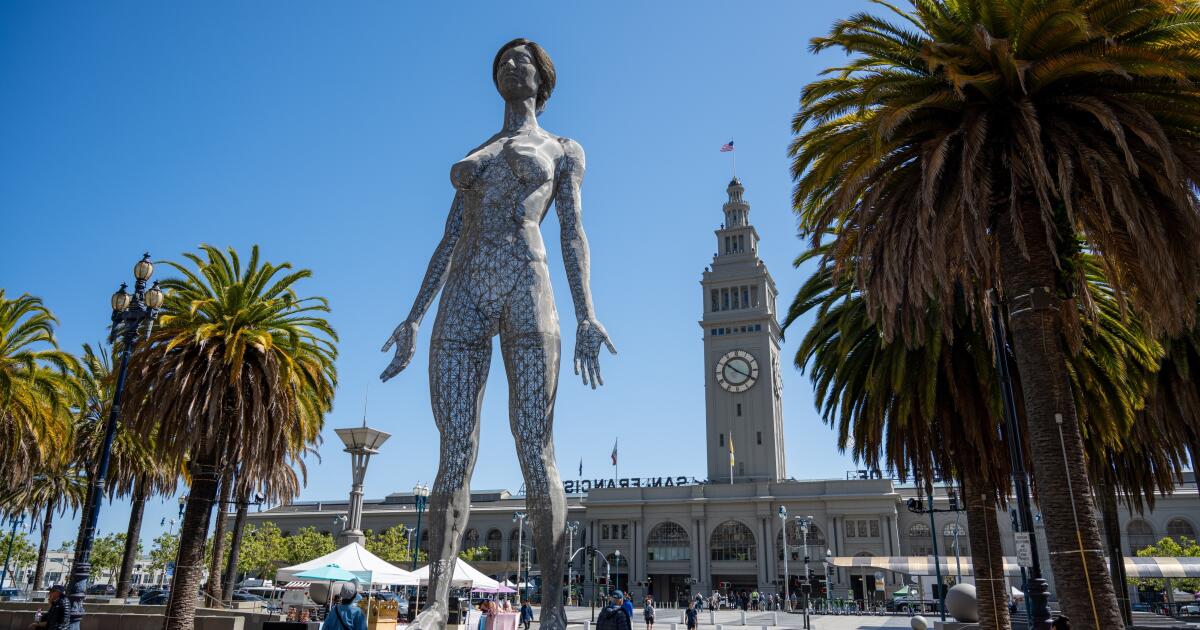 San Francisco, CA2 hours ago
A sculpture of a giant naked woman goes on sale in San Francisco. Bring a crane
-

 Dallas, TX2 hours ago
No ‘straight answer’: Why Pioneer Cemetery is the latest battleground at City Hall
-

 Miami, FL2 hours ago
TSA hosts news conference ahead of World Cup third place match at Miami Stadium
-

 Boston, MA2 hours ago
ICE Boston arrests Barbados national during targeted operations in Attleboro
-

 Denver, CO2 hours ago
Denver Broncos training camp is 2 weeks away
-

 San Diego, CA2 hours ago
Daily Business Report: July 17, 2026, San Diego Metro Magazine

