Idaho
The Day Four Lightbulbs Changed the World: Idaho’s Historic First Step in Nuclear-Powered Electricity


On a cold December afternoon in 1951, four ordinary 200-watt lightbulbs glowed in a modest brick building near Arco, Idaho. This seemingly small feat represented a monumental scientific achievement—the first generation of electricity from nuclear energy. Behind the unassuming scene stood the Experimental Breeder Reactor-I (EBR-I), a pioneering facility that helped lay the groundwork for the nuclear age.
Location and Origins: A Reactor in the Idaho Sagebrush
EBR-I was located on the Idaho National Reactor Testing Station (now the Idaho National Laboratory), a sprawling facility established by the U.S. Atomic Energy Commission (AEC) to develop and test nuclear reactor technologies. Situated in the remote southeast Idaho desert, the site offered isolation and security for these groundbreaking experiments.
Construction of the EBR-I began in 1949, spearheaded by scientists who had been instrumental in the Manhattan Project, the top-secret World War II initiative that developed the first atomic bombs. Among the key figures were Harold Lichtenberger, the project manager, Walter Zinn, a renowned nuclear physicist, and Aaron Novick, a specialist in reactor design. Their goal was ambitious: to demonstrate the viability of breeder reactors, which could revolutionize nuclear energy by producing more fuel than they consumed.
Breeder Reactors: Expanding the Potential of Nuclear Power
The concept of a breeder reactor was rooted in addressing the limited supply of uranium-235, the isotope crucial for sustaining nuclear reactions. Natural uranium is composed of about 99% uranium-238, a stable isotope that cannot undergo fission under standard conditions. Breeder reactors like EBR-I were designed to transform uranium-238 into plutonium-239, a fissionable material.
This transformation required a sophisticated sequence of nuclear reactions. In the EBR-I core, uranium-238 absorbed high-energy neutrons, resulting in the formation of neptunium-239, which quickly decayed into plutonium-239. The plutonium then served as fuel for sustained fission reactions, generating heat and additional neutrons to perpetuate the process.
A critical component of the reactor was its liquid metal coolant, a eutectic mixture of sodium (Na) and potassium (K) known as NaK. This alloy was chosen for its excellent thermal conductivity and low melting point, enabling efficient heat transfer within the reactor core. After absorbing heat from the nuclear reactions, the NaK coolant circulated to a secondary heat exchanger, where it transferred the thermal energy to a water-steam system. The resulting steam turned turbines to produce electricity.

The Moment of First Light: December 20, 1951
The culmination of years of design, construction, and testing came on December 20, 1951, at precisely 1:50 p.m. Inside the compact brick building, Harold Lichtenberger flipped a switch, allowing the electricity generated by the reactor to flow to four suspended lightbulbs. Witnesses, many of them seasoned physicists, observed the event with measured enthusiasm. The moment was significant but understated, reflecting the pragmatic focus of the team.
“When I turned the switch, I guess I was more interested in how the circuit breakers would function than I was in the significance of the test,” Lichtenberger later recounted. The real excitement for the team lay in verifying the reactor’s primary objective: demonstrating the efficacy of the breeder process and the conversion of uranium-238 into plutonium-239.
The following day, the EBR-I reactor achieved an output of 100 kilowatts, enough to power the building’s electrical systems. This marked another milestone, proving that nuclear power could provide practical amounts of energy beyond experimental conditions.
The Ebr-I Legacy: Laying the Foundation for Nuclear Energy
The success of the EBR-I experiment had far-reaching implications. By demonstrating the feasibility of breeder reactors, the project expanded the horizons of nuclear energy at a time when the world sought innovative solutions to growing energy demands. The reactor’s ability to produce more fuel than it consumed hinted at a sustainable nuclear future.
In 1953, EBR-I achieved another historic milestone: it became the first reactor to use plutonium as a fuel source. These breakthroughs underscored the versatility of nuclear technology and its potential applications.
Despite these advancements, interest in breeder reactors waned in the 1960s. The discovery of vast uranium deposits and the development of more efficient enrichment techniques reduced the urgency for breeder technology. Additionally, concerns about the proliferation risks associated with plutonium dampened enthusiasm for widespread adoption.
Today, EBR-I remains a landmark in the history of science and technology. Designated a National Historic Landmark in 1966, the facility stands as a museum open to the public. Visitors to the site can see the original reactor, its instrumentation, and the historic lightbulbs that marked the dawn of nuclear-generated electricity.
Got a reaction? Share your thoughts in the comments
Enjoyed this article? Subscribe to our free newsletter for engaging stories, exclusive content, and the latest news.



ADRIAN, Oregon — The Friends of the Owyhee organized a clean-up in Malheur County in Oregon, and volunteers came out to pick up trash and get rid of abandoned campers.
“We had two abandoned RV’S and a camper that were abandoned out on public lands,” said Tim Davis, who runs the Friends of the Owyhee. “They were sitting there for upwards of a year, and it is really clear that it is hard to get rid of these.”
WATCH| Check out the video to see volunteers demolish a camper—
Volunteers camp out for the Succor Creek Clean-Up in the Owyhees
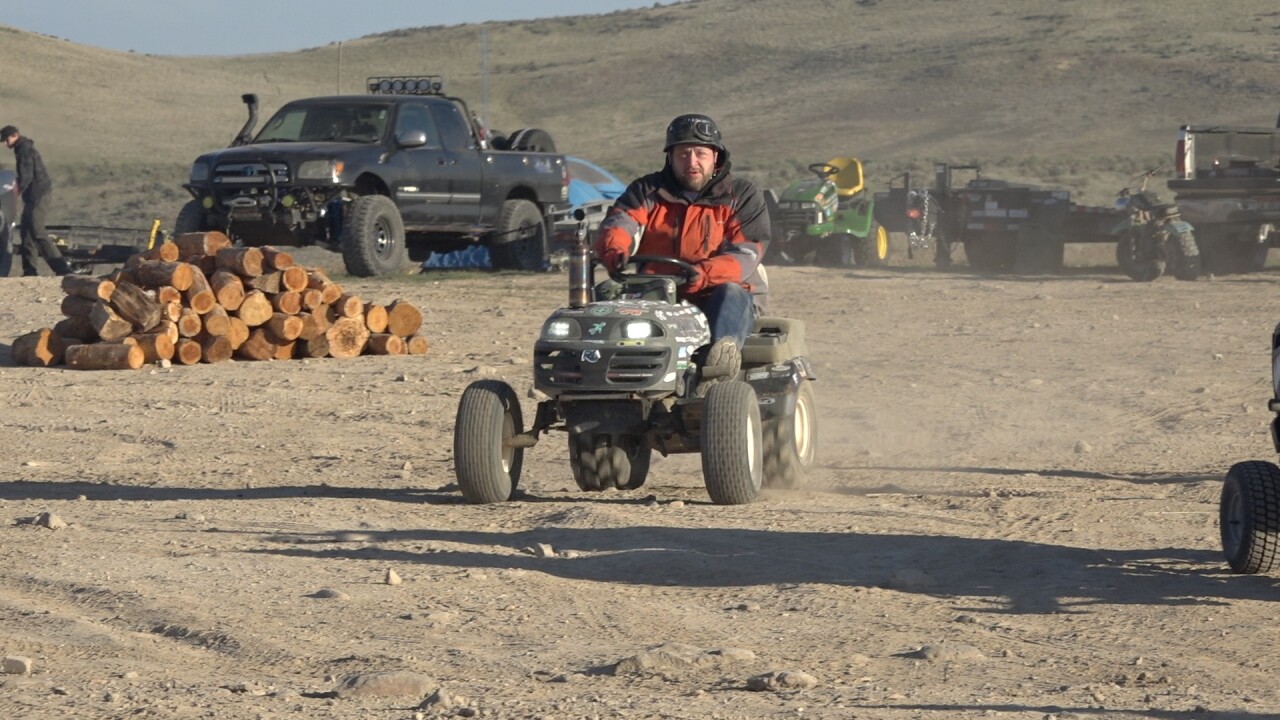
Davis worked with the local sheriff’s office and the BLM to remove the campers, but he found it difficult because there was no place to take these recreational vehicles. The Gambler 500, an off-road group, brought out some people to demolish a camper with an excavator.
“That is awesome to see the turnout with the army of volunteers we have today,” said Brian Arndt of the Gambler 500 group. “We are going to be able to get the camper all in the dumpster, get it cleaned down to the frame, and then everything that can be recycled will be recycled.”
Volunteers camped out on Succor Creek Road on Friday night so they could get an early start on Saturday. Many volunteers will camp out again on Saturday night and finish the clean-up on Sunday.
“Malheur is the 12th largest county in the United States, and it’s 74 percent public land,” said Davis. “We have very few resources with the BLM; they are understaffed, they have one rec planner right now, so us, as public land owners, should be able to step up and keep this place clean.”
Lela Blizzard works as the lone recreational planner for the Vail District of the BLM, who says most sites have signs that say pack it in and pack it out. She says the BLM really needs the cooperation of the public because of how large it is, and she was happy to see how many volunteers showed up.
“I just want to tell them thank you because I know they are taking time out of their weekend to come out here to help us make sure the land continues to look nice for everyone who comes out to enjoy it,” said Blizzard.

Griz Ward is one of the volunteers, and he enjoyed camping out, but he also would like to see people pick up after themselves. When it comes to outdoor recreation, it is so important to be part of the solution and not part of the problem.
“If you come out here and play in the area, be respectful,” said Ward. “Pack it in and pack it out, leave no trace and do the right thing, or frankly, stay home.”
The Succor Creek Clean-Up also received a lot of support from the Treasure Valley, as they got donations from the Ontario Sanitation Service with the dumpsters, Tates Rents with the excavator, and United with porta-potties for the campsite.
Send tips to Idaho Backroads neighborhood reporter Steve Dent
Have an Idaho Backroads story idea? Share it with Steve below —

IDAHO — ‘No Kings 3’ protests will take place throughout Idaho on March 28, including in Boise and Twin Falls.
According to the Idaho 50501 Facebook page, there will be speakers & musicians playing at protests across the Treasure Valley.
Protests will take place in Boise, Caldwell, Nampa, Mountain Home, Twin Falls, and other Idaho cities.
NoKings.org
On March 28, Neighborhood Reporters Allie Triepke & Lorien Nettleton will bring coverage of the Boise & Twin Falls protests on Idaho News 6 at 10.
Idaho
Idaho Senate introduces new bill to give local municipalities authority to control rat populations

BOISE, Idaho — A new bill in the Idaho Senate aims to let local municipalities take action to control rat populations. This, after a previous bill to combat rat infestations across Idaho, died in the House.
Rats have been spreading throughout the Treasure Valley in recent years, but previous attempts at legislation to deal with the problem have failed.
WATCH: Senior Reporter Roland Beres provides an update on the new rat bill
New bill would allow local governments to combat rats
Residents in Eagle and Boise have been tracking an alarming rise in rat populations recently.
Rep. John Gannon (D – District 17) introduced new legislation today that would essentially permit local governments to act in order to control rat populations if they want to, without creating a mandate.
Gannon said some cities complained that they did not have the authority to do the job themselves.
The bill was introduced with a dose of humor.
“I’m going to support this. It’s very late in the session, but I think this might just squeak through,” said Sen. Ben Adams (R – District 12). “Well. Unless it encounters a trap along the way.”
ALSO READ | ‘I’ve never seen something that big’: Boise neighbors finding rats in their backyards
This story was initially reported by a journalist and has been, in part, converted to this platform with the assistance of AI. Our editorial team verifies all reporting on all platforms for fairness and accuracy.
Send tips to neighborhood reporter Riley Shoemaker
Have a story idea from Downtown Boise, the North End or Garden City ? Share it with Riley below —

Georgia Finishes 15th at NCAA Championships – University of Georgia Athletics

10 Most Neighborly Towns In Hawaii
Volunteers camp out to take part in the Succor Creek Clean-Up in the Owyhees

How to buy Illinois Final Four gear, hats, shirts, hoodies, more

Young male dead after shooting on Indy’s northeast side

Florida High School Football Rankings: Top 25 teams – Oct. 21

How old is Bo Nix? What to know about Oregon quarterback ahead of 2024 NFL Draft

Cleary's 21 help Le Moyne down Central Connecticut State 69-64 in OT

99th annual Pony Swim held in Virginia

Indiana Members Credit Union announced as new anchor tenant at Bottleworks District

Jeffries declines to break with indicted Democrat after ethics panel’s guilty verdict

Hundreds of thousands march through London in stand against the far right

2 students killed, 7 other people injured in Tennessee bus crash during school field trip

Dem senators dodge crucial question on illegal alien accused of killing Chicago college student

EU Parliament unblocks key political hurdle in digital euro talks
-

 Detroit, MI1 week ago
Drummer Brian Pastoria, longtime Detroit music advocate, dies at 68
-

 Movie Reviews1 week ago
‘Youth’ Twitter review: Ken Karunaas impresses audiences; Suraj Venjaramoodu adds charm; music wins praise | – The Times of India
-

 Sports1 week ago
IOC addresses execution of 19-year-old Iranian wrestler Saleh Mohammadi
-

 New Mexico6 days ago
Clovis shooting leaves one dead, four injured
-
 Business1 week ago
Disney’s new CEO says his focus is on storytelling and creativity
-

 Tennessee5 days ago
Tennessee Police Investigating Alleged Assault Involving ‘Reacher’ Star Alan Ritchson
-

 Technology6 days ago
YouTube job scam text: How to spot it fast
-

 Texas1 week ago
How to buy Houston vs. Texas A&M 2026 March Madness tickets