Idaho
Orphaned teenager finds a home in Idaho through nursing programs


POCATELLO — Idaho State University nursing student Priscilla Raburn arrived in the dead of winter wearing just a tank top, shorts and flip flops.
Snow was unfamiliar. Mountain was an idea gleaned from movies. The United States was a foreign country. And she knew nothing about Idaho.
“I wasn’t going to be a statistic,” said Raburn.
After six years in the foster care system, 18-year-old Raburn left St. Croix in the U.S. Virgin Islands for Pocatello. Relocating to Idaho was her friend’s idea. But it was an outlandish idea that reshaped the direction of her life in ways she could only dream of — financial stability, marriage, children and the family she never had.
“I wanted to grow and learn and not be a statistic in the foster care system,” she remembered.
Raburn is one of eight children who was taken away from their mother by the Division of Children and Family Services. She hasn’t seen her mother since that day. Her siblings found homes but she entered the foster care system, which led to an organization called Support our Sisters.
“I met a friend who was in the program and she was from Blackfoot,” Raburn said. “I wanted to leave the island as soon as possible.”
It took her a couple of years, but she finished her GED and then obtained certification as a certified nursing assistant from ISU, her profession for the past 12 years.
“I thought I would be a failure like my mom,” she said.
That academic momentum led Raburn to ISU’s practical nursing degree within the College of Technology. She will graduate in July. The yearlong program is designed to prepare graduates to take the practical nurse licensing exam and establish a career as a licensed practical nurse.
“I learned that I am actually smart and capable of being a registered nurse,” she said.
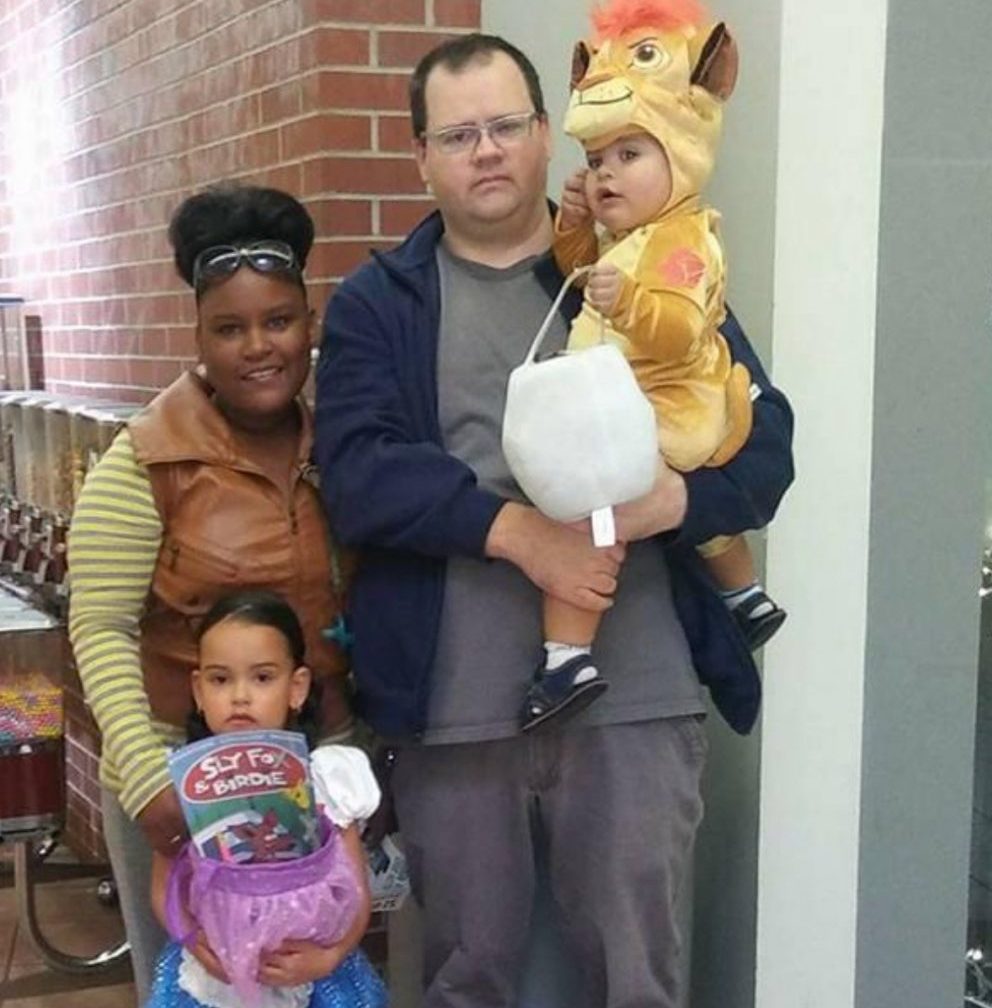
Now 37, Raburn has two children with her husband, Korey. And they are in the process of taking legal guardianship of two young cousins.
Because she wants to be available for her children, she’s taking baby steps toward her ultimate goal of becoming a registered nurse.
“With this program as a stepping stone, I know that I can do it,” she said. “I gained that feeling through my husband and my instructors at school.”
All those years ago, her main objective was to get off the island and improve herself — mission accomplished. But she hasn’t seen a beach in nearly 20 years, and she misses the sand and ocean.
“I really do,” she said.


IDAHO FALLS, Idaho (KIFI) – A controversy is brewing as the City of Idaho Falls reviews its alcohol ordinance.
The goal is to consolidate four existing ordinances for beer, wine and liquor into a single law and ensure compliance with state code.
However, at its meeting last Thursday, the Idaho Falls City Council unanimously voted to remove the proposed ordinance from its agenda, in order to receive and consider additional public comment.
The proposed ordinance would:
1. Require commercial establishments selling, dispensing or permitting consumption of alcohol – including beer, wine or liquor – to have an alcohol license, alcohol catering permit or a charitable event permit.
2. Business events with 20 or less employees consuming alcohol at the business would be allowed.
3. Require alcohol servers to complete training every three years.
4. Individuals who violate the law could be charged with a misdemeanor.
Idaho Falls City Council President Jim Francis said the changes were the culmination of months of collaboration between law enforcement, business owners and city attorneys.
“We wanted to provide a safe environment – the primary point here – for public gatherings,” Francis said. “We recognize that certain antiquated elements of the current code are overly restrictive and needed to be addressed. We wanted to make the code more accessible to the public. We needed to address over-pouring issues. We wanted to reduce penalties where possible for violations, particularly the first offenses, and yet make the code clear enough to be enforceable consistently by law enforcement.”
But City Council Member John Radford said the changes represent an overreach by city government.
“I believe it’s a bad policy. What problem are we solving in the name of trying to solve a non-problem?” Radford said. “We’re becoming big brother around alcohol in your private property. I’m concerned that landlords will be at risk of being charged with a misdemeanor if they knowingly, which I made sure that was in there, because that is what we’ve been talking about, allowed people to drink in our business. We will be outside the norm of Idaho cities. This is a big step, and I don’t think the public has weighed in on this.”
At a City Council Work Session on June 1, Idaho Falls Chief of Police Bryce Johnson cited an increase in alcohol-related crime – particularly downtown – as a reason for the changes.
“DUI is there, but this would include sexual assaults, assaults, batteries, disturbances, urination, public vandalism, shooting – all sorts of crimes,” Johnson said.
But business owners are concerned about the potential impact on commercial enterprises.
“The ordinance doesn’t address the real problem – which is people drinking … at one event and then showing up in a bar or restaurant already hammered and causing problems anyway,” ” said Terri Ireland, representing the Idaho Falls Downtown Merchants Association. “The industry is really well-regulated by state and local laws already.”
The City of Idaho Falls began the process of updating its alcohol ordinance in January 2026, seeking input from community stakeholders.
Multiple community members spoke out about the ordinance.
For more in-depth information, you can read the full 39-page proposed alcohol ordinance here.

BOISE, Idaho (CBS2) — A simmering dispute between Idaho’s top elections official and the U.S. Department of Justice escalated this month after federal officials warned Secretary of State Phil McGrane about possible prosecution tied to non-citizens voting in Idaho.
The Justice Department sent a letter earlier this month threatening McGrane with prosecution. The warning came amid a broader conflict between the Trump administration and McGrane, whom the administration has sued over his refusal to provide unredacted voter rolls to the federal government.
Idaho’s chief of civil litigation, James Craig, responded on July 10. In a letter first reported by the Idaho Statesman, Craig pushed back on the federal warning, writing, “Insinuations of criminal violations of the federal election laws are not well taken,” and asking the department to “stop threatening your friends in Idaho.”
Craig also requested that the lawsuit against McGrane be dismissed and criticized the Justice Department for sending its letter directly to McGrane rather than to the Idaho attorney general’s office.
The attorney general’s office said the state has already referred 15 cases of possible non-citizen election violations to the Justice Department but is not aware of any of them being prosecuted. Craig’s letter ends by asking the department to do so.

The Idaho Legislature won’t eliminate property tax next year. My bold prediction. There will be a few bills introduced, a lot of chatter on talk radio and online, and then action will be kicked down the road. If it looks like a winner in the 2028 Election, it’ll sail through in session a few weeks before the 2028 Primary. Wet an index finger and raise it in the air. Then vote.
As an old Libertarian (with a capital L), I’m familiar with the basic argument. If you own it, why do you have to pay rent? The answer always comes back to, “It’s the best system we have to fund local governments”. Forms have been in place since colonial times, even if scattered geographically. The idea gained steam in the years after the Civil War when a handful of economists blamed property ownership for growing poverty in cities. Property accrued value as space became a premium. So-called reformers believed the tax would balance economic inequality, and appealed to noblesse oblige.
Your Taxes Get Sprinkled Like a Good Rain
I live in Twin Falls County, where we have 78 taxing districts that rely on the current system. If you ask what can replace it, you’re called a Republican in name only (RINO) by compatriots. Obviously, not everything funded by the tax is a waste. First responders and snow plows come to mind. It makes me think of the calls to gut the federal government, but while maintaining Social Security and Medicare. The former makes up nearly a quarter of the budget. Medicare is only 14 percent, but additional health spending brings the tab to another quarter. Historian Niall Ferguson grew up in Scotland, and he summed up Great Britain a couple of weeks ago. People want more, not less, welfare spending. Are we different?
Before anyone in Boise wipes out property tax, legislators need to consider what voters want to stay, and how to fund it otherwise. If they don’t, they’ll see a backlash at the ballot box. Just because I say I want taxes reduced, I didn’t mean the programs that benefit me! The answer won’t be available over 90 days next year.
More than 20 years ago I hosted a weeklong series on tax alternatives. Among the proposals we examined were Flat Tax, Fair Tax, and Automated Payments Tax. People are most familiar with the first. Everyone pays a flat percentage. Say 12 to 15 percent. Of income, I guess. Of course, we need to define income. Professor Gad Saad is leaving Canada for a job in the United States and has to pay an exit tax based on his estimated assets. Estimated is the dirty word! That’s left to bureaucrats.
This Requires Study and Gaming Outcomes
Go ahead and adopt the flat tax, and please the conservatives, however. Many people, even on the right, have paid very little when it comes to present income confiscation. See how they react when they get a wake-up call. The Fair Tax is a national sales tax of 23 percent. Or it was the percentage proposed 20 years ago. That sounds large, but when you consider your overall tax burden right now, if it replaced what currently exists, you would be better off. This isn’t to say that local governments wouldn’t institute their own taxes. If you live in a blue state or city, that’s a given. Proponents argue that citizens have the option of not paying taxes if they choose not to buy. Obviously, you need to buy some things, unless you’re destitute and living exclusively on handouts.
Automated Payments Tax (APT) is a 1 percent charge on every transaction. A company buys steel to build trucks; it pays 1 percent on the steel. And on every other purchase. The dealer buys the truck for his lot and pays one percent. You buy from the dealer and pay one percent. An economist at the University of Indiana told me it would cover the federal budget. We had that conversation in 2005, when the national debt wasn’t even a quarter of what we see today. None of these plans address the debt, but if state and local governments are creative, maybe we can find something that replaces property taxes.
What we’ll get is a commission from the politically connected who’ll meet once a month for bagels and orange juice. In three years, they’ll provide a solution that works best for them.
Highest Gas Taxes By State in the U.S.
Here are the top 10 states for gas taxes.
-

 Mississippi5 minutes ago
Mississippi Legislature to hold special session for youth court laws
-

 Missouri11 minutes ago
Route 66 in Springfield, Illinois and St. Louis: Chasing Midwest food innovations on the Mother Road
-

 Montana17 minutes ago
Get Smitten With a Kitten at Humane Society of Western Montana
-

 Nebraska23 minutes ago
EPIC organizers launch fundraising petition effort to eliminate property taxes
-

 Nevada29 minutes ago
Nevada Legislative Committee to meet in Lake Tahoe
-

 New Hampshire35 minutes ago
Concord City Manager Receives ‘Satisfactory’ Review, 2.5% Raise, But Sabbatical Request Gets Trimmed
-

 New Jersey41 minutes ago
New Jersey high school teacher faces charges for allegedly having sex with student
-

 New Mexico47 minutes ago
It’s a Boy! Giraffe born at Hillcrest Park Zoo in Clovis

