Idaho
Idaho Water Wars


Idaho Department of Water Resources Director Mathew Weaver issued a final curtailment order today, finding that six groundwater districts were deficient in complying with their existing, approved mitigation plans to address an injury volume of 74,100 acre-feet to senior water users.
The order indicates that water rights junior to March 31, 1954, in those six districts are now subject to curtailment.
The six groundwater districts found to be in noncompliance with an approved mitigation plan are:
• Bingham Ground Water District
• Bonneville-Jefferson Ground Water District
• Jefferson-Clark Ground Water District
• Magic Valley Ground Water District
• Carey Valley Ground Water District
• North Snake Ground Water District
“It is surprising to us that six groundwater districts would choose not to live by the terms of either of their approved mitigation plans and subject their members to curtailment,” said Brian Patton, Deputy Director of IDWR.
Under Idaho water law, water users with senior water rights have priority over water users with junior rights. On the Eastern Snake River Plain, IDWR administers both surface and groundwater resources together as one whole, or “conjunctively.” In general, groundwater rights are junior to surface water rights.
The 74,100 acre-foot shortfall is based on a number of factors including mountain snowpack, reservoir content, irrigation need, and aquifer conditions.
In this video, in response to the possibility of water curtailment, Idaho farmers say, “We’re all going to fail.”
IDHW released an update on June 6:
“On Wednesday, June 5, two Magic Valley-area ground water districts – North Snake and Magic Valley – filed notice with the Idaho Department of Water Resources (Department) demonstrating that they are now operating under an approved mitigation plan, officials said Thursday.
In response to North Snake’s and Magic Valley’s filings, the Surface Water Coalition delivered a notice of non-objection to the Department supporting the ground water district’s filings conditioned on adherence to their approved 2016 mitigation plan for the remainder of the irrigation season. As a result, approximately 2,400 junior ground water rights owned by members of those two districts will be protected from curtailment under the Department’s May 30 curtailment order.”
All IDWR news releases can be found here.
From this informative article, Idaho Senator Glenneda Zuiderveld said,
“[Idaho ground water users] should have considered all factors before planting their crops, opting for those that require less water. As junior rights holders, they are aware that they must keep in mind the senior rights holders. Because the senior rights holders are further down the line, we have to trust that they will only take what is allotted to them. When they do not, it curtails the farmers in the Magic Valley, forcing them to figure out how to finish the year. I am disheartened that this issue could not have been resolved without resorting to social media, which has caused public upset over possible curtailment of farmers if they don’t comply. We are doomed if we cannot handle these issues more constructively.
I know this to be true: no farmer wishes to see another lose crops. They all understand how vital every part of the agricultural community is to the livelihood of Idaho.”
According to this article, IDWR spokesman Steve Stuebner told East Idaho News on June 10 that although the curtailment was scheduled to take effect next Monday, the involved parties are discussing and working to come to an agreement. He said,
“Water users are working behind the scenes today to work out a deal for this water season, but nothing has been finalized as yet.”
On June 11, Idaho Lieutenant Governor Scott Bedke sent out a news release saying,
“Surface water and groundwater users are currently negotiating an agreement to avoid the water curtailment order from the Idaho Department of Water Resources (IDWR)…
“Since the last agreement between the surface water and groundwater users eight years ago, we have learned a couple of things for what a long-term solution requires: it must include an averaging component or details around the concept of water blocking. Our farmers deserve to know what their water allotment will be each year before they plant to meet their business and other obligations.”
“Agreements between farmers and water users are always better than ones made by the government or in a courtroom. I am optimistic that our water users will find a path forward that can meet the requirements for 2024, as well as come back to the table to craft an agreement to ensure our future generations have access to a predictable water supply.”
Bedke PR
Feature photo by abovethenorthwest shows waterfalls in Idaho’s Thousand Springs State Park
Tags: Agriculture, Eastern Snake Plain Aquifer, Glenneda Zuiderveld, ground water districts, Idaho Department of Water Resources, Idaho Farmers, IDWR, Irrigation, junior water rights, Magic Valley, Scott Bedke, senior water rights, Steve Stuebner, Water, water curtailment, Water Rights

Idaho
Idaho is home to the nation's first DarkSky Reserve. Now it's home to the nations first DarkSky Certified Resort


IDAHO FALLS, Idaho (KIFI) – A controversy is brewing as the City of Idaho Falls reviews its alcohol ordinance.
The goal is to consolidate four existing ordinances for beer, wine and liquor into a single law and ensure compliance with state code.
However, at its meeting last Thursday, the Idaho Falls City Council unanimously voted to remove the proposed ordinance from its agenda, in order to receive and consider additional public comment.
The proposed ordinance would:
1. Require commercial establishments selling, dispensing or permitting consumption of alcohol – including beer, wine or liquor – to have an alcohol license, alcohol catering permit or a charitable event permit.
2. Business events with 20 or less employees consuming alcohol at the business would be allowed.
3. Require alcohol servers to complete training every three years.
4. Individuals who violate the law could be charged with a misdemeanor.
Idaho Falls City Council President Jim Francis said the changes were the culmination of months of collaboration between law enforcement, business owners and city attorneys.
“We wanted to provide a safe environment – the primary point here – for public gatherings,” Francis said. “We recognize that certain antiquated elements of the current code are overly restrictive and needed to be addressed. We wanted to make the code more accessible to the public. We needed to address over-pouring issues. We wanted to reduce penalties where possible for violations, particularly the first offenses, and yet make the code clear enough to be enforceable consistently by law enforcement.”
But City Council Member John Radford said the changes represent an overreach by city government.
“I believe it’s a bad policy. What problem are we solving in the name of trying to solve a non-problem?” Radford said. “We’re becoming big brother around alcohol in your private property. I’m concerned that landlords will be at risk of being charged with a misdemeanor if they knowingly, which I made sure that was in there, because that is what we’ve been talking about, allowed people to drink in our business. We will be outside the norm of Idaho cities. This is a big step, and I don’t think the public has weighed in on this.”
At a City Council Work Session on June 1, Idaho Falls Chief of Police Bryce Johnson cited an increase in alcohol-related crime – particularly downtown – as a reason for the changes.
“DUI is there, but this would include sexual assaults, assaults, batteries, disturbances, urination, public vandalism, shooting – all sorts of crimes,” Johnson said.
But business owners are concerned about the potential impact on commercial enterprises.
“The ordinance doesn’t address the real problem – which is people drinking … at one event and then showing up in a bar or restaurant already hammered and causing problems anyway,” ” said Terri Ireland, representing the Idaho Falls Downtown Merchants Association. “The industry is really well-regulated by state and local laws already.”
The City of Idaho Falls began the process of updating its alcohol ordinance in January 2026, seeking input from community stakeholders.
Multiple community members spoke out about the ordinance.
For more in-depth information, you can read the full 39-page proposed alcohol ordinance here.

BOISE, Idaho (CBS2) — A simmering dispute between Idaho’s top elections official and the U.S. Department of Justice escalated this month after federal officials warned Secretary of State Phil McGrane about possible prosecution tied to non-citizens voting in Idaho.
The Justice Department sent a letter earlier this month threatening McGrane with prosecution. The warning came amid a broader conflict between the Trump administration and McGrane, whom the administration has sued over his refusal to provide unredacted voter rolls to the federal government.
Idaho’s chief of civil litigation, James Craig, responded on July 10. In a letter first reported by the Idaho Statesman, Craig pushed back on the federal warning, writing, “Insinuations of criminal violations of the federal election laws are not well taken,” and asking the department to “stop threatening your friends in Idaho.”
Craig also requested that the lawsuit against McGrane be dismissed and criticized the Justice Department for sending its letter directly to McGrane rather than to the Idaho attorney general’s office.
The attorney general’s office said the state has already referred 15 cases of possible non-citizen election violations to the Justice Department but is not aware of any of them being prosecuted. Craig’s letter ends by asking the department to do so.
-

 World7 minutes ago
US says latest Iran strike wave over, IRGC claims damage to US Naval HQ
-
 News37 minutes ago
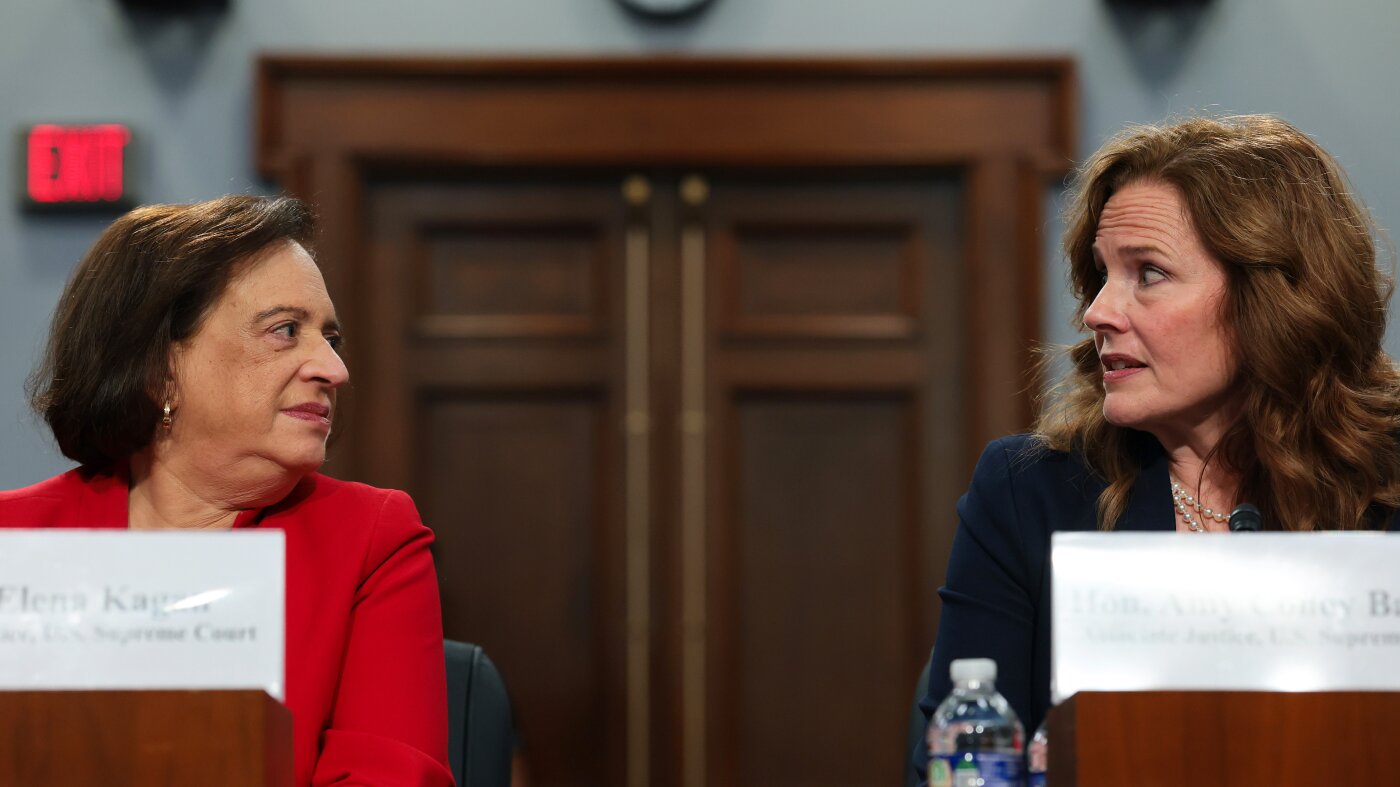
Supreme Court Justices give chilling accounts of threats to their safety
-

 Los Angeles, Ca2 hours ago
Stabbing at Chino Hills liquor store ends in attempted murder arrest
-

 Detroit, MI3 hours ago
A small group of citizens rally for mental health coverage in Detroit
-

 San Francisco, CA3 hours ago
1 dead, 2 missing after boat capsizes near Alcatraz in San Francisco Bay
-

 Dallas, TX3 hours ago
Death penalty off the table for man accused of beheading Dallas motel manager, prosecutors say
-

 Boston, MA3 hours ago
Chickadee, the popular Mediterranean restaurant in Seaport, is shutting down – The Boston Globe
-

 Denver, CO3 hours ago
Denver Nuggets 7-Year NBA Veteran Gets Honest On Peyton Watson

