Idaho
As Idaho budget debate rages, JFAC co-chair says ‘budget setting is in limbo’ – Idaho Capital Sun

As legislative leaders continue to debate voting procedures and rules, the Idaho Legislature’s budget committee has not yet taken the traditional step of voting on a revenue target that the entire state budget is based around.
The revenue target is important because the Idaho Constitution requires the Idaho Legislature to pass a balanced budget where expenses do not exceed revenues.
The revenue target is intended to show the Joint Finance-Appropriations Committee, other legislators and the public how much money is available to spend on budget requests.
The Joint Finance-Appropriations Committee, or JFAC, faces other challenges aside from the lack of a revenue target. JFAC’s co-chairs, Sen. Scott Grow, R-Eagle, and Rep. Wendy Horman, R-Idaho Falls, are implementing a series of significant changes to the budget process this year, including breaking the budgets up into different parts and altering the committee’s daily public hearing procedures.
On Friday, 12 of JFAC’s 20 members rebelled against the new procedures to break up the budgets in different ways and went around Grow and Horman to write and craft their own standalone budgets that are in direct competition with Grow and Horman’s plans for separate maintenance of current operations budgets.
When asked if JFAC can continue setting budgets without knowing how much revenue is available to spend, Horman said she isn’t sure.
“I would say budget setting is in limbo,” Horman said in a telephone interview late Tuesday afternoon.
Why does the Idaho Legislature’s budget committee need a revenue target?
Normally, JFAC sets a revenue target and makes statewide budget decisions before it begins setting state budgets.
This year JFAC accepted a revenue report from the Economic Outlook and Revenue Assessment Committee on Jan. 12, but has not yet acted on that report by setting a revenue target, Horman said.
“Given some of the other issues we’ve been dealing with in JFAC, that was moved,” Horman said. “It was less of a priority than resolving some of the other problems we are dealing with.”
Although JFAC has not yet set a revenue target, JFAC passed 10 omnibus budget bills on Jan. 16 that spend more than $5.1 billion in general fund money.
Since then, on Friday, JFAC also passed 14 additional state agency budgets that include millions more in general fund spending. The Department of Agriculture budget, for example, includes more than $15 million in general fund spending for fiscal year 2025.
Those new budgets JFAC passed Friday are in direct competition with the 10 omnibus budgets JFAC passed Jan. 16.
Idaho budget showdown could intensify Wednesday at the Idaho State Capitol
The situation with competing budgets could force the full Idaho House of Representatives and Idaho Senate to pick one side or the other starting as soon as Wednesday. Nine of the 10 omnibus budgets are near the top of Wednesday’s floor agendas – five in the Idaho Senate and four in the Idaho House.
The earlier omnibus budgets passed Jan. 16 lump about 100 state agencies all together between new bare-bones budgets that Grow and Horman said do not include any new spending requests and are designed to simply keep the lights on for state agencies.
Need to get in touch?
Have a news tip?
By contrast, the 14 state agencies budgets JFAC passed Friday separate the agencies out from each other, but are intended to be full standalone maintenance budgets that include fuller raises for state employees, replacement items for state agencies and more, supporters of those budgets have said.
Because the Jan. 16 and the Feb. 2 budgets are in competition, both cannot pass, and legislators will need to make a choice at some point.
“That’s where we are at an impasse right now,” Sen. Janie Ward-Engelking, D-Boise, said in an interview Tuesday. “If that is the case, then we have to vote those down or our budgets (from Friday) could be ruled out of order.”
If the Jan. 16 omnibus budgets pass, the Feb. 2 standalone budgets could be thrown out. If that’s the case, JFAC may need to again return to those 14 budgets to consider state employee raises, new spending requests and replacement items that were not in the Jan. 16 budgets.
But if the Jan. 16 omnibus budgets fail, then those budgets will be thrown out.
How much revenue is going to be available for Idaho budgets?
The Economic Outlook and Revenue Assessment’s Committee’s report recommends that a little less than $5.6 billion in revenue be available for budgeting in fiscal year 2025.
Horman said JFAC members were supposed to vote on a revenue target earlier in the year, but delayed action while legislative leaders debate JFAC’s rules and voting procedures.
Idaho Gov. Brad Little says JFAC’s budget changes could have unintended consequences
Depending on what happens in the ongoing budget showdown, JFAC may have already spent $5.1 billion against a revenue recommendation of a little less than $5.6 billion. Meanwhile, JFAC hasn’t yet considered new spending for the state’s largest budgets, the public schools budgets and the Medicaid budget.
Horman said the Idaho Legislature is not at risk of overspending its revenue.
“But the maintenance budgets (from Jan. 16) are well under those revenue targets,” Horman said. “As soon as House and Senate leadership make some decisions about JFAC operations and we get a resolution on the maintenance budgets, we will immediately put that on the agenda for consideration of what we have in the report from the Economic Outlook and Revenue Assessment Committee.”
GET THE MORNING HEADLINES DELIVERED TO YOUR INBOX


IDAHO FALLS, Idaho (KIFI) – A controversy is brewing as the City of Idaho Falls reviews its alcohol ordinance.
The goal is to consolidate four existing ordinances for beer, wine and liquor into a single law and ensure compliance with state code.
However, at its meeting last Thursday, the Idaho Falls City Council unanimously voted to remove the proposed ordinance from its agenda, in order to receive and consider additional public comment.
The proposed ordinance would:
1. Require commercial establishments selling, dispensing or permitting consumption of alcohol – including beer, wine or liquor – to have an alcohol license, alcohol catering permit or a charitable event permit.
2. Business events with 20 or less employees consuming alcohol at the business would be allowed.
3. Require alcohol servers to complete training every three years.
4. Individuals who violate the law could be charged with a misdemeanor.
Idaho Falls City Council President Jim Francis said the changes were the culmination of months of collaboration between law enforcement, business owners and city attorneys.
“We wanted to provide a safe environment – the primary point here – for public gatherings,” Francis said. “We recognize that certain antiquated elements of the current code are overly restrictive and needed to be addressed. We wanted to make the code more accessible to the public. We needed to address over-pouring issues. We wanted to reduce penalties where possible for violations, particularly the first offenses, and yet make the code clear enough to be enforceable consistently by law enforcement.”
But City Council Member John Radford said the changes represent an overreach by city government.
“I believe it’s a bad policy. What problem are we solving in the name of trying to solve a non-problem?” Radford said. “We’re becoming big brother around alcohol in your private property. I’m concerned that landlords will be at risk of being charged with a misdemeanor if they knowingly, which I made sure that was in there, because that is what we’ve been talking about, allowed people to drink in our business. We will be outside the norm of Idaho cities. This is a big step, and I don’t think the public has weighed in on this.”
At a City Council Work Session on June 1, Idaho Falls Chief of Police Bryce Johnson cited an increase in alcohol-related crime – particularly downtown – as a reason for the changes.
“DUI is there, but this would include sexual assaults, assaults, batteries, disturbances, urination, public vandalism, shooting – all sorts of crimes,” Johnson said.
But business owners are concerned about the potential impact on commercial enterprises.
“The ordinance doesn’t address the real problem – which is people drinking … at one event and then showing up in a bar or restaurant already hammered and causing problems anyway,” ” said Terri Ireland, representing the Idaho Falls Downtown Merchants Association. “The industry is really well-regulated by state and local laws already.”
The City of Idaho Falls began the process of updating its alcohol ordinance in January 2026, seeking input from community stakeholders.
Multiple community members spoke out about the ordinance.
For more in-depth information, you can read the full 39-page proposed alcohol ordinance here.

BOISE, Idaho (CBS2) — A simmering dispute between Idaho’s top elections official and the U.S. Department of Justice escalated this month after federal officials warned Secretary of State Phil McGrane about possible prosecution tied to non-citizens voting in Idaho.
The Justice Department sent a letter earlier this month threatening McGrane with prosecution. The warning came amid a broader conflict between the Trump administration and McGrane, whom the administration has sued over his refusal to provide unredacted voter rolls to the federal government.
Idaho’s chief of civil litigation, James Craig, responded on July 10. In a letter first reported by the Idaho Statesman, Craig pushed back on the federal warning, writing, “Insinuations of criminal violations of the federal election laws are not well taken,” and asking the department to “stop threatening your friends in Idaho.”
Craig also requested that the lawsuit against McGrane be dismissed and criticized the Justice Department for sending its letter directly to McGrane rather than to the Idaho attorney general’s office.
The attorney general’s office said the state has already referred 15 cases of possible non-citizen election violations to the Justice Department but is not aware of any of them being prosecuted. Craig’s letter ends by asking the department to do so.

The Idaho Legislature won’t eliminate property tax next year. My bold prediction. There will be a few bills introduced, a lot of chatter on talk radio and online, and then action will be kicked down the road. If it looks like a winner in the 2028 Election, it’ll sail through in session a few weeks before the 2028 Primary. Wet an index finger and raise it in the air. Then vote.
As an old Libertarian (with a capital L), I’m familiar with the basic argument. If you own it, why do you have to pay rent? The answer always comes back to, “It’s the best system we have to fund local governments”. Forms have been in place since colonial times, even if scattered geographically. The idea gained steam in the years after the Civil War when a handful of economists blamed property ownership for growing poverty in cities. Property accrued value as space became a premium. So-called reformers believed the tax would balance economic inequality, and appealed to noblesse oblige.
Your Taxes Get Sprinkled Like a Good Rain
I live in Twin Falls County, where we have 78 taxing districts that rely on the current system. If you ask what can replace it, you’re called a Republican in name only (RINO) by compatriots. Obviously, not everything funded by the tax is a waste. First responders and snow plows come to mind. It makes me think of the calls to gut the federal government, but while maintaining Social Security and Medicare. The former makes up nearly a quarter of the budget. Medicare is only 14 percent, but additional health spending brings the tab to another quarter. Historian Niall Ferguson grew up in Scotland, and he summed up Great Britain a couple of weeks ago. People want more, not less, welfare spending. Are we different?
Before anyone in Boise wipes out property tax, legislators need to consider what voters want to stay, and how to fund it otherwise. If they don’t, they’ll see a backlash at the ballot box. Just because I say I want taxes reduced, I didn’t mean the programs that benefit me! The answer won’t be available over 90 days next year.
More than 20 years ago I hosted a weeklong series on tax alternatives. Among the proposals we examined were Flat Tax, Fair Tax, and Automated Payments Tax. People are most familiar with the first. Everyone pays a flat percentage. Say 12 to 15 percent. Of income, I guess. Of course, we need to define income. Professor Gad Saad is leaving Canada for a job in the United States and has to pay an exit tax based on his estimated assets. Estimated is the dirty word! That’s left to bureaucrats.
This Requires Study and Gaming Outcomes
Go ahead and adopt the flat tax, and please the conservatives, however. Many people, even on the right, have paid very little when it comes to present income confiscation. See how they react when they get a wake-up call. The Fair Tax is a national sales tax of 23 percent. Or it was the percentage proposed 20 years ago. That sounds large, but when you consider your overall tax burden right now, if it replaced what currently exists, you would be better off. This isn’t to say that local governments wouldn’t institute their own taxes. If you live in a blue state or city, that’s a given. Proponents argue that citizens have the option of not paying taxes if they choose not to buy. Obviously, you need to buy some things, unless you’re destitute and living exclusively on handouts.
Automated Payments Tax (APT) is a 1 percent charge on every transaction. A company buys steel to build trucks; it pays 1 percent on the steel. And on every other purchase. The dealer buys the truck for his lot and pays one percent. You buy from the dealer and pay one percent. An economist at the University of Indiana told me it would cover the federal budget. We had that conversation in 2005, when the national debt wasn’t even a quarter of what we see today. None of these plans address the debt, but if state and local governments are creative, maybe we can find something that replaces property taxes.
What we’ll get is a commission from the politically connected who’ll meet once a month for bagels and orange juice. In three years, they’ll provide a solution that works best for them.
Highest Gas Taxes By State in the U.S.
Here are the top 10 states for gas taxes.
-

 Health5 minutes ago
Notable figures who died from the same heart condition linked to Lindsey Graham’s death
-

 Sports11 minutes ago
Folarin Balogun admits that red-card reversal affected USA World Cup teammates: ‘A lot of outside noise’
-

 Technology17 minutes ago
Humanoid robots perform live surgery in world first
-
 Business23 minutes ago
A ‘next generation studio’ for YouTube creators
-
 Entertainment29 minutes ago
Finn Wolfhard is taking ‘control of the narrative’
-
 Lifestyle35 minutes ago
What are your most cherished memories of the 2026 World Cup in L.A.?
-
 Politics41 minutes ago
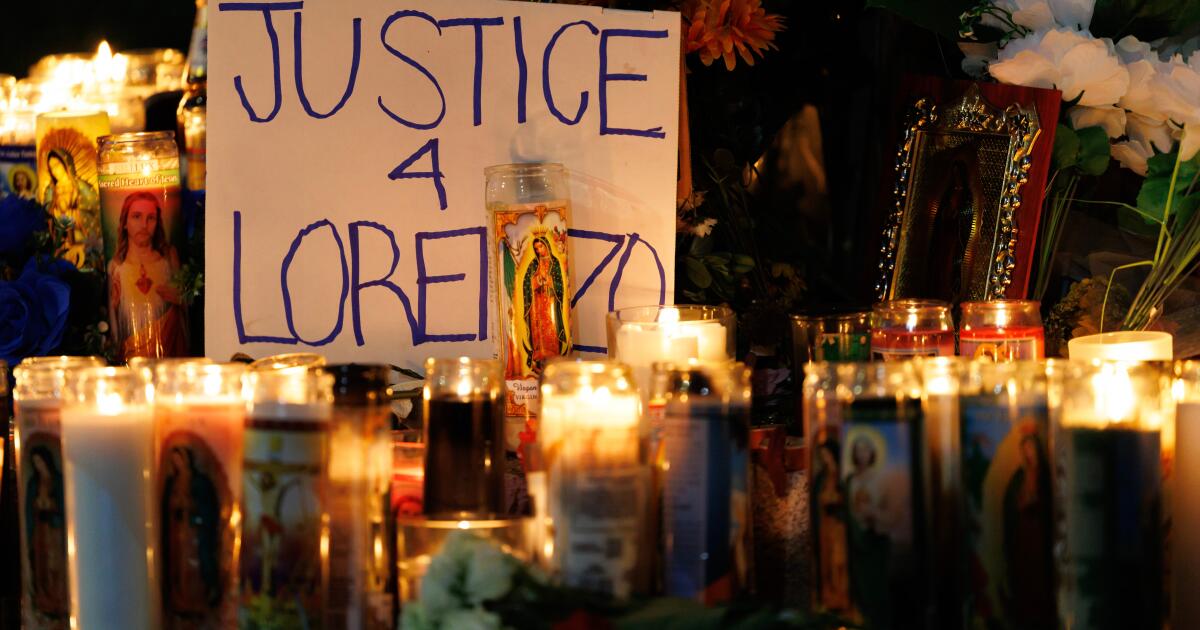
Commentary: Two Lorenzos from Mexico. One fulfilled his American dream. ICE killed the other
-
 Sports53 minutes ago
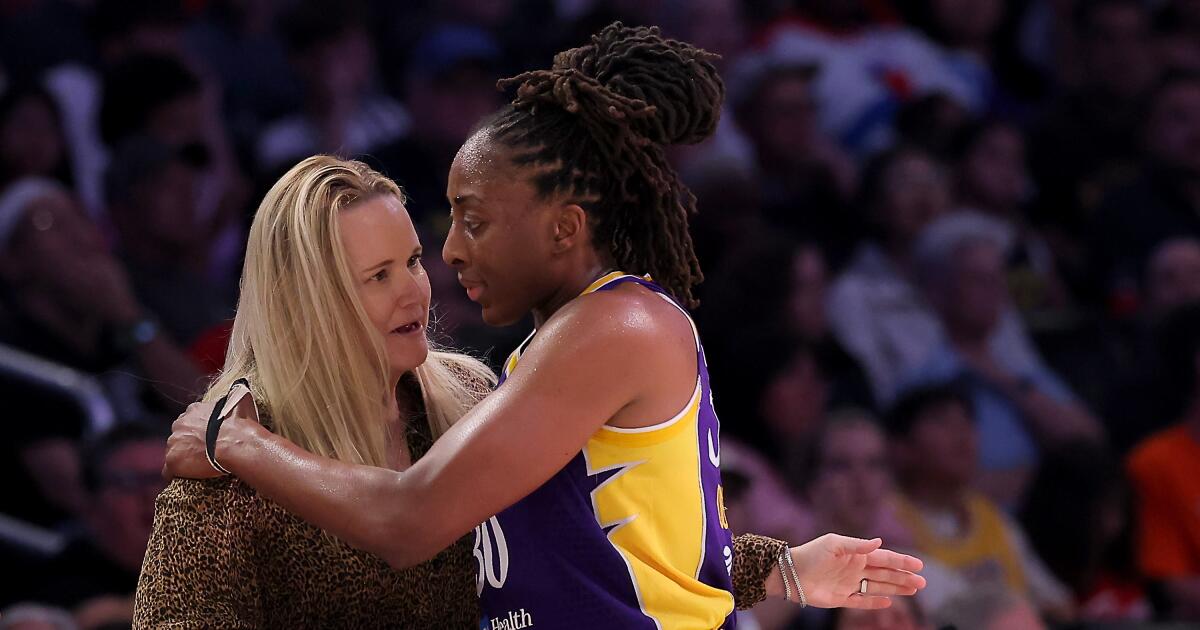
What will the Sparks do next? The franchise is at a crossroads after firing its GM

