Hawaii
Several Hawaii projects included in latest water infrastructure bill

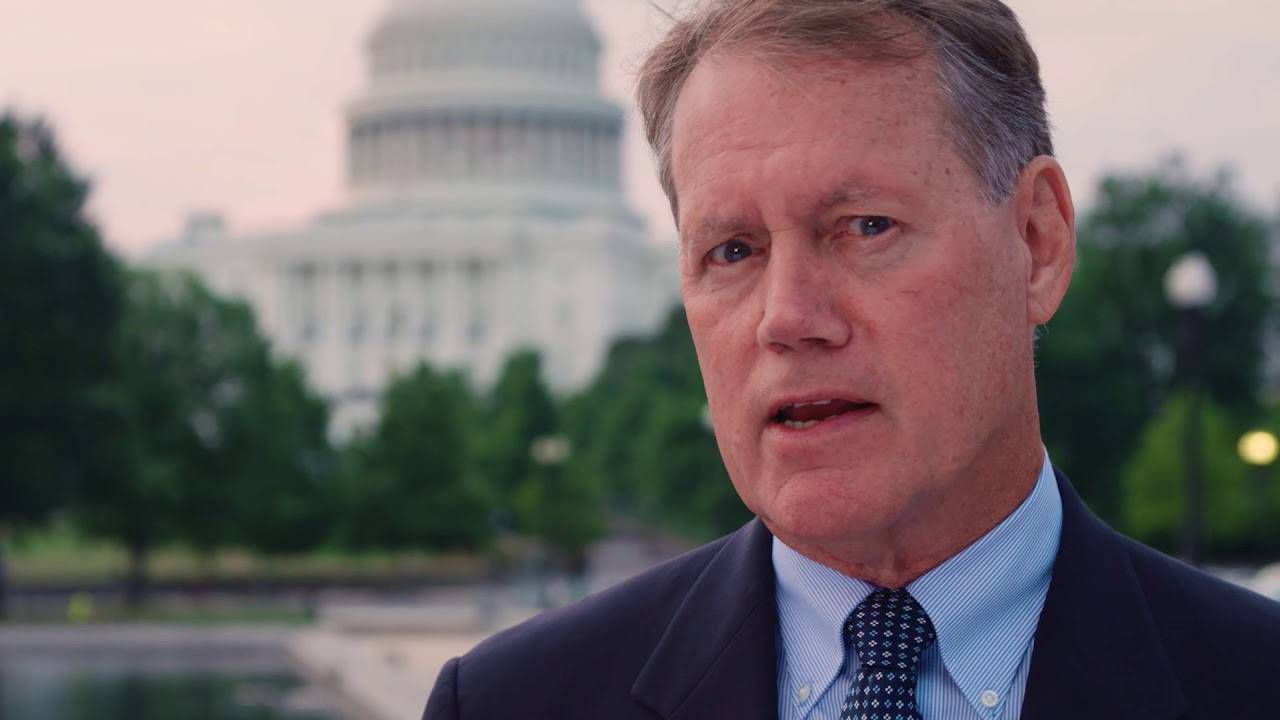
WASHINGTON — The proposed federal Water Resources Development Act of 2024 is headed for a final vote in the U.S. House of Representatives with some key Hawaii projects secured by Reps. Ed Case and Jill Tokuda, both D-Hawaii, included in its numerous provisions.
The biennial bill, which cleared the House Transportation and Infrastructure Committee on a 61-2 vote last month, authorizes projects to improve the country’s ports and harbors, inland waterways, flood and storm protection and other water resource infrastructure.
Projects are performed by the U.S. Army Corps of Engineers in partnership with federal, state, local and tribal organizations and non-government organizations.
“As Hawaii has seen in increasing frequency, extreme weather events are leaving a trail of destruction and loss behind,” Tokuda said. “From hurricanes to flooding to wildfires, we need to do all we can to protect our local communities from the impacts of sea level rise and natural disasters. I am proud this bill includes projects in four counties to help protect our communities from future disastrous events.”
“In addition, Hawai’s harbors serve as a critical lifeline for residents and businesses,” she continued. “This year’s WRDA includes efforts to maintain the infrastructures that keep products flowing in and out of our state and keep Hawaii moving forward.”
Some of the Hawaii initiatives included in the 2024 WRDA include:
Increased funding for the Maui Environmental Infrastructure authorization: Both Case and Tokuda requested that funding be increased to $50 million from $20 million to assist with wildfire recovery.
Lahaina watershed study: Case and Tokuda also advocated for a study of the Lahaina Watershed that would include the coral reef habitat north of Lahaina. The study would examine the overall impacts of the wildfire with the goal of better protecting the community from flooding and preventing environmental damage from runoff.
Ala Wai Canal flood risk management project: Case is seeking to expedite the 25-year-old project, which focuses on protecting the homes, businesses and communities of Makiki, Manoa, Palolo and Waikiki.
“We all are facing the real-life evidence every day of the effects of climate change including disastrous flooding, and we must continue our efforts to prevent a catastrophic storm that would impact the watershed and the adjacent canal,” Case said.
Honolulu Harbor expansion and upgrade: Case proposes to update a previous authorization for a study on expanding and upgrading Honolulu Harbor to reflect “expanded complexity, scope and funding needs, including elements of coastal storm risk management.”
“As the main port of the State of Hawaii, Honolulu Harbor receives and distributes all overseas cargo shipments constituting over 80% of all imports into the state, supports fishing operations and cruise ships and handles federal maritime activity including the U.S. Coast Guard’s 14th District,” said Case, who previously secured $1.5 million in funding for the project via his work on the House Appropriations Committee.
Joining USACE studies of the Pacific Region: Under this provision, Hawaii would be allowed to partner with the Army Corps of Engineers on studies involving cultural resources preservation and environmental restoration. The agency already works with Guam, American Samoa and the Commonwealth of the Northern Marianas on similar studies of coastal storm risk management and flood risk.
Expanding eligibility for federal assistance for coastal communities dependent on key ports: This amendment would allow for expanded eligibility for coastal communities whose longevity is tied to harbor access. It allows for greater consideration of cultural, social and ecosystem benefits to the local communities in cost-benefit analyses.
Further Hawaii-related provisions include an assessment of the Waialua Watershed to inform efforts to prevent future flooding and climate change impacts; modifications to repair Laupahoehoe Harbor to allow for the repair of the harbor’s breakwater structure; a comprehensive new start Feasibility Study to evaluate sources of flooding and propose solutions to reduce flood damages in the Hanapepe River watershed.
Michael Tsai covers local and state politics for Spectrum News Hawaii. He can be reached at michael.tsai@charter.com.



Three convicted sex offenders were arrested on Hawaii Island last week for allegedly failing to comply with sex offender registry requirements.
Multiple law-enforcement agencies conducted checks in Kona on registered sex offenders who had been identified as potentially out of compliance with the state’s Sex Offender Registry laws, according the Department of the Attorney General.
As a result of the three-day operation, several individuals were brought back into compliance, and three West Hawaii men were arrested for allegedly failing to comply with the requirements.
The three men who were arrested are Joseph Debus, 56, of Kailua-Kona, Garth Coleman, 53, of Holualoa and Alexsandr Skelcey, 34, of Kailua-Kona.
Debus was convicted of second-degree sex assault in Hawaii in 1993 and sentenced to five years probation with a year in jail. Coleman was sentenced to 20 years in prison for first-degree assault in 2000 after a jury trial in Hawaii. And Skelcey was convicted in Michigan in 2012 of assault with intent to commit sex assault.
“Sex offender registration requirements exist to protect our communities and ensure law enforcement knows where convicted offenders are living,” Tom Alipio, chief of the AG department’s Investigations Division, said in a press release. “Compliance operations like this send a clear message that we will actively monitor the registry, investigate violations and work closely with our law enforcement partners to hold offenders accountable when they fail to meet their legal obligations.”
HPD Chief Reed Mahuna said, “Operations like this allow us to verify that offenders are maintaining strict compliance with registration laws and those who aren’t will be addressed immediately. We will continue to leverage these multi-agency partnerships to keep our island communities safe,”
Members of the public can look up publicly available offender information and subscribe to notifications at sexoffenders.ehawaii.gov/coveredoffender/.
Anyone with information regarding a registered sex offender who may be violating registration requirements is encouraged to contact the Department of the Attorney General’s Investigation Division at (808) 586-1240 or their local law enforcement.

A brush in North Kona, near the Ulu Wini Apartments, has closed a portion of Hina Lani Street, between Route 190 and Ane Keokalole Highway.
According to Hawai‘i Island police, the road is expected to be closed for the next three hours and motorists are advised to avoid the area.
Hawai‘i Fire Assistant Chief Chris Carvalho confirmed at least two engines, two brush trucks, Chopper 2 and a medic vehicle responded to the blaze that started in some bushes.
No evacuations or injuries have been reported at this time.
At 11:09 a.m., an AlertWest camera, installed by Hawaiian Electric in wildfire-prone areas, showed smoke billowing above the Keahuolu Courthouse. As of 12:06 p.m., that smoke appears to have dissipated.
This is a developing story. More information will be provided as it becomes available.
Hawaii
Chinese communist party member arrested in Hawaii on visa fraud charge | Honolulu Star-Advertiser

-

 Louisiana10 minutes ago
Parasitic stomach illness that can cause explosive diarrhea rises in Louisiana
-

 Maine17 minutes ago
Is prison in play for Graham Platner?
-

 Maryland20 minutes ago
Office building in Glen Burnie evacuated after shift in parking garage floor
-

 Michigan25 minutes ago
Menominee, Michigan man arrested on sexual assault charges involving a minor
-

 Massachusetts32 minutes ago
Healey administration vows to appeal as Trump rejects Massachusetts blizzard aid request – The Boston Globe
-

 Minnesota34 minutes ago
Minnesota Looks to Add 1,100 Child Care Slots, With Melrose Among the 11 Funded Communities
-

 Mississippi40 minutes ago
Death of Mississippi teen Nolan Wells under investigation
-

 Missouri47 minutes ago
Missouri realtors hold statewide rally to vote no on Amendments 4 & 5

