Hawaii
RIMPAC 2024 Kicks Off In Honolulu, Hawaii – Naval News


The 29th iteration of the Rim of the Pacific (RIMPAC) exercise is set to cover all major aspects of warfare and naval operations, from anti-submarine warfare to disaster response. Partner nations from around the world have gathered in Hawaii to participate in a range of exercises and team building spanning the next month.
Exercise Rim of the Pacific (RIMPAC) 2024 has officially begun in Hawai’i, bringing 29 partner nations and 25,000 personnel, making this year’s RIMPAC in the largest iteration to date by number of countries involved. Over the next month, from June 27th to August 1st, participants will embark on exercises that cover all the bases of the maritime domain, from disaster response to multi-axis carrier defense.
RIMPAC 2024 Combined Task Force Commander Vice Admiral John Wade opened the day answering questions and beginning the formal ceremony that kicked off this year’s iteration of RIMPAC.
Partner nations have been arriving in Hawai’i by sea and air over the past few weeks, building up the scores of aircraft, ships, and submarines in the days before RIMPAC. Notable participants this year include a French Aquitaine-class FREMM Frigate Bretagne (D655), Royal Netherlands Navy’s De Zeven Provinciën-class air defense frigate HNLMS Tromp (F803), the Nimitz-class aircraft carrier USS Carl Vinson (CVN-70) with its F-35C Lightning II Advanced Air Wing, and a South Korean Sejong the Great-class ROKS Yulgok Yi I (DDG-992), among dozens of other ships and submarines participating.
Participating nations in this year’s iteration of RIMPAC are Australia, Belgium, Brazil, Brunei, Canada, Chile, Colombia, Denmark, Ecuador, France, Germany, India, Indonesia, Israel, Italy, Japan, Malaysia, Mexico, Netherlands, New Zealand, Peru, Republic of Korea, Philippines, Singapore, Sri Lanka, Thailand, Tonga and the United Kingdom.

The RIMPAC 2024 Docket
While a full list of events is not public, the U.S. Navy has confirmed that this year’s RIMPAC will feature the largest humanitarian aid and disaster response to date.
This year’s RIMPAC will host its largest humanitarian aid and disaster relief exercise with eight countries, five ships, five landing craft, five aircraft, multiple land forces, and over 2,500 total participants including the statewide Hawaii Healthcare Emergency Management exercise. The exercise control and scenario development are supported by subject matter experts from the Center for Excellence in Disaster Management, Pacific Disaster Center, USAID’s Bureau for Humanitarian Assistance, and Singapore’s Changi Regional Humanitarian Assistance and Disaster Relief Coordination Centre.
U.S. Navy Pacific Fleet Press Statement
Customary to RIMPAC, a SINKEX is also planned for mid-July featuring ex-USS Tarawa (LHA-1), an amphibious assault ship that served in the United States Navy from 1976 to 2009. Tarawa was stricken from the naval registry on April 30, 2024. More SINKEX events may be planned, but their details are not currently available to the public.
Other at-sea activities include anti-submarine warfare, multi-ship surface warfare, multinational amphibious landings, and multi-axis defense of the carrier strike group against live forces.



HONOLULU (HawaiiNewsNow) – Other than brush, overgrown grass, some birds singing in the distance, and perhaps a gust of wind coming in, there’s really not much going on in Honouliuli Gulch these days.
More than 80 years ago, it was a different story.
Following the bombing of Pearl Harbor, a hasty prisoner of war compound was built in this barren area of Oahu and named the Honouliuli Internment Camp.
Some of the Japanese Americans who were imprisoned here had another name for this place: “Jigoku dani,” or “Hell Valley.”
“There is a reason why the Japanese Americans nicknamed it Hell’s Valley. It’s a very rugged environment. It’s deep in the gulf to the valley,” said Christine Ogura, superintendent of the Honouliuli National Historic Site.
Now, for the first time, the public will be able to understand the “hell” internees experienced through guided tours into what is now known as the Honouliuli National Historic Site.
“You’re going to have an opportunity to actually walk original historic roads that people who were incarcerated there, their family members walked as well,” Ogura said. “Even though the camp was closed and we don’t have any original structures left, because when the military closed in 1946, they actually took everything down. But we do still have original, like the concrete slab foundation of the mess hall, where families were able to reunite with their mothers and their fathers during visitation.”
The internment camp opened in 1943 and was the largest and longest-used incarceration site in the islands. At its peak, Honouliuli held over 4,000 prisoners of war from Italy, Taiwan, Korea, Philippines and had the largest contingent made up of Japanese Americans.
For Superintendent Ogura, what happened here is personal since she is a second-generation American of Japanese ancestry.
“When I found out that this happened here and being Nisei myself and my parents are Issei, I reflected: had I been born a generation earlier it could have been me and my mom,” she said. “I think locally it’s an important history to conserve and perpetuate because it is important that our communities know that this happened locally.”
Tours at the Honouliuli National Historic Site will begin on July 18, and demand has been overwhelming with every tour fully booked and waitlists in the hundreds.
“I will say the response has been humbling when we released the dates. It booked up within 25 minutes and we currently have a waiting list of over 1,700 people,” Ogura said.
The park is working toward more availabilities for next year.
Officials are looking for volunteer docents to help expand tour capacity.
Copyright 2026 Hawaii News Now. All rights reserved.
Hawaii
Magical Creatures Sanctuary looks to develop community, educational programs – West Hawaii Today


Here’s what you need to know about the University of Arizona
UA was established in 1885, and its main campus is in Tucson. The Wildcats once had a live bobcat named Rufus as a mascot.
The Republic
If point guard JJ Mandaquit’s job at Arizona next season looks tricky and challenging, having to glue together a lineup full of potential NBA draft picks under the pressure of playing for a returning Final Four team, it might be worth considering what his grandfather and father have been up to.
They’ve been running a roofing company … in Hilo, Hawaii. The rainiest city in the country, on the windward side of the Big Island. Where some 130 inches of rain hit buildings every year, creating slick working conditions, and where, even in drier moments, there’s high humidity and trade winds to deal with.
“I had to go on the roof a couple of times,” Mandaquit said, chuckling. “But not in the rain.”
He had other things to do. With his basketball skills overshadowing the local level of play since his elementary school years, Mandaquit left Hilo as a sixth-grader to begin a higher-level basketball journey that put him in Tucson this year.
His family came with him to Oahu, where he transferred to the Iolani School of Honolulu. His father, Jason Sr., commuted back and forth between Oahu and the Big Island while still roofing, though his mother was able to transfer from Hilo to Honolulu within her job at Hawaiian Electric.
Everyone thought that was the plan for a while.
“It was a better opportunity, better education and more opportunity,” Mandaquit said. “When we left from Big Island to Oahu, that was a huge move for my family, a lot of sacrifice that went into it. I’m super grateful to my parents. When we made that move in the sixth grade, we thought that was going to be the move, that it was just going to end there, I’d go to high school there.”
It still wasn’t enough. Mandaquit outgrew the basketball scene again. By ninth grade, he moved on to Real Salt Lake Academy, which turned into Utah Prep.
In Hawaii, he found players have also been kept from high-profile West Coast clubs because of a quirky club-ball residency rule in which players are typically allowed to play only for a club in their state or a bordering one — and Hawaii borders only an ocean. So Mandaquit said he and other locals started their own “Sons of Hawaii” club to play on the “MADE Hoops” circuit.
It still wasn’t enough. Utah was next.
“We felt it was best to get out of Hawaii and chase this dream,” Mandaquit said. “It wasn’t an easy choice to leave home, but we felt looking at the big picture, if I want to play at the high Division I level, we almost felt that it was a necessity to get out of the islands, surround myself with better competition, be somewhere that allows me to be more exposed.”
That move paid off. Mandaquit grew into a high-major prospect at Utah Prep and became a mainstay with USA Basketball junior teams. He won three gold medals at FIBA events: At the 2023 U16 AmeriCup, the 2024 U17 World Cup and, on a team led by UA coach Tommy Lloyd, the 2025 U19 World Cup.
Only a secondary recruiting target of Arizona’s before he committed to Washington in November 2024, Mandaquit jumped out at Lloyd while playing for USA Basketball last summer. Mandaquit averaged 6.1 points and 5.4 assists — with nearly a 4-to-1 assist-turnover ratio — while hitting 6 of 10 3-pointers over USA’s seven-game romp.
“I had only seen him play a few times before (last summer), but I was just so impressed with his character, but also his tenacity and the effort he played with. Just how he impacted winning,” Lloyd said. “So obviously, when we saw his name on the transfer portal, it piqued my interest right away.”
Lloyd said he considered Mandaquit out of high school, but the Wildcats were also pursuing Brayden Burries and had Jaden Bradley projected to stay through last season. Lloyd said he also took a cautious recruiting approach in 2025 because “you just didn’t know” how rev-share and NIL were going to work out, since 2025-26 was the first year schools could pay players.
So Mandaquit chose the Huskies over USC and Creighton. He started the Huskies’ first five games but wound up playing off the bench for most of his 22 appearances, averaging 5.2 points and 2.1 rebounds while shooting 28.2% from 3-point range.
Mandaquit struggled with a foot issue in the preseason and eventually missed the Huskies’ last 11 games because of it, though he has since had corrective surgery and returned to the court at Arizona.
“It was a great learning experience,” Mandaquit said of Washington. “I didn’t have the year that I wanted to have, but just going through that experience is gonna be huge for me and my future. I’ve got one year of college basketball under my belt, and the Big Ten was awesome last year.”
After he left Seattle, SI’s Huskies website wrote that UW coach Danny Sprinkle “has to be reeling by Mandaquit’s departure,” saying Mandaquit’s playing style “seemed to match Sprinkle’s hard-nosed personality.”
Instead, Mandaquit will be playing for the same coach he said he loved playing under last summer in Switzerland. Mandaquit joined a team that included former UA forward Koa Peat, incoming UA freshman Caleb Holt and No. 1 NBA Draft pick A.J. Dybantsa, among others.
They were all stars, forced together to play team ball during the world’s highest-profile junior tournament.
Gold was the expectation.
“What he was able to do with our group in such a short amount of time, I just loved,” Mandaquit said of Lloyd. It was “just the culture that he was able to build. Obviously, it’s not the easiest job as a coach to be able to manage all of the star players and egos that we had. It was just the way that he was able to get everyone to just buy in and focus on a common goal, and ultimately go and reach that goal.
“It was amazing. It was the most fun I ever had playing basketball.”
Despite their bond, Mandaquit said he couldn’t have a recruiting conversation with Lloyd until after he entered the portal this spring. But that might have been a formality anyway.
Both Lloyd and Mandaquit knew plenty about each other at that point.
“This time it was fast,” Lloyd said. “We both knew what we wanted on both sides.”
Lloyd needed a true point guard to join North Carolina transfer Derek Dixon and Holt in a reloaded backcourt that lost NBA Draft picks in Burries and Bradley.
Mandaquit wanted to be under Lloyd for more than a few weeks.
Official elapsed time between Mandaquit’s early April entry into the transfer portal and his commitment to Arizona: Ten days.
“When this opportunity came back around, I couldn’t pass it up,” Mandaquit said. “I knew this is the place that I wanted to be, and I knew I wanted to be coached by Tommy.”
During an interview at McKale Center last month, Mandaquit said he’s since arrived at Arizona to find high-character guys around him, and that coaches are pushing him the way he wants to be pushed.
“I’m loving it so far,” Mandaquit said.
As a bonus, Mandaquit’s first season with the Wildcats will also take him nearly full circle. Not to Hilo and the Big Island, but to the Maui Invitational, the prestigious early-season event that Mandaquit said he routinely watched on television even if the inter-island hop and high ticket prices kept him out of the Lahaina Civic Center to watch in person.
This time, he’ll be in the building — and soaking up the atmosphere outside it. His parents, now living back in Hilo, can make the easy flight over to watch, too.
It probably won’t rain much, if at all, Lahaina being on the leeward side of Maui and all.
But, for Mandaquit, it’s still home.
“Hawaii means everything to me,” Mandaquit said. “I try to get back there as much as possible, and I feel the support of the state behind me. I feel their love, so it pushes me to work harder.”
-
Vermont4 minutes ago
VT Lottery Powerball, Gimme 5 results for July 13, 2026
-

 Virginia10 minutes ago
Pete Eshelman appointed to Virginia Tourism Authority by Gov. Spanberger
-
 Washington16 minutes ago
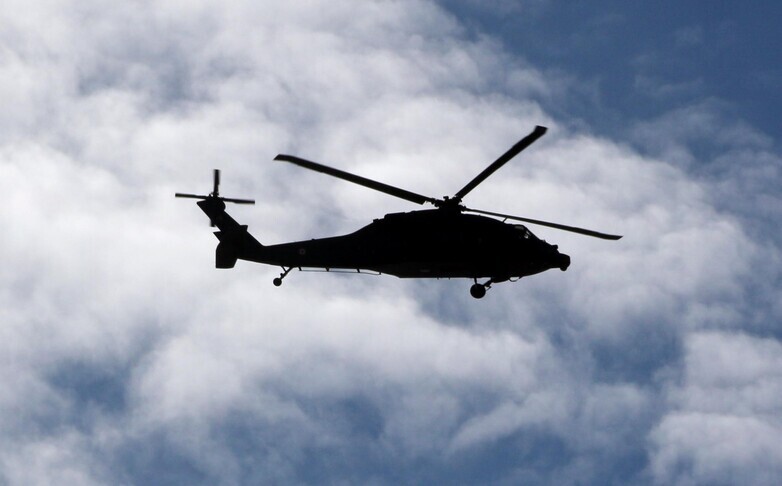
US Air Force helicopter makes precautionary landing in Washington
-

 Wisconsin22 minutes ago
Wisconsin Lottery Powerball, Pick 3 results for July 13, 2026
-

 West Virginia28 minutes ago
West Virginia Wildlife Center’s popular ‘Rendezvous’ celebration returns this month
-

 Wyoming34 minutes ago
July 13 recap: Wyoming news you may have missed today
-

 Crypto40 minutes ago
Why Early Legal Action Matters After a Cryptocurrency Investment Scam
-

 Finance46 minutes ago
Goldman Sachs Sets $1 Trillion M&A Record

