Hawaii
Fewer than half of Hawaii’s keiki proficient in reading and math – West Hawaii Today


A new study reports that fewer than half of Hawaii’s students are proficient in reading and math and that Hawaii is ranked among the bottom third of states nationally for economic well-being, indicating a need for more state action supporting keiki and families.
The Kids Count Data Book, a report developed by the Baltimore-based Annie E. Casey Foundation, has shed light on children’s well-being across the nation since it was first published in 1990. While students’ lack of basic reading and math skills has been an ongoing problem for decades, the study read, the focus on learning loss due to the COVID-19 pandemic has shifted attention back to the issue, especially as chronic absence grew and economic instability rose.
“This year’s data suggests a concerning trend for Hawaii’s youth and that is they will continue to be the population who suffers when our state’s policies do not support the economic well-being of working families,” Hawaii Children’s Action Network Executive Director Deborah Zysman said in a news release.
According to the report, 35% of Hawaii fourth graders were at or above reading proficiency in 2022, a small change from 34% in 2019, before the COVID-19 pandemic. At the same time, 22% of eighth graders were at or above proficient in math, a significant drop from 28% in 2019.
Nationally, Hawaii ranked eighth in reading proficiency, compared with 28th in 2019, and 38th in math proficiency, compared with 42nd in 2019 — both improvements in ranking due to average proficiency rankings worsening nationally.
The link between student readiness and lifetime economic stability is also apparent, with many of the fastest-growing occupations requiring high-level reading and math skills “that we are not ensuring our children possess,” the study read.
“Just as underprepared workers are less competitive within our economy, an underprepared workforce makes America less competitive in the global economy,” the study read. “Persistent disparities further damage both individual prospects and the economy as a whole — at an enormous scale.”
The report also found that 39% of Hawaii’s students were “chronically absent” — meaning they missed 10% or more days of school in the academic year — in 2022, a jump from 18.5% in 2019. This statistic ranks Hawaii among the worst 10 states in the country for rates of chronically absent students. Additionally, 59% of Native Hawaiian and Pacific Islander students were reported to be chronically absent in 2022, aligning with data indicating students of color experienced higher rates of chronic absence.
While chronic absence has roots that have existed before the pandemic, such as housing insecurity, poverty and student disengagement, the study cites early research indicating that the pandemic “both exacerbated existing attendance challenges and introduced new ones,” like rising anxiety and mental health issues.
The Kids Count Data Book study has traditionally presented data across 16 indicators over four “domains” — economic well-being, education, health, and family and community factors — and ranks states accordingly, reflecting the interconnectedness between student performance and external conditions.
“When kids grow up in harsh economic conditions, education is really supposed to be the great equalizer to get them out of that when they’re adults,” Ivette Rodriguez Stern, junior specialist at the UH Center on the Family, told the Honolulu Star-Advertiser. “When you look at our proficiency rates and the new data offered on chronic absenteeism, and then you look at the disproportionality with some groups, that’s a great concern, because if you’re growing up in those economic conditions and you’re not getting the educational opportunities to lift you out of that, then what does our future look like?”
Overall, Hawaii ranked 25th in the nation for overall child well-being — maintaining its rank from 2023 — and placed 20th in education, 15th in health and 18th in family and community factors. Each of these rankings fell as compared with 2023, from 19th in education, 13th in health and eighth in family and community factors.
However, the state improved its economic well-being ranking, going from 44th place in 2023 to 38th this year, although the ranking still categorized Hawaii among the “worse” category of states.
The ranking in the bottom third of states in this domain was heavily affected by Hawaii’s ranking of 47th in the housing cost burden indicator. According to the report, in 2022 almost 38% of Hawaii’s keiki lived in households that spent over 30% of their income on housing. In that same time, 28% of children in the state lived in families where no parent had full-time, year-round employment.
“It is concerning that too many children are living in families where parents lack secure employment. In addition, we continue to have among the worst housing cost burdens in the nation,” Stern said in the news release.
Additionally, Stern said this data indicates the profound effect of the COVID-19 pandemic on economic stability for families, as the data was collected post-pandemic.
With this new data, the report proposed various solutions and priorities for states — including ensuring access to “essential resources” like low- or no-cost meals and reliable internet access in schools, the availability of mental health care, and working toward improving chronic absence rates.
“It’s a concern to see some of the education data,” Stern said. “There have been improvements, but we’re still not in a good place, and that’s both as a state and as a country.”


Mechanical problems with a water treatment plant in Hawaii have left thousands of soldiers without central air conditioning in the barracks, a spokesman for U.S. Army Garrison Hawaii confirmed Tuesday in a statement to Military Times.
Four thousand soldiers in Area North Barracks are opening windows, turning on fans or using other tools to beat the heat while the base grapples with pump issues.
On July 10, deep-well pumps supporting Army installations in central and northern Oahu started experiencing problems.
According to the garrison, only one pump is currently pushing water to the surface. To maintain essential water services, water chiller systems have been turned off. Without the chiller systems — which make up almost 40% of the daily water use — the barracks do not receive central air conditioning. The incident was initially reported by Task & Purpose.
According to the National Weather Service, temperatures for the remainder of the week range from the mid-70s to the upper-80s.
Units are able to move troops to MWR facilities with central air conditioning, according to the service, but as of Sunday, no units had done so.
Repairs are underway, but an exact timeline for when the pumps will be fully functional again was not provided.
The cause of the issues has not been definitively identified, however “age and extreme heat due to ventilation system repairs are believed to be part of the cause,” said Nathan Wilkes, the garrison’s external communications chief.
The installation is prioritizing keeping safe drinking water available.
Barracks and residential housing have access to drinkable water, and plumbing and sanitation systems are operational. Wilkes also said the installation has paused irrigation systems pulling from Area North water supply.
Family housing still has air conditioning and water access, Wilkes added.
The garrison’s commander, Col. Rachel Sullivan, was scheduled to host a town hall on the installation’s Facebook page on Tuesday.
Eve Sampson is a reporter and former Army officer. She has covered conflict across the world, writing for The New York Times, The Washington Post and The Associated Press.

A 21-year-old Hilo woman died as the result of a three-vehicle traffic collision Sunday night on Alii Drive in Kailua-Kona.
Officers responded to a 9:28 p.m. report of a head-on collision near the north end of Kahaluu Beach Park.
Their preliminary investigation determined that the woman, Hinanui T. Starr-Boyle, was driving a gray 2012 Toyota Tacoma northbound at a high-rate of speed for the area.
While passing another northbound vehicle in a no-passing zone, the Tacoma crossed into the southbound lane and collided head-on with a silver 2010 Nissan Frontier pickup truck driven by a 20-year-old Holualoa man.
Following the initial collision, the Nissan Frontier continued onto the makai shoulder of the roadway, where it struck a parked tan Ford Econoline van.
Starr-Boyle was pronounced dead at 10:17 p.m. at Kona Community Hospital. Her passenger, a 25-year-old Hilo man, and the driver of the Nissan were admitted to KCH. Both were listed in stable condition.
The driver of the Nissan was arrested on suspicion of DUI.
None of the people involved in the collision were wearing seat belts, and speed and impairment are believed to be contributing factors in the crash, police said.
Starr-Boyle’s death is the 18th traffic fatality on Hawaii Island in 2026, compared to 14 at the same time last year.
Potential witnesses or anyone with video camera footage from the area around the time of the crash are asked to contact Officer John Harvey at (808) 326-4646, ext. 3229, or john.harvey@hawaiicounty.gov.
Those who prefer anonymity may contact Crime Stoppers at (808) 961-8300.

HONOLULU (HawaiiNewsNow) – Other than brush, overgrown grass, some birds singing in the distance, and perhaps a gust of wind coming in, there’s really not much going on in Honouliuli Gulch these days.
More than 80 years ago, it was a different story.
Following the bombing of Pearl Harbor, a hasty prisoner of war compound was built in this barren area of Oahu and named the Honouliuli Internment Camp.
Some of the Japanese Americans who were imprisoned here had another name for this place: “Jigoku dani,” or “Hell Valley.”
“There is a reason why the Japanese Americans nicknamed it Hell’s Valley. It’s a very rugged environment. It’s deep in the gulf to the valley,” said Christine Ogura, superintendent of the Honouliuli National Historic Site.
Now, for the first time, the public will be able to understand the “hell” internees experienced through guided tours into what is now known as the Honouliuli National Historic Site.
“You’re going to have an opportunity to actually walk original historic roads that people who were incarcerated there, their family members walked as well,” Ogura said. “Even though the camp was closed and we don’t have any original structures left, because when the military closed in 1946, they actually took everything down. But we do still have original, like the concrete slab foundation of the mess hall, where families were able to reunite with their mothers and their fathers during visitation.”
The internment camp opened in 1943 and was the largest and longest-used incarceration site in the islands. At its peak, Honouliuli held over 4,000 prisoners of war from Italy, Taiwan, Korea, Philippines and had the largest contingent made up of Japanese Americans.
For Superintendent Ogura, what happened here is personal since she is a second-generation American of Japanese ancestry.
“When I found out that this happened here and being Nisei myself and my parents are Issei, I reflected: had I been born a generation earlier it could have been me and my mom,” she said. “I think locally it’s an important history to conserve and perpetuate because it is important that our communities know that this happened locally.”
Tours at the Honouliuli National Historic Site will begin on July 18, and demand has been overwhelming with every tour fully booked and waitlists in the hundreds.
“I will say the response has been humbling when we released the dates. It booked up within 25 minutes and we currently have a waiting list of over 1,700 people,” Ogura said.
The park is working toward more availabilities for next year.
Officials are looking for volunteer docents to help expand tour capacity.
Copyright 2026 Hawaii News Now. All rights reserved.
-

 World7 minutes ago
US says latest Iran strike wave over, IRGC claims damage to US Naval HQ
-
 News37 minutes ago
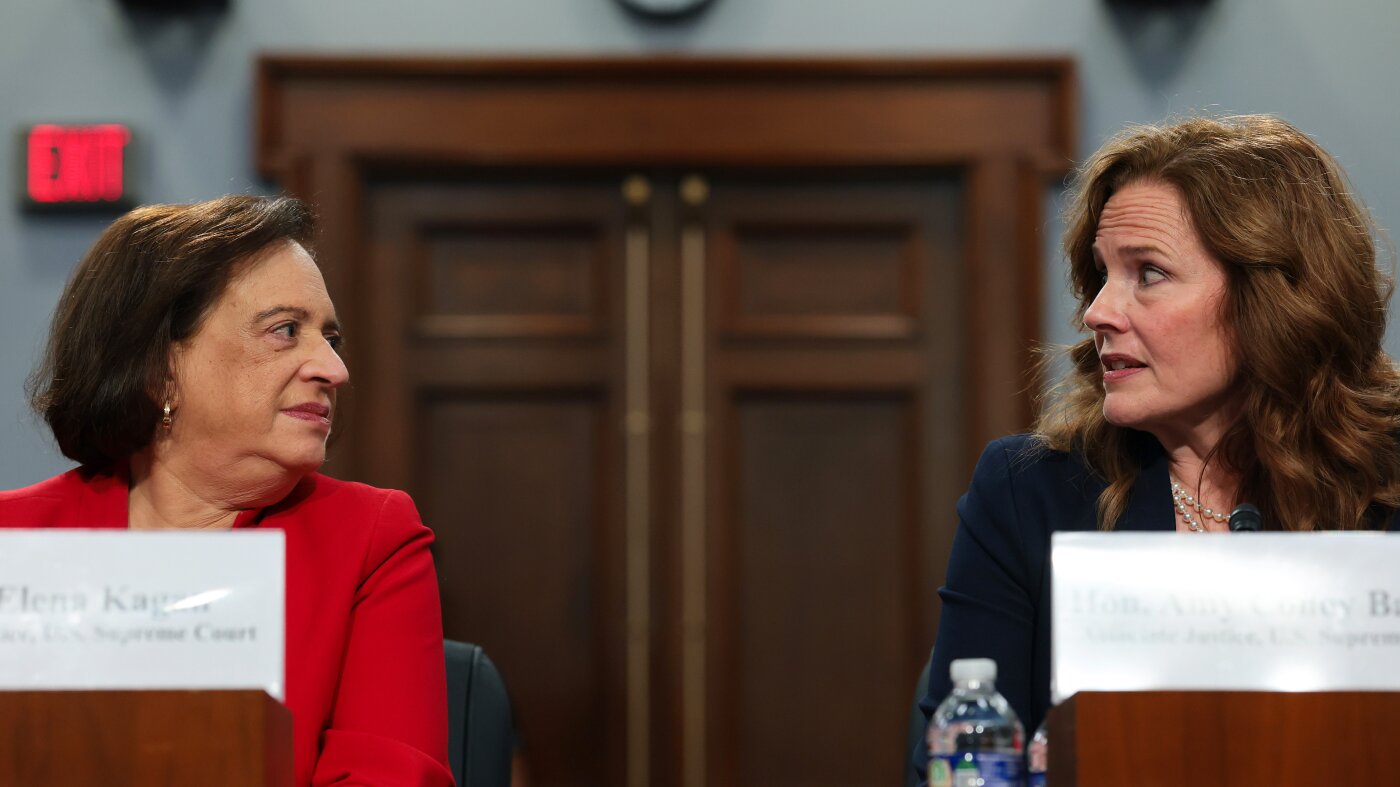
Supreme Court Justices give chilling accounts of threats to their safety
-

 Los Angeles, Ca2 hours ago
Stabbing at Chino Hills liquor store ends in attempted murder arrest
-

 Detroit, MI3 hours ago
A small group of citizens rally for mental health coverage in Detroit
-

 San Francisco, CA3 hours ago
1 dead, 2 missing after boat capsizes near Alcatraz in San Francisco Bay
-

 Dallas, TX3 hours ago
Death penalty off the table for man accused of beheading Dallas motel manager, prosecutors say
-

 Boston, MA3 hours ago
Chickadee, the popular Mediterranean restaurant in Seaport, is shutting down – The Boston Globe
-

 Denver, CO3 hours ago
Denver Nuggets 7-Year NBA Veteran Gets Honest On Peyton Watson

