Hawaii
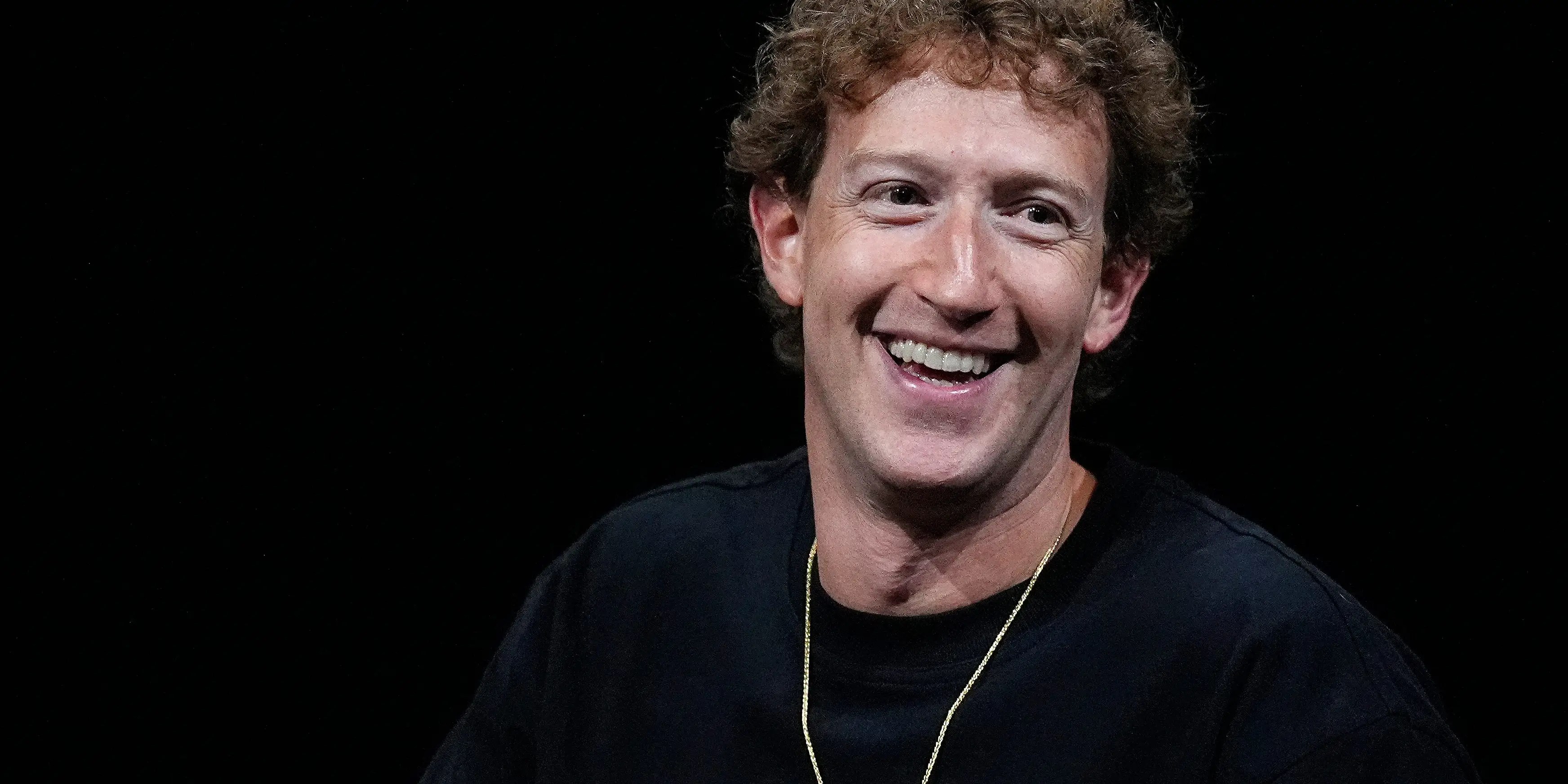
Everything we know about Meta CEO Mark Zuckerberg's Hawaii bunker
Billionaires are no strangers to extensive real estate portfolios, and many of them are building their own Doomsday bunkers.
Shall we count Mark Zuckerberg among them? If you ask him, no.
The Meta CEO said on a recent episode of the podcast “This Past Weekend w/ Theo Von” that he does “have an underground tunnel” at his ranch on the Hawaiian island of Kauai, though he resisted characterizing it as a bunker.
“There’s this whole meme about how people are saying I built this, like, bunker underground. It’s like more of underground storage type of situation,” Zuckerberg said. “It’s sort of a tunnel that just goes to another building.”
Zuckerberg’s real estate portfolio includes expansive holdings in Hawaii. He began snapping up land there more than a decade ago. He reportedly paid $100 million for roughly 750 acres in 2014 and $53 million for another 600 acres on Kauai’s North Shore in 2021.
In December 2023, Wired reported that Zuckerberg was building a 5,000-square-foot underground shelter, complete with its own supplies of energy and food, at his Ko’olau Ranch property. The final bill after tallying up building permits and land will be about $270 million, the magazine reported.
Wired reported the Kauai compound would feature two mansions linked by a tunnel that also connects to the shelter, which would have “living space, a mechanical room, and an escape hatch that can be accessed via a ladder,” as well as a sturdy metal door filled with concrete.
Brandi Hoffine Barr, a spokesperson for Zuckerberg and his wife Priscilla Chan, declined to comment to Wired at the time regarding the size or features of the underground structure.
Local news outlet Hawaii News Now reported in December that it had obtained county planning documents showing an underground “storm shelter” measuring nearly 4,500 square feet on his property, roughly the size of an NBA basketball court.
In a December Bloomberg interview, Zuckerberg equated the bunker to “a basement” or “a little shelter.”
“There’s just a bunch of storage space and like, I don’t know, whatever you want to call it, a hurricane shelter or whatever,” he said. “I think it got blown out of proportion as if the whole ranch was some kind of Doomsday bunker, which is just not true.”
Zuckerberg posted a video on Instagram in January 2024 poking fun at the discourse surrounding his property, saying, “When your wife catches you in the ‘bunker’ playing video games.” The clip shows Chan walking into a keypad-operated room resembling a home movie theater where Zuckerberg is seen gaming with friends on a massive screen.
Zuckerberg has also posted on Instagram about starting cattle ranching on the property.
“Started raising cattle at Ko’olau Ranch on Kauai, and my goal is to create some of the highest quality beef in the world,” he wrote in January 2024. “The cattle are wagyu and angus, and they’ll grow up eating macadamia meal and drinking beer that we grow and produce here on the ranch.”
The following month, he said that he was “not trying to do this commercially” and was “just trying to create the highest-quality stuff we can.” He also explained the reasoning behind the cows’ diet of macadamia nuts and beer.
“As a human, what do you think is the thing that basically you just sit and eat a lot? It’s like beer and nuts, basically. Nuts, super dense. Beer induces appetite, which I think people are familiar with.”
He added that he wanted to feed the cows the “densest, most nutritious” food so they would gain weight and “be the most delicious cows.”
In addition to cattle ranching, the land would include “organic ginger and turmeric farms, a nursery dedicated to native plant restoration, and partnering with Kauai’s foremost wildlife conservation experts to protect native birds and other endangered or threatened wildlife populations,” a spokesperson for Zuckerberg and Chan told Business Insider.
“Mark and Priscilla value the time their family spends at Ko’olau Ranch and in the local community and are committed to preserving the ranch’s natural beauty,” the spokesperson said. “When they acquired the property, they rescinded an existing agreement that would have allowed for portions of the property to be divided into 80 luxury homes. Under their care, less than 1% of the overall land is developed with the vast majority dedicated to farming, ranching, conservation, open spaces, and wildlife preservation.”

Hawaii
Travelers Sue: Promises Were Broken. They Want Hawaiian Airlines Back.
Hawaiian Airlines’ passengers are back in federal court trying to stop something most people assumed was already finished. They are no longer arguing about whether they are allowed to sue. They are now asking a judge to intervene and preserve Hawaiian as a standalone airline before integration advances to a point this spring where it cannot realistically be reversed.
That approach is far more aggressive than what we covered in Can Travelers Really Undo Alaska’s Hawaiian Airlines Takeover?. The earlier round focused on whether passengers had standing and could amend their complaint. This court round focuses on whether harm is already occurring and whether the court should act immediately rather than later. The shift is moving from procedural survival to emergency relief, which makes this filing different for Hawaii travelers.
The post-merger record is now the focus.
When the $1.9 billion acquisition closed in September 2024, the narrative was straightforward. Hawaiian would gain financial stability. Alaska would impose what it described early as “discipline” across routes and costs. Travelers were told they would benefit from broader connectivity, stronger loyalty alignment, and long-term fleet investments that Hawaiian could no longer fund independently.
Eighteen months later, the plaintiffs argue that the outcome has not matched the pitch. They cite reduced nonstop options on some Hawaii mainland routes, redeye-heavy return schedules that many readers openly dislike, and loyalty program changes that longtime Hawaiian flyers say diminished redemption value. They frame these not as routine airline integration but as signs that competitive pressure has weakened in our island state, where airlift determines price and critical access for both visitors and residents.
What is different about this filing compared with earlier debates is that it relies on developments that have already occurred rather than on predictions about what might happen later.
The HA call sign has already been retired. Boston to Honolulu was cut before competitors signaled renewed service. Austin’s nonstop service ended. Multiple mainland departures shifted into overnight red-eyes. And next, the single reservation system transition is targeted for April 2026, a process already well underway.
Atmos replaced both Hawaiian Miles and Alaska’s legacy loyalty programs, and readers immediately reported higher award pricing, fewer cheap seats, no mileage upgrades, and confusion around status alignment and family accounts. Each of those events can be described as aspects of integration mechanics, but together they form the factual record that the plaintiffs are now asking a judge to examine in Yoshimoto v. Alaska Airlines.
The 40% capacity argument.
One of the more interesting claims tied to the court filing is that Alaska now controls more than 40% of Hawaii mainland U.S. capacity. That figure strikes at the core of the entire issue. That percentage does not automatically mean monopoly under antitrust law, but it does raise questions about concentration in a state that depends exclusively on air access for its only industry and its residents.
Hawaii is not a region where travelers have options. Every visitor, every neighbor island resident, and every business traveler depends on our limited air transportation. The plaintiffs contend that consolidation at that scale reduces competitive pressure and gives the dominant carrier far more leverage over pricing and scheduling decisions. Alaska says that competition remains robust from Delta, United, Southwest, and others, and that share shifts seasonally and by route.
Competitors reacted quickly.
While Alaska integrated Hawaiian’s network under its publicly stated discipline strategy, Delta announced its largest Hawaii winter schedule ever, beginning in December 2026. Delta’s Boston to Honolulu is slated to return, Minneapolis to Maui launches, and Detroit and JFK to Honolulu move to daily service. Atlanta also gains additional frequency. Widebodies are appearing where narrowbodies once operated, signaling Delta’s push into higher capacity and premium cabin layouts.
Those moves complicate the monopoly narrative. If Delta is expanding aggressively, one argument is that competition remains active and responsive. At the same time, Delta filling routes Alaska trimmed may reinforce the idea that structural changes created openings competitors believe are profitable, and that markets respond when gaps appear.
What changed since October.
In October, we examined whether the case would survive dismissal and whether passengers could refile. That moment felt more procedural than what’s afoot now. It did not alter flights, fares, or loyalty programs.
This filing is different because it is tied to post-merger developments and seeks emergency relief. The plaintiffs are asking the court to prevent further integration while the merits are evaluated, arguing that each added step toward full consolidation this spring makes reversal less feasible as systems merge, crew scheduling aligns, fleet plans shift, and branding converges.
Airline mergers are designed to become embedded quickly, and once those pieces are fully intertwined, unwinding them becomes exponentially more difficult, which is why the plaintiffs are pressing forward now rather than waiting any longer.
The DOT conditions and the defense.
When the purchase of Hawaiian closed, the Department of Transportation imposed conditions that run for six years. Those conditions addressed maintaining capacity on overlapping routes, preserving certain interline agreements, protecting aspects of loyalty commitments, and safeguarding interisland service levels.
Alaska will point to those commitments as evidence that consumer protections were built into the core approval. The plaintiffs, however, are essentially claiming that those conditions are either insufficient or that subsequent real-world changes undermine the spirit of what travelers were told would remain. That tension between formal commitments and actual experience is at the core of this dispute.
Hawaiian had not produced consistent profits for years.
That is the actual financial situation, without sentiment. Alaska did not spend $1.9 billion to preserve Hawaii nostalgia. It purchased aircraft, an international and trans-Pacific network reach, and a platform it thinks can return to profitability under tighter cost control.
What this means for travelers today.
Nothing about your Hawaiian Airlines ticket changes because of this filing. Flights remain scheduled. Atmos remains the reward program. Integration continues unless a judge intervenes.
However, Alaska now faces a renewed court challenge that points to concrete post-merger developments rather than speculative harm. That scrutiny alone can bring things to light and influence how aggressively future route decisions and loyalty adjustments occur.
Hawaiian Airlines’ travelers have been vocal since the start about pricing, redeyes, lost nonstops, and loyalty devaluation. Others have said very clearly that without Alaska, Hawaiian might not exist in any form at all. Both perspectives exist as background while a federal judge evaluates whether the integration should be impacted.
You tell us: Eighteen months after Alaska took over Hawaiian, are your Hawaii flights better or worse than before, and what changed first for you: price, schedule, routes, interisland flights, or loyalty programs?
Lead Photo Credit: © Beat of Hawaii at SALT At Our Kaka’ako in Honolulu.
Get Breaking Hawaii Travel News
Hawaii
Lawsuit claims Hawaiian-Alaska Airlines merger creates monopoly on Hawaii flights
HONOLULU (HawaiiNewsNow) – An effort to break up the Hawaiian and Alaska Airlines merger is heading back to court.
Passengers have filed an appeal seeking a restraining order that would preserve Hawaiian as a standalone airline.
The federal government approved the deal in 2024 as long as Alaska maintained certain routes and improved customer service.
However, plaintiffs say the merger is monopolizing the market, and cite a drop in flight options and a rise in prices.
According to court documents filed this week, Alaska now operates more than 40% of Hawaii’s continental U.S. routes.
Hawaii News Now has reached out to Alaska Airlines and is awaiting a response.
PREVIOUS COVERAGE
Copyright 2026 Hawaii News Now. All rights reserved.
Hawaii
Column by Pele Harman: Celebrating Mahina ʻŌlelo Hawaiʻi, bringing Hawaiian language to life at UH Hilo – UH Hilo Stories
At UH Hilo, ʻōlelo Hawaiʻi is not simply a subject taught in classrooms, it is a living language that connects us to this place, to one another, and to the generations who came before us.
This column is by Pelehonuamea Harman, director of Native Hawaiian engagement at the University of Hawaiʻi at Hilo. In her columns, Pele shares Native Hawaiian protocols on the use of ōlelo Hawaiʻi (Hawaiian language), cultural traditions, traditional ways of Indigenous learning, and more. This column is on Mahina ʻOlelo Hawaiʻi (Hawaiian Language Month), celebrated every February to honor the Hawaiian language.
Each year, the month of Pepeluali marks Mahina ʻŌlelo Hawaiʻi, a time dedicated to celebrating and uplifting the Hawaiian language. At the University of Hawaiʻi at Hilo, ʻōlelo Hawaiʻi is not simply a subject taught in classrooms, it is a living language that connects us to this place, to one another, and to the generations who came before us.
While Pepeluali gives us a focused moment of celebration, the Hawaiian language should not live only within a single month. ʻŌlelo Hawaiʻi thrives when it is used every day.
One of the simplest and most meaningful ways to begin is by pronouncing the words we already encounter daily with accuracy and care. Hawaiian is an oral language carried through voice and relationship. When we take the time to say words correctly, we demonstrate respect for the language and for the poʻe (people) who have worked tirelessly to ensure its survival.
Across our own campus, we have opportunities to do this every day.
Let us honor the names of our places by using them fully:
Kanakaʻole Hall, not “K-Hall.” (Formally Edith Kanakaʻole Hall, named after our beloved kumu.)
Waiʻōlino, not “CoBE,” for our College of Business and Economics. (Formally Hānau ʻO Waiʻōlino; waiʻōlino literally means sparkling waters, alluding here to bringing forth waters of wellbeing and prosperity.)
These names are not merely labels for buildings. They carry ʻike (knowledge), history, and meaning. Speaking them in their entirety acknowledges the stories and values embedded within them.
Using ʻōlelo Hawaiʻi does not require fluency. It simply requires willingness. Each of us already knows words we can begin using more intentionally.
Greet one another with aloha.
Express gratitude with mahalo whenever possible.
Small choices like these help normalize Hawaiian language in our daily interactions and strengthen UH Hilo’s identity as a place grounded in Hawaiʻi.
One of the most common questions I am asked is: How do you respond in ʻōlelo Hawaiʻi when someone says “mahalo” to you?
Here are three simple and appropriate responses:
ʻAʻole pilikia — It’s no problem.
He mea iki — It is just a little thing.
Noʻu ka hauʻoli — The pleasure is mine.
There is no single correct answer. What matters most is participating in the exchange and allowing the language to live through conversation.

UH Hilo holds a unique and important role as Hawaiʻi Island’s university. Our commitment to Native Hawaiian success and place-based education calls on all of us to help create an environment where ʻōlelo Hawaiʻi is visible, audible, and welcomed.
You do not need to wait until you feel ready. You do not need to know many words. The language grows stronger each time it is spoken.
So during Mahina ʻŌlelo Hawaiʻi and throughout the entire year I encourage the UH Hilo ʻohana to:
- Use the Hawaiian words you already know.
- Pronounce names and places with intention and care.
- Greet others with aloha.
- Share mahalo often.
Because when we use ʻōlelo Hawaiʻi, we are doing more than speaking words, we are helping to perpetuate and uplift the native language of our home.
E ola ka ʻōlelo Hawaiʻi.
Let the Hawaiian language live.
-
World2 days agoExclusive: DeepSeek withholds latest AI model from US chipmakers including Nvidia, sources say
-
Massachusetts2 days agoMother and daughter injured in Taunton house explosion
-
Montana1 week ago2026 MHSA Montana Wrestling State Championship Brackets And Results – FloWrestling
-
Louisiana5 days agoWildfire near Gum Swamp Road in Livingston Parish now under control; more than 200 acres burned
-
Oklahoma1 week agoWildfires rage in Oklahoma as thousands urged to evacuate a small city
-
Denver, CO2 days ago10 acres charred, 5 injured in Thornton grass fire, evacuation orders lifted
-
Technology7 days agoYouTube TV billing scam emails are hitting inboxes
-
Technology7 days agoStellantis is in a crisis of its own making