Hawaii
8 Reasons to Love Waimea on Hawaiʻi Island – Hawaii Magazine


While it shares its name with the canyon on Kauaʻi and the bay and valley on Oʻahu, the town of Waimea on Hawaiʻi Island stands apart in a delightful way.
Located toward the northern tip of the Big Island, Waimea is unlike any other town on the Big Island—and it’s one of my favorites to visit for that reason. I always look forward to the serene drive north from Kona, as barren lava fields give way to rolling green pastures. You know you’ve arrived in Waimea as you begin to see herds of cattle roaming, hinting at the area’s deep-rooted ranching history.
But beyond its paniolo (cowboy) culture, Waimea—also known as Kamuela to help distinguish it from other locales—is home to a welcoming community of independent businesses, award-winning farm-to-table restaurants, bustling farmers markets and more.
While visiting the Big Island, here are 10 reasons to stop in Waimea.
1. Fascinating Paniolo History
The 4th of July rodeo at Parker Ranch is the largest annual event in Waimea on Hawaiʻi Island.
Photo: Courtesy of Parker Ranch/Jacob Tavares
While paniolo culture is prevalent across the Islands, one of the best places to learn about Hawaiʻi’s cowboys is where the tradition started. After all, Waimea was home to cowboys before the American West.
In the 1830s, three Mexican vaqueros were brought to the Islands to teach Hawaiians how to rope, slaughter, breed cattle and work with horses. As a result, a class of dexterous Hawaiian cowboys ensued, long before the first big cattle drives of the Old West.
Named paniolo, a Hawaiian iteration of the word Español, local cowboys created their own style and practices distinct from the vaquero.
Today, you can take a self-guided tour of Hawaiʻi’s oldest and largest working ranch, Parker Ranch, which remains committed to preserving the heritage of the area.
Not far from Parker Ranch, Kahuā Ranch was established in 1928. The ranch welcomes visitors for horseback riding tours through electric green pastures with panoramic views of the coastline. You can also book a spot for an exciting paniolo barbecue dinner at the ranch.
2. Vibrant Farmers Markets

The Kamuela Farmers Market is one of the many farmers markets held every week in Waimea.
Photo: Hawaiʻi Tourism Authority (HTA)/Dana Edmunds
Browse the bounty of crops grown in the region, along with handcrafted goods, at several Waimea farmers markets. The Waimea Town Market, Kamuela Farmers Market and Kūhiō Farmers Market are on Saturdays, and the Pukalani Midweek Market on Wednesdays.
3. Hawaiian Style Café

The teri-beef burger-chicken cutlet plate lunch.
Photo: David Croxford
For local comfort food, Hawaiian Style Café is a must-try. Serving the community since 1993, the restaurant dishes out massive loco mocos and plate lunches, from kālua pork to kalbi ribs.
4. Farm-to-Table Restaurants

Since 1988, Merriman’s in Waimea has been a leading restaurant in farm-to-table practices.
Photo: Courtesy of Merriman’s Waimea
Waimea isn’t just known for its historic ranches; it’s also surrounded by a bounty of local farms. Along with local ranchers and fishermen, these farms and others across the island supply farm-to-table restaurants like Merriman’s Waimea and FORC with the freshest ingredients available. As a result, diners can savor thoughtfully prepared dishes that highlight the flavors and spirit of the Islands.
READ MORE: The 5 Best Farm-to-Table Restaurants on Hawaiʻi Island
5. Pâtisserie Nanako

A spread of Pâtisserie Nanako’s popular desserts: raspberry ladybug mousse, strawberry shortcake, lilikoʻi mango mousse, vanilla cream puff, and mac nut carrot cake.
Photo: Lauren Okinaka
Since opening in 2021, this family-owned shop has become beloved among locals and visitors for its Japanese-style pastries. (There’s usually a line out the door, but it moves quickly!) From pillowy strawberry shortcake and delicate cheesecake to a curry pan (buttery bread stuffed with savory curry), everything is made with care at Pâtisserie Nanako.
The raspberry ladybug is the bakery’s signature dessert. With a light chocolate cake base, the rich chocolate mousse is encased in a glossy raspberry glaze. And it’s delightful!
6. Cherry Blossoms Bloom in the Spring

The Waimea Cherry Blossom Heritage Festival is held every February to celebrate the cultural significance of the trees.
Photo: Island of Hawaiʻi Visitors Bureau (IHVB)/Kirk Lee Aeder
Cherry blossoms are among the world’s most iconic symbols of spring. While Japan is famous for its pink sakura, few know about the pockets of cherry blossoms hidden throughout the Hawaiian Islands—including in Waimea.
In the 1950s, cherry blossoms were introduced to the town and by the 1970s, dozens were planted along Waimea’s Church Row. Today, the Waimea Cherry Blossom Heritage Festival is held every February to celebrate the cultural significance of the trees here in the Islands and beyond. The festivities include a tea ceremony, art show, crafts, cooking demonstrations and more—all surrounded by the beauty of the sakura trees.
7. Kahilu Theatre
Built in 1980, Kahilu is a multidisciplinary art center that brings the community together through live performances. It hosts ʻukulele and slack-key guitar festivals, jazz performances, plays and more. Check out events and shows here.
8. Waimea Nature Park

Waimea Nature Park has the largest collection of variously colored ‘ōhi‘a lehua trees in the state.
Photo: Courtesy of Hawai‘i Tourism Authority (HTA)/Kirk Aeder
Spread across 20 acres, Waimea Nature Park—also known as Ulu Lāʻau—is a serene place for a stroll or a peaceful rest. The former pastureland was acquired by the Waimea Outdoor Circle in 1999, and volunteers soon planted native species and transformed it into a park. Today it boasts the largest collection of ʻōhiʻa lehua trees in the state.
Grace Maeda is the editor of HAWAIʻI Magazine.



HONOLULU (AP) — For residents of Puna, a remote and eclectic part of Hawaii’s Big Island, the killings of three men known for embracing the community’s off-grid, free-spirited lifestyle became a startling reminder of its struggles too.
Nearly 24 hours after Jacob Baker was arrested, residents were struggling to understand what happened and were eager for answers on why authorities zeroed in on the 36-year-old as their suspect in the killings of the men who were all nearing or in their 70s.
Baker remained jailed on suspicion of murder, burglary and other charges.
Court records show Baker having repeated run-ins with police for a variety of offenses. And people who live in Puna told The Associated Press that their concern about Baker in recent days accelerated, portraying him as increasingly threatening.
Baker is accused of being involved in the deaths of three men: a 69-year-old man found partially submerged in a cement pond, a 79-year-old man who was found just a few hundred feet (meters) away, and a third man, also 69, whose body was found about 19 miles (31 kilometers) away. As of Friday, prosecutors had not yet filed charges.
Police identified the first victim as Robert Shine and the third victim as John Carse. The name of the 79-year-old man was pending positive identification but friends identified him as Chitta Morse.
Hawaii Police Chief Reed Mahuna said investigators had not found any connections among the victims, other than two of them lived near each other.
Fixtures at drum circles
Friends of Shine and Morse say the men moved to Puna for its off-grid, tropical and communal lifestyle.
Shine enjoyed dancing and swaying to the beat at drum circles, usually on Sunday afternoons, said Donald Hyatt, a drummer.
Hyatt last saw Shine at a party last month. A local rock-and-roll band was playing and Shine was dancing around.
“He was dancing like he loved life,” Hyatt recalled. “Bob had a permanent smile. Always in good spirits.”
Morse moved from Van Nuys, California 40 years ago “to live off-grid and to live in a warm tropical place, and to eat fruit,” said friend Jezuz Cinderland. “For 40 years he only ate raw food. Since he got to the island he just went completely raw and this was just the right environment for him to do it.”
On land rich with volcanic soil on Papaya Farms Road, Morse had what Cinderland called a “fruit forest,” growing things like coconut, avocado and durian.
“He would just share all the fruit he had,” Cinderland said. “The most fabulous abundance that you can imagine.”
While Morse had previously been a member of the raw-food commune Cinderland moved to Puna to join, in recent years Morse was a loner, Cinderland said.
Shine was a member of Cinderland’s commune, which has been shuttered by the county for various code violations, Cinderland said.
Work-trade life
Janelle Honer, who also grew fruit on Papaya Farms Road, seems to be what connected Baker to the men, who often attended pot luck dinners and parties on Honer’s property.
Baker had been living on Honer’s property in exchange for climbing and trimming coconut trees, her ex-husband, Stephen Shaffer said. Trading work for living accommodations is common in Puna.
Hyatt said Baker left the cabin he was living in on Honer’s property months ago but returned recently claiming “squatter’s rights” and threatened Honer. Hyatt said he urged her to seek a restraining order.
The slayings happened just days after two women requested temporary restraining orders against Baker, saying he had threatened and harassed them at a farm. One woman was staying there and the other co-owned it. A judge denied both applications, saying there was not enough proof of harassment.
No attorney was listed for Baker, who had 20 other cases in the court record in the past two decades, many of them traffic infractions. In most of those cases, Baker represented himself.
Honer, who Shaffer said was traveling out of the country, couldn’t be reached for comment.
A memorial for the men was planned for Saturday next to Honer’s place.
Puna is one of the few places in Hawaii where there’s affordable land, and the area’s infrastructure hasn’t kept up with its growth, said Ashley Kierkiewicz, who represents Puna on the county council.
While Puna has a reputation as a quirky frontier, it’s also a place rich in culture where people are resilient and lean on each other, she said.
Puna, with its landscape that’s a mix of lush jungle and barren lava-rock fields, also struggles with drugs, poverty and limited resources, said longtime resident Tiffany Edwards Hunt.
“People have this mistaken impression that they can come to Hawaii and heal,” she said. “Hawaii can either really be kind to you or it can chew you up and spit you out.”
Surveillance cameras aid capture
Mark Wyatt and Richard Valdez played a key role in Baker’s capture, calling the police when their surveillance camera system pinged Valdez’s phone and it showed Baker on their property on Thursday. Their property is about a half-mile from Carse’s home, but they didn’t know him well.
The videos show Baker, shirtless and barefoot, with a dog walking near a road and getting down on the ground as cars went by, in an apparent attempt to avoid being seen.
“He was ducking from the traffic, so it was pretty obvious” that he was trying to avoid being found, Valdez said.
Authorities arrested Baker a short distance away after finding him in a small cave, police said.
Wyatt said he believed Baker had been hiding near his property in a small, makeshift camping spot over a bluff overlooking the ocean. He said Baker stole couch cushions from a container outside his home and some charcoal, and Baker used coconut tree palm fronds to cover the site.
Valdez said he hadn’t seen Baker in about two years. Back then, he said, Baker was living next door to them, renting space from their neighbor while trimming coconuts from trees and selling them just off the area’s main road. He lived next door for about six months, Valdez said.
“He told me he was from Maui and that he had just had a newborn baby and his girlfriend had left and that he was trying to get his life together,” Valdez said. “So he seemed pretty normal and conscientious, so it’s hard to fathom that this happened.”
___
Collins reported from Hartford, Connecticut.

MANITOWOC (WLUK) — A 200-foot Manitowoc-built crane is on its way to a Navy Base in Hawaii.
Big Blue P-82 sailed out of the Manitowoc Harbor Friday morning to Navy Joint Base Pearl Harbor-Hickam on the island of Oahu.
Manitowoc Mayor Justin Nickels posted a bon voyage post to social media, reading in part:
Pearl Harbor is where America’s involvement in World War II began — a moment that changed the course of history. And it is altogether fitting that Big Blue now heads to that very place, because Manitowoc played a defining role in that same war effort. Right here on the same peninsula where Big Blue was built, the people of Manitowoc constructed 28 submarines that helped secure victory and defend freedom around the world. That legacy of ingenuity, patriotism, and hard work is still alive today. The men and women of this community continue to build big things — important things — that support our nation and strengthen our future. Their skill and dedication are part of a story that spans generations. We’re proud of Big Blue, proud of those who built it, and proud of Manitowoc’s enduring place in American history. Safe travels, Big Blue; from a city that helped win a war to the harbor where it began, we wish you fair winds and following seas
BE THE FIRST TO COMMENT
The crane will make the 7,600 to 7,800 nautical mile journey from the Manitowoc Harbor through the St. Lawrence Seaway, down the East Coast of the U.S. before going through the Panama Canal to the island of Oahu.

-
Now Playing
Hawaii authorities searching for suspect after 3 killings
02:08
-
UP NEXT
DOJ investigation into E. Jean Carroll’s Trump lawsuit
02:08
-
Former CIA officer accused of stashing 300 gold bars in his house
02:09
-
Judge declines to jail teenager accused of killing stepsister aboard cruise ship
02:56
-
Matthew Perry’s former assistant sentenced to 41 months in actor’s overdose death
04:12
-
‘Teen takeovers’ turn violent across the U.S.
01:50
-
Secret Service kills man who opened fire at White House security checkpoint
01:57
-
DOJ reveals criminal charges over $90 million in alleged Medicaid fraud in Minnesota
01:25
-
Judge dismisses criminal case against Newport News assistant principal Ebony Parker
03:55
-
Justice Department charges Raul Castro with murder
02:36
-
California burglary ring bust
01:29
-
Search for suspect in Harvard assault
01:26
-
TikTok star accused of murder-for-hire plot to kill father of her child
03:02
-
Jan. 6 officers sue over Justice Department’s $1.8 billion ‘anti-weaponization’ fund
03:57
-
Teacher shot by student takes stand in Virginia
01:45
-
Investigators looking into manifesto left by San Diego shooting suspects
03:22
-
Investigation underway after small explosion near Pennsylvania polling location
01:49
-
Deadly shooting at San Diego Islamic center
02:45
-
Texas banned hypnosis in criminal cases but a man on death row says it helped convict him
08:03
-
Ex-LAPD detective Mark Fuhrman dies at 74
01:24
Hallie Jackson NOW
-
Now Playing
Hawaii authorities searching for suspect after 3 killings
02:08
-
UP NEXT
DOJ investigation into E. Jean Carroll’s Trump lawsuit
02:08
-
Former CIA officer accused of stashing 300 gold bars in his house
02:09
-
Judge declines to jail teenager accused of killing stepsister aboard cruise ship
02:56
-
Matthew Perry’s former assistant sentenced to 41 months in actor’s overdose death
04:12
-
‘Teen takeovers’ turn violent across the U.S.
01:50
Stay Tuned NOW
Hallie Jackson NOW
Top Story
Play All
-

 Rhode Island2 minutes ago
R.I. House Finance budget phases in millionaires tax over three years – The Boston Globe
-

 South-Carolina2 minutes ago
South Carolina Lottery Mega Millions, Pick 3 results for May 29, 2026
-

 South Dakota14 minutes ago
How to watch South Dakota State vs. Arizona State baseball today, time
-

 Tennessee17 minutes ago
What channel is Tennessee softball vs Texas Tech on today? Time, TV schedule to watch WCWS game
-
 Texas22 minutes ago
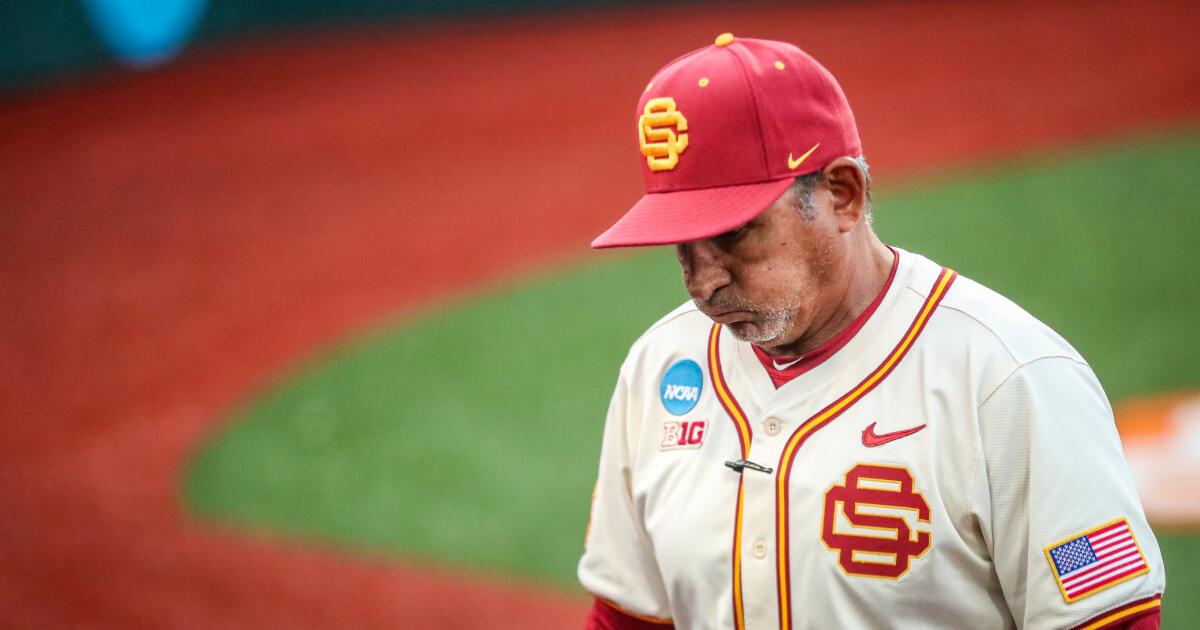
USC squanders late lead, falls to Texas State in NCAA regional opener
-

 Utah29 minutes ago
DHHS issues emergency actions against Utah behavioral school attended by Paris Hilton
-

 Vermont32 minutes ago
Vermont’s only theme park opened in the 50s. How Santa’s Land got its start
-

 Virginia37 minutes ago
‘I didn’t know I could go that fast’: Virginia pizza maker breaks record – WTOP News

