Connect with us

West

'Gone Girl' kidnapper charged in California home invasion cases from 2009

Published

on

'Gone Girl' kidnapper charged in California home invasion cases from 2009

Prosecutors announced new charges against a man who kidnapped and sexually assaulted a Northern California woman, which was originally thought to be a hoax, and has become known as the “Gone Girl” kidnapping.

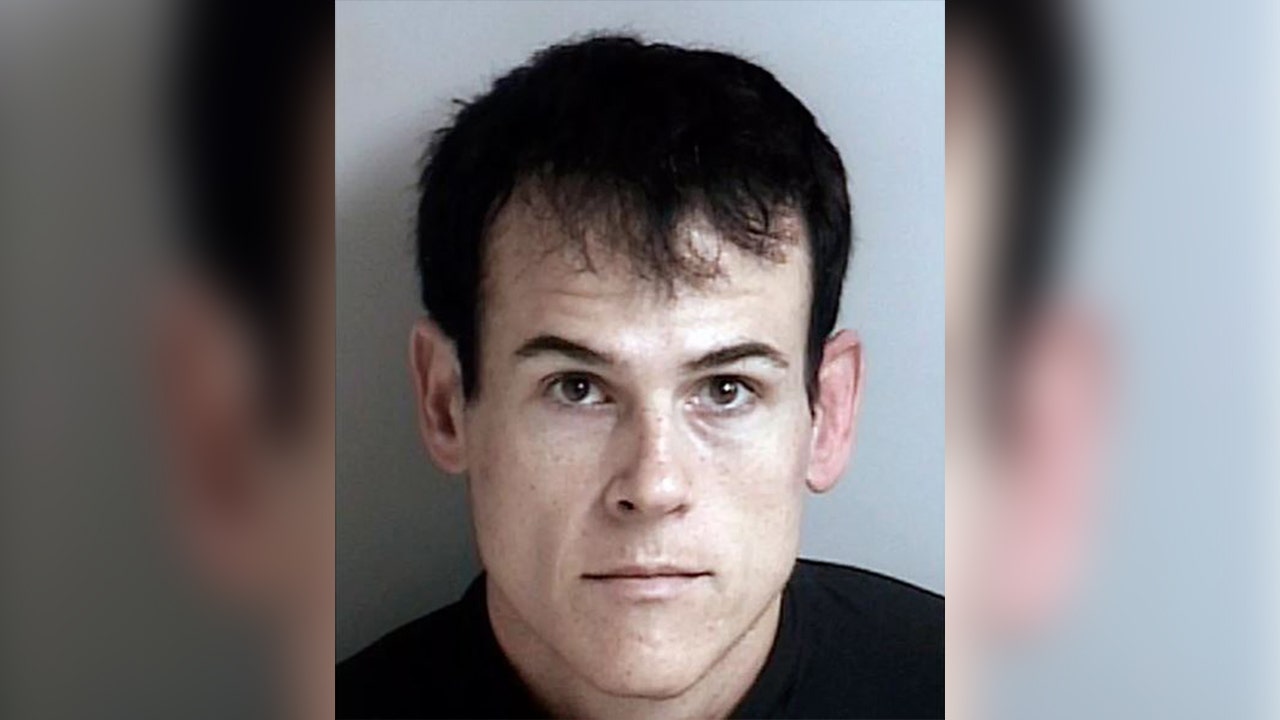
Matthew Muller, 47, the man who abducted Denise Huskins in Vallejo in 2015, is now being charged in two home invasion cases from 15 years ago.

Muller broke into women’s homes in Palo Alto and Mountain View in 2009, with the intent to rape them, according to the Santa Clara District Attorney’s Office.

Thanks to a new lead and advances in forensic DNA testing, the Santa Clara County District Attorney’s Office, along with Palo Alto and Mountain View Police, were able to ID Muller in the cases. 

CALIFORNIA COUPLE IN ‘GONE GIRL’ CASE VINDICATED AFTER ACCUSATIONS OF STAGED KIDNAPPING

Advertisement

Matthew Muller, a disbarred, Harvard-educated immigration attorney, was finally arrested for Huskins’ kidnapping after he was implicated in a similar home invasion by his forgotten cell phone.  (Solane County Sheriff’s Department)

Muller’s DNA was found on straps he used to bind one of the victims in one of the 2009 cases, the DA’s office said. 

Muller now faces two felony counts of committing sexual assault during a home invasion for the 2009 crimes. If convicted, he faces life in prison, officials said. 

“The details of this person’s violent crime spree seem scripted for Hollywood, but they are tragically real,” District Attorney Jeff Rosen said. “Our goal is to make sure this defendant is held accountable and will never hurt or terrorize anyone ever again. Our hope is that this nightmare is over.”

In the early hours of Sept. 29, 2009, officials said Muller broke into a woman’s Mountain View home, attacked her, tied her up, made her drink a concoction of medications, and said he was going to rape her. After the victim, who officials said was in her 30s, persuaded him against it, he suggested the victim get a dog, then fled.

Advertisement

Less than a month later, on Oct. 18, officials said Muller broke into a Palo Alto home, where he performed the same routine and bound and gagged a woman in her 30s. He then made her drink Nyquil and began to assault her, before being persuaded to stop. Muller gave the victim crime prevention advice, then fled.

DR. PHIL CALLS OUT ‘GONE GIRL’ FAKE ABDUCTEE FOR ‘GIGGLING’ AS SHE LIED ABOUT IMPRISONMENT

Denise Huskins and Aaron Quinn appear at a news conference with attorney Doug Rappaport (left) in San Francisco, Calif. on Thursday, Sept. 29, 2016. Huskins and Quinn were victims in the bizarre Vallejo kidnapping case in March 2015. Matthew Muller has pleaded guilty to kidnapping Huskins. (Paul Chinn/The San Francisco Chronicle via Getty Images)

Both cases were investigated at the time and went unsolved.

Muller gained national attention six years later as the subject of “American Nightmare,” a Netflix documentary series that chronicles his 2015 “Gone Girl Hoax” kidnapping of Denise Huskins from Vallejo and her harrowing 48 hours in captivity. 

Advertisement

On March 23, 2015, Muller broke into a Vallejo home, where he drugged, and tied up Huskins and her boyfriend. He kidnapped Huskins, brought her to a cabin in South Lake Tahoe, and sexually assaulted her. Two days later, Muller drove his victim to Southern California and released her. 

The Vallejo Police initially believed the invasion and kidnapping were a hoax orchestrated by her boyfriend, Aaron Quinn, a twist that the media deemed a “real-life ‘Gone Girl’,” referring to the hit Ben Affleck thriller and novel “Gone Girl,” in which a small-town wife stages her own murder to get back at her cheating husband. 

TEXAS COUPLE CHARGED AFTER ALLEGEDLY ATTEMPTING TO KIDNAP, KILL MAN WIFE WAS HAVING AFFAIR WITH

Vallejo’s police department headquarters is seen in Vallejo, Calif. on Tuesday, July 14, 2015. (Paul Chinn/The San Francisco Chronicle via Getty Images)

Although they said in a press conference that they were treating the case as a kidnapping, KRON4 reported, the Vallejo Police Department suspected Quinn of murdering his girlfriend and fabricating his account. He endured 18 hours of questioning, according to the docuseries. 

Advertisement

The couple sued the Vallejo Police Department for $2.5 million, but not before enduring months of public scrutiny.

Huskins and Quinn told filmmakers Misty Carausu, a rookie detective who solved the case, was their hero. On June 5, 2015, a couple woke in the middle of the night to a near-identical home invasion. 

After reaching out to police departments in the Bay Area, NBC Bay Area reported, Carausu learned that Muller had been a suspect in a 2009 Palo Alto home invasion. Also at the scene were a pair of swimming goggles blacked out with duct tape that had a blonde hair attached. 

While the wife hid in a bathroom and called police, her husband managed to fight off the attacker. But he left crucial evidence behind: zip-ties, duct tape, a glove and a cellphone. 

Carausu traced the phone to the stepfather of a man named Matthew Muller, a Harvard-educated immigration attorney and Marine veteran. 

Advertisement

At that point, Carausu contacted the FBI, and Muller was arrested for the Dublin, California, home invasion on June 8.

THE DISAPPEARANCE OF CHARLEY ROSS, THE FIRST KNOWN VICTIM OF KIDNAPPING FOR RANSOM IN US

Denise Huskins and Aaron Quinn are pictured at a press conference. They both hired defense attorneys after they were publicly accused of faking the home invasion, and feared losing their jobs as physical therapists.  (MIKE JORY/THE TIMES-HERALD via AP)

Evidence in his home, including Quinn’s laptop, finally linked him to Huskins’ kidnapping. Muller’s confession matched Quinn and Huskins’ stories perfectly, down to the audio recordings, blacked-out goggles and liquid sedatives. 

Muller pleaded guilty to one count of federal kidnapping in September 2016 and was sentenced to 40 years behind bars. Muller also faced state charges for burglary, robbery, kidnapping and two counts of rape by force.

Advertisement

FOLLOW THE FOX TRUE CRIME TEAM ON X

The Vallejo Police Department publicly accused Denise and Aaron of staging their ordeal, welcoming a barrage of negative press before their attacker was arrested for a similar home intrusion. (Associated Press)

But he was deemed incompetent to stand trial for those charges in November 2020, according to the documentary. Muller allegedly suffered from “Gulf War illness” after his military service, and his attorney claimed he was diagnosed with bipolar disorder, NBC News reported. 

Muller was then sentenced in 2022 to 31 years in state prison after pleading no contest to two counts of forcible rape of Huskins.

He is currently incarcerated in federal prison in Tucson, Arizona. 

Advertisement


Huskins and Quinn previously told People magazine they have no idea why Muller targeted them.

“Like many victims, or many people who have gone through tragedy, you don’t get all the answers,” Quinn told the magazine. “And that can be a sticking point to recovery. So, for us, we don’t rely on finding those answers, but what we have to do is move forward in the unknown and focus on things that matter the most to us, like our family, our kids, our work. Those are sustainable things. And having the answers of why they targeted us doesn’t change what we do as far as moving forward.”

The pair married in 2018, released a book on their ordeal in 2021 and welcomed daughters in 2020 and 2022.

Fox News Digital’s Christina Coulter and The Associated Press contributed to this report. 

Advertisement

Stepheny Price is writer for Fox News Digital and Fox Business. Story tips and ideas can be sent to stepheny.price@fox.com


Read the full article from Here

Continue Reading
Click to comment

Leave a Reply

Your email address will not be published. Required fields are marked *

This site uses Akismet to reduce spam. Learn how your comment data is processed.

California

California gets Bruce Lee Day in a first for US state’s Chinese Americans

Published

on

California gets Bruce Lee Day in a first for US state’s Chinese Americans


Bruce Lee Day aims to honour the San Francisco-born martial arts legend as a cultural bridge and Asian-American icon.

Martial arts icon Bruce Lee will become the first Chinese American in California history to be honoured with an annual namesake day.

California Governor Gavin Newsom signed a law on Tuesday afternoon, officially designating May 17 as Bruce Lee Day.

Advertisement

Recommended Stories

list of 4 itemsend of list

Lee was born in San Francisco in 1940 and returned to the city on May 17, 1959, aged 18, after spending his childhood in Hong Kong.

His daughter, Shannon Lee, CEO of the Bruce Lee Foundation, said the honour reflects her father’s enduring legacy as a bridge between cultures.

“From young people who found confidence and possibility in his philosophy, to families who finally saw themselves represented on screen, to athletes who still draw on his teachings of discipline and inner strength, his reach is profound,” she said in a statement.

State Assembly member Matt Haney, who represents San Francisco, called Lee the “epitome of the best of California”.

“At a time when Asian Americans were too often absent from or stereotyped on screen, Bruce Lee helped generations see themselves represented with strength and dignity,” he said.

Advertisement

The Bruce Lee Foundation and Asian-American groups hope Bruce Lee will be celebrated each year with voluntary activities, including cultural exhibits, public events and classroom lessons.

Born to Chinese parents touring the US with an opera, Lee held birthright citizenship. He moved to Hong Kong as an infant, became a child actor, and studied Chinese kung fu before returning to the US in 1959.

He enrolled at the University of Washington in Seattle in 1961, but dropped out to teach martial arts.

In the 1960s, Lee appeared in Hollywood, most notably as Kato in the TV series The Green Hornet, but said studios typecast him in racist roles and paid him less than white actors.

He returned to Hong Kong and starred in martial arts films, including The Big Boss and Fist of Fury.

Advertisement

Lee died tragically in 1973 at the age of 32 after an allergic reaction to pain medication.

His name and likeness remain widely popular.

Fans gather on his birthday, and a treatment he wrote for a television series inspired the HBO Max show “Warrior”.


Source link

Advertisement
Continue Reading

Colorado

Colorado governor fires two clemency board members who spoke out about Tina Peters’ commutation | CNN Politics

Published

on

Colorado governor fires two clemency board members who spoke out about Tina Peters’ commutation | CNN Politics


Colorado Gov. Jared Polis on Wednesday fired two members of the state’s clemency board after they spoke out against his controversial decision to grant clemency to Tina Peters – an election denier whose sentence was cut in half by the outgoing Democratic governor in May.

Azra Taslimi and Hannah Seigel Proff told CNN they were fired after speaking out publicly, including in a New York Times article in June, in which they revealed secret details about the clemency process and criticized the governor for overruling the board. They told the Times the clemency board twice voted unanimously behind closed doors to reject Peters’ application for an early release from prison.

Polis’ decision in May to release Peters came after President Donald Trump waged a long pressure campaign against Colorado to free her. Peters – who was released from prison in June – was the last Trump ally still in prison for 2020 election-related crimes.

In letters to Taslimi and Proff obtained by CNN, Polis said the two members breached confidentiality by speaking out.

Advertisement

“Specifically, you breached the required duty of confidentiality by publicly divulging Board members’ votes pertaining to a clemency application which you obtained only through your official position on this Board,” Polis wrote in the letters.

The two women told CNN they are disappointed they were fired — but not surprised.

“I’m not upset that he overrode our decision. I think what’s upsetting is that we understand why he did it, which is that you know Tina Peters had a powerful ally behind her,” Taslimi said. “She had political pressure applied in her name, and the governor capitulated to it, and that is what makes this unfair, and that is why I call it selective mercy, because you are giving her the benefit that you don’t give or apply to anyone else.”

Eric Maruyama, a spokesperson for the governor, told CNN in a statement Wednesday, “Publicly disclosing board recommendations and how members vote on any case threatens the credibility of the board, colors future deliberations by the board and breaks clearly stated confidentiality policy articulated in the Executive Order which establishes this board.”

Proff, who served on the board for nearly eight years, said she understood the state rules around the closed-door clemency recommendation process “more as the confidentiality to protect the people who apply for clemency, not to protect the governor.”

Advertisement

The governor primarily justified his decision to release Peters by citing a recent Colorado appeals court ruling that found the trial judge violated Peters’ First Amendment rights by improperly punishing her for her protected speech about the 2020 election.

“It was a straightforward decision because, after reviewing the facts, and reading the Appeals Court decision, I concluded that her sentence was simply too long,” Polis wrote in a Substack post, where he condemned Peters’ crimes.

Now that they’ve been terminated, Proff worries there will be less transparency.

“I worry now that we’ve been terminated from the board what comes of this is that people are less likely to speak out … that politicians will go unchecked on these sort of decisions,” Proff said.

Advertisement


Source link

Continue Reading

Hawaii

BBC Audio | Witness History | Hawaii becomes the 50th American state

Published

on

BBC Audio | Witness History | Hawaii becomes the 50th American state


On 18 March 1959, Hawaii was brought into the United States of America as the 50th state with the passing of the Hawaiian Admission act.

Five months later, on 21 August it was officially proclaimed the 50th state by President Eisenhower.

Former governor of Hawaii, John Waihe’e, tells Jen Dale his memories of statehood and why Hawaii’s history with America means it has become a divisive issue.

Eye-witness accounts brought to life by archive. Witness History is for those fascinated by and curious about the past. We take you to the events that have shaped our world through the eyes of the people who were there.

Advertisement

For nine minutes every day, we take you back in time and all over the world, to examine wars, coups, scientific discoveries, cultural moments and much more.

Recent episodes explore everything from how the Excel spreadsheet was developed, the creation of cartoon rabbit Miffy and how the sound barrier was broken.

We look at the lives of some of the most famous leaders, artists, scientists and personalities in history, including: the moment Reagan and Gorbachev met in Geneva, Haitian singer Emerante de Pradines’ life and Omar Sharif’s legendary movie entrance in Lawrence of Arabia.

You can learn all about fascinating and surprising stories, like the invention of a stent which has saved lives around the world; the birth of the G7; and the meeting of Maldives’ ministers underwater. We cover everything from World War Two and Cold War stories to Black History Month and our journeys into space.

(Photo: President Eisenhower signs the proclamation admitting Hawaii as the 50th state. Credit: Getty/Bettmann)

Advertisement


Source link

Continue Reading
Advertisement

Trending
