Plus special access to select articles and other premium content with your account – free of charge.
By entering your email and pushing continue, you are agreeing to Fox News’ Terms of Use and Privacy Policy, which includes our Notice of Financial Incentive.
Please enter a valid email address.
Steve Pankey was always curious about the case of his neighbor, Jonelle Matthews, a seventh-grader who vanished five days before Christmas in 1984.
It would take over three decades for the police to find out why.
Advertisement
“He was a monster who tapped on the shoulder of law enforcement,” retired lead detective Robert Cash told Fox News Digital. “He taunted law enforcement. But when we put the pieces of the puzzle together, it became clear. His behaviors and his writings – pretty much everything about his character – gave us an indication that his taunting us gave him fuel. It gave him satisfaction to think he had duped law enforcement.”
IDAHO MAN RECALLS HOW ‘EVIL’ ESTRANGED WIFE, A FORMER NURSE, COMMITTED MURDER IN DOC: ‘I FELT DISGUSTED’
“He was a monster who tapped on the shoulder of law enforcement.”
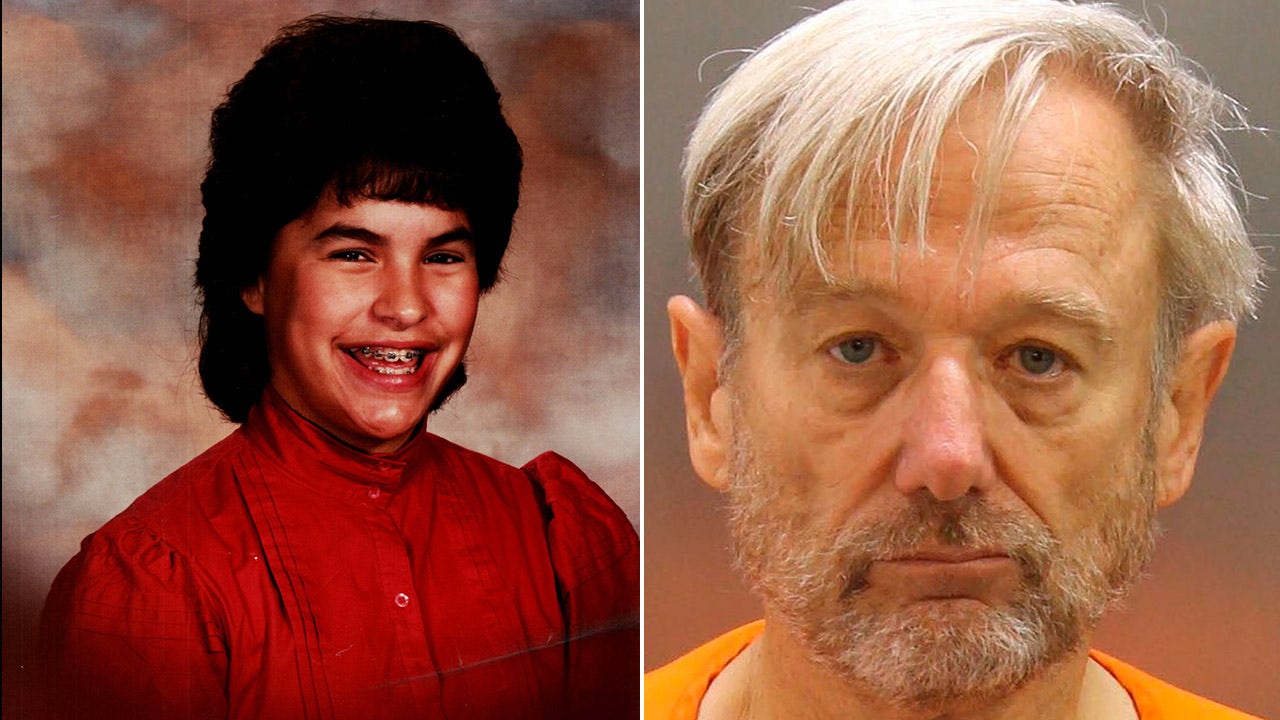
Steve Pankey, a former candidate for Idaho governor, was charged in the 1984 cold-case killing of a 12-year-old girl from Greeley, Colorado. (Katherine Jones/The Idaho Statesman/Tribune News Service via Getty Images)
“It was his constant rehashing and laying these hints … it kept the case alive,” Cash shared. “And thankfully, he tapped on the right shoulder at the right time.”
Advertisement
The case of the 12-year-old Greeley, Colorado, resident is being explored in a two-part special on Oxygen, “The Girl on the Milk Carton.” It features new interviews with Matthews’ family, local police who investigated for almost 40 years, as well as Angela Hicks, Pankey’s ex-wife.
The documentary also details how Hicks played a role in solving the case.
The case of Jonelle Matthews is being explored in an Oxygen true crime special airing Sunday, “The Girl on the Milk Carton.”(Oxygen True Crime)
“I hadn’t done any interviews [before], but I just felt the documentaries I was seeing, and some of the [true-crime] podcasts were just getting things so wrong,” Hicks told Fox News Digital. “It was just so inaccurate. . . . And I felt this documentary would honor Jonelle Matthews.”
Jonelle Matthews’ (left) sister, Jennifer Mogensen (right), remembered Jonelle as “a strong, independent, opinionated 12-year-old.”(Oxygen True Crime)
Advertisement
Matthews was a member of the Franklin Middle School Honor Choir and active at the Sunny View Church of the Nazarene. After performing at a Christmas concert with classmates, she was taken home by a friend and the friend’s father. Her mother was out of state caring for her ailing grandmother, and her father was at her sister’s basketball game.
Matthews was last seen at 8 p.m. on Dec. 20, entering her family’s lit ranch-style home with a detached garage, the front yard blanketed by snow.
Jonelle Matthews disappeared shortly after singing “Jingle Bells” with classmates at a 1984 Christmas concert in Colorado.(Oxygen True Crime)
Hicks, who was married to Pankey at the time, described how they had been coming back from an “impromptu” trip to California. Hicks said they left Big Bear Lake “abruptly” when she first learned of Matthews’ disappearance.
Advertisement
“We were driving, and Steve said, ‘Turn the radio on,’” Hicks recalled. “It was unusual for us, because he had banned radio, TV and newspapers a year before. We didn’t have any of that in our lives. I assumed he wanted me to find some music to listen to, some old ‘50s rock ‘n’ roll. I tried to find that, but he said, ‘No, no.’ He wanted me to put on the news channels. That’s when I heard Jonelle Matthews was missing. That’s what he wanted to hear.”
This photo of Jonelle Matthews’ home was taken shortly after she vanished.(Oxygen True Crime)
“For the rest of Christmas Day and the next day until we got back to Greeley, while we were driving, I was constantly flipping the radio for news about the missing girl,” Hicks shared. “They mentioned Sunny View Church, which Steve was a member of. . . . But it was obsessive. It was him hearing the radio report over and over. Every time we listened to one station he would say, ‘Find another.’ . . . He just felt this strange need.”
Jonelle Matthews was one of the first missing children whose face was printed on milk cartons.(Oxygen True Crime)
Cash said that at the time, Pankey wasn’t a suspect but that he somehow needed to know everything about the investigation.
Advertisement
“Even in the early days of the case, he was the one who reached out to law enforcement,” Cash explained. “But it took decades for him to become a suspect.”
It took decades for Jonelle Matthews’ (left) neighbor to be listed as a prime suspect.(Oxygen True Crime)
According to reports, Pankey inserted himself into the case, quickly raising eyebrows. But there was no evidence to prove he was involved in Matthews’ disappearance.
SIGN UP TO GET THE TRUE CRIME NEWSLETTER
Jonelle Matthews “would have celebrated a happy 13th birthday with her family,” said President Ronald Reagan. “. . . But five days before Christmas, Jonelle disappeared from her home.”(Oxygen True Crime)
Advertisement
Meanwhile, Matthews’ case garnered national attention after President Ronald Reagan took up the case as part of his administration’s attempt to help locate the more than one million children who reportedly disappeared each year. Her picture was printed on milk cartons across the country as part of a project by the National Child Safety Council.
Jonelle Matthews’ at the time she disappeared.(Oxygen True Crime)
Meanwhile, Pankey had brushes with the law and spats with people. A few years after Matthews disappeared, Pankey and his family moved to different states before finally settling in Idaho.
Hicks said their marriage continued to deteriorate over the years.
Over the years, Steve Pankey kept tabs on the investigation of Jonelle Matthews.(Oxygen True Crime)
Advertisement
“Steve had made threats against my father,” she claimed. “. . . I was walking on eggshells, trying to keep the peace. I felt like I had to keep the people I cared about in my life safe. You’re in a domestic violence relationship, a coercive control situation, but it’s like you’re frozen. You feel like there’s nothing you can do without a plan or a support system. I was trapped. And especially when we left Greeley . . . I had no support system whatsoever.”
Jonelle Matthews is seen here as a baby with her family.(Oxygen True Crime)
Prosecutors said that Pankey kept up to date on the case, even as he moved to several other states. In 1999, he told the Idaho Supreme Court, after causing a scene at a bank, that his conviction, which was later dismissed, had been an “attempt to force” him to “become an informant” in Matthews’ disappearance.
That year, Pankey told Hicks that police were “persecuting” him because he wouldn’t “tell them what they want to know about Jonelle Matthews,” 9News reported.
GET REAL TIME UPDATES DIRECTLY ON THE TRUE CRIME HUB
Advertisement
Jim and Gloria Matthews, holding a picture of their daughter, Jonelle, are pictured during a press conference with District Attorney Michael Rouke, right, at the Weld County Courthouse.(Fort Collins Coloradoan-USA Today Network/Imagn)
According to the outlet, Pankey told his wife, “Do you really think I would hurt her when she looked so much like you?”
Their divorce was finalized in 2002.
“They’re sad,” Jonelle Matthews’ sister told The Associated Press about their parents. “They’re grateful for all the hard work the Greeley Police Department has done.”(Oxygen True Crime)
The outlet also noted that when their son was murdered in 2008, Pankey brought up Matthews before the memorial service.
Advertisement
Russell Ross stands outside the former home of Jonelle Matthews in Greeley, Colorado. Ross and his daughter, Deanna, were the last to see Matthews before her disappearance.(Imagn)
Pankey later turned to politics. He ran unsuccessfully as a Constitution Party candidate for Idaho governor in 2014 and in the Republican gubernatorial primary in 2018. Pankey was labeled a person of interest that year after claiming to have information about what happened to Matthews and asking for immunity from prosecution.
Then in 2019, Cash got a call he will never forget.
Lead detective Robert Cash, who is now retired, told Fox News Digital he was determined to find out what happened to Matthews. The missing girl is seen here as a baby with her family during happier times.(Oxygen True Crime)
“We learned there were some remains that had been found – I just had an electric feeling,” he recalled. “There had been other times when remains were found, and we thought maybe this was it, but we were mistaken. But this time, for whatever reason, this felt very unique. I made the trip down to where the remains were. Braces were still affixed to the teeth on the skull. Jonelle had braces when she disappeared. Then we could still see and make out the colors of the different pieces of clothing. It was a whirlwind of emotion and excitement. I was trembling. All hands were on deck.”
Advertisement
Jonelle Matthews had braces at the time of her disappearance.(Oxygen True Crime)
Matthews’ identity was confirmed with DNA technology. Her death was then ruled a homicide. Matthews died from a single gunshot wound to the head, prosecutors said.
“Parents cry out for help, many through letters to me,” President Ronald Reagan told editors in 1985 about the cases of missing children. “But a president can only do so much.”(Oxygen True Crime)
Pankey’s lawyers said that his behavior may have seemed unusual, but they argued that police had not secured hard evidence against him. They also pointed out that investigators had failed to clear an alternate suspect who had died in 2007, the Tribune reported.
Advertisement
Still, law enforcement had no doubt they had Matthews’ killer.
Jonelle Matthews was considered missing until workers digging a pipeline in a rural area near Greeley in July 2019 discovered human remains matching her dental records.(Oxygen True Crime)
In 2022, Pankey was found guilty of felony murder, second-degree kidnapping and false reporting in the disappearance and death of Matthews in 1984, the office of District Attorney Michael Rourke said. A judge sentenced him to life in prison with the possibility of parole in 2040, the Greeley Tribune reported.
This undated photo provided by the Weld County Colorado District Attorney’s Office, shows Steve Pankey, a former longshot candidate for Idaho governor, charged with murder, kidnapping and other counts in the death of Jonelle Matthews, a 12-year-old Colorado girl who went missing in 1984. He was arrested on Oct. 12, 2020, at his Idaho home. (Weld County District Attorneys Office via AP)
It was Pankey’s second trial in the case. In 2021, jurors were unable to reach verdicts on the kidnapping and murder charges, and prosecutors decided to put him on trial again.
Advertisement
Hicks, who testified, said that she finally felt “safe.”
“If he had not been found guilty, I truly would not have been safe from then on out,” she said. “So, I felt relief. But for the first time in 30-some years, I’m safe.”
MISSOURI STUDENT, VICTIM OF ‘THE WORST FRATERNITY HAZING INJURY EVER,’ IS ‘ALIVE FOR A REASON’: PARENTS
In this Aug. 12, 2019, photograph, Jennifer Mogensen holds a poster of her adopted sister, Jonelle Matthews, who went missing and whose remains were found in Greeley, Colorado. Steve Pankey was indicted in the 12-year-old’s murder. Mogensen, who was a junior in high school at the time, said she had been playing varsity basketball the night her younger sister disappeared.(AP Photo/David Zalubowski)
The true motive behind Pankey’s act may never be known. But Cash has his theories.
Advertisement
Cash believes that to Pankey, Matthews “was nobody.” She was just “collateral damage” as a result of his anger against his church, one he “despised.”
“All of this was done in retribution of people who, in his mind, had wronged him,” Cash explained. “I think it highlights the callousness of the crime, the absolute lack of empathy or humanness in Steve. . . . And I think that’s what makes it even more tragic. She got in the way of a monster that, even in his act, had so little emotion.”
Jonelle Matthews’ remains were found in 2019.(AP Photo/David Zalubowski)
“As far as introducing or inserting himself into the case, I just think it goes to his neurosis, his feeling that he has to be fed the information. This was his way, I think, that he was able to play the game. I think, to him, this was all a game. If Steve Pankey had said nothing and not inserted himself into the case, then we probably would still be investigating the disappearance of Jonelle Matthews. Steve Pankey revealed himself, and it’s not unusual that suspects in crimes do this.”
Jonelle Matthews has finally been laid to rest.(Oxygen True Crime)
Advertisement
“. . . I want people to understand that it’s never too late,” Cash reflected. “With the right connection, with the right intentions, cases like this can be solved.”
“The Girl on the Milk Carton” premieres Aug. 25 at 7 p.m. Fox News Digital’s Louis Casiano and The Associated Press contributed to this report.
Growing communities, and new, large-scale projects popping up left and right.
It’s a time of rapid growth here in the western United States, and experts say over the next decade, electricity demand is expected to jump more than 20% across the region.
In anticipation of the bump, Nevada and 10 other western states formed a group called the Western Transmission Expansion Coalition, aiming to bring more power to those who need it.
They want to establish a regional framework and prioritize high-impact transmission lines, while urging Congress and the Trump administration to move projects along faster.
Advertisement
This agreement comes after several solar plans have been delayed in Nevada, following the order last year that Interior Secretary Doug Burgum must personally review all projects.
Joe Lombardo detailed the Silver State’s continued economic success depends on reliable, affordable energy, saying in a statement… “As our state expands and attracts new businesses, we need the infrastructure to support that growth. This agreement shows that western states can work together to modernize our grid, protect ratepayers, and build the transmission network needed to power the next generation of economic opportunity.”
Olivia Tanager, Executive Director of the Sierra Club Toiyabe Chapter, says the region is growing rapidly, and new transmission is needed. But she noted that when the new power is going to data centers or natural gas plants, she’s not in favor.
“We were promised that the green link transmission projects were going to help decarbonize our grid and be the answer to renewable energy in Nevada. And instead, what we’re seeing is we’re seeing data centers and natural gas plants being hooked up directly to those projects,” said Tanager.
Walter Dasheno’s mind drifted toward the distant past as he studied the small black-and-white photograph, with 11 serious-looking Native American teens staring back at him.
Dasheno still knows the names of the other 1965 graduates of St. Catherine Indian School — boys in caps and gowns from New Mexico pueblos and the Navajo Nation, their lives knitted together during their years at the Catholic boarding school in Santa Fe.
They played basketball for the Thunderbirds. They spoke in their Indigenous languages in a crowded dormitory. Overseen by a faculty largely made up of nuns, they cleaned the chapel floors and recited the rosary, sometimes in their traditional Native regalia.
Advertisement
“Him and I joined the service together,” said Dasheno, 79, a former Santa Clara Pueblo governor, pointing out a former classmate in the photo, a boy from San Ildefonso Pueblo. “He went into aviation, and I became a radio man.”
Walter Dasheno, a graduate of St. Catherine Indian School and former Santa Clara Pueblo governor, smiles while looking at a small black-and-white photograph of his former classmates in the mid-1960s at his home at the pueblo on Thursday.
Advertisement
Gabriela Campos/The New Mexican
A raging fire that ripped through the historic St. Catherine Indian School campus last week — claiming the iconic main building, the girls dormitory and the chapel — was painful for Dasheno and many other former students. Officials have not determined what caused the July 2 blaze at the long-vacant property north of downtown Santa Fe. A partial demolition began Friday to provide investigators with safer access to the building where they believe the fire ignited.
St. Catherine, which served students in grades 7-12, was a private boarding school for more than a century before its final graduation ceremony in 1998. Named for St. Catherine of Siena and founded by a woman who would later be known as Mother Katharine Drexel, it was run for decades by women who joined Drexel’s religious order and focused on educating Indigenous youth.
The Catholic school, founded in 1886, had a complicated history, entangled in part in the legacy of trauma caused by federal and church-run boarding schools for Native children and teens in the 19th and 20th centuries — institutions designed to culturally assimilate kids who were forced to enroll. But many former students of St. Catherine, especially in its last several decades of operation, speak of cherished memories and defend the school — known to some as St. Kate’s — as a beloved community.
Advertisement
Walter Dasheno holds up a photo of himself and fellow high school graduates from St. Catherine Indian School’s Class of 1965 — teen boys from the pueblos of New Mexico and the Navajo Nation dressed in their caps and gowns. He recalled memories from his times at the Catholic boarding school in Santa Fe.
Gabriela Campos/The New Mexican
Advertisement
The July 2 fire dealt a devastating blow to the campus, which housed storied buildings bearing priceless murals, such as Our Lady of Guadalupe’s Love for the Indian Race by Edward O’Brien — which showed the Virgin of Guadalupe surrounded by images of Native people.
Competing views of St. Kate’s
The Historic Santa Fe Foundation describes St. Catherine Indian School on its website as “a remnant of a contested system of Indian boarding schools, run by missionaries of various Christian religious orders, first developed in nineteenth century New Mexico to educate, assimilate, and ‘civilize’ indigenous children into Euro-American culture.”
Others remember it as a different kind of Native boarding school. While the nuns could be strict and the campus environment was rigorous, former students have noted, they felt their culture was respected by school officials, and they look back at their time there with fondness.
Advertisement
Some Native people who attended the school also have long pointed out — at least in their experiences from the 1960s forward — their enrollment was a choice made by them or their parents rather than the federal government.
City firefighters battled for hours July 2 at the historic campus of the former St. Catherine Indian School.
Advertisement
Jim Weber/New Mexican file photo
Michael Peacock, a member of Laguna Pueblo who graduated from St. Catherine in 1975, described his experiences at the school in overwhelmingly positive terms, saying it helped shape him.
His mother attended the school in the 1950s before him, and many of his classmates had family legacy ties to the school as well, he said.
“St. Catherine’s was a unique school and a wonderful, wonderful experience, I believe, for me and a majority of the people who went there,” Peacock said. “It was nothing compared to the Albuquerque Indian School or any other schools throughout the United States that abused their kids or brainwashed their kids and institutionalized their kids.”
Advertisement
Still, documents archived in the University of New Mexico’s digital repository show some administrators with the Sisters of the Blessed Sacrament, which operated St. Catherine, were bent on converting Native students to Catholicism and seemed to hold attitudes dismissive of Native religions.
Take, for example, a letter penned in 1946 by an administrator with the Sisters of the Blessed Sacrament to Archbishop Edwin Byrne of the Archdiocese of Santa Fe.
Archbishop Byrne and clergy meeting with Taos dancers at St. Catherine Indian School, circa 1950.
Advertisement
Tyler Dingee, Courtesy Palace of the Governors Photo Archives (NMHM/DCA), No. 120261
“There has been so little done by the Church as well as the government for the bettering of these poor wandering Navajos, the greater number of them pagans, that we have felt concerned,” the letter states, lamenting the closure of some government-run Native schools.
The letter, citing the potential construction of a new high school for Navajo youth, outlines an effort to “win as many Souls as we could through the mission of God and His glory.”
Jean Marquardt, who was president of St. Catherine for two years in the mid-1990s, said she sees the school within the context of Catholic boarding schools that “ravished” aspects of Indigenous culture.
Advertisement
When she was president, she said, about 80% of the 200 students were Native American.
“In terms of academics, I think they did a very good job, but in terms of acknowledging the history of Indian boarding schools, they were very neglectful,” added Marquardt, who now lives in California.
Cochiti Pueblo pupils at chapel, St. Catherine School.
Advertisement
Tyler Dingee, Courtesy Palace of the Governors Photo Archives (NMHM/DCA), No. 120417
“They did not acknowledge the trauma that generations of Pueblo and Navajo people went through in the early 1800s because of the policy of Manifest Destiny, and kids were kidnapped from their homes and brutally taken to these Indian schools,” she said.
Haaland recalls family ties
Former congresswoman and Interior Secretary Deb Haaland of Laguna Pueblo, the Democratic nominee for governor, led the Federal Indian Boarding School Initiative to investigate the troubled history of Native boarding schools. The effort led to a historic apology by former President Joe Biden for the federal government’s role in such schools.
Advertisement
Haaland in January 2025 wrote about listening to Biden’s apology months earlier at the Gila River Indian Reservation in Arizona. In the same reflection, still posted on the Department of Interior’s website, she also wrote about her grandmother’s experience at St. Catherine.
“I remembered my grandma Helen recount the story of when she was taken away to St. Catherine’s Indian Boarding School in Santa Fe, New Mexico,” Haaland wrote. “She told me about the day a priest from the Pueblo of Laguna came to our village of Mesita, ‘gathered up the kids,’ put them on a train, and sent them away. She was 8 years old at the time.”
Haaland said in a statement to The New Mexican last week the recollection was an accurate description of her grandmother’s experience. She went on to describe the impact the boarding school had on her family.
Advertisement
Details at the historic St. Catherine Indian School in 2021 include a small cemetery where clergy were buried and murals created by some of the students.
Jim Weber/New Mexican file photo
“Because my grandma’s dad only had a horse and buggy, he was only able to visit my grandma once in the 5 years that she was at St. Catherine’s,” Haaland said in the statement. “Many parents were forced to be without their children for long periods of time, and all children are impacted when that happens. My grandma was always deeply religious, and she said the rosary every night.”
Advertisement
Haaland’s grandparents met at the boarding school, she said.
“I know the school changed a lot over the years, so it’s important to recognize that the fire and loss of part of this school is felt differently across the community,” she said. “Losing a part of history is always difficult, because we must learn all of that history in order to grow and build better communities.”
‘Woven together by tradition’
For those who treasured their days at St. Kate’s, memories are flooding back of raucous basketball games where the Thunderbirds played hard and established rivalries with Pojoaque Valley and Los Alamos schools.
They remember the pleasure in beating teams from larger schools with taller players.
Advertisement
Walter Dasheno unfurled a school sweater with “Thunderbirds” on the back. It had belonged to his late wife, Judy Dasheno, a former St. Catherine student who died from COVID-19 during the pandemic.
He enrolled at St. Catherine as a seventh grader.
A photo of Walter Dasheno and a female student wearing traditional clothing as they carried in the chalice and unconsecrated wine during a special Mass at St. Catherine Indian School in the mid-1960s.
Advertisement
Gabriela Campos/The New Mexican
“It developed a cadre of young men and young women who went on to become successful in their lives, some of them becoming lawyers, doctors, attorneys, tribal leaders for their communities, health program directors,” Dasheno said. “And then, of course, others became successful in the arts and then, in a traditional sense, going back to their communities and becoming traditional people.”
He was in rock ’n’ roll bands that sprang up on the campus, including one called the Thundertones, influenced by surf rock and the Beatles. Dasheno played saxophone and clarinet.
Advertisement
A small figure of St. Catherine with a young Native American student alongside a Hopi kachina on display at Walter Dasheno’s home in Santa Clara Pueblo on Thursday. Dasheno, a former Santa Clara Pueblo governor, graduated from St. Catherine Indian School in 1965.
Gabriela Campos/The New Mexican
Advertisement
He recalled the music’s echoes in the old school gym and the merriment of his high school years.
Peacock also arrived as a seventh grader. Though he was homesick in the early days, he grew to love St. Catherine so much he didn’t want to leave as a graduating senior.
Advertisement
Bystanders watch July 2 as firefighters battle the blaze at the historic St. Catherine Indian School.
Nathan Burton/The New Mexican
He recalled his first couple of stays in the dormitory, a crowded room filled with bunk beds, hearing the voices and languages of Native students from around the Southwest. Some of his good friends were from the Navajo and Apache nations.
Advertisement
“Those first nights, I remember the soft murmur of conversations in many languages and the feeling that I had joined something bigger than myself — a community woven together by tradition, learning, and shared experience,” he wrote in a reflection posted on a website devoted to the preservation of St. Catherine Indian School.
Downtown Santa Fe was his second classroom, he wrote: “The plaza was our playground and history book all in one — the Palace of the Governors standing proud, the smell of food drifting from La Fonda, the friendly chaos inside Tiano’s Sporting Goods, and the unbeatable taste of a Woolworth’s frito pie.”
The last graduating class of St. Catherine Indian School celebrates outside St. Francis Cathedral in May 1998.