West
Exclusive: Illegal immigrant released under Biden ‘catch and release’ allegedly kills driver in police chase
NEWYou can now listen to Fox News articles!
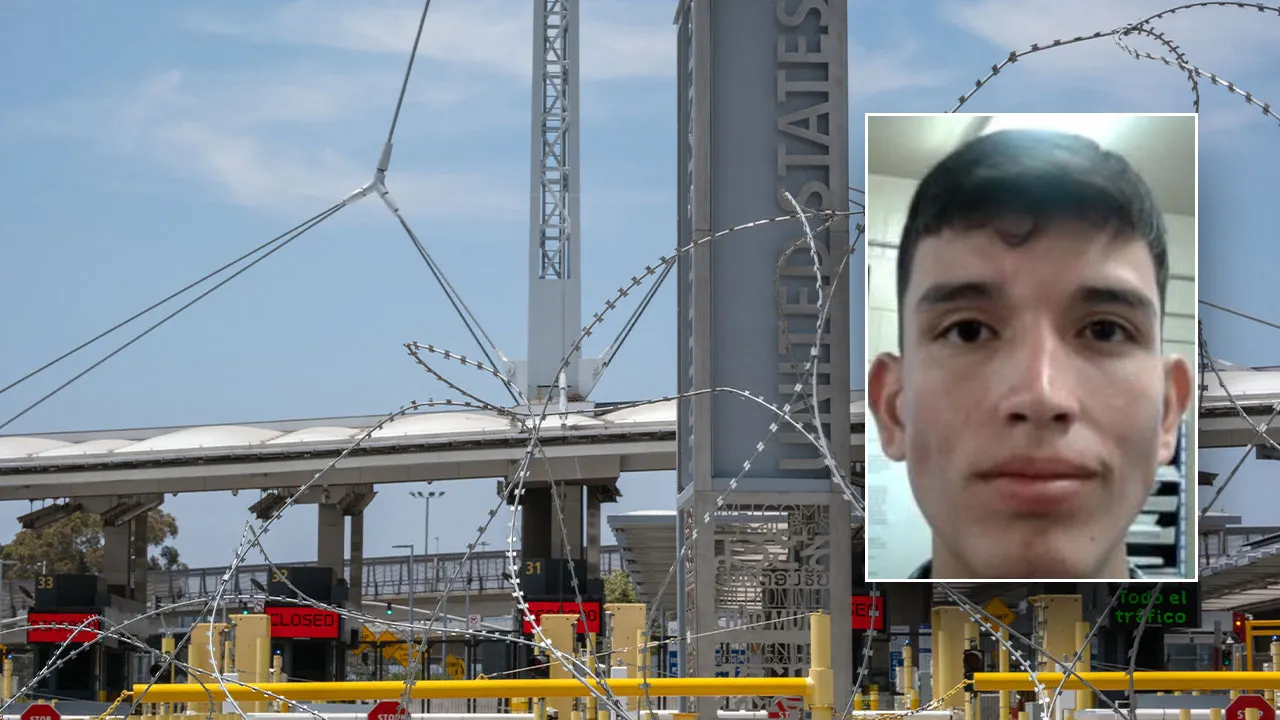
EXCLUSIVE: An illegal immigrant from Colombia killed a motorist in Southern California last month during a police chase, authorities said.
Darwin Felipe Bahamon Martinez, 21, was caught entering the United States near San Diego in 2023 and released by the Biden administration, U.S. Immigration and Customs Enforcement (ICE) said.
“Bahamon Martinez illegally entered the U.S. near Chula Vista, California, in August 2023,” a statement from ICE Los Angeles field office leadership said.
“He was released into the U.S. under the Biden administration’s so-called ‘catch-and-release’ policies, but if that hadn’t happened, the innocent 59-year-old driver he allegedly killed may still be alive today.”
DHS HONORS ILLINOIS WOMAN WHOSE CORPSE WAS ALLEGEDLY ABUSED BY ILLEGAL IMMIGRANT FREED UNDER SANCTUARY LAWS
Martinez was driving a Jeep Gladiator in Anaheim Jan. 21 when police officers initiated a traffic stop for reckless driving. When the officers approached the Jeep on foot, Martinez sped away, authorities said.
A brief chase ensued before the Jeep collided with a Honda driven by a 59-year-old man in the neighboring city of Placentia.
The driver was pronounced dead at the crash site.
Another driver, an 83-year-old woman, was taken to a hospital and treated for minor injuries.
MAJOR COUNTY SHERIFF REJECTS ICE DETAINER ON ILLEGAL IMMIGRANT WHO KILLED YOUNG BOY IN HIT-AND-RUN
The Anaheim Police Department’s police vehicle. ( Jeff Gritchen/MediaNews Group/Orange County Register via Getty Images)
Bahamon Martinez is being held in the Orange County Jail while awaiting criminal proceedings on his homicide charge. ICE lodged an immigration detainer against him Jan. 22.
However, because of California’s sanctuary state laws, local authorities are not compelled to cooperate with ICE to transfer illegal immigrants charged or convicted of crimes into federal custody.
California school board members believe there is a lot of “fearmongering” happening over immigration enforcement as teachers unions and major city school districts are scolding U.S. Immigration and Customs Enforcement. (Getty Images)
“If local officials in Gavin Newsom’s sanctuary California choose to release Bahamon Martinez into the community, they will put ALL Californians at risk,” ICE said in a news release. “California must honor our immigration detainer. Otherwise, ICE will be forced to re-arrest this criminal illegal alien at-large.”
In jurisdictions with sanctuary laws, ICE officers typically have to go into communities to look for illegal immigrants targeted for deportation. The agency has called for greater cooperation with local authorities amid confrontations between federal officers and agitators in Minnesota, where local officials have accused ICE of terrorizing neighborhoods.
CLICK HERE TO DOWNLOAD THE FOX NEWS APP
Critics of sanctuary laws say such laws are responsible for releasing dangerous criminals back onto the street.
Read the full article from Here

California
California couple charged with murder in death of toddler skip court
A Bay Area couple charged in the murder of a 2-year-old girl who reportedly overdosed on fentanyl earlier this year failed to appear in court last week to face the charges.
The tragic incident occurred just after 5 a.m. on Feb. 12, according to the San Francisco County District Attorney’s Office.
Officers with the San Francisco Police Department responded to an apartment in the 3800 block of 18th Street, near Mission Dolores Park, after receiving a 911 call reporting that a child was not breathing.
“Medics arrived at the location and pronounced the two-year-old child deceased,” the DA’s office said in a news release. “Medics observed signs of rigor mortis and lividity, indicating the child had been dead for several hours.”
Responding officers noted that Michelle Price, 38, the girl’s mother, was slurring her speech and had “an emotionless demeanor,” according to court documents. Investigators also observed drug paraphernalia in the apartment, including three pipes, lighters and torches, a used Narcan container, white powder ultimately identified as fentanyl, bottles of spoiled milk and stained sheets on the bed.
Price was arrested for child endangerment.
Her boyfriend, Steve Ramirez, 43, allegedly attempted to flee the apartment on a bicycle, leading police on a chase during which an officer was injured. At the time of his arrest, Ramirez was reportedly in possession of a pipe inside a bag on his bike. Two additional pipes with burnt residue were also found nearby, investigators said.
Blood samples taken from Price and Ramirez at the time of their arrests showed high levels of methamphetamine and fentanyl in their systems, according to the DA’s office.
An autopsy performed by the San Francisco Medical Examiner’s Office revealed no obvious signs of physical injury to the toddler. However, toxicology testing showed lethal levels of fentanyl, as well as naloxone, commonly known as Narcan, in the child’s bloodstream.
“The cause of death was determined to be acute fentanyl poisoning,” the release stated.
Price was initially charged with felony child endangerment, possession of fentanyl and possession of drug paraphernalia. Ramirez faced the same charges, along with an additional count of resisting, obstructing and delaying a peace officer.
Over the objections of prosecutors, both Price and Ramirez were allowed to remain out of custody ahead of their arraignments.
On April 15, San Francisco District Attorney Brooke Jenkins announced an amended complaint charging the couple with second-degree murder, marking the first time such charges have been brought in a fatal fentanyl overdose case in the county.
“There wasn’t really anywhere safe for this child to be inside of this home,” Jenkins said during a press conference announcing the charges. “This is a moment in time where people have to realize that we take these situations very seriously and where, I believe, parents who knowingly possess fentanyl, who understand its lethality and the danger it poses, allow their children to be exposed to it, this is something that can come with respect to accountability if a child dies.”
At the April 16 arraignment, where both defendants failed to appear, Price’s attorney told the court she may have experienced transportation issues. An attorney representing Ramirez said he did not know his client’s whereabouts, according to KTLA’s Bay Area sister station KRON.
While both attorneys said the couple was mourning the loss of the child and struggling with addiction, Ramirez’s lawyer accused the district attorney’s office of turning the case into a media circus, claiming the publicity caused his client to panic.
The judge subsequently issued bench warrants for both Price and Ramirez. It remains unclear whether either has since been taken into custody.
Colorado
UPDATE: Northbound Powers reopned after major crash
UPDATE: SUNDAY 4/19/2026 7:12 p.m.
(COLORADO SPRINGS) — Northbound Powers Boulevards is back open at Palmer Park Boulevard, according to the Colorado Springs Police Department (CSPD). However, the center and right northbound lanes as well as the right turn lane remain closed south of Constitution Avenue. Law enforcement asked the community to avoid the area if possible, and drive carefully.
ORIGINAL STORY: CSPD: Major crash closes northbound Powers
The northbound lanes of Powers Boulevard are closed at Palmer Park Boulevard for a major crash at Powers and Constitution as of 5 p.m. on Sunday, April 19, according to the Colorado Springs Police Department (CSPD). Drivers are asked to avoid the area.
According to FOX21 News crew who spoke to an officer at the scene, the crash involved at least two cars and two motorcycles, and multiple people have been taken to the hospital.
Multiple agencies are responding, according to the FOX21 News crew, and the Major Crash Unit may be called in. Reports indicate that no one has died as of 5:30 p.m.
Hawaii
A Deep Dive into Hawai‘i’s Shell Jewelry Industry – Hawaii Business Magazine
They adorn casual beachgoers, become treasured accessories for bridal parties and decorate the resplendent elite as they glide among guests at private dinners.
Hawaiʻi is a rich resource for this nascent business sector as demand builds across the Islands and across the globe. Exactly how big a business it has become is something of a mystery, though. State figures actually show the number of licensed sellers has declined in recent years, though officials admit that’s probably due to lack of awareness and noncompliance rather than reflecting reality.
“Shell jewelry has really only exploded in the last seven or eight years,” says Brooke Holt, founder and designer of 21 Degrees North Designs on Oʻahu. “Don’t get me wrong,” she adds, “I love shells. I love shell jewelry. That’s why I first wanted to make it, [but] I’m kind of over it at this point because it’s so oversaturated.”
When Holt started making shell jewelry in the mid-1990s, there weren’t many others creating newer styles of jewelry with Hawaiian shells outside of the revered tradition of Niʻihau shell lei. Now, jewelers selling shell designs are abundant, judging by the availability of choices online and in stores. Accessories such as sunrise shell necklaces, Hebrew cone earrings, and miter and Tahitian pearl bangles have become iconic staples of island style.
While the shell jewelry industry appears to be expanding in tandem with the popularity of this merchandise, it remains a largely under-documented domain, lacking the data necessary to quantify its true size and impact. Strict requirements of state regulations may actually be driving sellers to evade the mandates.
Technically, anyone taking marine life from Hawaiian waters for commercial purposes must hold a Commercial Marine License (CML), according to the state Department of Land and Natural Resources’ Division of Aquatic Resources (DAR). The license, which costs $100 for residents and $250 for non-residents annually, mandates strict monthly harvest reporting.
“It is important to note that because marine life is defined in the rule as including even parts of living organisms, this licensing requirement applies to the commercial collection of live specimens, empty shells, and even shell pieces,” says DAR Aquatic Biologist Bryan Ishida.
Regulation extends down the supply chain. Businesses that purchase marine life — including empty or fragmented shells — directly from CML licensees for commercial resale must obtain a Commercial Marine Dealer License (CMDL), which costs $100 per year and requires weekly reporting.
Ishida says these licensing fees “are vital to maintaining DAR’s objective of protecting aquatic resources for future generations.” By law, these proceeds are directed into the Commercial Fisheries Special Fund to bankroll research, monitoring and the staff that work in commercial fisheries management.
These reports also serve as an economic barometer. “CMDL reports, in particular, provide the ability to track even small changes to market demand, pricing and other trends,” Ishida explains.
However, the department admits licensing and reporting compliance in the shell sector is “likely quite low” compared to the seafood sector. According to their records, commercial participation peaked in 1977 with 44 shell collectors submitting reports; over the last decade, the number of CML holders reporting shell harvests has dwindled to ten or fewer annually.
This decline is primarily attributed to a lack of awareness. “DAR recognizes this and understands that increased outreach and non-enforcement measures are needed to raise compliance,” Ishida says, but the agency must prioritize using “their limited resources on the harvest of live aquatic life,” and most shells harvested for jewelry are thought to be empty shells.
Figaroa’s grandmother Loka Kenemaka Kaohelaulii (center) mentored him in the art of making Niʻihau shell lei, which she and her two companions are pictured wearing. Photo courtesy of Kealoha Figaroa
Honoring a Tradition
Shell jewelry has been an integral part of Hawaiian culture for centuries, with ample evidence indicating Niʻihau shell lei predate the arrival of Captain Cook in 1778. They are made of rare, tiny shells found off the rugged coast of the Forbidden Isle.
According to Kealoha Figaroa, founder of Niʻihau shell jewelry company Pūpū Creations, many of the shell species used to construct Niʻihau shell lei are found on other islands, but ones found on Niʻihau are prized because they “hold their luster” better. He guesses that this is because there’s comparatively less freshwater runoff into the ocean. “My family tells me on Niʻihau, the water is so pristine that you can see about 300 feet down into the bottom of the ocean,” he says. For his family, and many others from the island, the tradition of creating shell leis has been passed on for many generations.
Figaroa recalls memories from childhood spent at a table where elders would dump hundreds of shells for the children to organize. “All our grandparents… they would take all the kids, and they would tell us, ‘Okay, you need to sit here and sort these shells by color, by size, by all that.’ And of course, we hated it. But for the older people, it was very important for us to learn these things, so that when we do see these leis, we have much more appreciation for the leis.”
Once they had mastered the sorting process, the children would learn the delicate art of piercing the shells. Only after proving their proficiency in that skill were they allowed to begin stringing them together, starting with smaller pieces like earrings before eventually advancing to leis.
Still, Figaroa says that gathering shells from the beach is by far the most tedious part of the process. Figaroa explains that collecting a sufficient number of matching shells to create a high-quality, symmetrical lei requires immense patience. “It’s anywhere from two weeks all the way up to three years to make one lei,” he explains. The considerable time and craftsmanship required to create these intricate pieces are reflected in their price tag, which can reach upwards of tens of thousands of dollars.
Figaroa, who lives on Oʻahu, says his cousins frequently send him shells from Niʻihau to create the lei sold by his business, Pūpū Creations. “I allow space for my family members to also have some other items on sale so they can profit from it as well, and not just myself.” He says one reason he loves collaborating with his relatives is that “there’s different family members that have specific styles.”
One of his cousins, for example, specializes in delicate color gradients. And Figaroa, mentored by his grandmother, took after her in specializing in working with momi shells to create three-strand leis and the straight Kui Pololei style.
Jewelry and fashion designer Brooke Holt at work in her Mākaha studio. Photo by Aaron Yoshino
The Evolution of Shell Jewelry
Newer styles of Hawaiian shell jewelry have emerged in recent decades. They often feature cone shells, cowries, drupes and miters not typically found in the Niʻihau shell lei tradition.
One of the contemporary style shell jewelry makers on the scene is Anoʻipua Kaaloa, who started out as a shell collecting hobbyist. Kaaloa says the kinds of shells she finds differ based on whether or not she’s looking on the Windward Side or Leeward Side: On the east side, “I’ll find a lot of abbreviated cones, tumbled pink cones, the endemic Hawaiian golden yellow cones, strombs, Adam’s miters, lettered miters. Then on the other side of the island, I find so many cowries” and rarer shells to come by, “like marble cones, leopard cones.”
She says she saw other people making jewelry with their beach finds and thought, “That looks cool. I think I can do that with my shells.” Her business, ʻAnoʻipūpū Jewelry, sells everything from shell necklaces, earrings, bangles, belly button rings and keychains. She says her favorite pieces to make are resin earrings that contain a bunch of different micro shells because they are one of her more “unique” designs.
When she started selling her pieces in late 2024, Kaaloa says she was motivated to not only create “nice jewelry, but more affordable” merchandise, because a lot of the market is “really expensive.” When figuring out her price points, she says she considered “if I was to buy my own jewelry, what prices would I want to set?”
Like many other shell jewelry businesses, Kaaloa operates without a traditional brick-and-mortar storefront. Instead, she has built a loyal following through markets, appearing as a regular vendor at the Kakaʻako Farmers Market every Saturday and the Kailua Farmers Market on Sundays.
Despite having neither a physical shop nor an e-commerce website, Kaaloa found enough success at the markets that she was able to quit her former job in the food service industry and focus on running her business full-time a little over a year into opening ʻAnoʻipūpū Jewelry. “I’m grateful, that’s for sure,” she says.
Holt, founder and designer at 21 Degrees North Designs, makes jewelry from an array of materials, including coral, pearls, sandalwood beads, neon thread, lauhala, silver, gold and, of course, shells.
Having partially grown up in Mākaha, she’s been frequenting Oʻahu’s west side beaches in search of shells since the 1980s.
“I had different beaches for different shells,” Holt explains. “Some shells you can find up and down the coast, but others you can only find in very specific spots. I started then researching what types of shells grow in what types of reef situations.”
The daughter of a fashion designer mother and a glass blower father, Holt naturally felt inclined to do something creative with the shells she found, which led her to taking up jewelry making.
Holt finds that inspiration can strike from anywhere: “sometimes it’s a color, sometimes it’s a concept, sometimes it’s a place.” For instance, the design for one of her first pair of statement earrings began with a moment of observation while surfing.
Captivated by how “the water and the sun playing on the ripples gives it all those little dancing rings, I wanted to make earrings that represent that, so I made these concentric circle earrings. I like organic shapes and asymmetrical things.”
In an era of viral trends and mimicry, Holt says it’s important that her pieces stand out. That’s “the greatest compliment I can get, and I do hear it a lot at my markets. I want to be different. I don’t want to look like anyone else.”
One concern Holt has is the impact an increase in shelling has on the environment: “You want to encourage entrepreneurship, but again, we’re still perpetuating this culture of, take, take, take…. So, yeah, do we need to start having limits?”
Hawaiʻi’s most venomous cone shells (left to right): the banded marble cone (Conus bandanus), the textile cone (Conus textile), and the Hawaiian striated cone (Conus striatus). Photo: MarinelifePhotography.com
The Ethics of Shelling
It isn’t illegal to take live shells, but Ishida says “DAR requests that commercial collectors do so sparingly and only as demand requires as many species are quite rare” or little is known about their abundance. The agency strongly recommends collecting empty shells rather than live specimens.
“However, DAR asks commercial collectors to remember that shells, even when empty, contribute to the ecosystem, whether providing a home for a hermit crab or over years wearing down into sand and other seafloor substrate,” says Ishida.
For artisans like Figaroa, Kaaloa and Holt, the first rule of the reef is absolute: only take empty shells. They look for signs of life — like a visible body or a sealed operculum — whereas sand and rocks in the aperture indicate the shell is dead. “The only way shells can reproduce plentifully is if the reef system is healthy. If the reef is not healthy, you won’t get your shells,” Figaroa says.
Marine educator Keoki Stender, founder of MarinelifePhotography.com, warns that damage often happens through simple negligence, such as walking on reefs made of mussels and oysters at low tide: “If you trample it, you crush the shells. You kill hundreds at one time. You have to be mindful of what you’re stepping on.”
He also implores beachgoers to return things back to where they originally were when exploring the ocean and tide pools. For example, “If you leave the rock overturned, the sun’s going to fry everything [on the bottom], the fish are going to eat everything that is here and exposed, and then the life that was on the top of the rock is going to die [underneath], and the part of the reef where you turn the rock and put it onto the reef is going to kill everything on that part of the reef too,” he says.
Ishida reminds commercial collectors that as a natural resource, “empty shells are for everyone’s enjoyment. People who want to collect shells for their own personal collection, jewelry making for themselves, or just enjoying seeing them while diving should be able to do so. Accordingly, commercial collectors should think about their impact on not only the environment but others who may want to collect shells for non-commercial purposes.”
Keoki Stender pictured at his studio lab. Photo by Aaron Yoshino
Where Shells Come From and What to Look Out For
The shells used in jewelry come from animals in the mollusk phylum. To protect their vulnerable, soft bodies, many mollusks have evolved to build exoskeletons, a.k.a. shells, by secreting minerals through a specialized organ called the mantle.
Keoki Stender, a marine educator, photographer and founder of MarinelifePhotography.com, says that you can glean a great deal about a mollusk’s lifestyle by examining its shell. Cowries, for instance, are the heavy-duty tanks of the reef. Their domed, “bottom-heavy” shell is engineered for stability. “The ones that are most domic — a humpback, very domed, flat bottom — they would be more likely to be in a high surf environment,” Stender explains. Combined with a foot that provides powerful suction, the humpback cowries’ low center of gravity allows it to “handle the full force of breaking waves” without being swept away.
In contrast, he says, the streamlined, “tapered shape” of miters and augers allows them to easily crawl through sand in search of prey. And the elaborate, spiny architecture of murexes serves as a defense “designed so no one can bite them.”
The diversity of patterns, from the distinctive black markings on Hebrew cones to the vibrant ombré of sunrise shells, is produced by pigment-secreting cells in the mantle. These cells act much like an inkjet printer, depositing color at the growing edge of the shell.
Some specimens in Stender’s extensive shell collection.
Cone snails are predators that hunt using a venomous harpoon-like tooth that shoots out the base of their shell. Their toxicity generally depends on that species’ diet. “The worm eaters are like a bee sting [to humans]. But if you’re allergic to bee sting, that can be really bad,” Stender warns. “The fish eaters are especially bad because if your prey is fast moving, you got to have a potent sting.”
Because specific cone snail species are among the most venomous animals on earth, being familiar with their patterns to discern which are dangerous is extremely important when handling. “The ones that have the worst sting are the tented pattern cones,” says Stender. In Hawaiʻi, textile, banded marble and striated cones possess a sting that is potentially fatal to humans.
Stender explains that lifespan varies significantly across species, noting a direct correlation between shell size and growth rate. “The bigger the shell, generally, the slower it grows,” he says, because the animal must extract a higher volume of minerals from both the water and its food to build its home. While Stender estimates that many micro-shell species live for only six months to a year, some larger mollusks — such as the leopard cone and tiger cowry — can live for a decade or longer.
-
Arkansas4 minutes ago
Arkansas Lottery Cash 3, Cash 4 winning numbers for April 19, 2026
-
California10 minutes agoCalifornia couple charged with murder in death of toddler skip court
-
Colorado16 minutes agoUPDATE: Northbound Powers reopned after major crash
-
Connecticut22 minutes agoCT Lottery Cash 5, Play3 winning numbers for April 19, 2026
-
Delaware28 minutes agoMan speeds past leading runner in photo finish at Delaware Marathon
-
Florida34 minutes agoFlorida Lottery Fantasy 5, Cash Pop results for April 19, 2026
-
Georgia40 minutes ago
Gaudette & Patel Pitch Past No. 3 UNC, 5-2
-
Hawaii46 minutes agoA Deep Dive into Hawai‘i’s Shell Jewelry Industry – Hawaii Business Magazine