Denver, CO
The Disconnect That Led to the Denver Nuggets’ Demise


The back-to-back championship dream is over for Denver Nuggets players, fans, and coaches. But for their general manager, going back-to-back was never the biggest priority.
“I just want dudes that we try to develop, and it’s sustainable,” Nuggets GM Calvin Booth told me last August. “If it costs us the chance to win a championship this year, so be it. It’s worth the investment. It’s more about winning three out of six, three out of seven, four out of eight than it is about trying to go back-to-back.”
This quote is from a feature published on opening night about the Nuggets’ hopes of building a dynasty. There was real optimism that Nikola Jokic could power the Nuggets to back-to-back titles, making them the first team to do it since the Warriors did it in 2017 and 2018. Denver was the clear favorite to win it all again, despite losing two key rotation players in Bruce Brown and Jeff Green to free agency. But only rookies and journeyman vets were added to plug in the gaps. With the new collective bargaining agreement presenting massive team-building challenges for teams that are well over the luxury tax, adding young players felt like a reasonable approach. But the Nuggets’ lack of depth was the one hole critics could poke in its case to run it back.
And ultimately, that’s what did the Nuggets in. Denver ran out of gas Sunday, blowing a 20-point lead in the second half at home in Game 7 and losing to the Minnesota Timberwolves. Only one bench player logged more than 10 minutes and the Nuggets had five players under the age of 25 ride the pine the entire game. This was a theme all season, not just in the playoffs. On multiple occasions throughout this campaign, Michael Malone, the fiery head coach of the Nuggets, lamented his team’s lack of steady depth.
“That’s the challenge when you have so many young, unproven players off the bench,” Malone said in late November after an early-season loss to the Rockets. “But we also have games to win, and that delicate balance is a tightrope. But we need to win, and I’m gonna play the guys that are gonna help us get a win.”
Booth and Malone had different approaches to the season that often clashed. Booth was investing in the future, and Malone was thinking entirely about the present. And in the end, nobody won. The Nuggets failed to advance to the conference finals and the rookies didn’t get developmental time they needed. Booth’s plan could still work out in the long run if his draft picks improve. But with the Nuggets already planning their summer vacations, it looks like he whiffed on a valuable chance to win it all again.
Malone had nobody on the bench he believed he could trust, even as Jokic and the Nuggets looked exhausted in the second half of Game 7. The rotation lacked a steady shot-creator in the backcourt besides Jamal Murray, with 34-year-old Reggie Jackson being the only veteran option. Michael Porter Jr. couldn’t find his shot all series, but only journeyman Justin Holiday got chances behind him. Second-year wing Christian Braun was the only youthful contributor. And there was no reliable big man to play behind or alongside Jokic, with DeAndre Jordan as the only veteran on the bench. Minnesota looked longer, quicker, and deeper all series.
“I think they’re built to beat us,” Jokic said after Game 7. “Just look at their roster. They have basically two All-Stars, two probably first-team defensive players, Mike Conley, who is the most underrated player in the NBA. … From the bench, they have a [Sixth Man of the Year]. They have Kyle [Anderson] and [Nickeil Alexander-Walker], who was really good for them. They are one team that can do literally everything. They can be big, or small.”
Jokic’s comments had to sting for Booth and the Nuggets, especially when considering that ex-Nuggets GM Tim Connelly is the one who drafted Jokic, built the roster around him, then left for the Timberwolves to construct a title hopeful shaped to defeat his own creation. Maybe the Nuggets had to lose this season for Booth and Malone to get on the same track long term. But all season, Denver lacked organizational alignment, a worrisome reality for a franchise that just won its first title with a historic player who’s still in his prime and who this season won his third MVP in four years.
Putting the blame solely on Booth would be an error, though. Booth also added Kentavious Caldwell-Pope the prior offseason, and his first rookie class of Braun and Peyton Watson proved to be fruitful. Braun made pivotal plays as a rookie on Denver’s way to a title, which carried over to this season. Watson didn’t play meaningful minutes as a rookie but flashed excellent two-way abilities this season before his lack of a reliable jumper led to his benching against the Timberwolves. The three rookies Booth drafted this year—wing Julian Strawther, guard Jalen Pickett, and forward Hunter Tyson—were all upperclassmen that he hoped would play during the season and then be ready for rotation minutes come the playoffs. Just like Braun last year. But for one reason or another, it didn’t happen.
Here’s what Booth told me over the summer in a quote that didn’t make my opening-night story, after I asked if Braun’s minutes increasing throughout the 2022-23 season was a template for the 2023-24 rookie class: “I think Malone will have to play them. Hunter and Julian, these guys can manufacture points on their own. And I like the balance between Jamal and Jalen, who has been basically Joker Lite wherever he’s been. What happens when Jalen goes out there with Jokic and the ball’s moving around with both of those guys? It’s going to be like San Antonio with Boris Diaw.”
Things didn’t pan out as expected, though. Strawther shot only 29.7 percent from 3 in his 545 regular-season minutes. Pickett appeared in only 122 minutes, sharing the floor with Jokic for just 35 and with Murray for none. Tyson played only 48 minutes, even fewer than Nuggets players on two-way contracts, despite excelling in the G League. Instead, Malone played four of his five starters even more minutes than they did last season (only Murray didn’t, due to his injuries). Malone valued pursuing home-court advantage over managing minutes and distributing playing time to younger players, and it ended up not mattering in the end with Denver losing three home games to Minnesota.
“We played until June last year,” Malone said after Game 7. “We had to play our main guys through Game 82 [this season] to secure the no. 2 seed, whereas last year we were able to rest down the stretch. The run last year, coming back, the amount of minutes our starters had to play, I think emotionally and physically, our guys are gassed.”
So where do the Nuggets go from here to get their dynasty hopes back on track? Maybe most importantly, Booth and Malone need to get on the same page moving forward. The truth is blame and credit are both shared between them. Malone has been in Denver longer than anyone else in the organization, and was critical in the rise of Jokic and in the construction of a system that won a title. But he also should’ve played the kids more to find out whether they could contribute in the playoffs while not running his tired starters into the ground. Booth put the perfect final touches on the team that Connelly built, but knowing Malone’s tendency to favor veterans, and knowing the uncertainty of rookie production, he also could’ve done better than bringing in Jackson, Jordan, and Holiday as the only vets off the bench.
The pressure this summer is undoubtedly on Booth, though. Malone inked a long-term extension in November through the 2026-27 season. Jokic is signed through 2027-28. Meanwhile, Booth’s contract is up after the 2024-25 season, according to a new book from Nuggets reporter Mike Singer. Josh Kroenke and the rest of Nuggets ownership need to consider whether they should reward Booth with an extension despite their leadership’s lack of a shared direction.
No matter who’s in charge, the job of an NBA GM is more complex than ever. The choice to just pay every player and make a bunch of trades isn’t as clear-cut as it once was, because of the severe restrictions the new CBA places on teams over the luxury tax. The first luxury tax apron is $7 million above the salary cap, and the second apron is $17.5 million above it. Teams over the salary cap’s first apron are not allowed to:
- Acquire a player via sign-and-trade;
- Sign players using the biannual exception;
- Sign players using more than the taxpayer midlevel exception;
- Sign players waived during the season if their salary exceeds the non-taxpayer midlevel exception.
Teams over the second apron have even more punitive restrictions:
- Cash can no longer be used in trades;
- Trade exceptions from prior years can’t be used in deals;
- Players can’t be acquired in a sign-and-trade;
- Outgoing salaries can’t be combined in trades;
- Cannot sign players using the taxpayer midlevel exception;
- First-round picks seven years out cannot be traded;
- If a team remains in the second apron for three out of five seasons, its first-round pick is automatically moved to the end of the round.
Denver was over the second apron this season and is set to exceed it again next season. And the roster is about to become even more expensive. Caldwell-Pope will be an unrestricted free agent in high demand as a knockdown 3-point shooter who also belongs on an All-Defensive team. Any of the eight teams that can create over $20 million in cap space this summer could realistically target him: If the Sixers whiff on Paul George, could KCP be their next target? Why wouldn’t the Spurs want a 3-and-D veteran next to Victor Wembanyama? Isn’t KCP a perfect fit for Orlando’s needs? Up and down the line, Caldwell-Pope can fit anywhere.
One year from now, Murray will be up for a max extension and Aaron Gordon can become an unrestricted free agent who would also have a significant market. It can be assumed that Murray will get a max extension, which means Caldwell-Pope and Gordon would have to combine for roughly $45 million at most for Denver to retain its starting five. That might be too optimistic of a projection for the Nuggets, considering they got priced out of retaining Brown and Green last summer.
More immediately, the Nuggets must worry about retaining KCP. If he’s re-signed to a deal worth around $15 million annually, the Nuggets could get under the second apron by trading away one of Jackson or Zeke Nnaji, and replacing them with a minimum salary. If KCP’s contract is over $20 million annually, then both would have to go (and possibly Vlatko Cancar, depending on other moves). Losing KCP would be a big problem, but it can’t be ruled out with elite 3-and-D players in such high demand.
“This new CBA was appropriate. The second apron was appropriate,” Booth told me before the season. “That’s another reason why we got three rookies.”
And more could be on the way. The Nuggets have the 28th and 56th picks in this year’s draft, which is deep with quality role players. By necessity, Booth needs to invest in young players or else he’ll be handcuffed in detrimental ways. Malone has no choice but to get on board, because the supporting veterans won’t necessarily get any better than they were this year. Booth needs those young players to be hits, though, or he’s going to have to do better at scraping the bottom of the barrel for vets.
“You’re always looking at ways to get better,” Malone said after Game 7. “And that’s what we’ll do.”
The issue is that Booth has so few levers to pull. Even if the Nuggets get under the second apron, they’ll still feel the restrictions of the first apron. They don’t have cap space. They can only trade firsts in 2024 and 2031. Their young guys didn’t improve enough to have much trade value. Front office executives described Booth’s trade negotiations before the deadline as someone who went shopping but left their wallet at home on purpose. It was also a thin trade market: Would moving a rookie for Kelly Olynyk really have made sense? Odds are they couldn’t have outbid the Raptors for him anyway, or made a better offer than the Suns did for Royce O’Neale. Could trading multiple seconds for Andre Drummond really have moved the needle? Perhaps, if it bought Jokic a few minutes to catch his breath. But there wasn’t much out there.
Moving forward, the Nuggets may need to get creative with trades to solve their problems. One card Booth could play is trading Porter Jr., who is about to enter the third year of a five-year, $179.3 million deal. He’s still only 25 years old and appears to be past his injury concerns after missing only 21 games the past two seasons. And he’s certainly one of the league’s best shooters. But he’s expensive, he doesn’t create his own shot off the dribble, and he’s inconsistent on defense. Maybe it’d make sense for the Nuggets to trade Porter for two players, giving them more depth while retaining shooting prowess. Because for the second consecutive year, MPJ’s production fell off a cliff in the playoffs. Last season, Porter averaged 12.3 points on 11.4 shots per game on just 32.7 percent shooting from 3 over the final three rounds. This year, he was even worse in the second round, averaging 10.7 points on 10 shots on 32.5 percent from 3. Porter was also more productive on defense last year. Porter’s health could still be a red flag to some teams, but his youth, shooting prowess, and theoretical upside in an expanded role makes him Denver’s most valuable expendable asset, its clear out to an expensive roster in need of reinforcements.
The problem with even considering trading MPJ is that the Nuggets have already devalued 3-point shooting as is. Most of their draft picks have been inconsistent or low-volume threats from the perimeter at the collegiate level, which has carried over to the NBA in the case of Braun, Watson, and Strawther. And as a team, the Nuggets ranked dead last in 3-pointers attempted this season. Any acquisitions moving forward need to be able to shoot reliably.
“Conventional wisdom says that best players help the role players, but in reality it’s a two-way street,” Booth told me last summer. “The best role players help the best players out. They make the best players better.”
Ultimately, Jokic found himself overwhelmed by Minnesota. Whether it was Karl-Anthony Towns contesting every move, Rudy Gobert looming nearby, or Naz Reid stepping up when he needed to, Jokic faced relentless pressure from a cadre of long arms. And the lack of sharpshooters around him meant he often faced double-teams, swarmed by the Timberwolves with strategic precision.
“I consider the San Antonio Spurs a dynasty, and they never won back-to-back,” Malone said following Game 7. “So losing, the hurt of it, the pain of it, helped win our [first] championship. Can we 1716304990 use this year, too?”
The Nuggets will need to. But there is no guarantee they ever make it back to the Finals. Anthony Edwards is still on the rise. The young Thunder are gaining momentum. The Mavericks and Wolves aren’t going anywhere. And Wembanyama is way ahead of schedule. The Nuggets already caught a glimpse of Wemby’s impact when he led a comeback victory over the Nuggets in his season finale, a loss that dropped Denver to the 2-seed in the West. The game was just a hint at future showdowns in a Western Conference landscape that is only getting tougher.
Once the architect behind the Nuggets, Connelly drew up a new blueprint to take them down. Now, it’s Booth’s turn to adjust the roster, follow through on his original vision, and chase his dream of a Nuggets dynasty.



DENVER (KDVR) — More sunny and hot conditions are in Denver’s weather forecast for the rest of the weekend and into next week.
Denver weather tonight: Mainly clear
Saturday night will stay mainly clear and warm. Low temperatures will fall to the mid 60s, which is about 5 degrees warmer than normal for this time of year.
Denver weather tomorrow: Sunny, hot
Sunday will be sunny, breezy and hot with wind gusts out of the south southwest picking up to 20-30 mph. High temperatures will climb to the mid 90s, which is more than 5 degrees warmer than normal for this time of year, but well below the daily record of 102 set in 2024.

Looking ahead: Hot week ahead
Sunshine and a warming trend continues on Monday. High temperatures will reach just below the daily record of 100 degrees set in 2003.

More sunny and dry conditions are on the way through the workweek. Every day will start with a low in the 60s, then plenty of sunshine helping to boost high temperatures to the mid to upper 90s.

There is a slight chance for showers, mostly in the High Country, that return by the end of the week and the start of the weekend.

Getty
Peyton Watson #8 of the Denver Nuggets is a potential Lakers free-agent target.
The Los Angeles Lakers are still exploring means to improve their roster ahead of the upcoming season. Moves have been made already, but there are opportunities to add more talent around Luka Doncic.
One potential target for L.A. is Denver Nuggets star, Peyton Watson. In a proposed multi-team deal involving the Miami Heat and New Orleans Pelicans, the Lakers could land the high upside talent.
In the deal:
Both Watson and Jones have been linked with a move to L.A. this offseason, but no deal has been able to push forward. This proposal offers a chance to get both with one swing.
Lakers’ Outline for Acquiring Peyton Watson Through Trade
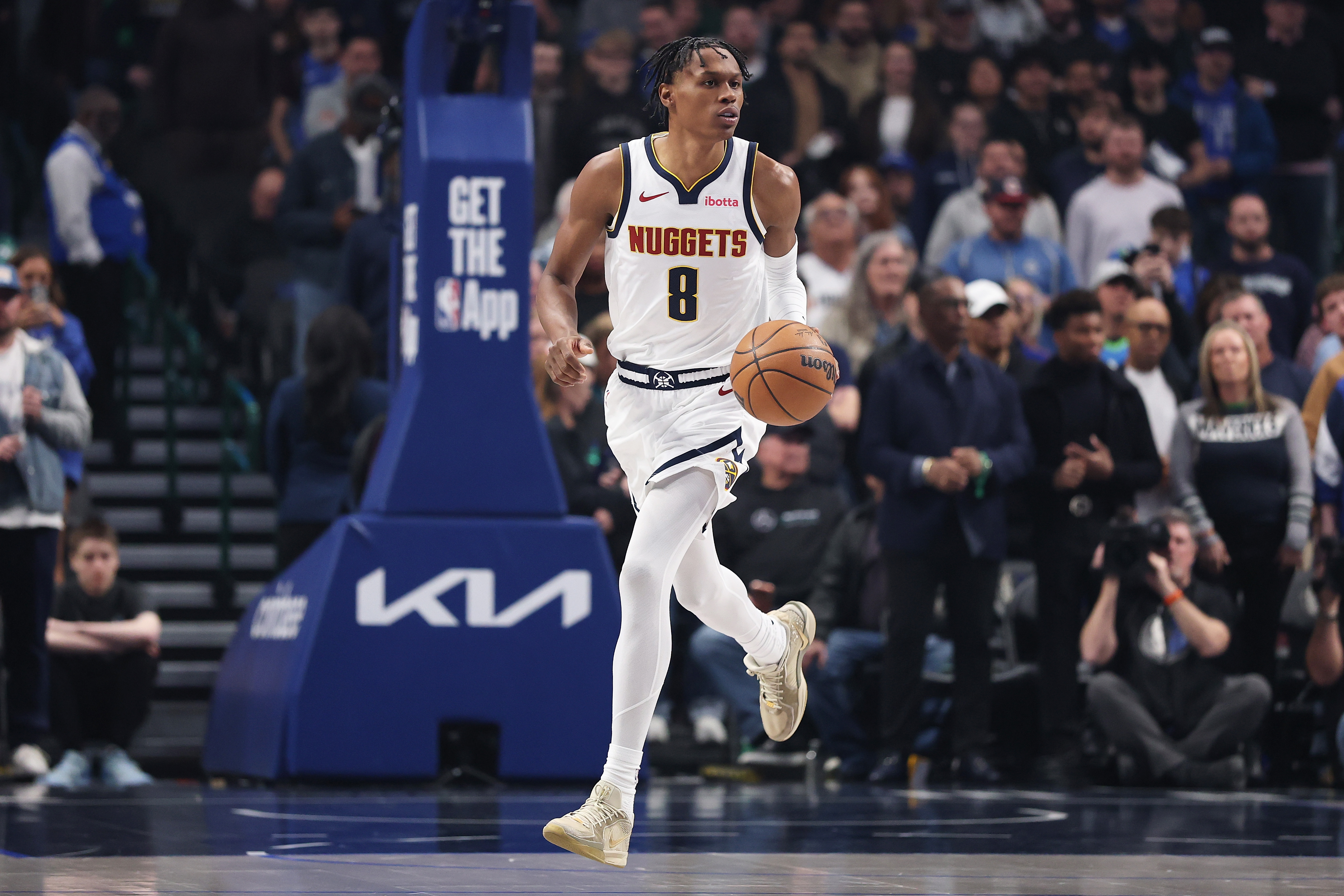
GettyDALLAS, TEXAS – JANUARY 14: Peyton Watson #8 of the Denver Nuggets handles the ball during a game against the Dallas Mavericks at American Airlines Center on January 14, 2026 in Dallas, Texas.
Watson, 23, is a restricted free agent, which makes any approach difficult. The Nuggets could match any offer to retain him and are reportedly planning to do so.
The 6-foot-8 star is coming off a breakout season in Mile High City, averaging 14.6 points, 4.9 rebounds, 2.1 assists and 1.1 blocks per game. He shot 49.1% from the field and 41.1% from three while starting 40 of his 54 appearances.
Watson’s camp is reportedly seeking north of $25 million per year which is unfavorable for the Nuggets at this point. Denver already has huge commitments to Nikola Jokic, Jamal Murray, Anthony Gordon and Christian Braun.
The Lakers can capitalize on the Nuggets’ need to move for pieces for flexibility and pitch a move for Watson. There would be adequate space to fit in the incoming star with the outgoings in this framework.
The Lakers can offer Watson a multi-year deal that doesn’t affect their flexibility. Vanderbilt’s outgoing deal is the most notable, which is why the Lakers have put him at the top of their moving list for now.
Watson’s Upside and Adding Herb Jones to the Roster

GettyLuka Doncic #77 of the Los Angeles Lakers passes the ball as he is pressured by Herbert Jones #2 and Jeremiah Fears #0 of the the New Orleans Pelicans during the second quarter of an 2025 Emirates NBA Cup game at Smoothie King Center on November 14, 2025 in New Orleans, Louisiana.
The Lakers would also get Jones out of this trade from the Pelicans. He is on a three-year, $68 million extension going through 2028-29 with a player option. His cap hit for 2026-27 sits at around $14.9 million.
With Watson and Jones, the Lakers would be bringing in roughly $38 million worth of salary, adding both Saddiq Rey for depth while sending out only about $26 million. This scenario would push L.A. well over its luxury limit but not into restrictive zones.
A potential lineup having Watson and Jones alongside Doncic, Austin Reaves and the newly acquired Walker Kessler, is positioned to be a strong core.
The real hurdle is getting Denver to move on from Watson. The franchise is committed to keeping him, even if it means giving up one of their more seasoned stars. They did activate a qualifying offer, making him restricted and they intend to match offers. Although a sign-and-trade is not impossible and the Lakers can work with that.
Adel Ahmad Adel is a writer with over five years of experience covering the NBA. His work has appeared on various media platforms, both national and local. More about Adel Ahmad
Denver, CO
One tree at a time: Denver nonprofit works to close shade gap as heat dome threatens neighborhoods

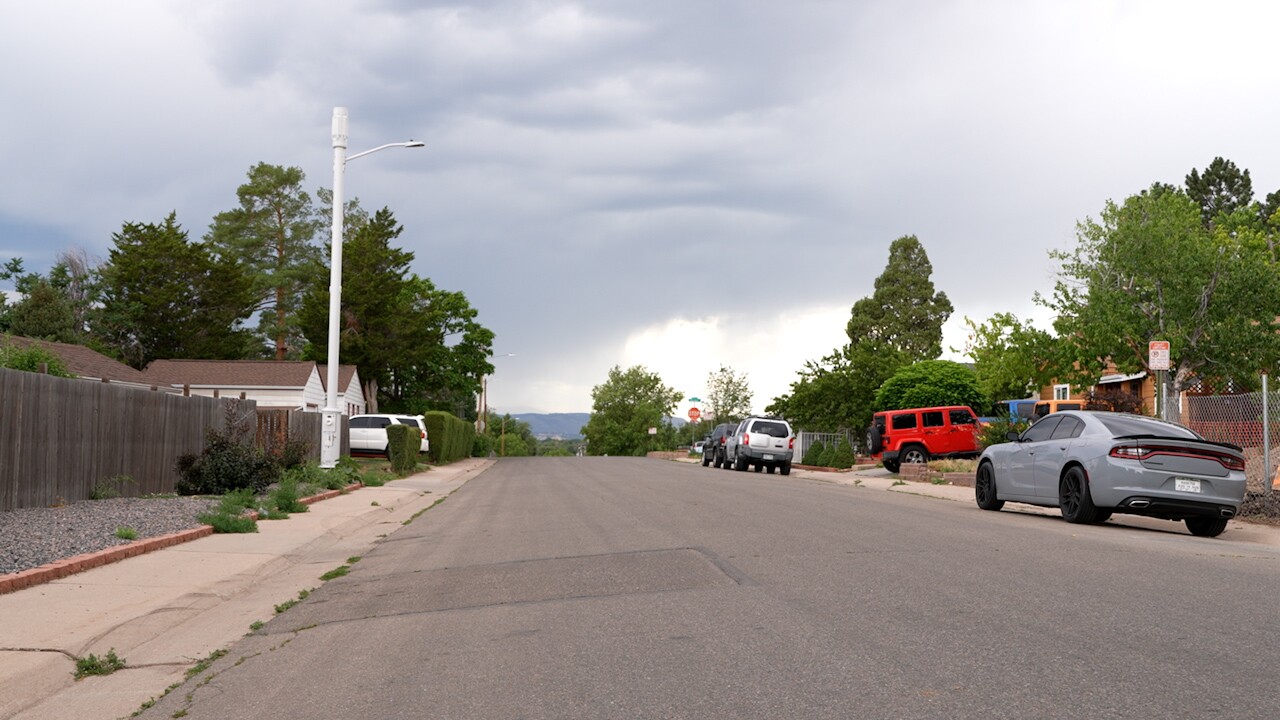
DENVER — Some Denver neighborhoods are far more vulnerable to this weekend’s incoming heat dome than others — and the difference comes down to trees.
The Valverde neighborhood on the city’s west side has about 9% canopy cover, leaving residents with little shade as temperatures climb toward triple digits.
▶️ WATCH: Denver7’s Claire Lavezzorio learns more about The Park People and how it is helping neighborhoods in Denver.
One tree at a time: Denver nonprofit works to close shade gap as heat dome threatens neighborhoods
Kim Yuan-Farrell, executive director of The Park People, a nonprofit that plants trees in underserved neighborhoods, said the disparity across Denver is stark.
“We have some neighborhoods that have wonderful canopy cover, like 20 to 30% of those neighborhoods are forested. Then a number of our neighborhoods have really low canopy cover, between four or 8% where it’s just significantly less,” Yuan-Farrell said.
Denver7
The Park People identified 28 neighborhoods in need of more tree cover, including Westwood, Globeville and Northeast Park Hill.
Trees can cool an area by 15 to 20 degrees, making a significant difference.
The National Weather Service (NWS) warned the heat dome could last through next weekend.
“The exceptional thing about this is how long it will last,” said NWS meteorologist Russell Danielson. “If you do have trees to take shelter under, it does actually cool down the temperature a decent amount.”
Yuan-Farrell said trees are more than a comfort — they are a critical piece of urban infrastructure.
Denver7
“We really consider it a really essential element of green infrastructure, a real nature-based solution to a lot of these really serious local environmental problems,” Yuan-Farrell said.
In the map below, explore Denver’s libraries and rec centers that welcome the public in from the heat during business hours.
When asked whether Denver has a long road ahead, she did not hesitate.
“We have a lot of work ahead of us,” Yuan-Farrell said. “And we really need our whole community to get involved in that.”
The Park People plant anywhere from 1,200 to 2,000 trees a year. You can apply for one in your yard. Planting is set to begin in September.

Denver7 | Your Voice: Get in touch with Claire Lavezzorio
Denver7’s Claire Lavezzorio covers topics that have an impact across Colorado. If you’d like to get in touch with Claire, fill out the form below to send her an email.
-
 News28 minutes ago
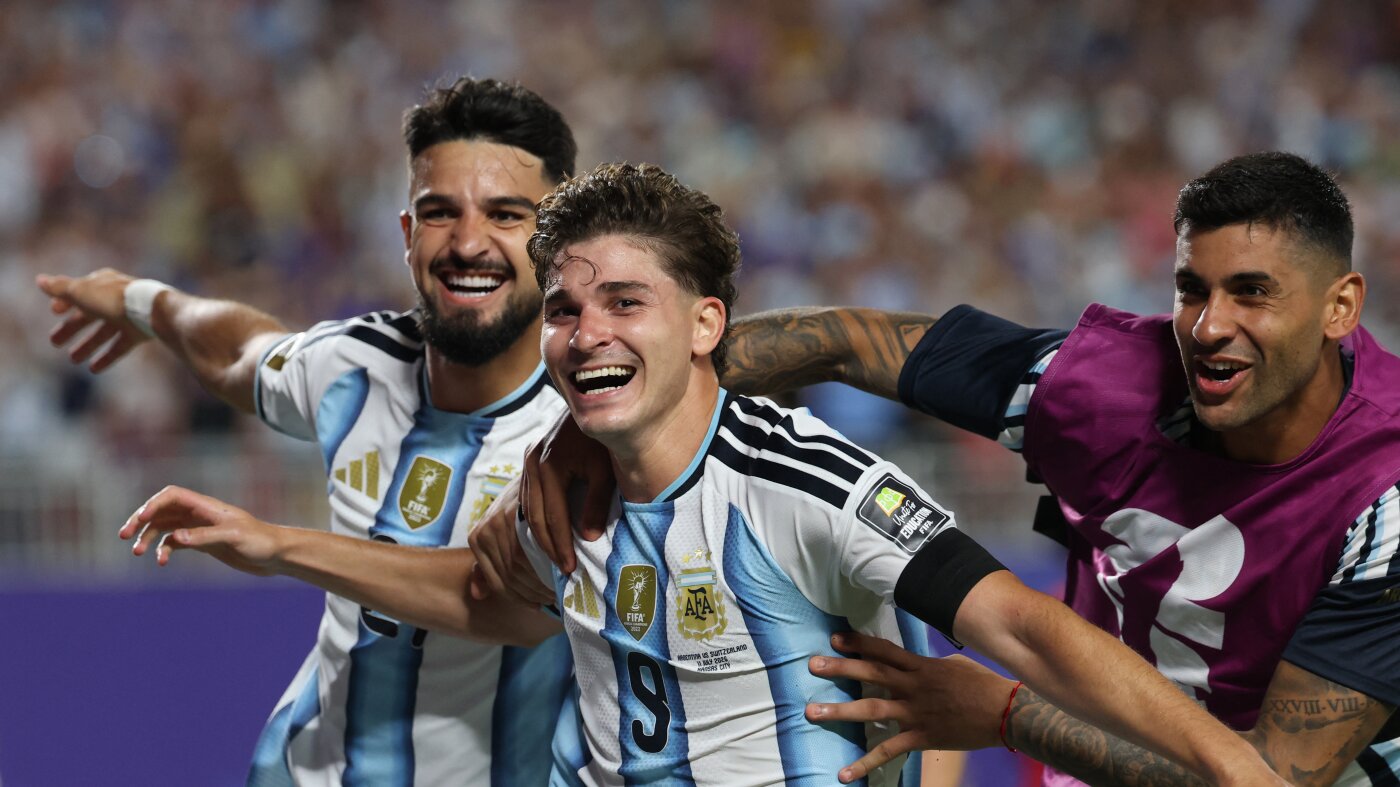
Messi and Argentina survive another close call to reach the World Cup semifinals
-

 Los Angeles, Ca2 hours ago
19-year-old arrested, accused of distributing marijuana to minors across Riverside County
-

 Detroit, MI2 hours ago
Phillies end the Tigers’ winning streak at 6 with a 4-2 victory
-

 San Francisco, CA2 hours ago
Giants select Barry Bonds’ nephew Peyton in third round
-

 Dallas, TX2 hours ago
Mark Cuban takes legal action against the Dallas Mavericks ownership over proposed arena deal
-

 Miami, FL2 hours ago
South Florida businesses report economic boom, as FIFA officials estimate a billion dollar economic impact
-

 Boston, MA3 hours ago
Forecast: Looking ahead to toasty temps next week
-

 Denver, CO3 hours ago
Denver weather: Warming trend continues this weekend and into next week

