Denver, CO
Denver’s TV-centric SeriesFest survives amid industry crunch


Randi Kleiner felt like an 8-year-old at her birthday party as she fretted inside the Sie FilmCenter. It was 2015, the opening year of the SeriesFest TV festival and, as with a birthday party, there was no guarantee people were going to show up.
” ‘Is anyone actually coming?’ ” the festival co-creator recalled wondering as she unlocked the doors at the theater on East Colfax Avenue. “I was anxious.”
Not only did people show up that first year, they’ve also continued to blow past her expectations. Now in its 10th year, the nonprofit SeriesFest draws more than 12,000 attendees annually and commands a $2.7 million budget. Kleiner expects attendance to grow by another 2,000 this year, based on current ticket sales for the public event.
SeriesFest, co-created by Kleiner and Kaily Smith, returns for Season 10 May 1-5, with dozens of screenings, panels, awards and even a “Cowboy Carter”-themed Beyoncé dance party at Red Rocks Amphitheatre on May 5, featuring Grammy-winning Young Guru (Jay-Z’s tour DJ). Past SeriesFest events there have featured performances from Stevie Wonder, Lady Antebellum (now Lady A), Chelsea Handler, En Vogue and Common.
This year’s anniversary event takes place mostly at the Sie, with another high-profile slate of guests and programming, including its first-ever gala and honors for actor Minnie Driver, SAG-AFTRA, Shonda Rhimes’ Shondaland company, and a celebration of 20 years of “Grey’s Anatomy” (with cast members James Pickens Jr., Kevin McKidd, Caterina Scorsone and Kim Raver).
The fundraising soirée bolsters SeriesFest’s reputation as a reliable, innovative spot to gather in an industry beset by head-snapping change. As prestige TV continues to move almost entirely to streaming, and the industry grapples with the staggering effects of the pandemic, last year’s Hollywood strikes and artificial intelligence, SeriesFest continues to look smart by marching boldly into a complicated, uncertain future.
“Certainly since the strikes last year, and with the IATSE (film-crew union) strikes looming on the horizon, there’s been a slightly pervasive sense of doom and gloom in my industry,” said British-Nigerian actor Chiké Okonkwo, who returns this year for a live table read of “Grave Affairs” and as a juror in the Drama category of the Independent Pilot Competition. He’s lately been seen in the last three seasons of NBC’s “La Brea,” and is a past award winner at both SeriesFest and the Denver Film Festival.
“I for one don’t subscribe to that doom and gloom,” he said. “We always need stories in a communal setting, but we also love to dig into stories at home and on TV, so this offers different ways of seeing those stories. I’m in awe of the drive and creativity to get these things made against all odds. It makes me optimistic that these people can find audiences.”
Streaming networks and production companies have snapped up independent pilots that premiered at SeriesFest, including “Cooper’s Bar” (AMC+); “Everyone Is Doing Great” (Apple TV+); “Dreaming Whilst Black” (BBC and Showtime); and “Generation Por Qué” (acquired as a short on Max). Creator Emil Pinnock, for example, also signed a blind-script deal with Blumhouse Television and has been tapped to pen an untitled Daymond John project (he’s one of the sharks on “Shark Tank”), Kleiner said.
That’s the result of hard work and a commitment to support new and diverse voices, SeriesFest veterans say. Even with the annual celebs and major title launches — the Paramount+ hit “Yellowstone,” starring Kevin Costner, officially premiered at a SeriesFest screening at Red Rocks Amphitheatre — SeriesFest is a nonprofit that supports young and upcoming women, BIPOC and other directors with mentorships and education.
John Leyba, Denver Post file
Chike Okonkwo pauses for a photo on the red carpet on opening night of the Denver Film Festival, Nov. 2, 2016, in Denver.
Kleiner praised the Shondaland production company for taking on SeriesFest luminaries such as Tamika Miller. She won SeriesFest’s highly competitive Women Directing Mentorship with Shondaland and went on to direct three episodes of the acclaimed “Station 19.”
Alysia Reiner is a SeriesFest veteran who’s returning this year for “The Methods of Multi-Hyphenates” panel, along with actors Christy Carlson Romano (“Kim Possible”) and Michelle Hurd (“Star Trek: Picard”). For other veterans of the industry, the festival is essential for reaching new creatives and executives, given that it draws from a fast-growing, global pool of talent flowing from India, China, South Korea, Mexico and other U.S.-crossover markets, she said.
“You have a spectacular mix of people in front of and behind the camera,” said Reiner, who has appeared in seminal prestige-TV shows and streaming hits such as “Orange Is the New Black,” “Better Things,” and the Disney+ series “Ms. Marvel.” Her instantly recognizable face joins Jane Seymour (“Dr. Quinn, Medicine Woman”); Mark Duplass (“The Morning Show”); Jocko Sims (“New Amsterdam”); closing-night comic Hasan Minhaj (“Patriot Act”); Patrick Macmanus (“Dr. Death”) and many more.

“The truth is, our industry has contracted a little bit post-COVID and post-strike,” Reiner said. “Less is being made on that big-budget level … we’re in a real reshuffle of streamers and networks. So it’s deeply empowering when artists are reminded by SeriesFest that they don’t have to wait to create. They can make their own content. … It wasn’t like that when I was a baby artist.”
Plenty of film festivals now offer TV sidebars, Kleiner said, but SeriesFest was one of the first and only to focus exclusively on television. She’s seen the lines between TV, film and various digital media get thinner in the last decade. But her event isn’t just “the Sundance of TV,” as SeriesFest boosters have called it over the years, but an industry leader whose example is increasingly followed (including at South by Southwest in Austin, Texas, and Sundance Film Fest in Park City, Utah).
And yet SeriesFest remains one of the only places to see new TV pilots — network or independently produced — and mingle with industry types ranging from actors to soundtrack supervisors, costumers and directors, said Britta Erickson, a SeriesFest board member and film producer who formerly directed the Denver Film Festival.
“I’m proud of the fact that it came to Denver,” she said, noting that the co-founders shopped around before deciding on the Mile High City. “It was something that was missing in this market, and it felt like the right place, since we’ve been called the cable capital of the world. Now there’s this TV development pipeline that never existed and it’s launching careers and exposing new talent. The ecosystem really does start here.”
“Many networks have moved away from the traditional pilot season, so this is an incredible platform to discover new talent,” Kleiner said. “We’re showing 45 independently produced pilots, and with an audience in attendance, you can really do that litmus test right away.”
Kleiner said charitable giving is down, presenting a challenge for the festival’s continued growth, since it makes up a good portion of the budget. Resources are constantly being divided between fast-growing concerns, such as emerging crossover TV markets in Asia and Spain, prestigious competitions, and live events. But the emphasis remains on new and untested talent that proves itself worthy of national-level attention.
“We’re a small staff of six full-timers, though it grows to many more during the festival, so any programs we do always have an underlying thought to diversity, participation and social initiatives,” she said. “Most executives in industry leadership are white men, and that’s just the way it’s been. SeriesFest can’t change that, but we can show people some other ways of doing things, because we’re not just a festival. We’re a year-round arts organization now.”
Subscribe to our weekly newsletter, In The Know, to get entertainment news sent straight to your inbox.



On Sunday, a special Mass was held to say goodbye to the archbishop of the Archdiocese of Denver, Samuel J. Aquila.
Aquila was appointed as the diocese’s archbishop in 2012 and submitted his resignation last year as he neared his 75th birthday, in accordance with Canon Law. Pope Leo XIV accepted his resignation in February and appointed his successor, Archbishop-designate James R. Golka.
A Mass of Thanksgiving was held at the Light of the World Catholic Church on Sunday to bid farewell to the man who led the diocese for nearly 14 years and to thank him for his service. Aquila was ordained as a priest in the Archdiocese of Denver in 1976, and this year marks his 50th anniversary as a priest.
As archbishop, Aquila spoke out against abortion and called on officials to find a balance between protecting the United States’ borders and welcoming immigrants.
Aquila says that during his time as archbishop, the diocese has received many blessings and seen significant growth, including an increase in the number of young families.

“I think that the Lord has blessed this archdiocese tremendously, especially since World Youth Day in 1993; things really began to change here. Many new apostolates were born from the visit of Pope John Paul II, of Saint John Paul II. And there is a very deep awareness of how God providentially watches over this archdiocese,” said Aquila. “And so, I am handing off a very blessed archdiocese with many young families and many people who are deeply committed to the gospel.”
He shared a feeling of gratitude and joy for the opportunity to serve the diocese, knowing the faithful, and leading people to Christ. Aquila hopes that his community has found a deeper love of Christ and the sacraments through his service and an understanding of the importance of being missionary disciples.
“Of being those who go out themselves and invite others to encounter Christ and to come to know Jesus Christ. And proclaiming the, what we call the ‘kerygma,’ the basic good news of the gospel, or the joy of the gospel. That in Jesus Christ sin and death have been conquered, and He is the one that is the way to the Father,” Aquila said.
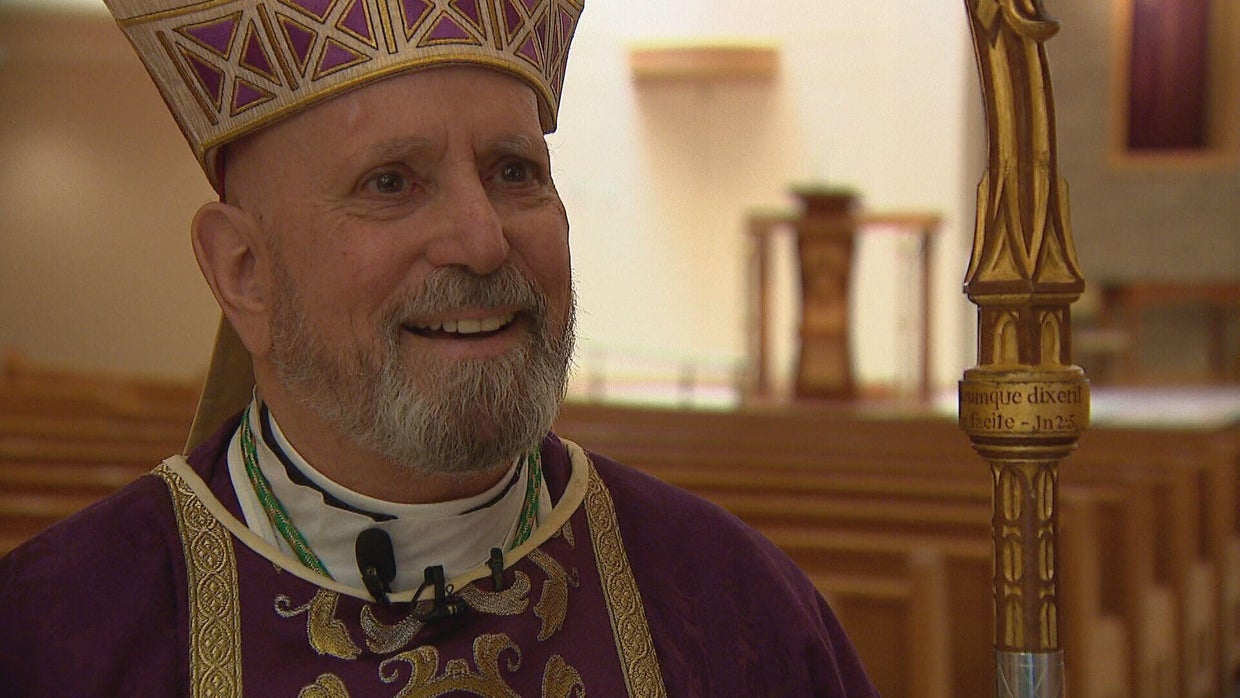
He said he hopes the diocese continues to grow in faith and that he believes Golka will be a good shepherd of that faith.
“The blessing is that my successor is an incredibly good man whose heart is on fire for Jesus Christ,” he shared. “And so, it’s like running a race and handing off the baton and saying, ‘Okay, you run with it.’ And knowing that Archbishop-designate Golka, who will be Archbishop Golka on Wednesday, that he will be one who continues caring for the gospel and making disciples for Christ.”
Golka’s installation as the new archbishop will begin with evening prayers at the CoBank Arena at the National Western Complex on March 24, followed by an Installation Mass the next day. A Mass of Taking Possession of the Cathedral will take place on March 26 at the Cathedral Basilica of the Immaculate Conception.

Sabrina Ortengren had almost no hope when she and her husband Jay sat down with an autism therapy provider in Evergreen in 2022.
All of the specialized schools in their home state of Virginia had deemed their son Ethan’s needs too severe to manage. The family had made the three-day journey west based on reports that autism services in Colorado would be better, but in the upheaval of a move, Ethan had gotten worse and thrown his father into a wall.
After a week in Children’s Hospital Colorado, he was doing better, but she couldn’t imagine anyone would want to work with a 14-year-old with the build of a lineman and a history of aggression.
“We were telling them every awful thing we could think of, so they’d know upfront,” she said.
Rebecca Urbano Powell, who owns Seven Dimensions Behavioral Health, could tell Ethan was going to be a challenging student, but she was confident he could make progress with applied behavior analysis, a therapy focused on breaking down tasks and using repetition to help people with autism learn to function more independently. The technicians working with him had to wear pads at times during the first year to limit injuries when he lashed out, but then, something began to shift.
Ethan began learning to express himself through a combination of short spoken phrases and pointing to icons on a tablet. He developed enough self-regulation that his parents felt safe taking him to restaurants and stores, confident that he wouldn’t bolt into traffic or hurt someone. He started to develop passions, such as building with Legos, riding over “bumpity bump” mountain passes and listening to 1980s hair bands, Jay Ortengren said.
His therapy “changed how our family is able to live,” Sabrina Ortengren said. “It gave him a life, and us with him.”
But the Ortengrens worry that Ethan and others like him in Colorado may not be able to get applied behavior analysis — known as ABA therapy — as easily in the future. The state agency that funds Medicaid is asking lawmakers to lower the rate paid to providers to help balance the budget and to allow more chances to review payments. The department is also seeking a new requirement that behavioral technicians doing most of the front-line therapy get certified, following a federal audit that flagged most bills for the service as questionable.
Kim Bimestefer, executive director of the Colorado Department of Health Care Policy and Financing, said the state has to make changes if Medicaid is going to continue paying for ABA therapy. Colorado’s payments to providers quintupled in six years, reaching $287 million in the fiscal year that ended in June.
Practices owned by private-equity firms that were “exploiting” the lack of standards for autism care accounted for a significant share of that increase, she said.
“Ultimately, evidence-based guidelines and best-practices assessments — which exist in most every other area of care — would enable Medicaid programs and commercial carriers to drive the right care, at the right price, in the right setting, for the right patient outcome for autistic children, thereby curbing the current outrageous, profit-driven provider behaviors,” Bimestefer said in a statement.
Colorado is facing a budget deficit as high as $1.5 billion, making Medicaid cuts almost inevitable, because the program accounts for about one-third of the state’s spending. In the current year, the Department of Health Care Policy and Financing’s budget, the vast majority of which goes to Medicaid, reached $18 billion, including about $10 billion in federal funds.
In addition, the U.S. Department of Health and Human Services’ Office of the Inspector General found Colorado may have overpaid ABA providers by about $78 million in 2022 and 2023, based on a sample of claims it reviewed. The OIG report recommended the state repay almost $43 million to the federal government, though Colorado is contesting the way it calculated that number.

Two sides pointing fingers
The Department of Health Care Policy and Financing and therapy providers have dramatically different takes on the OIG’s findings.
Colorado officials say autism therapy providers, especially those owned by private-equity investors, saw an opportunity to make money in a new field without much federal guidance. Providers say the state failed to provide clear guidance about how they should document their work and is punishing them for its mistakes.
The OIG focuses on whether payments followed Medicaid’s rules and can’t determine if anyone attempted to defraud the program, said assistant regional inspector general Kim Kennedy.
In about one-third of the sample of bills the OIG examined, enough evidence existed to conclude the state shouldn’t have paid because the bills didn’t have the right documentation, the provider didn’t have the necessary credentials, or the child didn’t have a relevant diagnosis recorded. In the remainder, the documentation was too poor to say one way or the other.
Without sufficient records, states have no way of knowing whether providers just didn’t document the high-quality sessions they offered, or if Medicaid has paid for little more than babysitting, Kennedy said.
“You could not tell what’s a good provider, a bad provider or a fraudulent provider from the documentation,” she said. “It’s not just a payment issue. It’s a quality of care issue.”
The OIG found similar problems in Maine, Wisconsin and Indiana, and is working on audits of three additional states, which haven’t been publicly identified. Medicaid has only consistently covered ABA therapy since about 2015, and states may still be learning how to make sure providers are following rules and giving necessary care, Kennedy said.
Urbano Powell, who is president of the Colorado Association for Behavior Analysis, said the Department of Health Care Policy and Financing has itself to blame for the findings, because it didn’t provide clear information about how to document sessions with clients, told providers to use the wrong billing codes for services, and continued to pay claims now flagged as problematic.
The state is sending a message with the cuts that it doesn’t value people with developmental disabilities, she said.
“Budgets are important, but I think humans are more important,” Urbano Powell said.
Bimestefer countered that some providers have pushed families toward more hours than necessary to maximize their payments. Those providers also billed for time that clearly wasn’t eligible, such as when children took play breaks or naps, she said.

All medical specialties have rules for filling out their notes, and ABA providers shouldn’t need the state to tell them that copying and pasting the same summary for each session, as the inspectors found in some cases, wasn’t good enough, Bimestefer said.
“The industry has to evolve,” she said. “In the meantime, we have to hold bad actors accountable.”
Nationwide, Medicaid payments for autism behavioral therapies increased from about $660 million in 2019 to $2.2 billion in 2023, and the number of companies offering the services roughly doubled.
In some cases, states reimbursed providers hundreds of dollars for an hour of therapy, even though the workers providing it had little education beyond high school, according to The Wall Street Journal. The average rate was $61. Indiana was particularly prone to high spending because it reimbursed providers 40% of whatever they billed, rather than setting an hourly rate for therapy.
Certification and reviewing payments
Two of Colorado’s proposals, increasing payment reviews and requiring behavior technicians to get certified, appear targeted at problems the OIG report found. The state pays board-certified behavior analysts to assess children, develop care plans and supervise the technicians doing much of the hands-on work with clients.
Currently, Colorado doesn’t require specific credentials for behavior technicians.
In December, the department asked the state Medical Services Board to pass an emergency rule requiring the roughly 2,000 technicians without credentials to complete a certification. About 6,600 technicians had already completed the process, which includes about 40 hours of coursework, on-the-job training and a test. The board ultimately didn’t pass the rule, but the department plans to try again this year.
The credentialing is one part of a rule to create regulations specific to ABA, said Adela Flores-Brennan, Medicaid director at the Department of Health Care Policy and Financing. Right now, providers operate under the rules for services to screen and treat young children, she said.
“It’s mostly about who can provide the services, what services can be billed,” she said of the proposed regulations.
Most providers support requiring technicians to get certified, but they need a grace period so that new hires can complete their training while they work, said Will Martin, a board-certified behavior analyst at Soar Autism Services, which has 15 locations in the Denver area and one in Colorado Springs.
The certification requirement would have little impact on the state’s budget. Legislative staff estimated that increasing reviews before and after payments to ABA providers go out could save about $10 million in the coming fiscal year, though.
Unlike prior authorization, which happens before the patient gets a service, pre-payment review occurs after the service but before reimbursement, while post-payment review could force providers to pay Medicaid back. Pre-payment reviews would likely be the bigger problem, because they could mean providers wait as long as six months for reimbursement on services they already provided, Martin said.
Medicaid currently does pre-reviews of payments for non-emergency medical transportation because of fraud in that field, and the pauses for review are typically less than three months, Flores-Brennan said. Post-payment review takes longer because the state has to dive into medical records, she said.
Legislative staff also said the state general fund could save about $2.7 million in the coming year by lowering Medicaid’s rate from 100% of the average paid by comparable states to 95%. The state would pay about 47 cents less for time spent assessing a child and $8.49 less for ABA therapy delivered in a group.
Colorado had raised that rate in 2023 because nine providers had left the state, and lawmakers were worried about access, Martin said. Lowering it risks creating the same problem again, he said.

‘Fearful for what’s going ot happen’
Urbano Powell said she already had to stop taking new clients covered by Medicaid because the $80 per hour rate doesn’t cover her costs, especially since she can’t bill for time supervising technicians or working with parents, which takes up about half of her day.
School districts pay for the therapy that full-time clients such as Ethan receive during classroom hours, but Medicaid or private insurance pays for any services outside that time, she said.
“I can barely support myself and my husband at this point,” she said. “I really am fearful for what’s going to happen to our Medicaid families in Colorado.”
When Colorado raised its rates in 2023, the group of comparable states included Nebraska, despite the department’s request to exclude it as an outlier, Bimestefer said. Nebraska has since lowered its rates, and states are adjusting after overpaying for a time, she said.
The number of providers increased steadily from 88 in fiscal year 2017 to 373 in fiscal year 2024, and pushing providers to stop prescribing more hours than necessary will free up sessions for additional children, Bimestefer said.
“We’ll be fine,” she said.
While a few providers probably are overprescribing therapy or providing less care than they bill for, the majority are trying to help kids reach their potential based on their best clinical judgment, Martin said. The state should focus on auditing outlier providers, such as those giving every client 40 hours of therapy each week, rather than reviewing payments for everyone or cutting rates, he said.
“A rate cut is something that is like a sledgehammer,” he said.
The state also needs to weigh cutting costs now against saving money in the future by allowing children to function more independently when they grow up, Martin said. More-intensive therapy before children turn 5 increases the odds they won’t need as much support as adults, though obviously not everyone will be able to hold a job and live on their own, he said.
“Their investment in children early in their developmental window would literally pay dividends over time,” he said.
While Ethan, who is now 18, probably will need some support throughout his life, he has far exceeded their initial goals of learning to pay attention for five minutes and not harming himself or others, Sabrina Ortengren said.
Jeffco Public Schools will continue to pay for his therapy until he turns 21, and Urbano Powell has started talking to his parents about gradually introducing skills he could use in a supported work environment.
That seemed impossible four years ago, when they moved to Colorado in a last-ditch effort to keep him out of an institution, she said.
“We’re, probably for the first time, excited to see where his future goes,” she said.
Sign up for our weekly newsletter to get health news sent straight to your inbox.


UPDATE: Plane found in swamp near Cleco lake, RPSO says

Maine Maple Sunday Weekend draws visitors to 100-plus sugarhouses statewide

What’s on Maryland lawmakers’ deadline day to-do list

Sweet 16 crossroads for Nimari Burnett journey to Michigan basketball

Big ballot mistakes: Mass. rent control, tax cut proposals would backfire – The Boston Globe

Florida High School Football Rankings: Top 25 teams – Oct. 21

How old is Bo Nix? What to know about Oregon quarterback ahead of 2024 NFL Draft

Cleary's 21 help Le Moyne down Central Connecticut State 69-64 in OT

99th annual Pony Swim held in Virginia

Indiana Members Credit Union announced as new anchor tenant at Bottleworks District

Video: Plane Collides With Vehicle at LaGuardia Airport

As cattle herds shrink and beef prices rise, investors back AI cow collars

French elections: Paris stays left as far right makes mixed gains

ICE officers set to deploy to airports as delays mount, border czar Homan confirms

Video: ICE Agents Will Be Deployed to U.S. Airports, White House Confirms
-

 Detroit, MI4 days ago
Drummer Brian Pastoria, longtime Detroit music advocate, dies at 68
-

 Oklahoma1 week ago
Family rallies around Oklahoma father after head-on crash
-

 Georgia1 week ago
How ICE plans for a detention warehouse pushed a Georgia town to fight back | CNN Politics
-
 Science1 week ago
Federal EPA moves to roll back recent limits on ethylene oxide, a carcinogen
-

 Alaska1 week ago
Police looking for man considered ‘armed and dangerous’
-

 Movie Reviews4 days ago
‘Youth’ Twitter review: Ken Karunaas impresses audiences; Suraj Venjaramoodu adds charm; music wins praise | – The Times of India
-

 World1 week ago
Thousands march worldwide in solidarity with Palestine, Iran on al-Quds Day
-

 World1 week ago
Jamal Rayyan, the first face of Al Jazeera, dies at 73