West
Dems who praised cop for killing J6 protester now condemn ICE for shooting MN agitator

NEWYou can now listen to Fox News articles!
Democrats have come out against federal law enforcement’s use of lethal force following shootings involving federal immigration officials in Minneapolis and Portland last week, with some going so far as to accuse them of murder.
However, their attitudes about lethal force after a U.S. Capitol police officer killed Ashli Babbitt paint a very different picture of these Democrats’ views on police using lethal force.
As recently as this year, Democratic House Minority Leader Hakeem Jeffries and Senate Minority Leader Chuck Schumer, who have rebuked Trump administration arguments that shootings involving federal immigration officials last week were justified, also rebuked a multimillion-dollar settlement awarded to the family of Ashli Babbitt earlier this year, calling it a “slap in the face” and a “sickening message to police.” Babbitt was shot and killed by a U.S. Capitol Police officer during the Jan. 6 riot as she was pushing and beating against a door that led into the Speaker’s Lobby just outside the House chamber along with a mob of others.
Several other Democrats who supported law enforcement’s actions on Jan. 6, 2021, have gone off on federal border patrol officials following the Portland and Minneapolis shootings last week, with some going so far as calling them murderers.
VANCE DOUBLES DOWN ON ‘DISGUSTING’ PRESS AS NEW FOOTAGE FROM ICE SHOOTING SURFACES, ACCUSES OUTLETS OF ‘LYING’
Representative Dan Goldman, D-N.Y., speaks during a House Oversight and Accountability Committee hearing in Washington, D.C. (Tierney L. Cross/Bloomberg via Getty Images)
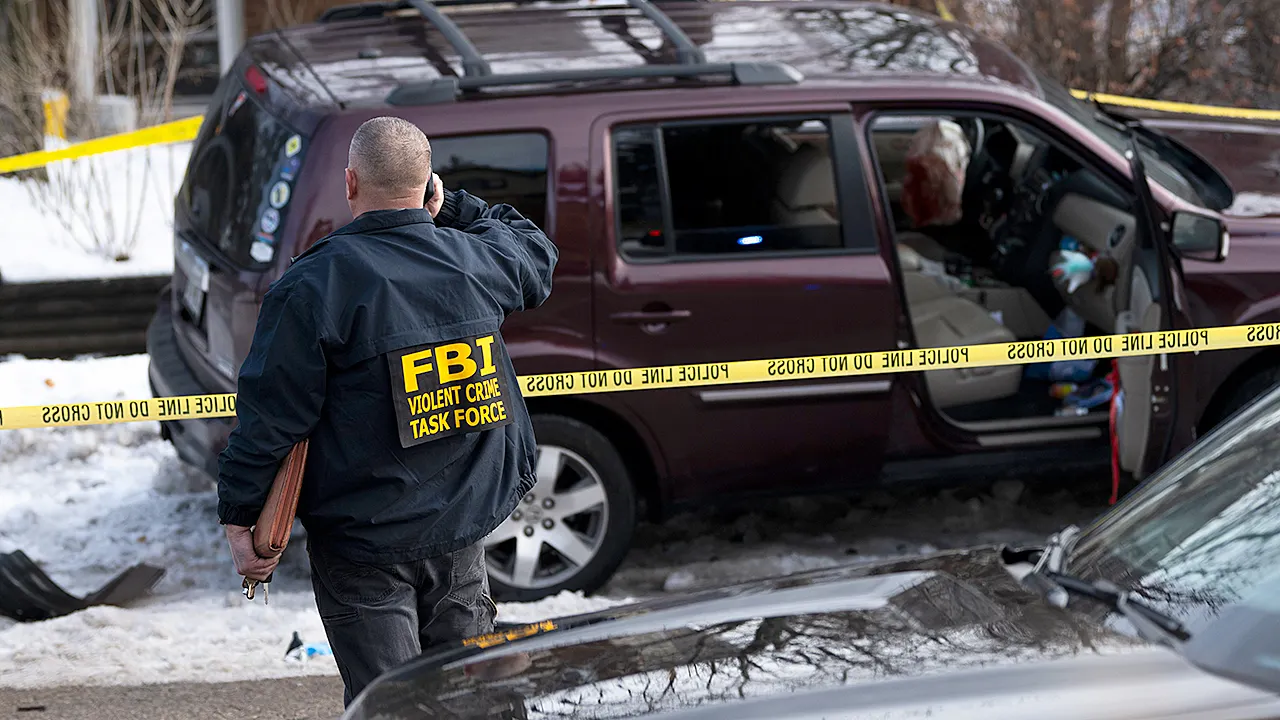
In Minneapolis, a woman accused of interfering with federal deportation efforts was fatally shot by ICE in Minneapolis, while an illegal immigrant couple who DHS said were deeply involved in criminal activity were shot by CBP agents in Portland after the driver of the car tried to ram his vehicle into agents.
Rep. Dan Goldman, D-N.Y., referred to the actions of ICE in Minneapolis as “murder” in a post on X. However, just days before, on the fifth anniversary of the Jan. 6 riot, Goldman reintroduced legislation to “honor those who defended the capitol” when a mob took it over in 2021.
Rep. Primal Jayapal, D-Wash., who has claimed to have been very close to Babbitt when the Speaker’s Lobby was trying to be breached, has chastised Republicans who she believes have failed to adequately honor U.S. Capitol Police for their work on Jan. 6, 2021. “They were begging for protection from Capitol Police. Yet they refused to honor Capitol Police there[after], refused to accept that it was real,” Jayapal told Teen Vogue in 2022.
Meanwhile, after the shootings last week, Jayapal too accused federal border patrol officials of committing murder, telling local news the incident “looked like outright murder” to her eyes.
WHY THE FBI CAN EXCLUDE STATE AUTHORITIES FROM MINNESOTA SHOOTING PROBE
Rep. Pramila Jayapal talks at a press conference on Capitol Hill. (Kevin Dietsch/Getty Images)
Reps. Jamie Raskin, D-Md., and Jason Crow, D-Colo., were also among those Democrats praising Capitol Police for their actions on Jan. 6, 2021 last week, while condemning the federal officer involved in the shooting that occurred as well. Crow complained that a plaque honoring U.S. Capitol Police officers who protected people on Jan. 6 was not hung up because of GOP obstruction, but was unafraid to condemn federal officials for “kill[ing]” someone. Raskin, who has also condemned the multimillion-dollar settlement to the Babbitt family, said he was “sickened” at ICE agents for “killing” a woman in Minneapolis.
Raskin’s colleague from Oregon, Rep. Suzanne Bonamici, D-Ore., demanded on X last week that federal immigration officers be held accountable for their involvement in the Portland shooting. She referred to the illegal immigrant gang members shot as “victims,” even though they tried to ram their car into officers. However, after the Capitol riot in 2021, Bonamici regularly praised the “heroism” of the U.S. Capitol Police and suggested they should be awarded the Congressional Medal of Honor.
Rick Wilson, co-founder of the anti-Trump Lincoln Project, sought to explain the discrepancy between Democrats’ reaction to Babbitt’s shooting versus the ICE shootings in a post on X, arguing “Babbitt was a domestic terrorist,” and the victim killed in Minneapolis, Renee Good, “was a mom, murdered by ICE.”
When reached for comment, Raskin echoed Wilson’s sentiment, arguing two different investigations found the Babbitt shooting was “entirely reasonable and appropriate.” He added that anyone taking the position that Good was treated properly would also have to agree that hundreds of protesters on Jan. 6, 2021 “could have been legitimately shot in the face three times.”
Rep. Jamie Raskin, D-Md., speaks to reporters outside the House Speaker’s office inside the U.S. Capitol building. (Anna Moneymaker/Getty Images)
CLICK HERE TO DOWNLOAD THE FOX NEWS APP
“Without the benefit of any investigation, Trump and his Administration have labeled Ms. Good, a U.S. citizen and 37-year-old mother of three, a ‘domestic terrorist’ and immediately excused her killing after she was shot three times at point-blank range, not while charging at the police but while trying to get away from them,” Raskin said. “In both cases, the Trump Administration is telling the American people to ignore the law and the evidence of their own eyes.”
Raskin also demanded in his comments to Fox News Digital that, following the Minnesota ICE shooting, Homeland Security Secretary Kristi Noem “must appear to answer questions” before lawmakers on Capitol Hill.
During the subsequent days following last week’s shooting, U.S. Border Patrol Chief Mike Banks slammed rhetoric from left-wing politicians for emboldening folks to do things like ram their cars into federal immigration officials.
“The rhetoric they are putting out. The constant lies they are putting out to their constituents – saying things like kidnapping, disappearing, it’s encouraging these people to continue violating the law. They are actually putting their constituents in danger.”
Read the full article from Here



The Oregon Supreme Court on Thursday declined to review the Oregon Court of Appeals’ decision upholding Multnomah County’s ban on flavored tobacco and nicotine products.
Legal challenges have so far delayed the ordinance from taking effect since it was passed four years ago. It was not immediately clear when the ban would go into effect.
“Flavors are one of Big Tobacco’s biggest tricks to hook the next generation of Oregonians on their deadly products,” Christina Bodamer, who leads the Western states region of the American Heart Association, said following the court’s decision.
The Board of County Commissioners originally approved the ordinance banning flavored tobacco and nicotine products in December 2022 to take effect Jan. 1, 2024. But the ordinance hit a roadblock: a court challenge by the 21+ Tobacco and Vapor Retail Association of Oregon, e-cigarette retailer No Moke Daddy LLC, and vape shop owner Paul Bates.
It has been working its way through the state court system since. The Multnomah County Circuit Court upheld the ban in September 2023. The state Court of Appeals continued the pause on implementation February 2024, before upholding the ban in an April 2025 decision. The Supreme Court’s denial of review marks the end of the saga.
The Supreme Court rejected a challenge to a similar restriction in Washington County in May. That now sets up both ordinances to go into effect, which will together ban flavored tobacco and nicotine for one-third of Oregonians. A similar ban failed in the Oregon Legislature in 2025, dying in committee.
Tobacco use is the top cause of preventable death and disease in Oregon, according to the Oregon Health Authority. More than 8,000 Oregonians die from tobacco use each year.
Supporters of the ban argue that flavored tobacco acts as a gateway for underage use. According to Flavors Hook Oregon Kids, a coalition of more than 60 organizations that support the ban, 81% of Oregonian kids who’ve used tobacco started with flavored products. And flavored products are much more popular among kids and young adults than older adults, OHA says.
Richard Burke, executive director of the 21+ Tobacco and Vapor Retail Association of Oregon, tells WW the group is disappointed that the Supreme Court did not take up the case. He argues that banning flavored tobacco “has effectively granted a monopoly to the black market,” where flavored products are often laced with more dangerous substances.
“We agree with the goal of keeping these products out of the hands of minors,” Burke says. “But this is an overcorrection that will result in unintended consequences as has been shown by attempts to institute flavor bans in other parts of the country.”
Willamette Week’s reporting has real-life impact that changes laws, forces action by civic leaders, and drives compromised politicians from public office.
Support WW.
-
Missouri1 minute ago
Missouri Lottery Powerball, Pick 3 winning numbers for July 13, 2026
-

 Montana7 minutes ago
Missoula and Western Montana neighbors: Obituaries for July 14
-

 Nebraska13 minutes ago
Cyclospora outbreak reaches Nebraska as health officials investigate source
-

 New Hampshire25 minutes ago
Thousands Of Sunflowers Hit Peak Bloom For Limited Time At Coppal House Farm In Lee
-

 New Jersey31 minutes ago
NJ fines Sen. Wimberly $24K after use of donations for hotels, airfare
-

 New Mexico37 minutes ago
New Mexico wants to get orphaned wells plugged — but did contractors get the word?
-

 North Carolina43 minutes ago
North Carolina attempted murder suspect arrested in Myrtle Beach
-

 North Dakota49 minutes ago
Families allege babies were switched at Grafton hospital

