Colorado
As new tax credits reroute money from budget, lawmakers brace for less certain budget growth


Even as Colorado enacts drastic changes to its tax policy, economic forecasters still expect the state to hit the constitutional cap on revenue collections in coming years.
But, the state could flirt with falling below the cap, set by the Taxpayer’s Bill of Rights, for the first time in half a decade during the adjustment period. The TABOR cap grows based on population growth and inflation, and money collected over it needs to be refunded to taxpayers.
Greg Sobetski, the chief economist for the Legislative Council Staff, didn’t raise any red flags during a forecast Thursday but acknowledged “a new set of budget circumstances” for state officials to navigate after years of explosive growth in state revenues. That growth resulted in billions of dollars being refunded to taxpayers in recent years, most notably through direct payments in fall 2022 and through tax returns this year.
Lawmakers this past legislative session, however, passed more than 30 bills either adjusting or creating new tax credits, according to a tally by the governor’s office. They include expansions to the earned income tax credit for the lowest-income Coloradans, senior housing tax credits and, if certain economic triggers are met, a new credit potentially worth thousands of dollars to families.
Collectively, the credits will reroute hundreds of millions of dollars — if not more than a billion — per year in coming years from state coffers, though it still ends up Coloradans’ wallets. In the next fiscal year, which begins July 1, the credits could also push state revenues below the TABOR cap. Economists for the legislative branch and governor’s office both expect revenue to remain above the cap, but Sobetskis’s office, in particular, warned a routine margin of error that comes with predicting the future could drop that below the TABOR cap.
Legislative forecasters expect $1.4 billion in revenue collected above the revenue cap this fiscal year, which ends July 1, will need to be refunded. They expect it to drop to about $328 million next fiscal year before bouncing back to $1 billion-plus for the fiscal year that begins July 1, 2025.
“Even without a recession, you could end up in an environment, easily, within the realm of normal forecast error where state revenue is under the (TABOR) cap,” Sobetski said.
Forecasters for the governor’s office were more optimistic and still expect nearly $700 million in money over the cap will need to be refunded for the next fiscal year. Exact TABOR refunds for the upcoming tax year won’t be set for months still and depend on future forecasts.
Overall, forecasters expected continued economic growth and lower chances of a recession in the immediate term. But, economic activity is being stymied by persistently high interest rates. State economists had originally expected multiple interest rate cuts from the Federal Reserve this year, and when those didn’t materialize, they revised state economic growth expectations down, Sobetski said.
“Because we’re expecting interest rate cuts to happen later, we’re not expecting the interest rates to accelerate as quickly,” he said.
Stay up-to-date with Colorado Politics by signing up for our weekly newsletter, The Spot.



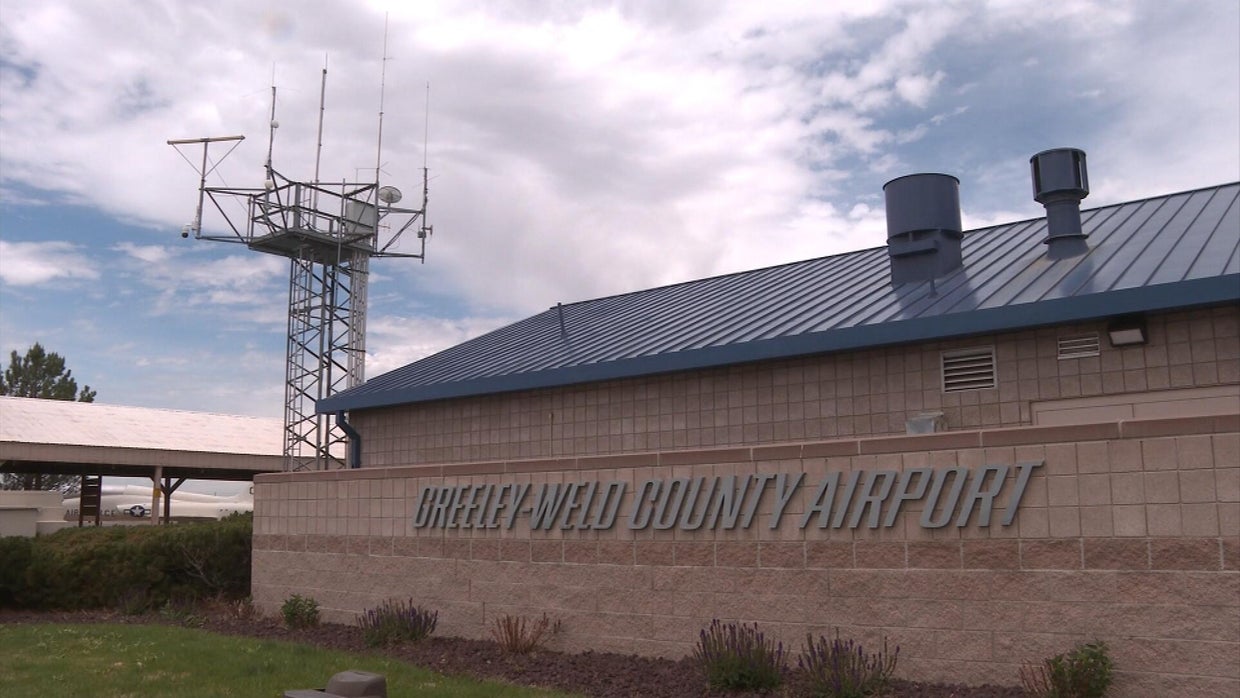
As Weld County and Northern Colorado continue to grow, leaders at the Greeley-Weld County Airport are preparing for an expansion they say will position the facility as a major transportation and economic hub for the region.
Airport director Cooper Anderson said the airport has reached a point where additional growth on its current footprint is no longer possible.
“We have reached our capacity, here, as far as growth on the south side of the airport,” Anderson said.
The airport is now developing land northeast of its existing facilities to accommodate larger aircraft and future aviation services.
“We needed to find a new area to expand and allow larger corporate jets, and eventual charters and commercial service down the road,” Anderson said.
Construction is already underway or completed on several infrastructure projects, including expanded taxiways and sites for future hangars. Anderson said the area being developed was farmland just a few years ago.
“It used to be corn fields, but since then we have ran water, sewage and gas is coming next week,” Anderson said.
The expansion effort has been supported by a combination of local and federal funding. Anderson noted that approximately $850,000 in federal funding was previously secured to develop a master design and long-term vision for the airport, with local money helping execute the plan. Additional federal tax dollars in recent years also helped fund taxiway expansion projects that have prepared the airport for future growth.
Now, Colorado leaders in congress are seeking millions more in federal funding to continue that momentum.
Rep. Gabe Evans, who represents Colorado’s 8th Congressional District, said the airport plays an important role in one of the nation’s busiest aviation corridors.
“The northern Front Range of Colorado is one of the densest airspace systems in the nation,” Evans said.
Before entering Congress, Evans served as a Black Hawk helicopter pilot out of Buckley Air Force Base and frequently flew throughout Northern Colorado. He said improvements at the Greeley airport would have benefits extending well beyond Weld County, noting other airports are overcrowded to the point of causing some nearby residents to complain of sound.
“It really does impact the entire Front Range,” Evans said.
Evans is working to secure additional federal funding that would help construct and staff an air traffic control tower in Greeley while supporting continued infrastructure improvements.
“When those bills are passed and sent to the president’s desk, writtten into those bills as a line item is several more million dollars to continue to expand the infrastructure at the Greeley airport,” Evans said. “So you can actually start to bring business flights into the Greeley airport and pull a lot of that traffic off of some of the overburdened airports in the metro area.”
Anderson said federal support demonstrates broad confidence in the airport’s future as a hub for business and travel.
“Having the addition of Congressman Evans’ office, and their congressional funding, I think shows how much everybody believes in this,” Anderson said.
That confidence is already attracting attention from the private sector, Anderson said, with major companies expressing interest in locating operations at the airport.
“Greeley’s population is booming. Weld County’s population in general is growing,” Anderson said.
Airport leaders view the expansion as a way to support economic development across the region.
“By us growing, and expanding our services, we are also helping the city of Greeley, Weld County and surrounding Northern Colorado communities and being able to grow economic opportunities for them,” Anderson said.
As the airport prepares for future growth, officials have also upgraded emergency response capabilities. The airport recently acquired two fire trucks that will improve its ability to respond to incidents involving larger aircraft. The vehicles also allow firefighters to use newer, non-toxic firefighting foam, replacing older products that posed environmental concerns.
Airport officials say those improvements will help ensure the facility can safely accommodate larger aircraft and increased traffic in the years ahead.
Colorado
‘We couldn’t do this in another place’: Horror film looks to make Southern Colorado the next Hollywood

COLORADO SPRINGS, Colo. (KKTV) – It’s commonly understood that many of the best blockbusters are made in Southern California but a group of local filmmakers wants to prove Southern Colorado can be a destination for both aspiring and established auteurs.
Shooting began in Fountain this spring on ‘Devil In The Trunk’, a new horror film set in Colorado’s eastern plains.
“Devil In The Trunk is about a small-town woman who encounters a mysterious traveler driving this car right here who claims to have the actual devil trapped in the trunk of her car,” executive producer Leon Kelly said. “As you can imagine, when the devil comes to your small town, terrible and dangerous things can happen.”
Director, writer, and producer Evan Alderson said they wanted to make the film as Colorado as possible.
“We ended up finding a local Colorado writer, and we ended up collaborating to come up with this idea that could act as a love letter to Colorado,” he said.
While Colorado may be most famous for its soaring mountain peaks, Kelly said the plains were a much more fitting setting.
“It’s both beautiful and dangerous at the same time,” he said. “One of the underlying themes is the desolation and the loneliness and how vulnerable some folks can be in small towns and out in rural areas.”
Kelly said not only is the film meant to showcase Colorado’s natural beauty, but also to showcase the talent of the people who live there.
“It’s a proof of concept, to show that we have not only the talented people but the infrastructure that can support really high-quality, independent films,” he said. “We know we’ve got great filmmakers here, we know we have really talented craftspeople here, but they don’t necessarily have the opportunities to work on something like this on this scale that’s a narrative film.”
With the Sundance Film Festival set to make its debut in Boulder in 2027, Kelly said people are asking new questions about what Colorado can do for those looking to tell stories on the big screen.
“Can Colorado become a hub? Can that be a place, a destination where others come? Can that be a place where our own filmmakers can come into their own?” he said.
Alderson said once the film is finished they will put it out on the film festival circuit, and even look for distribution.
“That will look like a theatrical release, potentially, in an ideal world, or it will be straight to streaming services like Amazon, Hulu, that type of stuff,” he said.
Copyright 2026 KKTV. All rights reserved.

The now 19-year-old victim, who Brent Metz is accused of shooting in the face, took the stand in Metz’s trial Thursday. Metz, a former town of Mountain View councilman, was in the second day of his trial hearings.
The teenager, who has recovered well physically from the shooting back in September of 2024, told the story of what led up to the shooting, then said he blacked out for a period after he was shot.
The young man, Jack (CBS Colorado is not sharing the victim’s last name) said he and his younger friend went to ask for permission to take pictures at a scenic home near Conifer. At first, they parked outside the gated driveway and tried to figure out how to contact someone there. They then hopped a low fence and went up to the house.
Jack said he had difficulty locating a front door on the home, but the large property also had a garage and barn. They heard music coming from the barn, which is a common practice for people with animals to leave music playing to calm animals while away.
“We decided to knock on the barn door and then after a couple a minutes we decided to go back down the driveway,” Jack said in court.
The two friends went back over the fence and moved the car to a spot not blocking the driveway along the right-of-way at the road. Minutes later, Brent Metz drove up in his black GMC pickup truck, blocking their car in. Metz got out. Jack testified that he raised his hands at some point, a claim the defense questioned in cross examination. He related that he was getting out to try to greet the person getting out of the truck.
“I just (got) the door open I kind of turned to open my door and then turned to get out, and I saw someone get out, and then it was black,” Jack said.
The victim soon awoke bleeding and injured. “I looked down and I thought I was going to die. So I said that a couple times,” Jack testified.
“My mouth was on fire and it felt like my upper lip was gone, and I could taste little fragments,” Jack told the court. Jack’s friend and Metz tried to help him out of the car.
“The one who shot me was trying to help me get out of the car.”
Soon after, Metz left his side.
“He helped me sit down, and then he walked away,” Jack said.
“I started to realize I needed to stay as calm as I could, and when I got out of the car, I sat down, but I was very anxious,” Jack recalled.
Later, the victim had to have surgery in order to have the bullet fragments removed from his face. One of the fragments was more than an inch in size. He had trouble breathing through his right nostril due to the injuries to his nose. His eye was blackened for a long time, and a tooth was shattered.
Jack did not remember Metz saying much.
The testimony followed hours of testimony from a gun testing expert who looked at the weapon at the request of the prosecution. Derek Watkins is an engineer who said he has seen many claims of weapons not working properly.
“My experience is that, if you manufacture a firearm, at some point in time, it’s going, you’re going to run across the claim that it behaves in a defective manner,” Watkins said.
Metz’s defense is centered on a claim that the Sig Sauer P320 he had fired on its own without Metz pulling the trigger.
“There was nothing about the gun through the testing or through the examination of the components indicating it would function any other way than it was designed and left the factory,” Watkins said.
The defense had little luck getting Watkins to agree the gun could fire on its own, but did try to point out to the jury in questions that Watkins has previously testified in civil litigation about the gun’s integrity on behalf of the manufacturer.
The case continues Friday when it could wrap up. Metz faces four charges, the most serious of which is second-degree assault, but also two menacing charges and one of illegal discharge of a firearm.
-

 Illinois1 minute ago
Real estate sales in Peoria, Tazewell, Woodford counties for May 30, 2026
-
 Indiana8 minutes ago
The newest spots to eat, drink and shop along the coast of Indiana and southwest Michigan
-

 Iowa11 minutes ago
Democrats put a ‘bullseye’ on Iowa, eager to turn the red state purple
-

 Kansas23 minutes ago
Where to watch Kansas City Royals vs Texas Rangers: TV channel, start time, streaming for May 30
-

 Kentucky26 minutes ago
It’s National Mint Julep Day! How many are served during Kentucky Derby weekend?
-

 Maryland31 minutes ago
Kittleman breaks with Republicans, the party of his father
-

 Louisiana31 minutes ago
As Seas Rise, Louisiana Faces a Choice: Plan for Movement or Let Crisis Decide – Inside Climate News
-

 Maine38 minutes ago
25 best places to eat for cheap across Maine

