California
Twister, California’s first of 2025, touches down near Shasta County after powerful storm


How to remember tornado watch vs. tornado warning
Here’s the most Indiana way possible to remember the different tornado terms – a pork tenderloin sandwich.
A strong thunderstorm birthed a rare tornado on Friday evening near Paynes Creek in Tehama County, close to the Shasta County border, according to meteorologists.
Scientists will study video and weather information where the twister touched down in the wilderness, about 8 miles northeast of Dairyville and 10 miles east of Cottonwood, the National Weather Service said.
The tornado developed between 5:18 and 5:21 p.m., prompting the weather service to issue a tornado warning for both counties by 5:22 p.m. Reports came to the agency almost immediately from a weather “spotter,” and webcams caught the event as it happened, said meteorologist Johnnie Powell at the weather service’s Sacramento branch.
As of 8: 45 p.m., there were no reports the twister injured anyone, or that it damaged any homes or businesses, according to the Tehama County Sheriff’s Office and Office of Emergency Services.
The North State has the dubious honor of having the first tornado of 2025 in California, possibly in the whole country, Powell said.
It was also the latest of at least 12 tornadoes spotted in Tehama County in 76 years, according to weather experts.
Here’s what we know about Friday’s tornado, and other North State twisters.
How a tornado grew over Tehama County
The thunderstorm that brought hail and heavy rain to the northern Sacramento Valley Friday evening, also triggered the twister, Powell said.
Tornadoes form when air, blowing in different directions, rises up in a thunderstorm and begins to spin, according to the National Center for Atmospheric Research.
The storm dissipated late Friday evening, Powell said, and the Redding area should be mostly dry this weekend and next week, with sunny skies.
Note to readers: If you appreciate the work we do here at the Redding Record Searchlight, please consider subscribing yourself or giving the gift of a subscription to someone you know.
How big and fast was the tornado?
Meteorologists have yet to learn how strong Friday’s tornado was, and how fast the wind was, Powell said.
The weather service could announce those answers as soon as Saturday, but first scientists need to look at the extent of the damage in daylight, Powell said: Are there overturned trees? What does the tornado’s path on the ground look like? Those things will give scientists the clues they need to come up with those answers.
“Even in Kansas, you have to wait” for tornado details, Powell said.
How many tornadoes formed over Northern California?
A tornado forming over the North State is a rare event, but not unheard of.
Tehama County had the most tornadoes — a total of 11 twisters — between 1950 and 2024, according to Golden Gate Weather Services consulting firm. Two of those tornadoes formed at the same time of year: Jan. 4, 2021. The most recent tornado reported by Golden Gate was on April 25, 2021.
All three twisters in 2021 were very weak (EF0 on the Enhanced Fujita Scale). That means the tornadoes’ winds ranged between 65-85 mph, according to the weather service. At those speeds, EF0 tornadoes may knock a few shingles off a roof, damage gutters and push loose items like lawn furniture around. Compare that to the strongest tornadoes (EF5), with winds moving at more than 200 mph.
During the same 75-year period, one tornado was spotted in Siskiyou County and four in Lassen, but none spun their way into Shasta or Trinity counties, Golden Gate reported.
The county with the most tornadoes sightings (49) between 1950 to 2024 is also one of the most densely populated. It was Los Angeles County.
Please refresh your browser for the latest radar loop.
Where to read more about tornadoes in California
To learn more about tornadoes, see the weather service’s tornado information website at weather.gov/ffc/torntext and UCAR’s tornado website at scied.ucar.edu/learning-zone/storms/how-tornadoes-form.
Go to Golden Gate Weather’s website to read a history of known tornadoes in California ggweather.com/ca_tornado.
Jessica Skropanic is a features reporter for the Record Searchlight/USA Today Network. She covers science, arts, social issues and news stories. Follow her on Twitter @RS_JSkropanic and on Facebook. Join Jessica in the Get Out! Nor Cal recreation Facebook group. To support and sustain this work, please subscribe today. Thank you.



It lurks ominously beneath California’s many natural wonders, a reminder that nothing in this landscape is truly permanent.
It’s been described as “the mother of all earthquake faults,” the source of both our geological birth and, perhaps, our ultimate undoing.
But the most unnerving thing about the San Andreas fault these days may be its silence. It’s a mystery scientists are still trying to unlock.
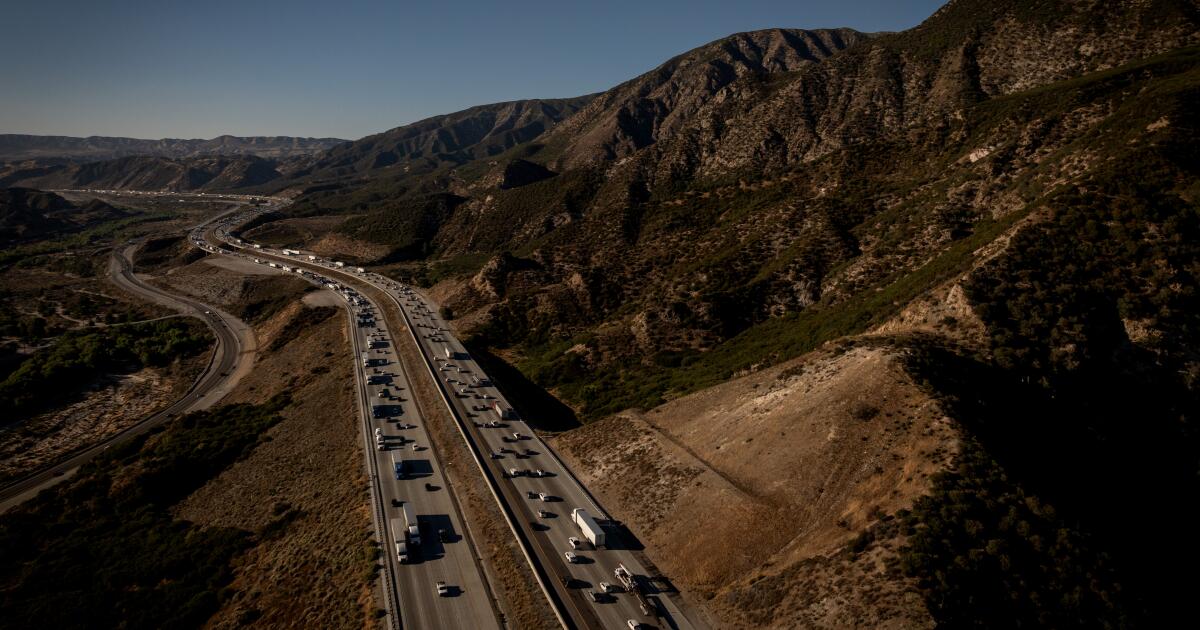
The San Andreas is central to any discussion of California. It’s the massive 800-mile spine of the state, trundling up the Coachella Valley to the San Gabriel Mountains, and pushing along the edge of Silicon Valley to beyond the Golden Gate.
There is no simple answer for why California’s longest fault, responsible for some of America’s most powerful earthquakes, has produced so few in the last century.
But it is clear that the quiet period is only increasing strain on the San Andreas, as well as on the state’s second-longest fault, the San Jacinto.
A new study underscores the concern. Researchers estimated that key sections of the fault in Southern California are at their highest level of tectonic strain in the last 1,000 years.
The San Andreas, in other words, is locked, loaded and inevitable.
A red-hot San Andreas
Tectonic stress on these sections of the San Andreas and San Jacinto faults is high — shown in red — a product of no significant quakes on them for more than a century. At the Cajon Pass, sections of the faults are at their highest strain in 1,000 years, calculations suggest.
Average tectonic stress, in megapascals
Liliane Burkhard / University of Bern / University of Hawai’i at Manoa; Statewide California Earthquake Center Community Fault Model
Sean Greene LOS ANGELES TIMES
Ticking tectonics
There are generations of Californians who have never experienced the fury of the San Andreas.
The fault was responsible for a megaquake that ripped through the then-sparsely populated state in 1857 — an event that, if repeated today, would reap mass destruction.
In 1906, “a crack in the edge of the world,” as author Simon Winchester described it, flattened San Francisco.
Modern Californians have been forced to make do with Hollywood’s CGI versions of the fault, which cast it as one of our state’s darkest villains.
But sooner or later, scientists say, California’s earthquake faults will rupture in a way not seen in the modern era. While California has seen sizable temblors since the great San Francisco quake of 1906, the state’s faults are capable of producing intense shaking over a much larger area than seen during more modern events such as the Sylmar, Loma Prieta or Northridge quakes.
“We keep accumulating that earthquake energy, and it has to be released. And the only way it gets released is through large earthquakes,” said U.S. Geological Survey geologist Kate Scharer, one of the new study’s co-authors. “The small ones don’t really do it.”

A section of the California Aqueduct crisscrosses the San Andreas fault dozens of times.

-
Share via
The latest study, published last month in the Journal of Geophysical Research: Solid Earth, set out to create a model that calculated the seismic strain on three key segments of the San Andreas and San Jacinto faults where they intersect at the Cajon Pass in San Bernardino County.
The model is based on a number of factors: the estimated timing of earthquakes on the faults over a record of the last 1,000 years; satellite observations of how fast tectonic plates are moving; and estimates of how rigid Earth’s crust is, which determines how much stress can be accommodated and then released, Scharer said.
The computer model “found that tectonic stress has now reached higher levels than at any point in that entire record. From the model, we see that the conditions that historically preceded large joint ruptures crossing both fault systems are now approaching,” said Liliane Burkhard, the lead author of the study and a scientist at the University of Bern in Switzerland and the Hawaii Institute of Geophysics and Planetology at the University of Hawaii.
The last major temblor to strike urban Southern California, the magnitude 6.7 Northridge earthquake of 1994, resulted in severe damage and the deaths of about 60 people. But it was also mostly limited to a relatively small area of Los Angeles County.
By comparison, a hypothetical magnitude 7.8 earthquake on the southern San Andreas would simultaneously bring violent shaking to L.A., Orange, Riverside, San Bernardino, Ventura and Imperial counties and could result in 1,800 deaths, according to a U.S. Geological Survey estimate published in 2008.
The findings of the latest study don’t change the overall expectation of a big earthquake hitting Southern California. But they underscore the persistent risk — as well as the possible scale of the disaster.
There’s a 60% chance of a magnitude 6.7 or greater earthquake striking the Los Angeles region by 2045, according to USGS estimates published in 2015. There’s about a 1 in 5 chance of such a quake striking on the San Andreas fault within L.A. County and the Inland Empire.
Why the drought?
The decades-long relative earthquake drought “is an unusually long interseismic period, and stress has been accumulating continuously throughout,” Burkhard said.
The authors created a 28-second animation, showing how tectonic strain increased along the faults over the last 1,000 years. Big earthquakes then release that strain, before the cycle starts again.

This animation condenses 1,000 years of the Cajon Pass’s earthquake history into 28 seconds. Tectonic stress, shown in shades of orange and red, builds up along three fault segments. Following an earthquake, that stress is released. (Liliane Burkhard / University of Bern / University of Hawai’i at Manoa)
The study calculated that the San Andreas fault just northwest of the Cajon Pass and the San Jacinto fault just southeast of the pass are at their highest tectonic strain since the year 1100.


The pass, located roughly 50 miles northeast of downtown Los Angeles, marks the dividing line between the San Gabriel Mountains to the west and the San Bernardino Mountains to the east.
Specifically, the study’s authors calculated that the current tectonic stress was 2.8 megapascals on the San Andreas northwest of the pass, surpassing the previous highs of 2.7 just before big quakes in 1469 and 1691.
For the San Jacinto, the authors calculated a current seismic stress of 3.6 megapascals, surpassing the previous high of 2.9 before an earthquake in the year 1249.
The study noted that it has been an unusually long time since a megaquakes has hit Southern California. The San Andreas fault northwest of the Cajon Pass usually has big quakes every 100 to 150 years, Scharer said, though intervals of about 200 years are not unheard of.
On the San Andreas southeast of the pass, big quakes usually happen every 200 to 250 years. But the most recent quake on the San Andreas along the Salton Sea, close to the Mexican border, was about 300 years ago.
There are some limitations to the study’s model, scientists acknowledge. For instance, the model presumes that when large earthquakes hit, all the tectonic stress that had been accumulated in the fault gets released, “so you start at a ground state of zero and then you accumulate back up until you have that next big event,” Scharer said.
But whether all that stress actually gets released during a big quake is not definitively known.

The Mormon Rocks in Phelan, Calif.
Tectonic risks
Whenever it strikes, a supersized earthquake on the southern San Andreas would be like no earthquake seen in living memory in California.
The 1857 quake, estimated to be a magnitude 7.9, produced 63 times more shaking energy than the 1994 Northridge earthquake, and across a much larger swath of the state.
In 1994, “violent shaking,” or Level 9 on the Modified Mercalli Intensity Scale, causing great damage in substantial buildings, affected only part of the San Fernando Valley.

But a magnitude 7.8 San Andreas quake hypothesized by the USGS in its 2008 ShakeOut scenario would cause that kind of shaking across Southern California.
In 1994, emergency responders from across Southern California were able to focus the bulk of their efforts on especially hard-hit areas. That wouldn’t be possible in a regionwide disaster.


It might be tempting for Californians to tune out talk of the “Big One” after hearing about it for most of their lives. But generational catastrophes do strike — be they an earthquake in San Francisco in 1906, a hurricane in New Orleans in 2005 or tsunamis in the Indian Ocean in 2004 or Japan in 2011.
Tectonic rewards
Earthquakes are part of the bargain of living in California, a product of the same forces that allow people to ski and surf on the same day. The same tectonics that drive earthquakes act as the state’s landscape artists, said Julian Lozos, associate professor of geological sciences at Cal State Northridge.
“Because we are on the edge of the continent, we’re on a plate boundary, and have been a plate boundary for a couple hundred million years. There’s constantly been stuff crashing into North America, and getting stuck to it, and getting uplifted, and erupted through, and slid around,” Lozos said.
The Sierra Nevada, California’s mightiest mountain range, “are the guts of the volcanoes that used to be there when there was a subduction zone … and then when those volcanoes stopped erupting, the guts of them lifted up through the crust,” Lozos said.

Big Pines Highway rises out of a valley to ride a ridge created by the tectonic forces of the San Andreas fault, two miles southeast of the unincorporated Mojave Desert community of Valyermo, home to about 450 residents.
The same forces that produce earthquakes are also what led gold to form in the Sierra foothills, inciting the state’s famous rush.
Tectonic movement also created today’s Central Valley, a highly productive agricultural area that was once part of the ocean, then an inland sea, and then a freshwater lake, Lozos said.
“Everything about what we see here is stuff that formed because of that plate boundary then, and it’s getting moved around by the plate boundary now,” Lozos said. “And so if we didn’t have anything like that, we would be Nebraska.”
But the risks, like the rewards, are significant. The San Andreas runs right through cities in the Inland Empire. The Los Angeles Basin is also at risk.
If an earthquake on the San Andreas comes from the south and heads north, it would shuttle all that shaking energy “right into downtown,” Lozos said, causing shaking that could last two to three minutes.
“Geologically, L.A. is a bowl of Jell-O. It is a hard rock bowl full of really soft, squishy stuff that shakes very easily,” Lozos said.

It is business as usual at the Wrightwood Inn on a recent Tuesday night. According to a recent study, seismic pressure has been gradually building in the area for more than a century.
It’s not certain why it’s been so quiet between earthquakes, said Scharer. Another study, published in 2023, suggested the lack of sudden, major floodwaters funneling into Lake Cahuilla, the larger historical predecessor to the Salton Sea, may have something to do with it.
Scharer said the study’s results are a good reminder to prepare for the next big earthquake.
To be sure, the computer model’s results are not a prediction, and all models have their limitations and uncertainties. Still, its suggestion that the fault systems are “more loaded than at any point in the 1,000-year record,” Burkhard said, “is a finding worth taking seriously.”
“In the end, the most important message is a simple one: Let’s make sure we are prepared,” she said.

A new poll in the race for California Governor shows Democrat Xavier Becerra is leading Republican Steve Hilton by a wide margin — 61% to 36%.
Becerra leads Hilton across several demographics: age, gender, homeownership, income, racial/ethnic groups and across the state’s major regions.
The poll also found 85% of likely voters say that the gubernatorial candidates’ positions on the environment are important — 60% of Democrats call it “very important,” compared to 29% of Republicans.
The poll surveyed 1,578 California adults from June 29 through July 6 and was conducted by the Public Policy Institute of California. The poll was conducted in English and Spanish, and 1,003 of those who were polled were likely voters.
The same poll found that a large majority of Californians do not want new data centers built in their area. Only about a quarter of those surveyed are in favor of the construction of data centers.
The PPIC survey focused on Californians and the environment.
Another key finding was that Californians are most likely to name wildfires as the top environmental issue facing the state today, followed by climate change, government overregulation and water supply. Of those polled, about six in 10 think that the state and local governments are not doing enough to address wildfires.
The California General Election will be held on Nov. 3, 2026.
Copyright © 2026 KABC Television, LLC. All rights reserved.

LOS ANGELES – A routine internal monitoring sweep by the California Department of Motor Vehicles has flagged thousands of suspicious test results, prompting a massive recall of licensed drivers to testing centers.
The state agency has warned that anyone who fails to comply with the retesting directive will face immediate cancellation of their driving privileges.
What we know:
The California DMV sent letters to about 11,000 licensed drivers last month after identifying suspicious patterns in their written test results.
According to the agency, these irregularities were detected through routine internal monitoring and point to various methods used to circumvent the testing process.
PREVIOUS COVERAGE: 11,000 CA drivers told to retake written test or lose licenses
The DMV has stated that the issue is entirely “test-taker related” and not the result of an internal technical glitch or the involvement of artificial intelligence.
To address the suspected fraud, several cases have already been referred to county district attorneys for criminal prosecution.
What we don’t know:
The DMV has not revealed the specific cheating methods used by the test-takers, nor have they disclosed the exact locations or dates of the flagged tests.
It’s unclear exactly how many of the 11,000 affected drivers have already completed their retests or how many licenses have been canceled so far.
What they’re saying:
A DMV spokesperson emphasized the importance of exam security in an email to City News Service: “The California DMV has identified irregularities in certain driver knowledge test results that may indicate instances of cheating.”
The spokesperson further explained, “Some individuals may have attempted to circumvent the testing process using various cheating methods.”
Addressing the root cause, the spokesperson added, “Nonetheless, these irregularities are test-taker-related and not the result of an internal DMV technical issue, or the involvement of artificial intelligence. Ensuring the integrity of the knowledge testing process is essential to public safety and to confirm that drivers understand California’s rules of the road.”
Regarding the lack of specific details on how the cheating occurred, the department stated, “DMV is not sharing additional information at this time, so as not to reveal investigative methods and protect the integrity of the investigative process.”
Sen. Tony Strickland (R-Huntington Beach), vice chair of the Senate Transportation Committee, recently sent a letter to DMV administrators expressing concerns about the situation.
On Tuesday, Strickland released a statement saying the DMV’s own letter to drivers created “confusion and unnecessary anxiety” among new license holders.
“The DMV is a state agency that serves millions of Californians, and they deserve clear communication along with timely information when something like this happens,” Strickland said. “I have heard from Californians who believe this language suggests the DMV is accusing them of cheating or engaging in misconduct during the examination process. Whether that is the Department’s intent or not, the wording of the notice has created confusion and unnecessary anxiety. In my letter, I requested additional information about what happened and the steps the department is taking to address the issue.”
What’s next:
The DMV will continue to monitor test results internally while working alongside county district attorneys on the active criminal referrals.
Drivers who received the letters must schedule and pass their exams before their individual 30-day deadlines expire to avoid losing their driving privileges.
What you can do:
If you received a letter from the DMV regarding testing irregularities, you must visit a local DMV office as soon as possible to retake your knowledge test.
Be sure to complete and pass the exam within the mandated 30-day window to prevent your driver’s license from being canceled.
The Source: This report is based on official statements and email correspondence provided by the California Department of Motor Vehicles to City News Service.
-

 Texas5 minutes ago
Texas Rangers Homestand Information for July 20-27, 2026
-

 Utah11 minutes ago
Here’s who will lead Utah Valley University as its next president
-

 Vermont17 minutes ago
Community Profile by Gordon Hayward: NYC bargeman drawn to rural life in Vermont
-

 Virginia23 minutes ago
Events canceled due to unhealthy air quality in central Virginia
-

 Washington29 minutes ago
Washington Nationals recall Harry Ford
-

 Wisconsin35 minutes ago
Cyclosporiasis cases in Wisconsin; what you need to know
-

 West Virginia41 minutes ago
Secretary of State maintains West Virginia’s elections are “safe, secure” after Trump claims – WV MetroNews
-

 Wyoming47 minutes ago
Wyoming Supreme Court upholds 125- to 175-year conviction for Steven Marler after child sexual abuse trial in 2025

