It’s anyone’s guess who is the front-runner for state superintendent of public instruction. According to a voter survey on K-12 education released Wednesday by the Public Policy Institute of California, none of the 10 candidates for the California schools chief reaches even 10% of support among likely voters.
The PPIC survey of 1,604 California adults was conducted between March 26 and April 3. It also found that voters overwhelmingly approve of teacher strikes and support an initiative, led by the California Teachers Association, that would make permanent a temporary, multi-billion-dollar income tax surcharge on wealthy earners, which is set to expire in 2031.
When asked in the abstract about the quality of education in the state’s public schools, half of voters (51%) said the quality has gotten worse over the past few years and major changes are needed, and 47% of all voters said public schools are headed in the wrong direction. But among public school parents, more than half (57%) said schools are headed in the right direction.
Advertisement
Mark Baldassare, survey director at PPIC, said the results are somewhat surprising, given the increased investments in public education in recent years.
“When you have more than half the people saying that they think that the quality of education has gotten worse, I think that’s something,” Baldassare said. “Given all the efforts that have been made to make it better and the resources that have gone into it, that’s still a sizable proportion who are concerned about where we are and where we’re headed.”
Still, voters’ concerns about the direction in which education is headed do not translate into support for radical changes to education policy, such as vouchers for private and religious schools. Less than a quarter (24%) of likely voters said they would vote yes on an initiative proposed for the November ballot that would require the state to provide money for California residents to attend religious and private schools.
Baldassare said he found it significant that the vast majority (79%) of those surveyed said they were concerned that students in lower-income areas are less likely than other students to be ready for college when they finish high school. A large majority (71%) also said they were concerned about improving educational outcomes for students learning English as a second language.
Good marks for Newsom
The survey found more than half of voters (54%) support Gov. Gavin Newsom’s handling of schools — an increase of 4 percentage points from last year — and there is widespread support for several of the initiatives implemented under his watch, including transitional kindergarten, an extra public school grade for 4-year-olds, limits on cellphone use in schools and protections for immigrant and transgender students.
Advertisement
A majority (61%) also approve of teachers’ unions striking for higher pay. Baldassare said support for teachers has been high for many years, but the answers to the question this year are significant because several teachers’ unions have either gone on strike or threatened to do so, whereas in the past the question was more theoretical.
“That’s really driven by a perception that the cost of living is very high in California and that people are concerned about teachers being able to afford to live here,” Baldassare said.
The PPIC is a prominent nonpartisan research and public policy organization that explores issues of the environment, politics, economics and education, and regularly surveys Californians on their views. The latest education survey has a margin of error of 3.2 percentage points, meaning that 95 times out of 100, the results will be within 3.2 percentage points of what they would be if all adults in California were interviewed.
Race for state superintendent
Almost a third (32%) of likely voters said they did not know who they would vote for in the race for state superintendent of public instruction. The rest were split among the 10 candidates — mostly within the survey’s margin of error — with 9% saying they would vote for Ainye Long, a public school teacher from San Francisco who has not run an active campaign, and 9% for Anthony Rendon, the former speaker of the California Assembly.
Advertisement
Two school board members — Richard Barrera of the San Diego Unified School District and Sonja Shaw, president of Chino Valley Unified School District — each had 7%; Assemblymember Al Muratsuchi and former State Sen. Josh Newman received 6%. Nichelle Henderson, board member of the Los Angeles Community College District, had 5%.
Calling the race “a sleeper outside of the education community,” Barrett Snyder, a partner with Capitol Advisors Group, a government relations firm for public schools, estimated it would take $15 million to $20 million for a candidate to get the awareness it would take to ensure a win.
At this point, no candidate has raised even a 10th of that amount. Former Assembly Speaker Anthony Rendon has collected $1.2 million, and Assemblymember Al Muratsuchi is second with about half of that amount.
The California Teachers Association, the dominant funding source in past state superintendent elections, has endorsed Richard Barrera, the veteran San Diego Unified school board member, but he has raised only about $180,000 so far — though that could change.
This week, the CTA announced it was throwing its support for governor to Tom Steyer, who has committed $100 million of his own fortune to the campaign, reducing the need for the CTA to throw a lot of money into that race. As a result, Snyder said, Barrera could be the biggest benefactor.
Advertisement
“We’re in it to win it. We know it takes money,” CTA President David Goldberg said Wednesday, without specifying how much the union would spend on the state superintendent primary campaign.
Support for transitional kindergarten, limits on cellphone use
Newsom made early education one of his signature issues during his campaign for governor, and in 2022 signed a law gradually expanding transitional kindergarten, an extra grade before kindergarten, to all 4-year-olds, which is now fully implemented.
The vast majority of voters (68%) said they approve of the state funding transitional kindergarten for all 4-year-olds in California. More than two-thirds (72%) said attending transitional kindergarten is somewhat or very important to helping students succeed in later years of school.
A large majority of voters are concerned about disparities in early education. More than two-thirds (69%) said they were concerned that children in lower-income areas are less likely than other children to be ready for kindergarten, and 61% said they were concerned that students who speak English as a second language are less likely than other children to be ready for kindergarten.
Advertisement
An overwhelming majority also approves of limiting cellphone use in schools, which Newsom championed by signing a law in 2024 requiring every school to adopt a policy limiting the use of phones in school by July 1. More than 90% of parents with school-age children support policies that limit phone use in schools. About half (52%) said they prefer banning cellphones during class time but allowing students to use phones at lunch or between classes, while 40% prefer banning cellphones throughout the school day.
Support for school policies protecting undocumented immigrant and transgender students
Two-thirds of voters (67%) said they were somewhat or very concerned about increased federal immigration enforcement under the Trump administration and the effects on undocumented students in their local public schools. The same percentage supports their school districts becoming a “sanctuary safe zone” to protect undocumented students. The Legislature passed several laws last year prohibiting schools from allowing federal immigration agents to enter nonpublic areas of schools without a warrant signed by a judge, and requiring schools to notify parents and students if federal immigration agents were on campus.
The majority of voters (57%) also said it is a good thing that California passed Assembly Bill 1955 in 2024, which bans schools from requiring teachers and staff to disclose students’ gender identity or sexual orientation to parents or others without their permission.
Ballot initiatives and legislation
Other education issues important to voters
66% support building affordable housing for teachers on land where public schools have closed
84% said community schools, which offer wrap-around services, are important for improving outcomes for underserved students
81% said they would vote yes on an initiative requiring risk labels for artificial intelligence or chatbots likely to be used by children
71% said it’s important for high schools to offer ethnic studies classes
74% said it’s important for high schools to offer education on the environment, climate and sustainability
Likely voters were asked how they would vote on several different initiatives proposed for the November ballot. A large majority (62%) said they would vote yes to make permanent an existing tax rate for high-income Californians, which is currently set to expire in 2031. If the initiative were to fail, it would result in an estimated annual loss of $2 billion to $5 billion for TK-12 schools and community colleges.
Though most voters (47%) said current state funding is “not enough” for public schools, the poll shows that local bond measures and parcel taxes that could provide more funding for public schools might fall short of the 55% majority needed to pass.
Most voters (57%) said they would not approve an initiative that would limit voters’ ability to pass local taxes by requiring a two-thirds majority.
Advertisement
Newsom’s proposal to shift control of the state Department of Education to a new education commissioner appointed by the next governor appears to have weak support, although it is unclear how much voters understood what the policy would entail. When asked whether they support a proposal to “remove the elected state superintendent as the head of the California Department of Education and have the appointed State Board of Education run the California Department of Education,” only 43% approved.
Oakdale’s first Pride event is moving forward this weekend after organizers changed venues following pushback over its original location and a planned drag performance.
Some residents pushed back over the event’s original location at Dorada Park and a planned drag performance.
“I also understand staff has issued a permit for a so-called Pride event,” one speaker said during the latest City Council meeting.
Another speaker raised concerns about the event being advertised as open to all ages, including children, and having a drag queen host.
Advertisement
After the public pushback, organizers moved the event indoors to the Bianchi Center.
“It was a huge upgrade to be able to provide a more accessible space in the heart of Oakdale,” said Ryan Hall, president of CalPride.
Hall said the idea to bring Pride to the city did not come from outside Oakdale, it came from people living there.
“That’s my place as a mom of rainbow kids, absolutely,” said Elizabeth May, owner of Sisters Coffee.
May’s coffee shop hosts a monthly LGBTQ+ social.
Advertisement
“I had a young man walk in here and say, ‘We don’t have anywhere to have a social here for LGBTQ.’ I said, ‘Heck yes,’” May said.
Still, the backlash has left parents like May concerned.
“How does it feel? Scary. I’m excited, but as a mom of a kid in the community, I’m nervous for them,” May said.
May said the venue change helped ease some of the tension.
“The different venue made a win-win situation for everyone. I was very proud of the kids for making that hard decision,” May said.
Advertisement
For organizers, the drag performance is part of the celebration.
“Enjoy some line dancing, enjoy some live music, enjoy the drag show, and then also enjoy community members and our local businesses, our local artists and partner organizations,” Hall said.
Oakdale Pride is scheduled for Sunday from 10 a.m. to 2 p.m. Entry is free.
California Gov. Gavin Newsom, a Democrat who is considering a run for president as he approaches the end of his term, called for a national “billionaires’ tax” on Friday even as he fights another proposal targeting the wealthy in his home state.
Newsom also said the U.S. government should own a stake in artificial intelligence companies. His proposals, outlined in a Substack post, aligns him with the Democratic Party’s populist left, and he argued that urgent changes are needed to prevent the elite concentration of wealth and power from undermining democracy.
“It’s time for an economic reset for America,” Newsom wrote.
The governor announced his agenda a day after an influential health care union in California pledged to go forward with a ballot measure that would impose a one-time 5% tax on the assets of billionaires living in the state as of Jan. 1, 2026.
Advertisement
Newsom opposes that measure, as do many of the liberal interest groups that typically favor higher taxes. They fear it would drive billionaires out of California, eroding the state’s tax base over the long term for a one-time influx of cash. A technology mecca, California has more billionaires than any other state — a few hundred, by some estimates.
“You may not be able to pick up and move to Texas or Florida to shelter your income from taxation, but I promise you that billionaires can, and do,” Newsom wrote. “Wealth is movable, and it shops for the state with the lowest taxes. The fight belongs at the federal level, where this broken system was created in the first place.”
A minimum tax on large net worths
Newsom said the solution is a new national tax policy, rather than a state-by-state system. He proposed a minimum tax on anyone with a net worth above $100 million. He also wants to make it illegal for the wealthy to borrow against their stock portfolios to fund their luxury lifestyles tax free.
Newsom said there should be new rules for inheritance taxes, warning that “the transfer of wealth among the ultra-wealthy will lock in a permanent American aristocracy of inherited wealth.” And he wants to raise corporate tax rates to where they were before President Donald Trump’s first-term tax cut.
READ MORE: Sanders and Newsom clash over proposed tax on California’s billionaires
Advertisement
The need is especially urgent as artificial intelligence threatens to displace workers and further concentrate wealth, he wrote.
“We need to ensure every American owns a stake in the future being built by AI through a national public equity fund that takes a major stake in the new economy,” he wrote. “Simply, as artificial intelligence reshapes the country, every American should own a piece of the future it builds.”
Revenue generated by his proposals could be used to retrain workers, fund universal child care, make college free and increase funding for health care.
‘Money buys influence’
Newsom, who has drawn attention as one of Trump’s most high-profile political antagonists, is getting an early start on laying out a policy framework for his potential White House bid months before the midterm elections, which have typically marked the informal start of overt presidential campaigning.
WATCH: News Wrap: Newsom says Trump ordering DOJ to investigate him and wife
Advertisement
The embrace of a wealth tax by Newsom, a moderate on tax policy despite his liberal reputation, signals a notable shift in the political landscape since Massachusetts Sen. Elizabeth Warren struggled to get traction in her 2020 campaign, which she largely centered around a 2% levy wealth tax.
Newsom portrayed the nation’s tax code as a corrupt system built to help an elite few.
“Money buys influence, and influence rewrites the rules,” he wrote. “Those rewritten rules funnel even more wealth to the few. Under this weight, democracy itself starts to buckle.”
A free press is a cornerstone of a healthy democracy.
This is the latest instalment of The Inside Story, Wallpaper’s series spotlighting intriguing, innovative and industry-leading interior design.
Nestled at the base of the San Gabriel Mountains in Sierra Madre, a 1947 adobe home – a traditional building method using sun-dried bricks of organic materials – has been reimagined. Removed from the noise and polish of Los Angeles, this neighbourhood is shaded by California oaks, eucalyptus and pine, and shares its hillside with bears. It’s an unusual setting for a design story.
(Image credit: Michael P.H. Clifford)
Advertisement
(Image credit: Michael P.H. Clifford)
The home’s transformation began with a fire that destroyed much of the structure, leaving only the original adobe brick wall standing. Rather than rebuild from scratch, designer Kirsten Blazek of A1000XBetter chose to work with what remained.
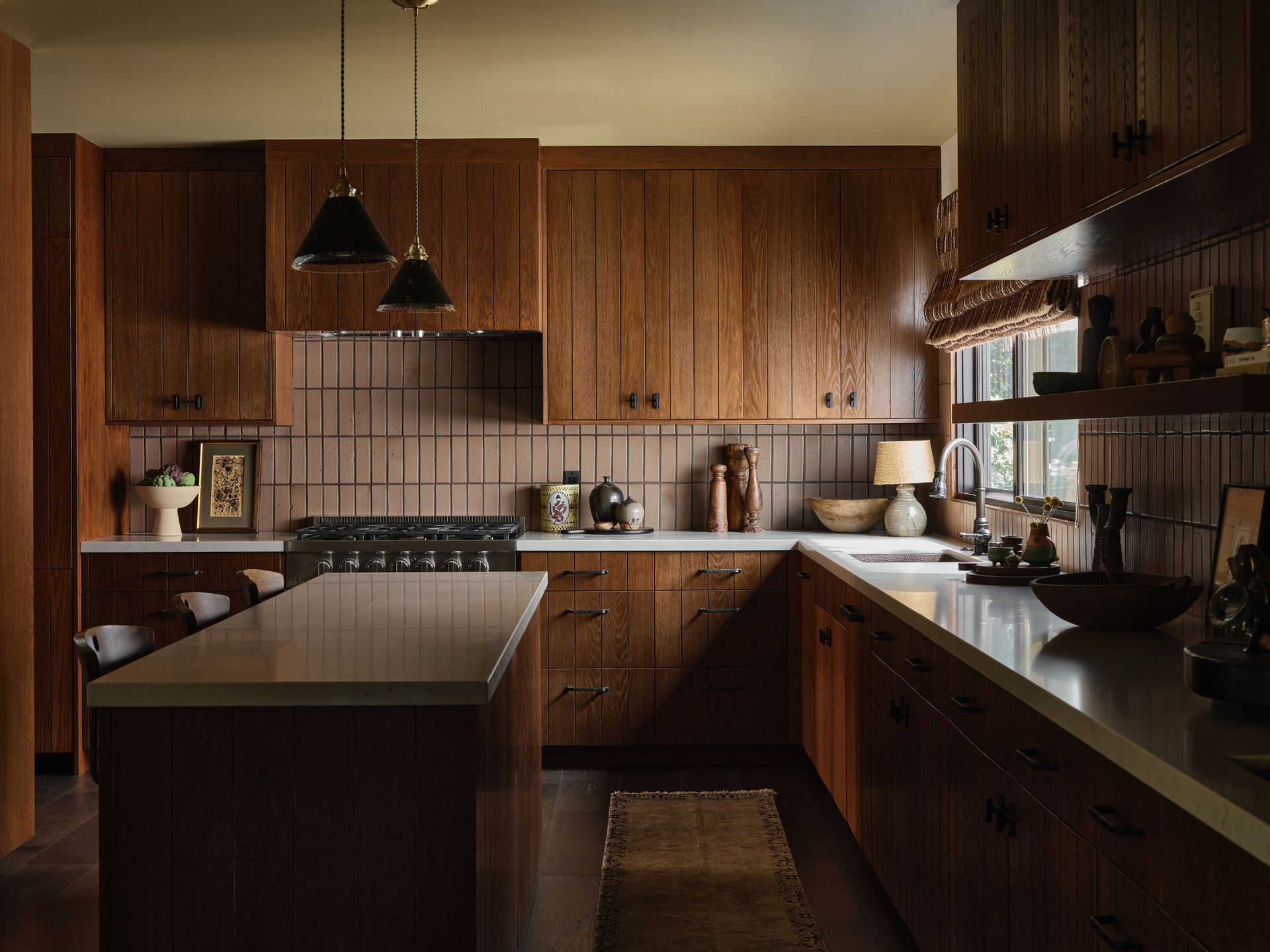
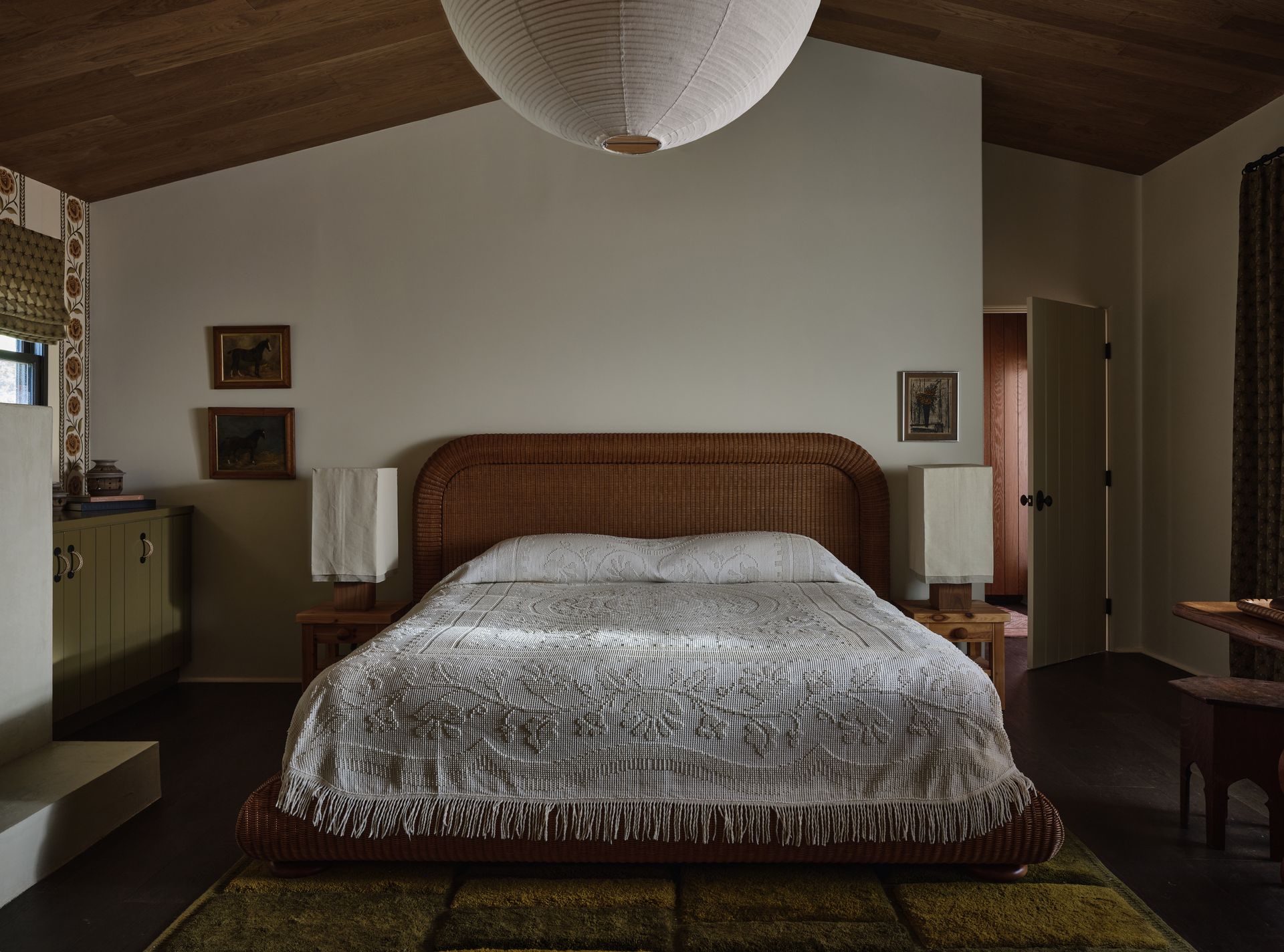
‘The overall vision was to maintain as much of the original character and style of the home as possible, while making it more functional for modern living,’ she explains. New rooms were added – a kitchen, a primary suite, a family room – though the expansion was restrained. ‘We worked mainly within the original footprint,’ the designer notes, ‘only adding a small amount of square footage for the primary closet.’
(Image credit: Michael P.H. Clifford)
(Image credit: Michael P.H. Clifford)
Advertisement
(Image credit: Michael P.H. Clifford)
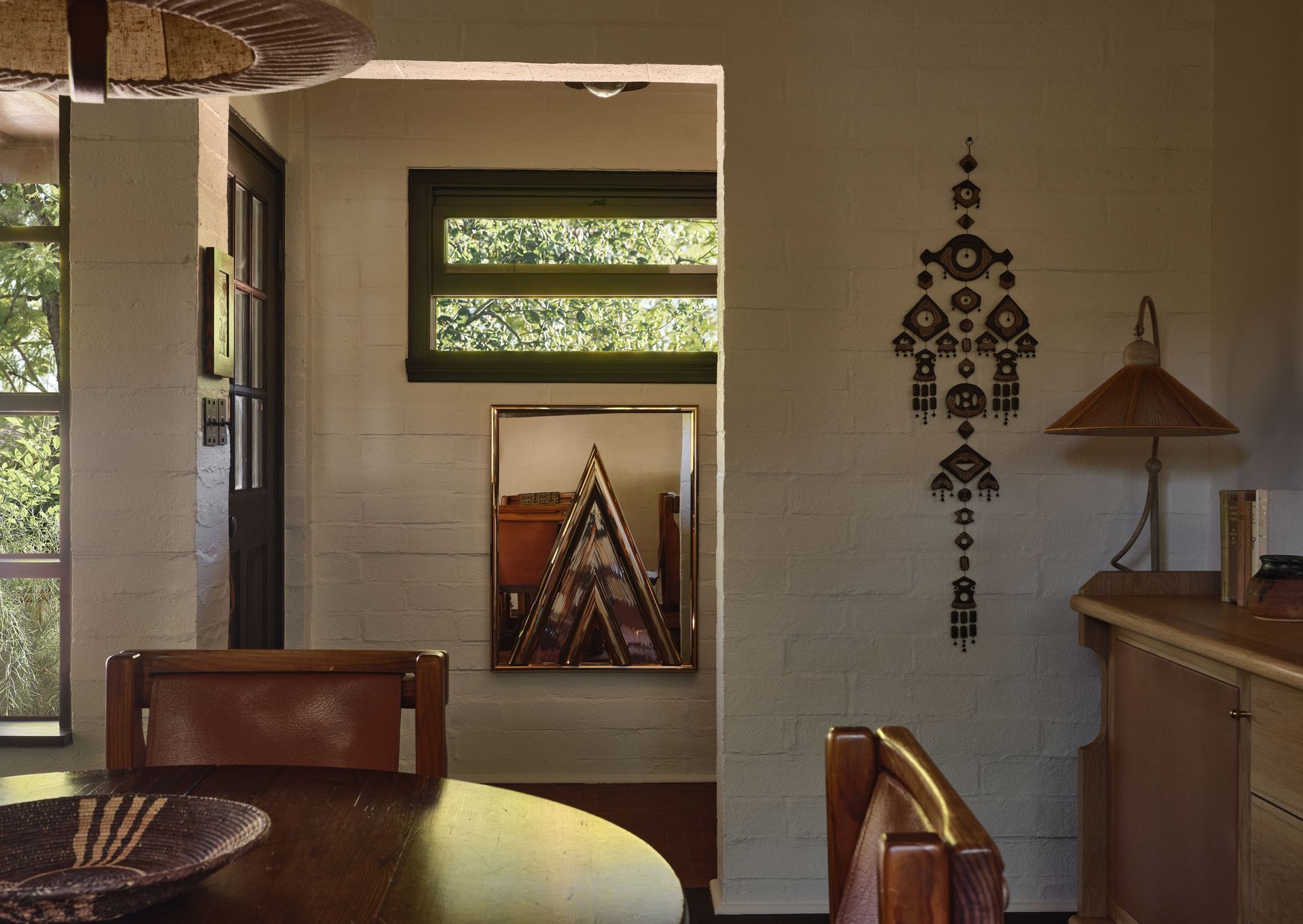
On the original adobe side, the layout was left untouched. The hallway windows, original to the 1947 build and ‘one of [Blazek’s] favourite features’, were preserved. ‘I wanted the house to feel like a modern California hacienda,’ she says of her guiding aesthetic, ‘and embraced that through every colour choice and finish.’
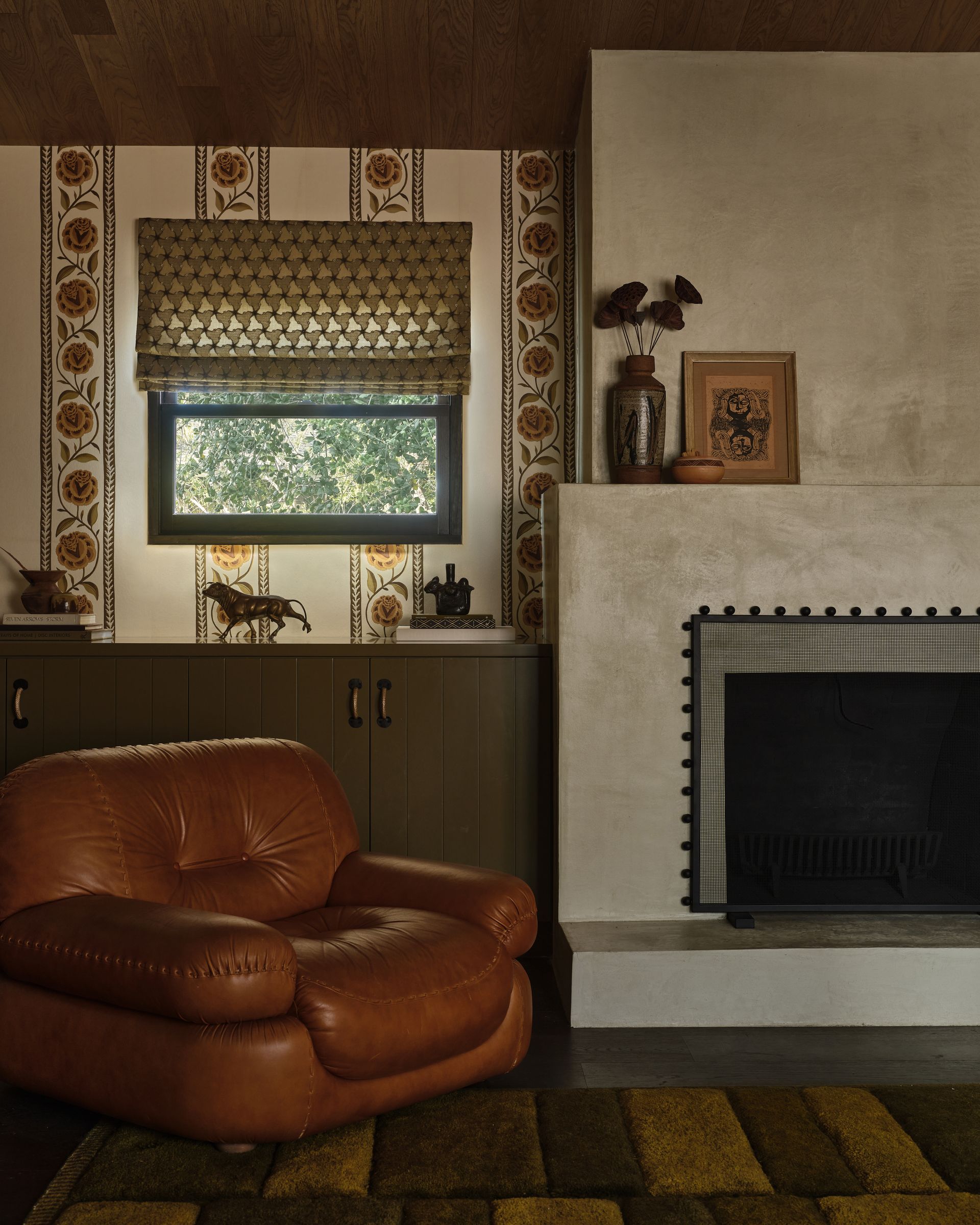
That palette draws directly from the landscape. Dunn-Edwards paints in warm, grounded tones – including an exterior shade named ‘Wild Horses’ – echo the surrounding terrain and scrubland. ‘I very much gravitate to an earth-based palette,’ says Blazek, ‘and the location at the base of the San Gabriel Mountains made that feel completely natural.’
Recreate the mood
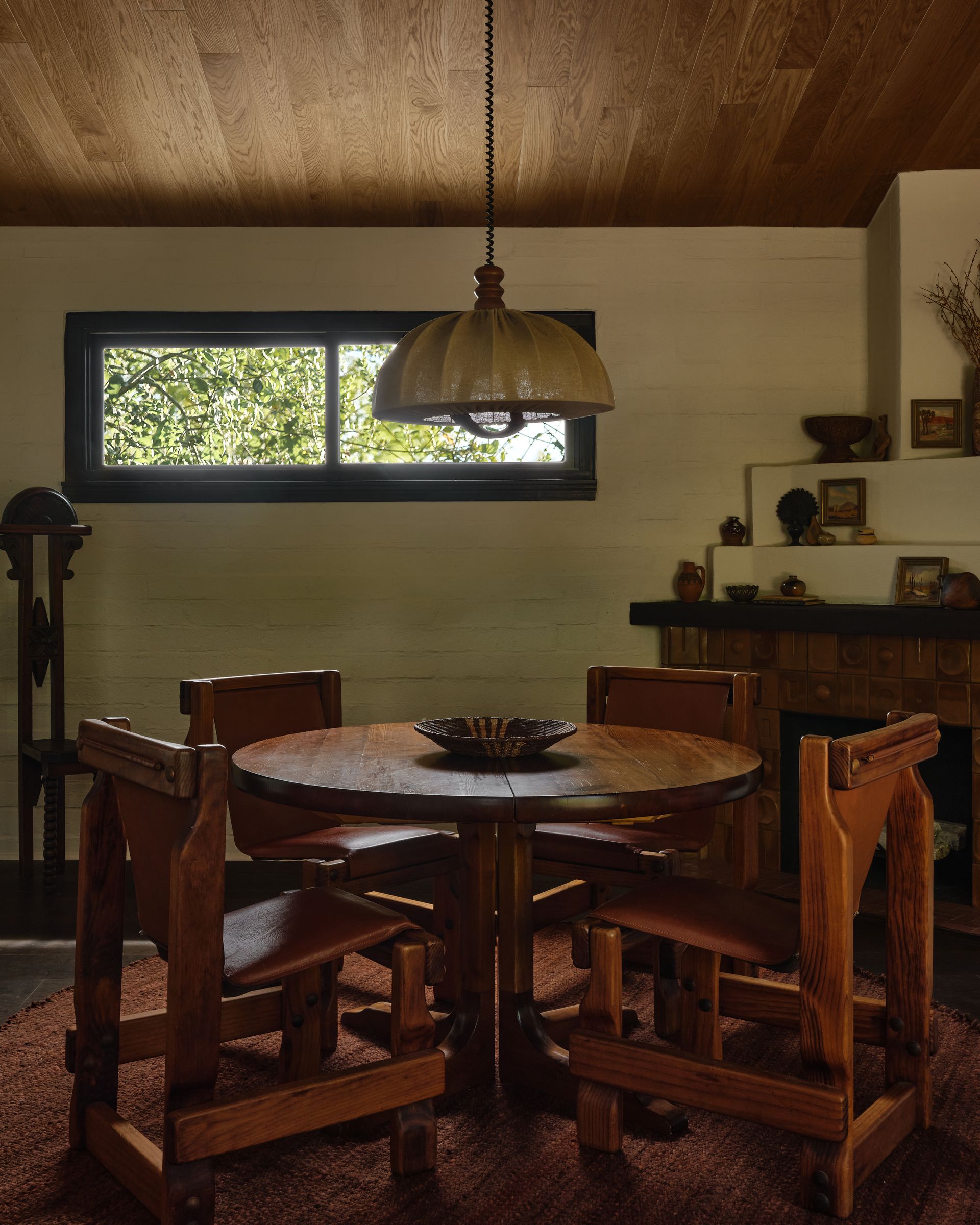
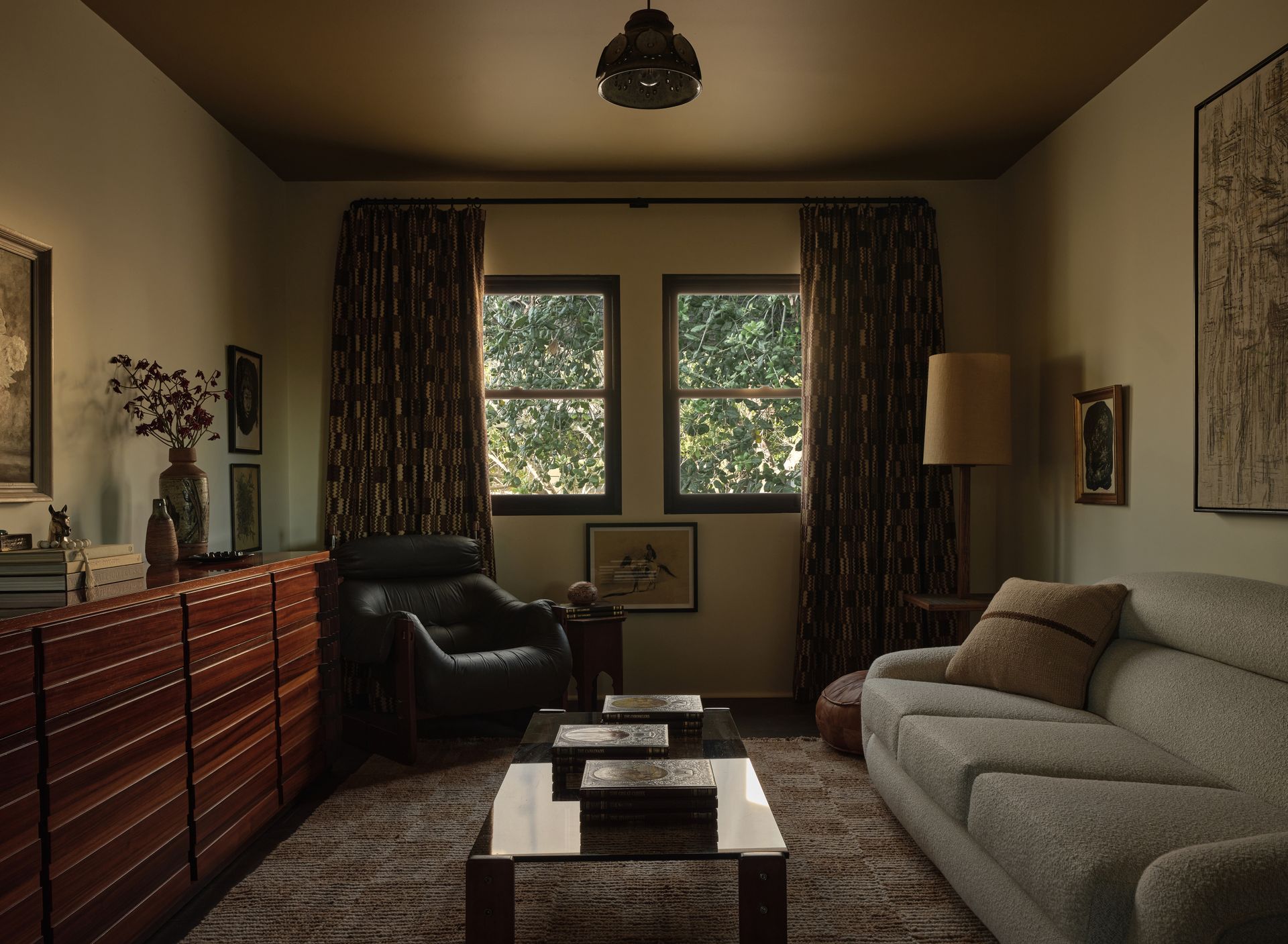
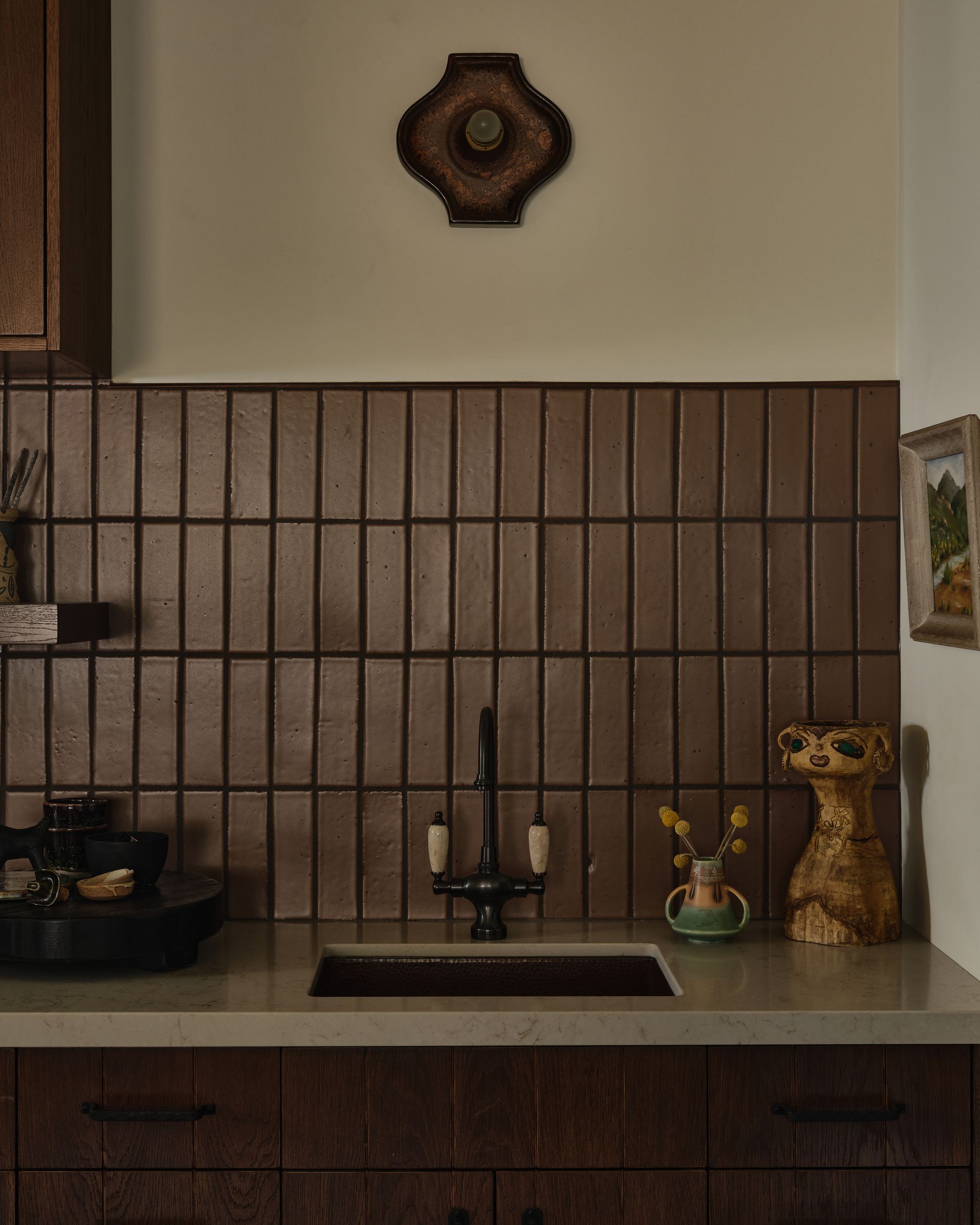
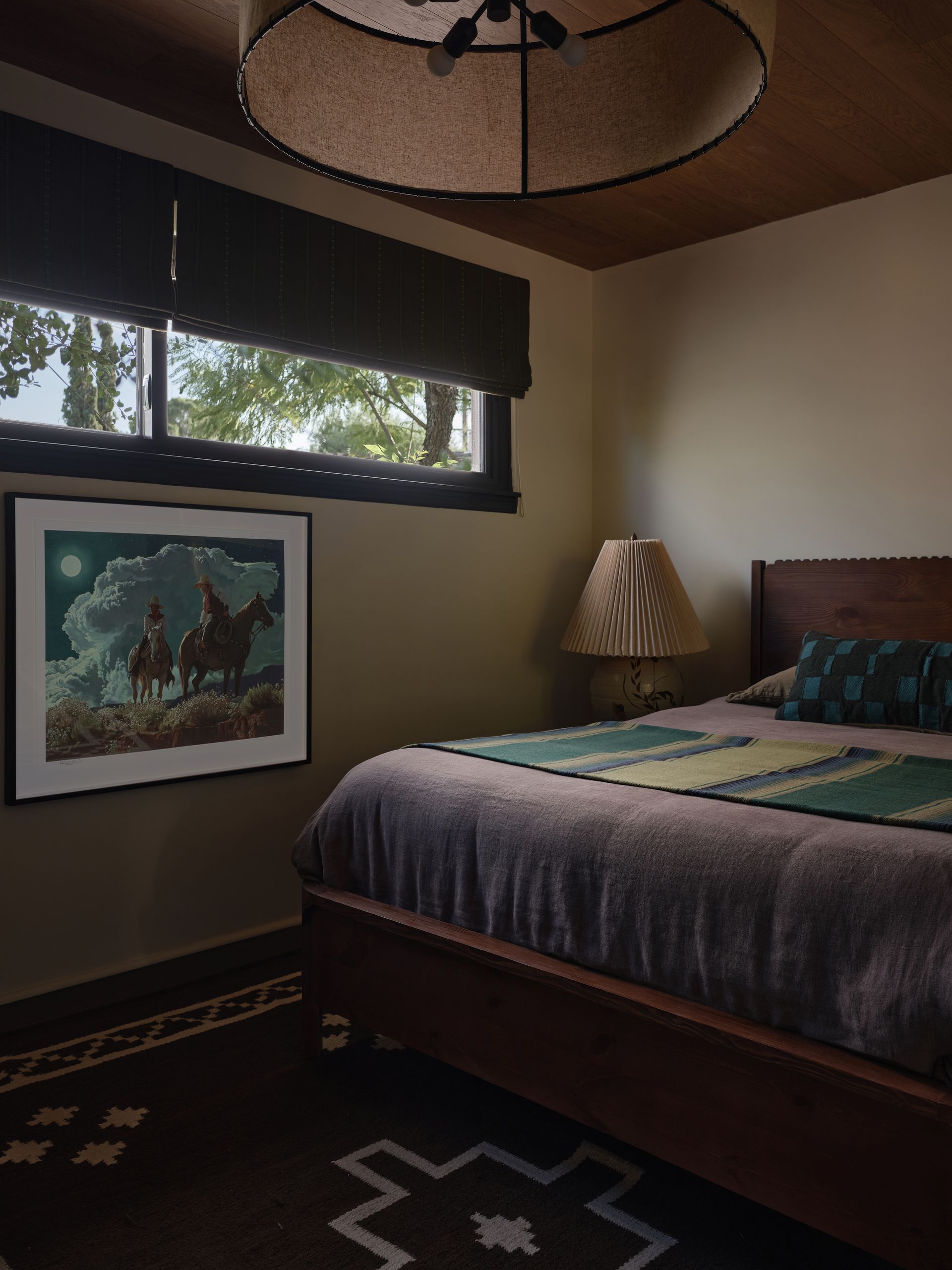
The interiors, meanwhile, speak to a lifelong passion. ‘I have a deep connection with the American Southwest and have long collected Native American and western-influenced art and objects,’ she says. Yet the rooms never tip into pastiche. Midcentury furniture – sourced from MidcenturyLA, Amsterdam Modern and Lawson-Fenning – grounds the collected pieces with clean, modern lines. Rugs from Pampa and Salam Hello add warmth underfoot; drapery by Zak and Fox frames the windows. ‘I never want my work to feel too referential,’ Blazek reflects. ‘I love midcentury lines, so there’s a pleasing blend of both genres throughout.’
Advertisement
Receive our daily digest of inspiration, escapism and design stories from around the world direct to your inbox.
(Image credit: Michael P.H. Clifford)
(Image credit: Michael P.H. Clifford)
Among her favourite moments is the dining room fireplace – original to the house, but updated with dimensional tile from Lofa Tile. Nearby, a framed print by artist Mark Maggiori anchors the wall. ‘It’s one of my favourite pieces,’ she says. ‘I was grateful to finally find the perfect place for it.’
(Image credit: Michael P.H. Clifford)
Advertisement
(Image credit: Michael P.H. Clifford)
Between the ancient craft of adobe and the clean geometry of midcentury design, this renovation represents both preservation and reinvention – a modern hacienda rooted in its land, its past and the strength of Blazek’s vision.