California
New California laws aim to protect reproductive rights, increase affordable housing


Gov. Gavin Newsom ushered in a slew of new legislation going into effect with the start of the new year, calling California “more than just a state of dreamers,” but also “a state of doers.”
Among the many new bills that highlighted this week by Newsom and his partnership with the Legislature were those supporting reproductive rights of Californians and increased affordable housing, along with legislation targeting oil companies and protecting the safety, health, and well-being of Californians.
Here is a look at some of the bills that went into effect Jan. 1:
REPRODUCTIVE RIGHTS
Following the U.S. Supreme Court’s decision to overturn Roe v. Wade, officials from the Governor’s Office said California is building on its nation-leading efforts to safeguard reproductive freedom for all Californians with a pair of bills.
– AB352, introduced by 16th Assembly District Representative Rebecca Bauer-Kahan, requires companies that manage electronic health records to protect electronic medical records related to abortion, gender-affirming care, pregnancy loss, and other sensitive services.
“This closes a major loophole in privacy protections for people traveling to California for abortion and gender-affirming care,” read the release.
– SB 345, introduced by District 9 Senator Nancy Skinner, protects providers and people from enforcement action in California of other states’ laws that criminalize or limit reproductive and gender-affirming health care services.
ADDRESSING THE OPIOID CRISIS
California is working to expand lifesaving treatment to communities in need in an effort to help combat the opioid crisis. AB 663, introduced by 17th District Assembly Representative Matt Haney, allows for more mobile pharmacies to be created in communities across the state and enables them to dispense treatment medications for opioid use disorder.
WORKERS’ RIGHTS
Newsom signed SB 616, introduced by Senate District 33 Representative Lena A. Gonzalez, expanding the number of sick days available to workers from 3 to 5.
INCREASING VOTER ACCESS
AB 545, introduced by 28th California Assembly District Representative Gail Pellerin, allows voters with a disability to complete a regular ballot through curbside voting, which takes outside of any polling place, and removes the requirement for a voter to declare under oath that they are unable to mark their ballot in order to receive assistance doing so.
HOLDING BIG OIL ACCOUNTABLE
SBX1-2, also introduced by state Sen. Skinner, grants the California Energy Commission new authority to penalize refineries and set a maximum gross gasoline refining margin if necessary to help combat price gouging.
“It also creates a new independent state watchdog to investigate market or price manipulation,” said Governor’s Office officials.
INCREASING AFFORDABLE HOUSING
Legislation signed this year aims to speed up the process to secure permits and meet housing goals as the state continues to work to increase the amount of affordable housing available for Californians.
– SB 423, introduced by Senate District 11 Representative Scott Wiener, extends and expands existing law, requiring local governments that are failing to meet state housing planning goals to streamline affordable housing projects, which officials said will increase affordable housing throughout the state in uncooperative cities.
– SB 4, also introduced by state Sen. Wiener and known as the “Yes in God’s Backyard” bill, allows housing to be developed on property owned by religious or independent higher education institutions. These groups are given this authority “by right,” which requires no discretionary local governance intervention.
ADDRESSING THE MENTAL HEALTH CRISIS
To address our nation’s behavioral health crisis, Governor Office officials said Newsom signed legislation to improve health care delivery systems and make these services more accessible.
“These efforts will help tens of thousands of Californians and fill critical needs across the state, from homeless Californians with severe behavioral health issues to kids suffering from depression and everyone in between,” read a release from the Governor’s Office.
– SB 326, introduced by 5th Senate District Representative Dr. Susan Talamantes Eggman, reforms the Mental Health Services Act by making better use of Mental Health Services Act funding to address today’s needs and increasing accountability to the public.
– AB 531, introduced by Assembly District 53 Representative Jacqui Irwin, would issue $6.38 billion in bonds to fund 11,150 new behavioral health beds and housing as well as 26,700 outpatient treatment slots.
Together, these reforms will be proposed to the voters for approval on the March ballot as Proposition 1.
PUBLIC SAFETY
In September, Newsom signed SB 14, introduced by 12th Senate District Representative Shannon Grove, to steepen penalties for human trafficking of minors in California. The law designates human trafficking of a minor for purposes of a commercial sex act as a serious felony.
STREAMLINING THE UC TRANSFER PROCESS
AB 1291, introduced by 6th District Assemblymember Kevin McCarty, establishes the University of California Associate Degree for Transfer Pilot Program, beginning with UCLA, to prioritize admission of a student who earns an associate degree for transfer (ADT) from selected community colleges and to redirect a student who meets those requirements but is denied admission to the applicable campus and offer admission to at least one other campus.
Expanding ADTs to the UC system allows qualified community college transfer students to fulfill the requirements of an ADT and meet the requirements for participating UC and CSU campuses, streamlining the transfer process and saving students money by being able to earn two degrees in four years, according to Governor’s Office officials.


Bruce Lee Day aims to honour the San Francisco-born martial arts legend as a cultural bridge and Asian-American icon.
Published On 2 Jul 2026
Martial arts icon Bruce Lee will become the first Chinese American in California history to be honoured with an annual namesake day.
California Governor Gavin Newsom signed a law on Tuesday afternoon, officially designating May 17 as Bruce Lee Day.
Recommended Stories
list of 4 itemsend of list
Lee was born in San Francisco in 1940 and returned to the city on May 17, 1959, aged 18, after spending his childhood in Hong Kong.
His daughter, Shannon Lee, CEO of the Bruce Lee Foundation, said the honour reflects her father’s enduring legacy as a bridge between cultures.
“From young people who found confidence and possibility in his philosophy, to families who finally saw themselves represented on screen, to athletes who still draw on his teachings of discipline and inner strength, his reach is profound,” she said in a statement.
State Assembly member Matt Haney, who represents San Francisco, called Lee the “epitome of the best of California”.
“At a time when Asian Americans were too often absent from or stereotyped on screen, Bruce Lee helped generations see themselves represented with strength and dignity,” he said.
The Bruce Lee Foundation and Asian-American groups hope Bruce Lee will be celebrated each year with voluntary activities, including cultural exhibits, public events and classroom lessons.
Born to Chinese parents touring the US with an opera, Lee held birthright citizenship. He moved to Hong Kong as an infant, became a child actor, and studied Chinese kung fu before returning to the US in 1959.
He enrolled at the University of Washington in Seattle in 1961, but dropped out to teach martial arts.
In the 1960s, Lee appeared in Hollywood, most notably as Kato in the TV series The Green Hornet, but said studios typecast him in racist roles and paid him less than white actors.
He returned to Hong Kong and starred in martial arts films, including The Big Boss and Fist of Fury.
Lee died tragically in 1973 at the age of 32 after an allergic reaction to pain medication.
His name and likeness remain widely popular.
Fans gather on his birthday, and a treatment he wrote for a television series inspired the HBO Max show “Warrior”.


See the best High Desert fireworks through the years
Fireworks have long lit up the California High Desert, from community shows in Victorville and Apple Valley to backyard celebrations that filled the night sky. Revisit Fourth of July moments through the years.
Each year, fireworks light up the sky across the United States for the nation’s Independence Day. With 2026 marking the nation’s 250th birthday, fireworks shows may be a bigger draw.
With California being so fire-prone, the state has strict fireworks laws, but does that mean that people won’t enjoy fireworks without risking jail time on July 4?
Are fireworks illegal in California?
The California Department of Forestry and Fire Protection, or CalFire, is the agency in charge of managing fireworks and classifying which ones are safe to light.
The California Fireworks Law was passed in 1938 and designated the Office of the State Fire Marshal as the only fireworks classification authority in the state, according to CalFire.
The fire marshal’s office classifies fireworks through lab analysis and field testing. It also requires that all parties dealing in fireworks, such as pyrotechnic operators, manufacturers, and retailers, have licensing.
Along with the aforementioned law, the State’s Explosive Law authorizes the fire marshal to “adopt regulations for the safe use, handling, storage and transportation of explosives,” CalFire says.
“Safe and Sane” fireworks are less likely to cause injury and generally mean that the fireworks do not explode or fly, according to the City of Fontana.
There are almost 300 communities in the state that allow “Safe and Sane” fireworks.
It is illegal in the state to sell, transport, or use fireworks that don’t carry the “Safe and Sane” seal or use any in a nonpermitted community. If convicted, you can face a fine up to $50,000, a year in jail or both, according to CalFire.
All other fireworks are considered illegal in the state and are prohibited from being operated by unauthorized parties in most jurisdictions.
Some illegal fireworks include:
- Wire Core Sparklers
- Sky rockets
- Bottle rockets
- Roman candles
- Aerial shells
- Firecrackers
- Other fireworks that explode, go into the air, or move on the ground in an “uncontrollable manner.”
How to safely use fireworks
CalFire has put out a list of safety tips to avoid injury when handling fireworks.
CalFire recommends:
- Use only State Fire Marshal-approved fireworks
- Verify local ordinances before purchasing or using fireworks.
- Always read the directions on labels.
- Children should always have an adult present.
- Only use fireworks outdoors.
- Avoid using fireworks near dry grass or other flammable materials.
- Only light one firework at a time.
- Have a bucket of water and a hose nearby in case of fire.
- During a drought, it is recommended that you use a bucket of reused water to submerge your firework after use to ensure it’s completely extinguished.
- Never place any part of your body directly over a fireworks device when lighting the fuse.
- Back up several feet immediately after lighting a firework.
- Never point or throw fireworks at another person.
- Never attempt to relight or fix fireworks.
- Never experiment with fireworks.
- Do not wear loose-fitting clothing while lighting fireworks.
- Never carry fireworks in your pockets.
Ernesto Centeno Araujo covers breaking news for the Ventura County Star. He can be reached at ecentenoaraujo@vcstar.com, 805-437-0224 or @ecentenoaraujo on Instagram and X.
California
California bill to block registered sex offenders from local office rejected by Senate committee

FRESNO, Calif. (KFSN) — California bill aimed at preventing registered sex offenders from holding local elected office was halted Tuesday after a Senate committee declined to advance the measure without changes opposed by its author.
Assembly Bill 2753, introduced by Assemblywoman Esmeralda Soria in February, would have prohibited anyone who is or has been required to register as a sex offender from running for local elective office.
“This issue is critical. We have heard loud and clear from the community that we must do something,” Soria said.
The proposal came to a stop in the Senate Elections Committee, where lawmakers argued the bill’s restrictions were too broad.
California’s sex offender registration system is divided into three tiers. Tier 1 offenders are generally required to register for 10 years, Tier 2 offenders for 20 years and Tier 3 offenders for life.
According to Soria, committee members proposed limiting the bill to Tier 3 offenders. She rejected those amendments, arguing that the legislation should apply more broadly.
“For this not to be the law today, where we’re banning people that have committed some of the most horrific crimes against children, against other people, you know, and we have survivors out there, I think it’s a disservice,” Soria said.
The bill had attracted significant support before reaching the Senate. It was backed by the Fresno City Council and passed the Assembly floor in April.
Fresno City Council President Nelson Esparza traveled to Sacramento to testify in favor of the measure and said he was disappointed by the outcome.
“I call it really a gut punch for our community, and what we had experienced here, and sort of the upheaval… I don’t think we want that to happen again here at Fresno,” Esparza said.
Esparza referenced controversy earlier this year involving registered sex offender Rene Campos, who sought a seat on the Fresno City Council but ultimately did not qualify for the ballot.
Opponents of the bill argued that candidacies should be decided by voters rather than restricted by law.
“It should be a decision made by the voters, so a person should not be barred from running for office and let the voters make the decision that makes the most sense for them,” said civil rights attorney Janice Bellucci.
With the committee declining to move the bill forward under its current language, efforts to enact the proposed restrictions have stalled for now.
Copyright © 2026 KFSN-TV. All Rights Reserved.
-
 Entertainment2 minutes ago
When, unlike our upcoming 250th anniversary, a bicentennial mattered to orchestras
-
 Lifestyle9 minutes ago
DLTA’s former Ace Hotel is reborn as a ‘creative hub’ — and yes, you can still sleep there
-
 Politics12 minutes ago
Trump wants to show off D.C. for the Fourth. His construction is in the way
-
 Science17 minutes ago
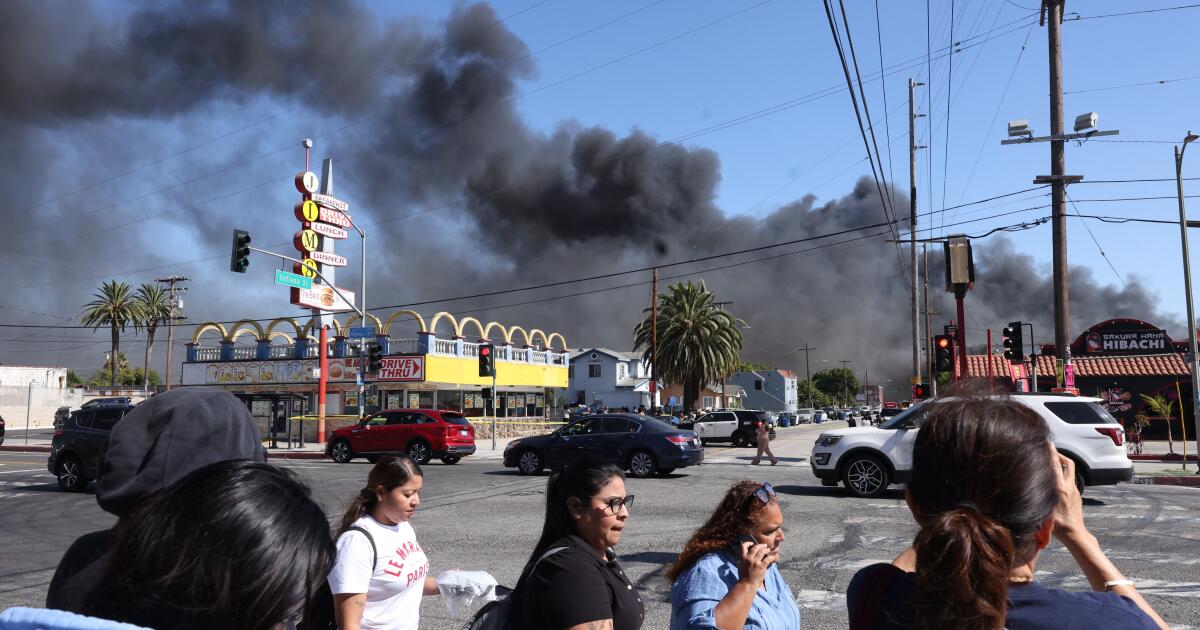
Boyle Heights blaze choked L.A. with astronomical soot pollution
-
 Sports24 minutes ago
Lakers announce summer league schedule, roster
-
World32 minutes ago
How the Entry-Exit System is becoming a nightmare for Europe's summer travellers
-

 News57 minutes ago
Newsom’s office responds to SCOTUS ruling on women’s sports as California faces ongoing trans athlete wave
-

 Los Angeles, Ca2 hours ago
Family of boy, 8, killed by falling tree branch at Calabasas park to get $14.6M

