California
Mathews: Americans underestimate Harris like they misread California


We got this, America.
California is sending you the best possible person to weather whatever the next three-plus months hold.
Let’s be honest about Kamala Harris. We’re not giving you our most charismatic public speaker. Her sentences can be as awkward as Joe Biden’s.
We’re not giving you our most disciplined politician. She’ll crack an ill-considered joke, or make a mistake in a meeting that requires clean-up.
What we are giving you is someone who can emerge improbably triumphant from losing situations. Someone who will take more crap than anyone possibly could.
The best explanation of Kamala Harris came from a San Francisco political consultant, who compared her to Andy Dufresne, the main character of the 1994 film “The Shawshank Redemption.”
Dufresne was a falsely convicted banker who escapes Shawshank Prison through a 500-yard-long sewage pipe. “Andy Dufresne,” the consultant said, quoting a movie line, “who crawled through a river of s–t and came out clean on the other side.”
Because Americans don’t know Harris this way, they are underestimating her. Just like they underestimate California.
Contrary to the stereotypes, 21st century California is not soft or easy. It’s a crowded, competitive place where everything — even finding an affordable place to live — is a struggle.
The real California made Harris tough. It helps that she spent her early years in the late 60s-early 70s in Berkeley and Oakland, which might be California’s toughest city. As a mixed-race kid, Harris had to learn how to fit in, at a newly integrated elementary school, and at both Hindu Temple and the 23rd Avenue Church of God. After the divorce of her immigrant parents, she and her sister were raised almost entirely by their mother, who moved them to Montreal.
Harris attended law school not in the leafy Ivy League but at UC Hastings, in the middle of San Francisco’s Tenderloin. She worked as a prosecutor in Alameda County and then San Francisco, on the sorts of cases — sex crimes and child abuse — that harden people.
She launched her political career in the hyper-competitive political culture of San Francisco. Her first election, for San Francisco district attorney, posed the trickiest challenge in politics — beating an incumbent (who was also her boss). She won an upset victory in a three-person race.
Then Harris, still little known, ran statewide, for California attorney general — against a popular Los Angeles Republican, Steve Cooley, who had the state’s law enforcement community behind him. On election night, she appeared to have lost. But when all the votes were counted, she had squeaked through.
When a U.S. Senate seat opened in 2016, Harris was hardly the most popular Democrat in the state. But she jumped into the race early, scared off other contenders and won the seat.
Harris’ 2020 presidential campaign was a disaster. She didn’t make it to the Iowa caucuses. But even after that embarrassment, she crawled through to the vice presidency.
Reviews have been dicey — staff turnover, difficulties with immigration policy. Her polling was lower than the president’s. Until it wasn’t. Now Biden has bowed out and endorsed her.
She doesn’t have the nomination yet. She may face a contested convention. And if she earns the nod, she’ll face a former president who is ready to attack.
Democrats are worried. Because Donald Trump is a constant font of lies and accusations. His strategy, as the now imprisoned Trump advisor Steve Bannon famously said, “is to flood the zone with s–t.”
But this time, his opponent is Kamala Harris. She survived all the b.s. of California. She’s heard every disgusting sexist insult. She sloughed off slurs against two different races.
She’s about to be submerged in it all again. Because American politics is a river of you-know-what.
Which is why this is her moment.
Who better to navigate us through all the crap than Kamala Devi Harris?
Joe Mathews writes the Connecting California column for Zócalo Public Square.
Originally Published:



California property owners can expect the nation’s steepest insurance premium hikes this year.
Nevertheless, that surge will leave California property owners paying below U.S. norms, according to my trusty spreadsheet‘s peek at a report by policy tracker Insurify. Its numbers reflect what private insurers charge to cover properties across all 50 states and Washington, D.C.
For Californians, that means an estimated 16% jump in premiums for 2026. It’s the biggest jump in the country, four times the 4% hike a typical American faces.
Years of rising property damage are largely behind this, with the 2025 Los Angeles wildfires as the latest example.
After California, Nebraska is seeing a 13% increase, followed by New Mexico at 11% and Georgia at 10%. Meanwhile, policies are actually getting cheaper in Hawaii and Massachusetts (down 2%) and Maine (down 1%).
Relative bargain
Please do not be mad at me for relaying this insurance math.
Even after the 2026 increase, California property insurance remains a relative bargain compared with the rest of the country.
Lower California rates are one reason why many property owners have trouble finding coverage. State insurance regulation has made it difficult for insurers to raise their rates, even as their costs and risks surge.
Owners who cannot obtain insurance coverage most often use the state’s FAIR Plan. Those premiums are expected to rise by 29% next year.
Note that Insurify projects the average annual premium in California for 2026 will be $2,843, ranking 21st-highest among all states.
Do you know of many housing-related expenses where you can say California prices are 7% below the national norm?
The most expensive premiums are found in Florida at $8,458 per year, followed by Oklahoma at $5,205, Louisiana at $5,035, Nebraska at $4,560 and Texas at $4,529. These states face high risks from hurricanes, tornadoes or hail.
The cheapest insurance is in Vermont at $1,094 annually, followed by Maine at $1,359 and Utah at $1,370.
Even cheaper?
Keep in mind, the average Californian is insuring a very expensive property.
California insurance policies commonly cover $488,000 in repairs, according to Insurify. This is the second-highest amount among the states and 43% above the national average of $342,000.
Only Hawaii is higher at $500,000. The lowest policy coverage is in Oklahoma at $292,000.
Stack up what homeowners pay against how much coverage they get, and California’s pricing looks even more reasonable.
This premium-to-coverage ratio indicates that the typical Californian pays 0.6% of the coverage offered. That ranks No. 30 among the states and is one-third below the nation’s 0.9% ratio.
The highest ratios are in Florida (2.6%), Oklahoma (1.8%), Louisiana (1.7%) and Texas (1.4%). The lows were in Vermont, Alaska, the District of Columbia, New Hampshire and New Jersey, all at 0.4% or less.
Loss likelihood
If you own property in California, you probably already know this, but here’s a reminder of a never-ending risk: natural disasters.
My trusty spreadsheet also reviewed data from various government and industry sources to see how often disasters strike – and how much those ugly events cost. The incidents tracked include wildfires, floods, earthquakes, hurricanes, tornadoes, blizzards and hail.
To grade the 50 states and the District of Columbia on their relative natural disaster risks, five measures were developed that account for the frequency and damage of calamities, weighted against population and geographic size.
When you add it all up, California ranks third for the likelihood of expensive disasters.
Florida is the riskiest state, followed by Hawaii, California, Louisiana and Tennessee.
If you want a safer place, consider Alaska, Nevada, Utah, Arizona, or Wisconsin.
Of course, this is just a simple way to look at a complex problem that befuddles property owners, insurance companies and policymakers alike.
Clearly, these aren’t just California headaches. One-third of Americans live in 10 states with the highest risk.
How often
The history of disasters offers us clues as to where the next one may hit.
Look at the five measures used to create the risk rankings, starting with how often these disasters actually happen.
Using the number of federal disasters declared over the past decade and dividing that by each state’s square miles, California comes in at No. 9.
By this measure, the most disaster-prone are D.C., Rhode Island, Hawaii, Connecticut and Washington state. The least are Ohio, Wisconsin, Pennsylvania, Alaska and Michigan.
Next is the number of major storms per square mile.
California is much lower on this list, ranking 41st. The stormiest are D.C., New Jersey, Maryland, Hawaii and Rhode Island. The calmest are Alaska, Oregon, Nevada, Utah and Idaho.
The price tag
Think about what it costs to clean up after disasters. This is a major driver of home insurance premiums.
First, look at the dollar amount of damages divided by the number of people in each state. California ranks ninth-highest for disaster costs per person.
The biggest bills? Louisiana, Hawaii, Texas, Florida and Colorado. The smallest? Delaware, Rhode Island, Massachusetts, Connecticut and New Jersey.
Next, check out the cost per storm. California’s disasters are the fifth most expensive.
The most expensive storms happen in Florida, Louisiana, Texas and Oregon. The least expensive are in Delaware, Montana, Wyoming, Rhode Island and Kentucky.
Finally, if you look at insurance losses per person, California ranks fourth highest.
The largest insurance losses are in Colorado, Nebraska and Florida. After California, Wyoming is next. The lowest losses are in Utah, Hawaii, Nevada, Alaska and Oregon.
Clearly, the property-loss odds are stacked against Californians.
Skipping the costs
Some property owners take one look at their insurance bill and decide to go without.
LendingTree, using Census housing cost data, estimates 11% of California property owners have no homeowner’s insurance policy.
That’s the 11th-lowest level of no coverage among the states. The national rate is 14%.
West Virginia has the highest share of owners without coverage at 24%, followed by New Mexico at 23% and Louisiana at 21%. The fewest uninsured homes are in Colorado, Oregon and New Hampshire at 10%.
So why do so many Californians still pay for coverage?
Contemplate the estimated California premium against statewide household income to see that the cost is relatively affordable.
This 2.8% insurance-cost burden ranks No. 25 among the states. It’s also one-fifth of the nation’s 3.6%.
The highest burden? Florida at 11%, and Louisiana and Oklahoma at 8%. Lows? Vermont, New Hampshire, Utah and Maine, all 1%.
Jonathan Lansner is the business columnist for the Southern California News Group. He can be reached at jlansner@scng.com
- Try Jonathan Lansner’s Substack collection of economic trends. CLICK HERE!
California
California man arrested for impersonating bank official, coercing money from Colorado victim

A 25-year-old California man is charged with three felonies after intercepting a package in Colorado containing $11,000 in cash he allegedly obtained via a computer scam.
Earlier this year, a Mesa County resident contacted authorities after receiving a message. The sender reportedly claimed to be an employee of the Federal Deposit Insurance Corporation (FDIC). The FDIC is an independent agency created by the Congress that insures and oversees the banking industry.
The resident claimed the purported FDIC representative stated the resident’s bank account had been compromised and needed to be secured. The resident was instructed to send cash from the account to an address in southern California, according to the Mesa County Sheriff’s Office.
The resident later chose to stop the shipment. But, according to the sheriff’s office, the box containing the cash was already in the process of being shipped.
A man later identified as Youbin Huang of El Monte, Calif., a Los Angeles suburb, came to the package’s location in Grand Junction and picked it up using documents which contained the Colorado resident’s personal information, per the sheriff’s office.
A nationwide warrant for Haung’s arrest was issued by the Mesa County Sheriff’s Office on Feb. 25. Huang was arrested by the California State Patrol on April 13, according to a press release from the sheriff’s office. Huang was brought to Colorado and booked into the Mesa County Detention Facility on May 10.
Huang is charged with theft, identity theft, and computer fraud, all felonies, and all state charges. He was advised June 11 and posted an $11,000 cash bond to obtain his release from jail that day. He has another court hearing on July 9.
The Mesa County Sheriff’s Office stated in its press release that Huang was “intimately involved in the perpetration of the scam.” It did not specifically state that Huang acted alone, nor if he was the person who impersonated an FDIC employee and communicated with the Colorado resident online.
MCSO recommended Coloradans never give out their personal or financial information to an unsolicited caller, allow remote access to their phones or computers, send gift cards or crypto currency as a form of payment, or send cash in the mail. As well, if they are unsure about what they are being asked to do, call law enforcement, family members, or a trusted friend to get advice.


Massive fire erupts at Boyle Heights cold storage facility
The blaze began on the roof’s solar panels before an interior ammonia leak and explosions forced rare, defensive aerial water drops on the 491,000-square-foot warehouse.
Fox – LA
A smoke advisory remains in place across Boyle Heights after a flare-up at a cold-storage warehouse fire, with officials urging residents to limit outdoor exposure as smoky conditions spread.
Public health officials warned Saturday that smoke from the South Los Palos Street blaze had drifted into surrounding neighborhoods, advising people to stay indoors, close windows, and avoid breathing in the smoke.
The blaze began shortly after 2:30 p.m. Wednesday at 1400 S. Los Palos St., and rapidly spread across the solar panels on the roof of the 491,000-square-foot warehouse, while an ammonia leak developed inside the building and thick smoke billowed into the air, prompting shelter-in-place orders for nearby residents and businesses.
LAFD officials said Saturday that crews spent the night working to prevent the fire from spreading to nearby homes and other units in the complex, including an adjacent cold storage facility.
“The good news is, all of our air monitoring that has been done by our department, Hazmat, LA County Hazmat, as well as AQMD, has shown that there are no additional toxic chemicals or hazards within that smoke other than normal structure fire smoke,” LAFD Capt. Branden Silverman said. “That said, no smoke is good smoke. We know that people are being affected by this in our city as well as LA County’s jurisdiction, and we do want you to take precautions to avoid that smoke whenever possible.”
This is a breaking news story. Check back later for more details.
Smoke advisory in effect; residents urged to limit exposure
The South Coast Air Quality Management District has extended a particle pollution advisory through at least midday Saturday as smoke from the fire continues to drift across Boyle Heights, East Los Angeles and nearby communities.
While shelter-in-place orders issued earlier in the week have been lifted, officials emphasized that smoky air remains a concern.
Fire officials said visible smoke may increase at times as crews continue suppression efforts, though there is no additional hazard beyond the smoke itself.
- Health guidance remains consistent:
- Use air purifiers or air conditioning if available
- Stay indoors with windows and doors closed
- Avoid outdoor activity, especially for sensitive groups
Fire reignites after wind shift; crews brace for ongoing flare-ups
The fire, which began Wednesday afternoon at a roughly 500,000-square-foot cold-storage facility, flared up again Friday evening after a shift in wind conditions, sending black and white smoke billowing into the sky.
Los Angeles Fire Department officials have described the incident as complex, warning the fire will likely “ebb and flow” due to deep-seated flames inside the structure and difficult access conditions.
Firefighters remain largely limited to exterior operations due to safety concerns inside the building, continuing to pour water onto the structure and targeting hotspots.
No injuries have been reported.
Shelters open as precaution; officials stress safety
Although there are no evacuation orders, officials have opened temporary shelters for residents seeking relief from smoke or uncomfortable conditions, according to a statement by Los Angeles County Board of Supervisors Chair Hilda Solis.
Shelters include:
- City Terrace Park, 1126 N. Hazard Ave.
- Pecan Recreation Center, 145 S. Pecan St.
Los Angeles County leaders said the sites were opened “out of an abundance of caution” as firefighting operations continue.
Residents are also being urged to:
- Monitor air quality alerts
- Keep pets indoors
- Wear masks if going outside
What caused the Boyle Heights fire?
Officials and the facility operator, Lineage Logistics, say the blaze appears to be linked to rooftop solar panels on the warehouse, though the exact cause remains under investigation.
The blaze spread across rooftop solar panels before firefighters discovered flames burning deep inside the cold‑storage areas, complicating containment efforts.
Fire officials noted that the structure’s size and layout — along with hazards such as stored equipment and limited access — have required unusual tactics, including the use of water-dropping helicopters typically used on wildfires.
Where is Boyle Heights?
Boyle Heights is a densely populated neighborhood just east of downtown Los Angeles, bordered by major freeways including the 101 and 5. It sits near East Los Angeles and is home to residential communities, schools, and industrial sites, including the cold-storage warehouse where the fire is burning.
City News Service contributed to this report.
-

 Mississippi3 minutes ago
Fort Worth youth baseball team rescued after floodwaters trap families in Mississippi
-

 Missouri10 minutes ago
MoDOT scheduled road work across Northwest Missouri for June 22–28
-
 Montana12 minutes ago
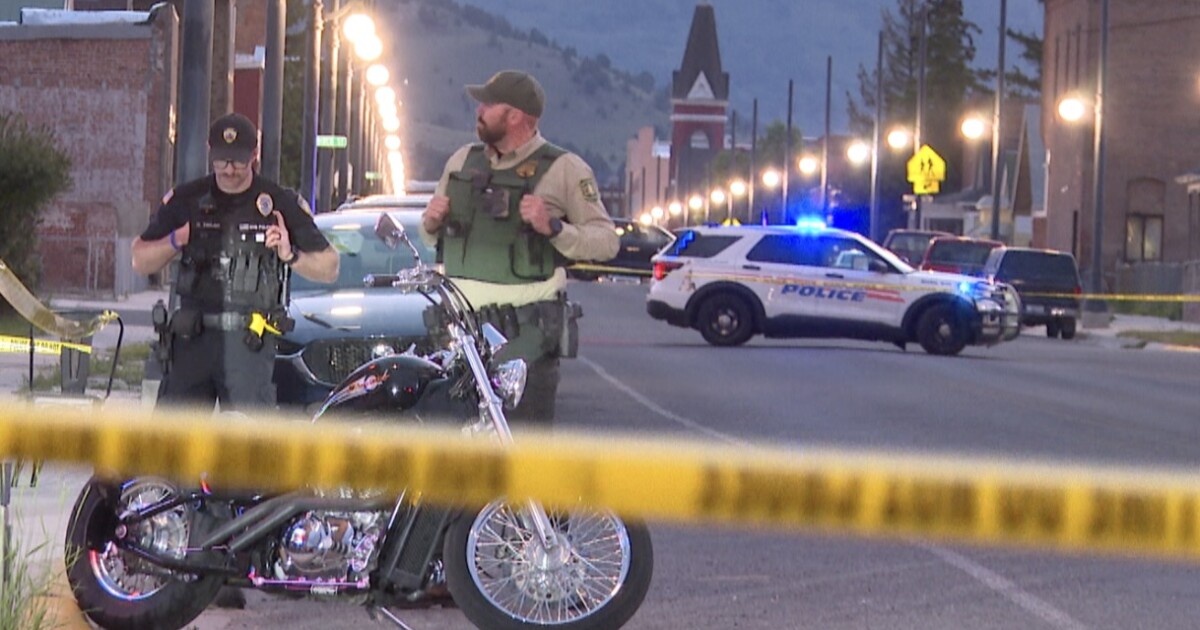
Anaconda shaken by second bar shooting within a year
-

 Nebraska15 minutes ago
Defensive Back Brennan Drummond Commits to Nebraska
-

 Nevada25 minutes ago
Desert state booms as workers flock from California amid game-changing discovery: ‘Remarkable’
-

 New Hampshire27 minutes ago
Police investigating after woman found dead in home in Hampstead, NH – Boston News, Weather, Sports | WHDH 7News
-

 New Jersey33 minutes ago
3 killed after plane taking off from NJ crashes near Maryland homes
-

 New Mexico39 minutes ago
Osha Canyon Fire – June 21 Update

