California
Democrats resisted some of Gavin Newsom’s budget cuts, but left tough choices for later


By Alexei Koseff, CalMatters
This story was originally published by CalMatters. Sign up for their newsletters.
The California Legislature passed a state budget today that relies more on borrowing than spending cuts to close a projected $12 billion deficit, aiming to push off difficult decisions about priorities even as that gap is only expected to grow in future years.
The $325 billion legislative spending plan, which was approved by the Democratic majority along largely partisan lines, is something of a formality, because lawmakers are constitutionally required to pass a balanced budget by June 15 or forgo their pay.
Having rejected many of the cuts to social services that Gov. Gavin Newsom proposed last month to stabilize California’s finances long-term, they must now negotiate a compromise in the coming weeks, with the July 1 start of the fiscal year looming.
The two sides remain billions of dollars apart, particularly on Medi-Cal, the state’s health insurance program for the poor, as well as home health services, public transit, higher education and raises for state workers.
Democratic leaders said they want to delay painful cuts by a few years to give themselves more time to find another solution that doesn’t “balance the budget on the backs of the most vulnerable” — and perhaps, as one lawmaker put it this week, wait for a “miracle” turnaround in California’s economy.
“The worst outcome here, though, would be to make cuts that we ultimately realize we didn’t need to make — to throw people off safety net programs and then come back and realize, you know what, the projections were off, that wasn’t something that was necessary,” Assemblyman Jesse Gabriel, the Encino Democrat who chairs the Assembly budget committee, told reporters after the vote. “We could be in a totally different world six months from now.”
A major point of contention is Medi-Cal, which is driving a large portion of the deficit. The state expanded services significantly in recent years and costs are now rising faster than anticipated after more new patients enrolled than projected. Lawmakers allocated billions of dollars in additional funding to the program this spring to keep it solvent.
Newsom proposed major changes to address those structural issues, including freezing enrollment for adults living in the country illegally, who became newly eligible last year, as well as adding a $100 monthly premium and cutting long-term care and dental benefits for those who maintain their coverage. The governor also wants to eliminate coverage for weight loss drugs like Ozempic and reinstate a strict asset test for seniors, which was recently eliminated.
The Legislature has accepted some of those proposals, such as the enrollment freeze and stopping coverage of weight loss drugs, and scaled back others, including the asset test. Lawmakers want to lower the monthly premium for undocumented immigrants to $30, give those who lose their Medi-Cal coverage because they cannot pay it a chance to re-enroll, delay cutting their dental benefits and maintain their long-term care benefits.
Even that potential compromise has been anathema to some Democrats, who spoke out against what they deemed a “two-tiered health care system” during the floor debate, urging a no vote or asking the Legislature to instead consider raising taxes on billionaires.
“We cannot contribute to the fear and suffering of communities across our state, and I implore us to consider alternatives,” said Assemblymember Celeste Rodriguez, an Arleta Democrat, who was nearly in tears as she told her colleagues that she was offended by the budget bill.
The legislative plan also rejects a Newsom proposal to cap overtime hours for in-home supportive service providers and eliminate those benefits for adults living in the country illegally.
It restores funding the governor had sought to eliminate for family planning clinics; the University of California, California State University and student financial aid; and public transit. It moves forward with $767 million in raises for state employees that Newsom asked to pause and introduces funding for other legislative priorities, including more than $900 million for affordable housing construction and mortgage assistance for first-time homebuyers. It proposes lending up to $1.75 billion from the state for local governments in Los Angeles and San Francisco Bay Area transit agencies dealing with their own budget crunches.
All of that would add billions of dollars in spending, next year and ongoing, above Newsom’s plan — which already relies on shifting money meant to pay for climate projects and Medi-Cal provider reimbursements, and pulling $7.1 billion out of a rainy-day reserve fund to close the revenue gap. To pay for it, the Legislature seeks to borrow even more from state special funds.

Their approach could be difficult to maintain given the state’s grim fiscal outlook, with an annual budget shortfall projected to grow to $30 billion within the next three years. Turmoil in the stock market and key California industries caused by Trump’s sweeping new tariffs, as well as anticipated federal funding cuts, could deepen that hole.
“This budget was really passed on a hope,” state Sen. Roger Niello, a Roseville Republican who serves as vice chair of the Senate budget committee, told reporters. “A budget that is passed on hope is a budget that is destined for trouble.”
Out of touch with Californians on spending?
And it increasingly does not reflect the will of California voters.
The Public Policy Institute of California has been surveying residents since 2003 on whether they prefer having higher taxes and a state government that provides more services or lower taxes and a state government that provides fewer services.
While Californians narrowly expressed a preference for higher taxes and more services for more than 20 years, that has recently flipped. PPIC’s latest survey released this week found that 55% of Californians now would rather have lower taxes and fewer services — although that is only true of about a third of Democrats.
The survey also found that 56% of California adults think it’s a bad idea to dip into the rainy-day fund to help balance the budget, even as an equal number support some combination of spending cuts, revenue increases and borrowing. And 58% now oppose providing health care coverage for undocumented immigrants, a complete reversal from when the question was last asked two years ago.
Mark Baldassare, director of the PPIC survey, told CalMatters the shifting political landscape tracks with an increasing number of respondents in recent years who believe the state is headed in the wrong direction and that there are bad economic times ahead.
“There’s so much pessimism about what the year ahead might look like, both in California and the nation, that there’s really a desire to shrink down the size of government and expectations that we had previously,” he said. “Voters are just not convinced that we’re not going to be in times where we can afford all the things that we want from government.”
State Sen. Scott Wiener, a San Francisco Democrat who chairs the Senate budget committee, dismissed the results of one poll. He contends that most Californians, asked if they want to cut specific programs such as funding for community health clinics or kick people off their health care, would say no.
“Yes, Californians want to have government that is run well and efficiently. I want that, too,” Wiener told reporters following the budget vote. “But Californians have shown over and over again that they care deeply about making sure that we have these basic services.”
A few Democrats agreed during the floor debate today that California needed to “right-size” its spending, especially with heavy cuts to federal funding likely coming later this year.
But most defended their plan as striking the right balance between fiscal responsibility and upholding California’s values, generating intense criticism from Republicans.
“Let’s be practical. We can’t be all things to all people, but we can be responsible to the critical issues that make California a great state,” said Assemblymember Diane Dixon, a Newport Beach Republican, who cited wildfire management and home health services as priorities that the Legislature should focus on funding. “We can’t be perfect, which means we can’t do everything.”
This article was originally published on CalMatters and was republished under the Creative Commons Attribution-NonCommercial-NoDerivatives license.

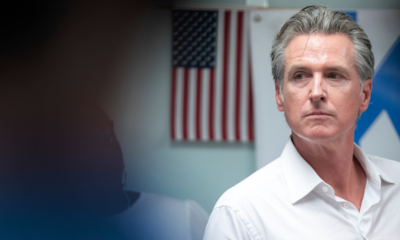








Polling shows Republicans Steve Hilton and Chad Bianco leading the pack, while eight Democrats split the liberal vote.
Democrats face nightmare scenario in California governor’s race
Polling shows Republicans Steve Hilton and Chad Bianco leading the California governor’s race, while eight Democrats split the liberal vote.
Democrats’ 2026 comeback could be spoiled by California electing a Republican governor, as two GOP candidates are leading in recent polls.
Experts forecast a potential “blue wave” in the midterm elections, as Democrats have recently overperformed in special elections, including flipping a state senate seat in President Donald Trump’s own Palm Beach, Florida, district on March 24.
But the party is facing a nightmare scenario in the nation’s most populous state, where polling shows Republicans Steve Hilton and Chad Bianco leading the pack in the June 2 nonpartisan primary. The state’s liberal majority is split among eight Democratic contenders.
The Democrats’ dilemma stems from California’s unusual election system, in which the top two finishers, regardless of party, advance to the November general election. A Berkley ISG survey released March 18 of more than 5,000 registered voters showed Hilton, a conservative TV host, receiving 17% of the vote while Bianco, the Riverside County sheriff, held 16%.
In third was Democratic Rep. Eric Swalwell, with 14%, then former Rep. Katie Porter holding 13%, followed by Tom Steyer at 10% and the five other Democratic candidates each getting 5% or less.
Other yardsticks show a similar trend, such as a March 18 survey commissioned by the California Democratic Party showing the two GOP candidates on top with Swalwell, Porter, and Steyer in a three-way tie for third place.
California Democrats enjoy a 2-to-1 voter registration edge over the GOP, but Golden State voters say there is a fog of confusion around the race due to the party’s failure to coalesce around a frontrunner. Olivya Reyes, a graduate student who lives in Oxnard, California, told USA TODAY the party still feels like it is trying to “find its footing” between a more moderate or progressive candidate.
“I feel like as a Democratic voter, what I would want to see from my party is clarity on who we’re supporting and getting behind,” she said.
Democratic Gov. Gavin Newsom, who is prevented from running due to term limits, has one eye on the presidency and hasn’t endorsed a successor or publicly nudged lower-performing candidates out of the race.
That neutrality could come at a cost, some experts say, should the two GOP aspirants prevail.
Do Democrats have a strategy for winning in midterms?
Democrats prioritize electability over ideology as they regroup from 2024 losses and focus on winning amid shifting voter confidence.
‘Nobody has leapt out’: Voters disengaged, largely unenthusiastic
Reyes, 29, a lifelong Democrat, said typically by the end of March she would have a strong idea of which candidate she planned to support. She was planning to back former Vice President Kamala Harris or Sen. Alex Padilla, but both bypassed running, leaving her clueless about who was running or who to support.
She has only learned about Steyer, who has poured millions into the contest, and former U.S. Health and Human Services Secretary Xavier Becerra.
“I’m going to be honest in saying that I have been getting a lot of conflicting messaging, even from my own party, about who I should put my vote behind,” Reyes said. “Right now, it seems that the party is very much trying to find its footing on whether or not we’re going for a progressive candidate or for a more moderate Democrat.”
Experts say voter apathy typically occurs in California because it’s a heavily Democratic-leaning state, and that a majority of voters don’t pay attention until after the usually low-turnout primary.
The Berkeley survey underscored how much inattention is responsible for Democrats’ lack of enthusiasm for a specific candidate. It noted that voters “remain largely disengaged and unenthusiastic,” and about 16% of Californians are undecided.
The poll found that even among the candidates who are generally better known, “significant proportions of likely voters have no opinion” of them.
That might come as a surprise, given that the top three Democrats all ran for major office before. Porter made an unsuccessful bid for Senate in 2024 while Steyer and Swalwell launched uneventful presidential campaigns in 2020.
There are other notable contenders on the Democratic side: Becerra, the former health secretary in the Biden administration who had just 5% in the Berkley poll; former Los Angeles Mayor Antonio Villaraigosa and San Jose Mayor Matt Mahan who raked in 4%; Tony Thurmond, state Superintendent of Public Instruction and Betty Yee, a former state controller who both shared 1%.
“No one in particular has caught fire with the average Democratic voter,” said Brian Sobel, a veteran political analyst based in San Francisco. “Nobody has leapt out.”
Democrat Rick De Alba, a workers’ compensation rights attorney from Pacifica, California, said he prefers Beccera, but noted he consistently sits in the basement of the race. He doesn’t want his vote going to someone who doesn’t have a shot at winning, and wishes underdog contenders would heed state party leaders’ advice and bow out gracefully.
“I think realistically you need about $30 million to put on an effective campaign in California, and if you can’t raise that, you should step aside,” De Alba said. “California always votes Democrat, no matter what. We just need to know who the candidate is.”
Reyes, the graduate student, said she had hoped to learn more about the other Democrats running through a debate hosted by the University of Southern California, which was originally scheduled to air on March 24. But the university canceled the event at the last minute after an accusation that it purposefully left out candidates of color, casting a shadow over the event for days.
Swalwell, Porter, and Steyer are White, whereas the lower-polling candidates are mostly people of color. Becerra and Villaraigosa are Hispanic; Mahan is White; Thurmond is Black; and Yee is Asian American.
“As a person of color, it did make me take a pause, and it didn’t look good,” Reyes said. “But I feel like this was a chance for all of these Democratic candidates to kind of put their faces in front of California voters.”
GOP shutting out Democrats ‘theoretically possible’ expert says
Conservative-leaning California voters such as Bud Thompson, a 61-year-old state government employee, said they are enjoying the spectacle of the usually dominant California Democrats in disarray. He was surprised to learn that the two leading candidates in this year’s races were the two GOP candidates.
“I think that you can look at California and see what a mess it is. Look at who’s been running it for the last few years,” the Sacramento, California, native said in an interview. “I am going to start seriously looking at the two Republicans. It would be a nice change of pace.”
California, under Newsom, has been one of the larger state governments that have opposed much of the Trump administration’s agenda, so having either Hilton or Bianco, who are both decidedly behind the president, would be a drastic shift.
Bianco made headlines this month when he followed the administration’s lead by seizing roughly 650,000 ballots in Riverside County, based on a tip from a citizen-led group that has been criticized for delving into conspiracy theories by local officials and other voting rights experts. He’s also made support for the president’s controversial SAVE Act voting bill one of the central themes in his campaign.
“Investigations into irregularities must happen so that the public can have full confidence,” Bianco said in a March 22 post on X.
Hilton, a former Fox News host, has also spoken in favor of Trump’s election overhaul, arguing that “(u)niversal mail-in voting must end,” in a March 26 post on X. He has emphasized allegedly fraudulent government spending and slammed Bianco for calling to work with Black Lives Matter protesters in 2020.
Thomas Holyoke, a political science professor at California State University, Fresno, said it’s “theoretically possible” that the two could shut out the Democrats, assuming GOP voters back their own candidates and earn enough votes from some independent voters.
But he said in the next couple of months, there will be a lot more pressure from state Democrats and others to significantly drain the pool of candidates so that the remaining contenders can consolidate support.
“I just got to imagine that pressure is really going to mount and a lot of donors to Democratic candidates may also push heavily for some Democrats to drop out,” Holyoke said.
Asked about the prospect of Republicans keeping Democrats out of the top two spots, national campaign officials who spoke with USA TODAY exuded optimism and spotlighted the party’s history of success in the state.
“We are confident that will not happen, and we are having active conversations with our partners in California about ways that we can ensure that doesn’t happen,” Johanna Warsaw, a spokesperson for the Democratic Governors Association, told USA TODAY in an interview.
She noted the group was heavily engaged in other elections that turned out well for progressives, including the 2025 redistricting ballot initiative known as Proposition 50 and the failed 2021 recall battle against Newsom.
Democrats express confidence as Newsom’s absence scrutinized
As the California election comes into focus, Newsom’s role in picking a successor is also being heavily scrutinized, especially given that he’s a rumored 2028 presidential contender.
Newsom served as lieutenant governor under former Gov. Jerry Brown, a longtime fixture in the state, before taking the reins in 2019. But Newsom’s second-in-command, Lt. Gov. Eleni Kounalakis, dropped out of the running last August.
“There isn’t a logical heir to the throne this time around,” said Eric Schickler, a political science professor at the University of California, Berkeley.
Newsom’s office did not respond to USA TODAY’s request for comment, but he addressed the lack of a focused message among the Democratic pool when speaking with Politico’s “On the Road” podcast. The governor noted that Harris and Padilla declining to run created “a lot of chill and a lot of delay” in this year’s campaign.
“You have this condensed period of time with a lot of candidates,” Newsom told host Jonathan Martin.
Sobel, the Bay Area political analyst, said Newsom has worked with many of the top candidates in various capacities previously and might want to avoid playing favorites. The 58-year-old governor will need their diverse and wide-ranging networks of support should he formally announce a White House bid.
“He’s going to need them again, sooner than later,” Sobel said.
Many of the low-polling candidates carry significant weight within the party at the local and state level, too, and some have been running for governor as far back as 2023. They are used to fighting ugly political battles, observers say, so they won’t go away easily.
The Yee campaign, for instance, points to the state party chair’s March 3 letter urging candidates to “honestly assess (their) viability” as an example of powerbrokers trying to clear the field for a select few.
“I’m not going to let that happen. Voters are still shopping,” Yee, a former state party vice chair, told USA TODAY in a statement. “Every poll shows the race remains wide open. Californians have a right to see and hear from a range of candidates, not just the billionaire-backed voices. Let the voters decide. Anything less is undemocratic and simply un-American.”
While the race might have some Democrats biting their nails, psychologist Steve Flannes, of Piedmont, California, said he’s pleased that so many people are running for governor. He said it’s a chore examining all the candidates, but he hopes it won’t be too cumbersome in the coming weeks.
“I’m trying to narrow down the options for myself,” Flannes, 75, said. “I’ve still got a couple of months to figure it all out, right?”

SACRAMENTO, Calif. (FOX26) — One week after ongoing efforts to ensure housing compliance statewide, Governor Gavin Newsom, through the California Department of Housing and Community Development (HCD), has issued final warnings to 15 cities and counties that have failed to meet state housing law requirements.
These jurisdictions are more than 60 days away from securing a certified housing element, a mandatory plan that outlines how communities will meet housing needs for residents of all income levels.
The cities and counties have 30 days to respond to the Notices of Violation.
If they fail to act, HCD could take further steps, including referral to the Attorney General.
“I’m disappointed on behalf of the state and the people of California that after years of effort, we still have communities that aren’t meeting the needs of their residents,” Gov. Newsom said. “There’s no carve-out here. No community gets a pass when it comes to addressing homelessness or creating more housing access. We’ll keep pushing forward by enforcing the law, fighting NIMBY actions, and holding local governments accountable, because every Californian deserves a place to call home.”
Under California law, every community must adopt a housing element demonstrating how it will meet regional housing needs for residents at all income levels, and submit that plan to HCD for review.
With guidance and technical assistance, 92 percent of California communities have already achieved compliance in the 6th cycle.
[RELATED] California lawmakers pass bill to rename César Chavez Day after sexual abuse allegations
The 15 jurisdictions receiving Notices of Violation are now part of a final push to bring all communities into compliance.
“These communities remain more than two years behind schedule and lack a clear path to compliance within 60 days,” HCD said. “If any jurisdictions on track fail to meet the requirements within that period, they will also face potential legal action.”
The 15 cities and counties receiving notices are: Atwater, Avenal, California City, Corcoran, Escalon, Half Moon Bay, Hanford, Kings County, Lemoore, Merced County, Montclair, Oakdale, Patterson, Ridgecrest and Turlock.
HCD has previously taken legal action or entered court-enforced agreements with other cities, including Anaheim, Elk Grove, La Canada Flintridge, Norwalk and Huntington Beach.
Since its creation in 2021, Gov. Newsom’s Housing Accountability Unit (HAU) has taken more than 1,200 enforcement actions, including securing 10 stipulated judgments and settlement agreements.
The unit has also “unlocked” 12,486 housing units, including more than 3,644 affordable units, that may have otherwise been stalled in local planning processes.
Governor Newsom has made addressing the housing and homelessness crises a statewide priority.
His efforts include:
- Streamlining housing construction through legal and regulatory reforms, including CEQA updates, to remove barriers to building new housing.
- Creating shelter and support programs for people living in encampments while holding local governments accountable for providing housing solutions.
- Expanding mental health care and supportive housing, including delivering more than 6,900 residential treatment beds and over 27,500 outpatient treatment slots following voter-approved Proposition 1 in 2024.
- Updating conservatorship laws to assist those unable to care for themselves due to severe mental illness or substance use disorders, creating the new CARE court system.
- Removing dangerous encampments on state and local property while connecting residents to shelter and services, with over 20,600 encampments cleared on state right-of-ways since 2021.
Californians can track how their communities are addressing housing, homelessness, and mental health through HCD’s accountability portal.
.
California
U.S. Forest Service issues Southern California rattlesnake warning after two deadly bites

The U.S. Forest Service has issued a warning regarding an increase in rattlesnake sightings in Southern California, especially after two deadly bites were reported in the last few weeks.
In a social media post, the USFS San Bernardino National Forest rangers reminded hikers and outdoor enthusiasts to be wary while exploring nature due to the increased temperatures and arrival of spring weather.
“As temperatures rise, rattlesnakes become more active in the forest,” the USFS’s post said. ” Stay alert, watch where you step and keep pets close.”
Southern California encounters
Since the beginning of the year, hikers have already reported rattlesnake encounters near a Moreno Valley hiking trail in Riverside County, where someone was bitten and required hospitalization.
There have been deadly incidents reported in both Orange County, where a man was bitten while mountain biking in Irvine, and Ventura County, where a 46-year-old woman died from “rattlesnake venom toxicity in an accidental manner.”
“If you encounter a rattlesnake, give it plenty of space and calmly move away,” the social media post said. “Never attempt to touch or disturb wildlife.”
USFS officials credited the increase in encounters to elevated temperatures and abnormally sunny conditions as opposed to the typical winter weather that Southern California sees.
They said that snakes can use their full length to strike, sometimes equating to more than five feet.
Treating rattlesnake bites
Officials advised anyone bitten by a rattlesnake to:
- call 911 and seek immediate medical attention
- keep the bite victim still as movement allows venom to spread through the body more easily
- keep the injured body part motionless and lower than heart level
- keep the victim warm and at rest
- refraining from food and drink
- cover the bite with a clean, dry dressing
They also urged people to avoid using a tourniquet, slashing at the wound with a knife, sucking out the venom, using ice or immersing the wound in water, drinking alcohol as a painkiller or drinking caffeinated beverages.
Officials warned that people should not wait for symptoms of a bite to appear before seeking medical attention. However, they provided a list of different signs that someone may see if they are bitten by a rattler, including:
- puncture marks at the wound
- redness and swelling around the bite
- severe pain at the site of the bite
- nausea and vomiting
- labored breathing
- disturbed vision
- increased sweating and salivation
- numbness or tingling in the face and/or limbs
Spotting and avoiding rattlesnakes
While Southern California is home to several species of rattlesnake, the most common are typically the Western Diamondback and Southern Pacific Rattlesnakes, according to the California Department of Fish and Wildlife.
Aside from their infamous rattle, rattlesnakes can be identified by their broad and diamond-shaped head. They usually have spotched markings that appaer separated by lighter colored stripes that become smaller and narrower towards the tail, which is tipped with a paper-like noise-producing rattle, USFS officials said.
While they typically hide during the cold winter months, snakes venture out during warm weather. They usually hide in shady spots during the hottest parts of the day and begin hunting either in the early morning or evening. Officials advised that rattlesnakes can swim as well.
In order to avoid rattlesnakes, USFS rangers said that people should not tease or harass any wildlife, keep a distance of at least six feet if a rattler is spotted, stay on trails and watch where stepping or placing your hands when hiking or climbing over obstacles, avoid tall grass and piles of leaves and wear long pants and proper foot gear.

Retired Detroit sergeant faces new sexual assault charge involving 14-year-old victim from 2002

Trump floats sending federal agents to San Francisco to tackle crime

Dallas ISD will offer free pre-K starting next school year

Norwegian Cruise Line offers a first look at Luna, new cruise ship setting sail from PortMiami – WSVN 7News | Miami News, Weather, Sports | Fort Lauderdale

Live: CPAC 2026 Day 2

Florida High School Football Rankings: Top 25 teams – Oct. 21

How old is Bo Nix? What to know about Oregon quarterback ahead of 2024 NFL Draft

Cleary's 21 help Le Moyne down Central Connecticut State 69-64 in OT

99th annual Pony Swim held in Virginia

Indiana Members Credit Union announced as new anchor tenant at Bottleworks District
Live: CPAC 2026 Day 2

Video: Will ICE Change Under Its New Leader?

DHS shutdown breakthrough comes at cost for Republicans as funding fights nears end

Rubio joins crucial G7 talks as Iran war set to dominate second day

A surprise resignation could open the door for an independent to win a Montana Senate seat
-

 Detroit, MI1 week ago
Drummer Brian Pastoria, longtime Detroit music advocate, dies at 68
-

 Science1 week ago
How a Melting Glacier in Antarctica Could Affect Tens of Millions Around the Globe
-

 Movie Reviews1 week ago
‘Youth’ Twitter review: Ken Karunaas impresses audiences; Suraj Venjaramoodu adds charm; music wins praise | – The Times of India
-

 Sports6 days ago
IOC addresses execution of 19-year-old Iranian wrestler Saleh Mohammadi
-

 New Mexico5 days ago
Clovis shooting leaves one dead, four injured
-
 Business1 week ago
Disney’s new CEO says his focus is on storytelling and creativity
-

 Technology5 days ago
YouTube job scam text: How to spot it fast
-

 Tennessee4 days ago
Tennessee Police Investigating Alleged Assault Involving ‘Reacher’ Star Alan Ritchson