California
Can this state be saved? Why California is so different from the rest of the U.S.


For people who don’t live in California, the nation’s most populous state can be a little hard to understand.
Home to Hollywood and Silicon Valley, Yosemite National Park and Disneyland, Lake Tahoe and the Napa Valley, the Golden State offers some of the most desirable tourist destinations in the U.S. — and some of the most beautiful places to live. California has great food, gorgeous landscapes and temperate weather. “If there were an ‘it girl’ of the United States, it’d have to be California,” House Beautiful magazine gushed last year.
There is the American dream, yes, but there is also the “California dream,” which for decades drove people to heed Horace Greeley’s famous call to “Go West” in search of the good life.
And yet, these days, California is derided for its politics and laws, seen by those in other states as wildly out of step with the rest of the nation; this year, new laws include one prohibiting school districts from notifying parents if a student changes their gender identity at school, and another that legalizes cannabis cafes.
The wildfires that swept through Los Angeles this month brought into sharp relief the state’s progressive environmental and building laws that some say contributed to the devastation. Actor Mel Gibson, whose $14.5 million Malibu home was destroyed in the fires, said on the Joe Rogan podcast, “This might finally get me out of California.”
The state has been losing residents to other regions in recent years; more than 800,000 residents left between 2021 and 2022, with some citing high taxes, home prices and the cost of living generally. (California’s gas taxes are the highest in the nation, 68 cents a gallon in 2024.) Consumer Affairs recently named California the worst state in which to raise a family, and United Van Lines ranks California fourth on its list of states that people are moving out of, behind New Jersey, Illinois and New York. High-profile voices who have left California in recent years include Elon Musk, Ben Shapiro and Joe Rogan.
President-elect Donald Trump has just named Jon Voight, Sylvester Stallone and Mel Gibson as “special ambassadors” charged with bringing business back to Hollywood — even before the fires, headlines were proclaiming that “Hollywood is ditching Hollywood” because of entertainment companies going to places like Georgia and New Mexico, and even to other countries, to escape California’s costs.
But there are other ways in which California is an outlier, maybe even a little bit weird.
Take the “California Psychics” that advertise so heavily on conservative radio shows. It’s hard to articulate why psychics seem to belong in California, but it’s clear that “Virginia Psychics” or “Ohio Psychics” just wouldn’t have the same cachet.
And is there an American consumer alive who hasn’t been perplexed— and perhaps a little bit fearful — about why something they’re about to eat is banned in California while legal everywhere else?
“California is the embodiment of ‘a nice place to visit, but you wouldn’t want to live there,’” said Bill Whalen, a research fellow at the Hoover Institution at Stanford University who was a speechwriter for former California Gov. Pete Wilson.
While a state as large as California is naturally going to have a lot of churn, there is some evidence that conservatives leaving the state are seeking “redder pastures,” as the Los Angeles Times put it a few years ago. There are also nonpartisan reasons for the exodus, to include the nation’s largest risk of wildfires and tsunamis, and the nation’s second highest risk of earthquakes (after Alaska), all of which make it more expensive to get insurance, if you can get insurance at all.
State Farm, among insurers which recently reduced or dropped coverage in the state because of wildfire risk, is under heightened scrutiny because of the LA fires and has pulled its popular advertising out of this year’s Super Bowl.
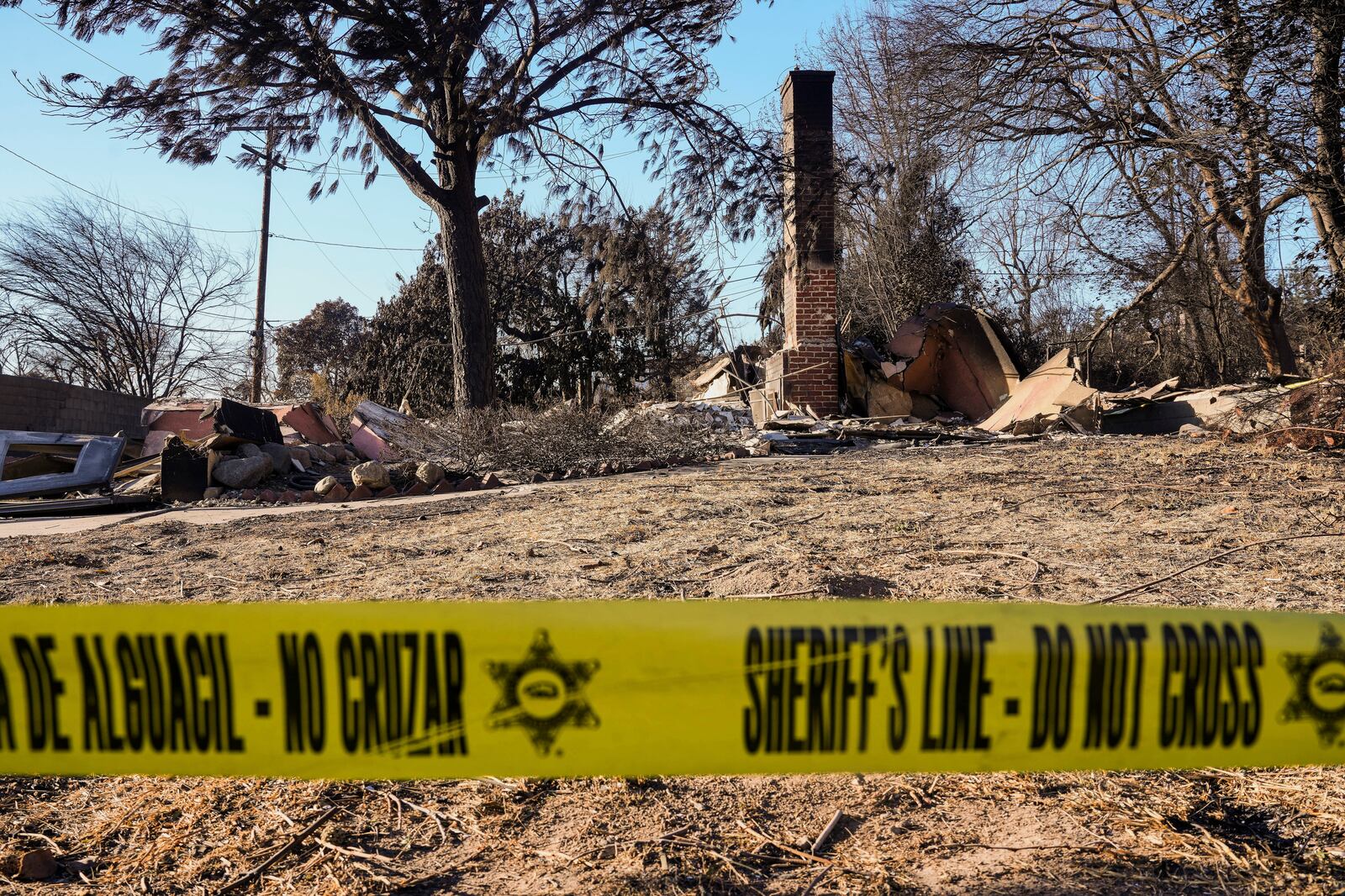
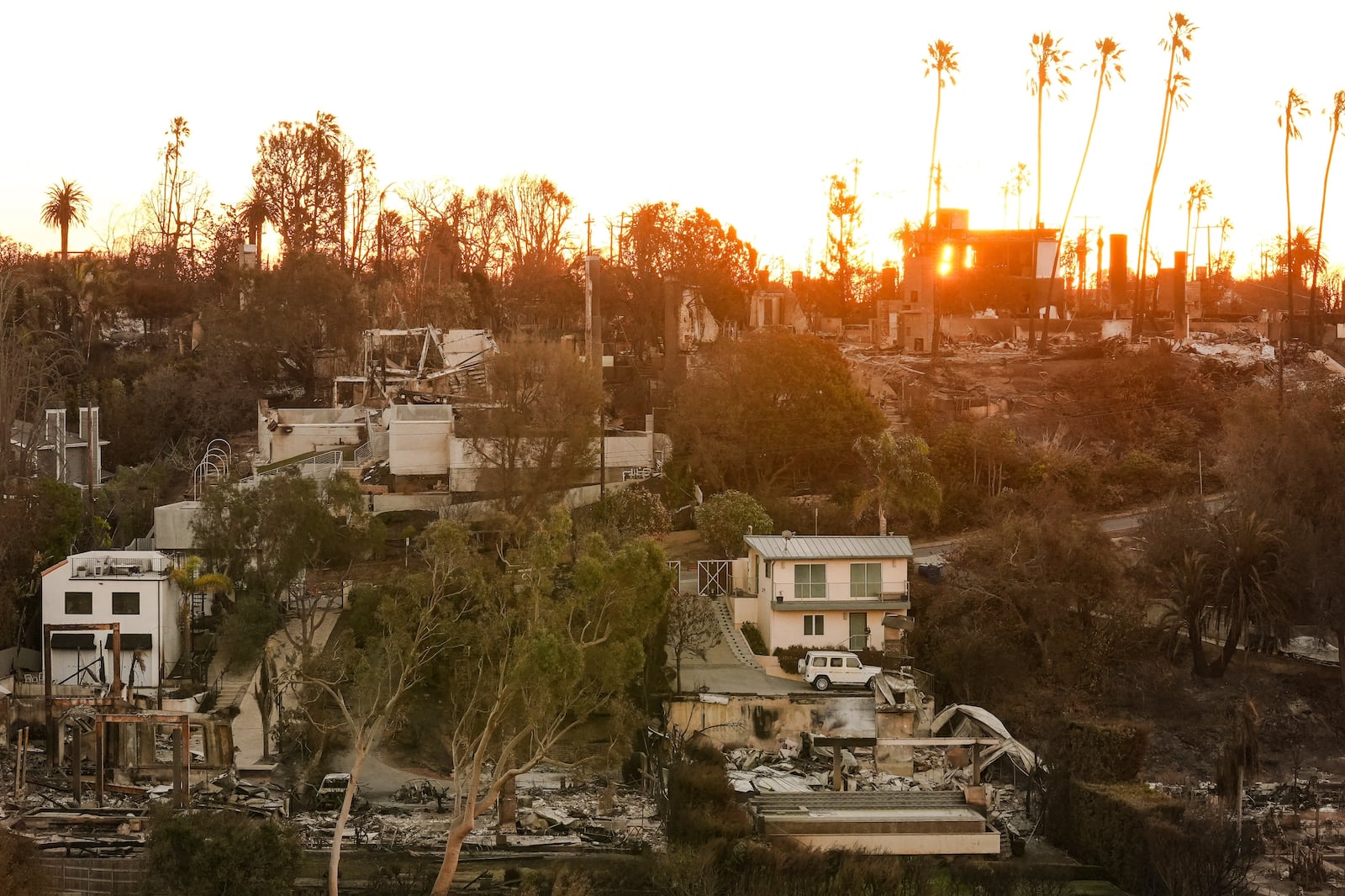
All of California, it seems, was not ready for its close-up, which arrived when the Santa Ana winds hit the Pacific Palisades Jan. 7, sparking both the fires and national scrutiny.
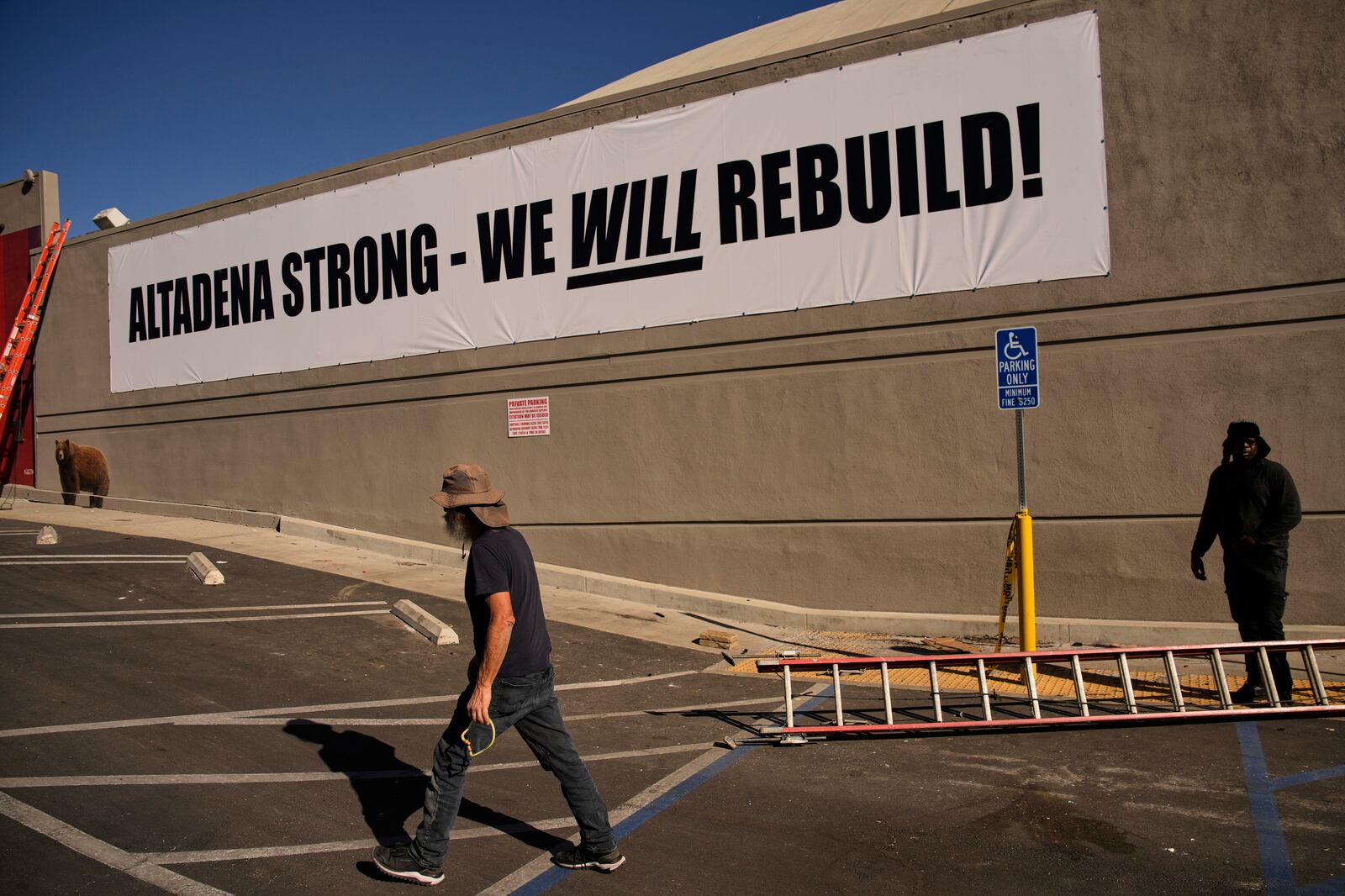
In the coming months, California faces a reckoning on whether its proud reputation as the “Left Coast” is literally destroying parts of the state — and whether that needs to change. If there is a shift to the right, as some people are predicting in the wake of the fires, it would be a seismic change for a state that embraces its outlier status.
“It’s not just big — it’s different,” acknowledges Dan Schnur, who teaches politics and communications at the University of Southern California and University of California, Berkeley. “Most Californians see it that way and like it that way.”
That’s in part because a lot of what the rest of the country sees as California oddities are policies aimed at improving the quality of life — like the $20 minimum wage for fast-food workers — or protecting California residents from various nefarious threats, such as the notice that pops up on the GetTrumpWatches.com website that says “Notice to California consumers.”
“Under California Civil Code sections 1798.83-1798.84, California residents are entitled to ask us for a notice describing what categories of Personal Information we share with third parties or corporate affiliates for those third parties or corporate affiliates’ direct marketing purposes.”
The notice stipulates that this only applies to residents of California.
But one person’s protection, of course, is another person’s nanny state.
How many Californians voted for Trump?
Schnur moved to California nearly 35 years ago to work on a political campaign, intending to stay for only a few months, but he stayed, living for a while in Sacramento and the Bay Area, before moving to Los Angeles, where he lives now.
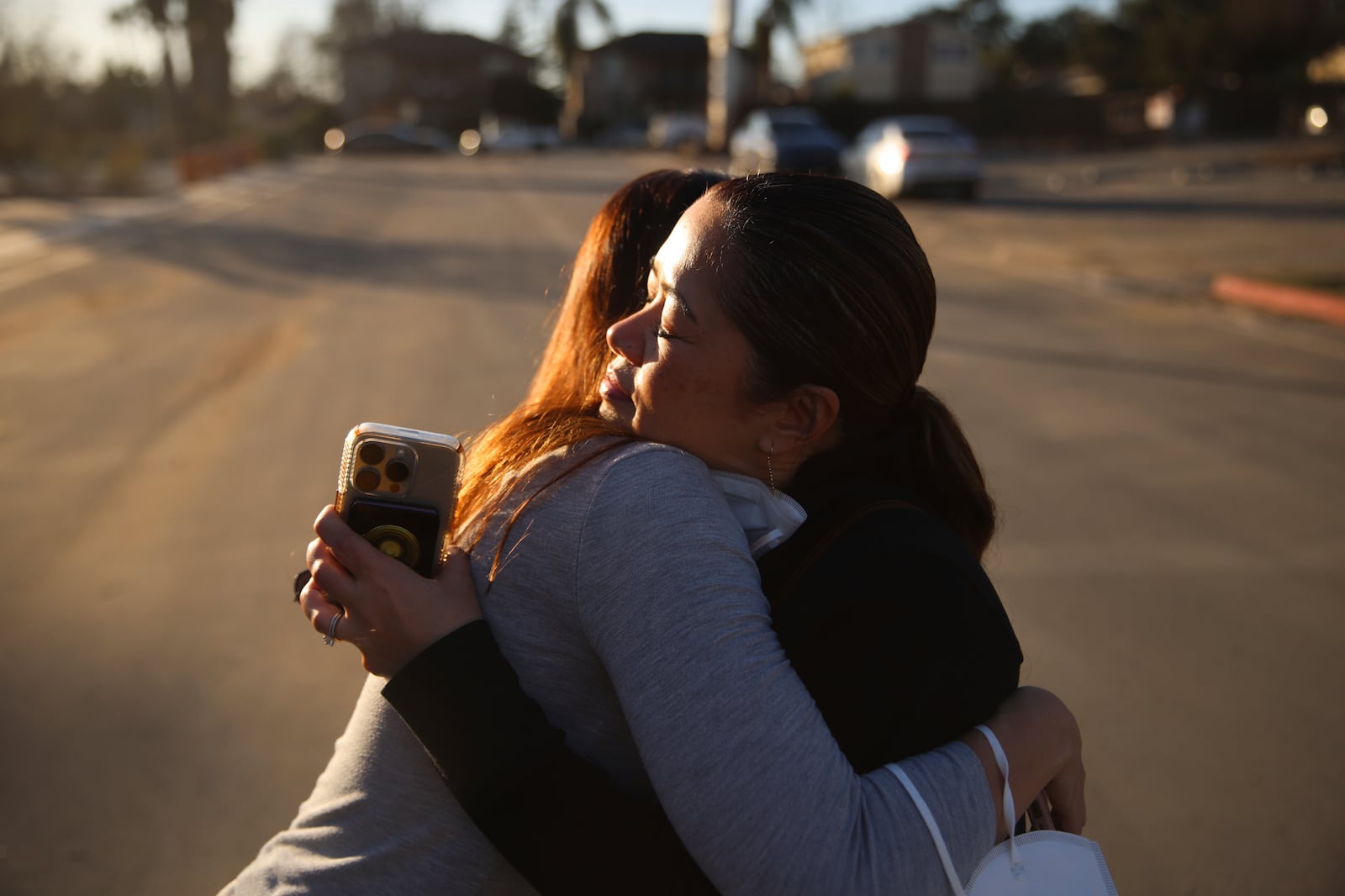
“What I find fascinating about Southern California is that it might be the most diverse society in the history of the planet Earth. There’s something exciting and sometimes challenging about being part of this mass experiment, of people with different backgrounds, different heritage and different beliefs, trying to make it work,” he said.
“There have been times in the past when New York or Boston or perhaps Miami represented that diversity more than any other place, but Southern California’s geographic location is what leads to such a broad range of backgrounds.”
In fact, more than a quarter of the state’s population was born outside the U.S., nearly twice the national average, and the state has been a hotbed for immigration battles. California not only has sanctuary cities, but is considered a “sanctuary state.” And Gov. Gavin Newsom has vowed to fight President-elect Donald Trump’s plans to deport immigrants living in the U.S. illegally; the Legislature approved his $50 million package to “Trump-proof” the state, with half of that money going to fight deportations.
The package was the latest volley in the long-simmering feud between Newsom and Trump, which stands to become more acrimonious in the coming months as Washington debates what aid to authorize for California, and whether there should be restrictions tied to it. Glenn Beck and House Speaker Mike Johnson are among those arguing that wildfire aid should be conditional, on California making changes.
California, however, has long been a stronghold of resistance to the GOP. Vice President Kamala Harris comfortably beat Trump in November with 58.5% of the vote, and former Speaker of the House Nancy Pelosi has wielded power in Washington for decades, most recently being instrumental in the ousting of President Joe Biden on the Democratic ticket. As the most populous state, California has the most representatives in Congress, even after losing a seat after the 2020 census. Writing for Cal Matters, Dan Walters warned that California’s political power will shrink as its population does.
And although the state remains blue, 6 million Californians voted for Trump — roughly the population of Utah, Wyoming and New Mexico combined.
Which, Schnur points out, is what many outsiders don’t understand about California: just how large and diverse the state is. People who haven’t lived in California think of the state as an amalgam of “Baywatch,” Hollywood and Silicon Valley, not realizing it’s also the nation’s largest agricultural producer, and that parts of the state, particularly along its eastern border, “aren’t all that much different from the rest of the country.”
“But there are 40 million people here, and most of them don’t work in entertainment or technology,” Schnur said.
This sentiment is seconded by people like Mike Cernovich, a filmmaker who frequently posts about California’s beauty on the social media platform X. “No one wants to leave California. Geographically it is perfect. You can go from beach to mountains in three hours,” Cernovich wrote on X. But his photos of Golden State beauty are sometimes challenged by people who say they feel gaslit.
“We have some very serious problems here in California, and they’re being perpetuated by progressive policies. Things like needle exchange programs, open air drug markets, and the decriminalization of theft,” podcaster Michael Oxford wrote in response to one of Cernovich’s idyllic photos.
Former Gov. Arnold Schwarzenegger has talked about biking past a homeless encampment in Venice on his way to the gym, and California accounts for about one-third of the homeless population in the U.S.
It is, in fact, those sorts of images that make California a punchline on Fox News and cause people in other parts of the country to wonder why anyone would want to live there. That’s quickly followed, however, by those in Texas, Utah and other locations with, “but don’t move here and drive up our housing prices.”
Both the golden view and doomsday view of California can be true; it depends on where you’re looking.
The ‘great exception’
The late Carey McWilliams famously called California “The Great Exception” in a book by that title released in 1949, a century after the Gold Rush that brought hundreds of thousands of people into the state. “California has not grown or evolved so much as it has been hurtled forward, rocket-fashion, by a series of chain-reaction explosions. (The) lights went on all at once, in a blaze, and they have never been dimmed,” McWilliams wrote.
But California has dimmed in the eyes of many Americans, in large part to the perception that the state is not so much a trail-blazer, but completely out of step with the values of the rest of the country — an idea that Newsom reinforces by talking about “California values,” as if they are distinct from American values.
In its annual list of the 10 worst new laws in California, the group Reform California, led by Assemblyman Carl DeMaio, included for 2025 a new law that prohibits polling stations for asking voters for proof of identification, already being challenged in court, like the law prohibiting school districts from notifying parents when a child identifies as a different gender in school. The group also called out a new law that requires potential foster parents in California to demonstrate support for “gender affirming” standards of care, which some see as discrimination against religious parents who don’t agree with the policy, let alone the terminology.
“Is California the petri dish of what America should be?” Whalen said. “No, if you’re either centrist or right of center.”
It was the law prohibiting school districts from notifying parents about gender changes that Elon Musk called “the final straw” that made him decide to pull out of California. He has also said that he tired of “dodging gangs of violent drug addicts just to get in and out of the building” when the headquarters of X was in San Francisco.
Conservative commentator Ben Shapiro, who moved from California to Tennessee, along with his media company, The Daily Wire, wrote four years ago that he left his home state “because all the benefits of California have eroded steadily — and then suddenly collapsed.” Podcaster Joe Rogan has said he moved from California to Texas because the state “went nuts” and has “gone full communist.”
Despite these high-profile losses, California’s population rebounded by about 250,000 people in 2024, the Los Angeles Times reported last month, while noting, “The numbers are not all rosy. California experienced a slower growth rate than the country as a whole, particularly large states in the fast-growing South. It also experienced the nation’s largest domestic migration loss.”
California gained 232,570 new residents between July of 2023 and July of 2024, compared to Texas, which grew by 562,941, and Florida, which gained 467,347 new residents.
Eric McGhee, a senior fellow at the Public Policy Institute of California, told me, “We do see some evidence that conservatives and Republicans are more likely to leave the state.” But he said that typically people give “family, job and the cost of living” as reasons for leaving, not “I can’t stand that Gavin Newsom, I’ve got to get out of here.”
On the other hand, McGhee said, “Republicans are dramatically more likely to say that they have thought about leaving California.” But, he added, “only a small fraction of them will actually do it.”
That’s not because living in California is gradually making them more liberal by osmosis, but more likely because, as Joshua Charles, a former speechwriter for Vice President Mike Pence, put it recently on X: “Home is always home.”
“Our family has been here over 100 years, since the beginning of the 20th century. … I am convinced that reclaiming the human from the grasp of modernity oftentimes requires staying put, putting down roots, and building,” wrote Charles, who lives near Sacramento.
From sitcoms to punchlines
The idea that people are leaving California in droves because of its progressiveness isn’t a new one. Whalen, the Hoover Institution scholar, worked for then-Gov. Pete Wilson in the 1990s, and even then people joked that U-Haul always ran out of trucks in California, he told me.
But, he said, you can see how the image of California has changed over time in how it is represented on TV.
“You go back and look at situation comedies in the 1950s and 1960s, and what do you see? California is a destination. California is the place you want to be. It’s where the Ricardos drove and thought about staying. It’s where situation comedies like ‘The Brady Bunch’ and ‘My Three Sons’ were set. The sunny suburban parts of Los Angeles; it just looked like paradise on Earth.” Now, he said, it’s still considered a nice place to visit, not live, by people outside of the state — particularly the middle class.
California has what’s called a barbell economy, Whalen said — meaning it is heavily weighted with high-skill, high-paying jobs on one end, and low-skill, low-paying jobs on the other. “And I don’t think the middle class has ever been under assault as it is right now in California in terms of livability,” he said. “That’s what you see in the outbound migration. And that’s the challenge that vexes every governor, every lawmaker: how to make California more affordable. And nobody seems to have an answer.”
California is typically ranked as the second most expensive state to live in, after Hawaii, with costs averaging around 30% higher than the rest of the U.S., per U.S. News & World Report. The state has the highest individual tax rate and the highest gas tax, 68 cents a gallon in 2024.
But Schnur says that many residents are willing to pay what amounts to a “weather tax” for the privilege of living in California. “It costs more to live here but in return you get beaches and mountains and a really terrific climate,” he said, noting that it costs more to live near water everywhere in the country, be it the ocean or a lake.
Moreover, he argues that many of the things that other people consider weird about California are simply the state being a trendsetter, with the rest of the country playing catch-up. In 2014, for example, California was the first state to pass a ban on plastic bags, something which many other states and municipalities across the country have now done.
“For most of the last century or longer, many of the nation’s most notable trends started in California, starting with the aerospace industry in the post-Cold War era and the tax-cutting revolution that ultimately elected Reagan as president. Certainly, the modern-day environmental movement has its roots here. Debates over immigration, affirmative action and climate change might not be unique to California, but the case can be made that the political impact was seen here first. … You can argue that history doesn’t repeat itself, it just moves East.”
Moreover, he noted, that some of the concerns of the Trump-adjacent Make America Healthy Again movement — such as worries about food additives and toxins — have already long been addressed by California’s Proposition 65, which seeks to protect residents from “significant exposures to chemicals that cause cancer, birth defects or other reproductive harm.”
And McGhee of the Public Policy Institute of California noted, “We had our own version of the Clean Air Act before the Clean Air Act was passed.”
Newsom, who has been considered a potential Democratic presidential contender, declined to be interviewed for this article. But Whalen, at the Hoover Institution, noted that if Newsom runs for president, it will essentially be a national referendum on California. And, he said, “It’s hard to see someone saying with a straight face that California is the direction in which America should go right now.”



Congressman Kevin Kiley has announced his plan to run in California’s newly redrawn 6th district.
In a statement on Monday, Rep. Kiley revealed he had considered running in the 5th District – which could have set up a possible showdown between two current Republican officeholders.
“It’s true that I was fully prepared to run in the new 5th, having tested the waters and with polls showing a favorable outlook in a “safe” district. But doing what’s easy and what’s right are often not the same,” Kiley stated.
Kiley currently represents California’s 3rd district, which originally comprised counties making up much of the back spine of the state.
As of the Prop. 50 redistricting push, the 3rd district was redrawn for the 2026 midterm election to lean toward the Democratic Party – with those eastern spine of California counties lopped off and more of Sacramento County, including Rancho Cordova, added.
California’s new 6th district is now comprised of Rocklin, Roseville, Citrus Heights, much of North and East Sacramento, and the city of West Sacramento. Democratic Rep. Ami Bera currently represents the district, but will be running for the new 3rd district in 2026.
Other declared candidates for the 6th district include Democrats Lauren Babb Thomlinson, Thien Ho, Richard Pan, Kindra Pring, Tyler Vandenberg, and Republicans Christine Bish, Craig DeLuz, and Raymond Riehle.
Kiley was first elected to the House in 2022 and was reelected in 2024.

SAN RAMON, Calif. (KGO) — An earthquake with a preliminary magnitude of 3.4 struck near San Ramon at 11:21 p.m. Sunday, the U.S. Geological Survey said.
USGS said the tremor was about 8.4 km in depth.
According to the Geological Survey, people typically report feeling earthquakes larger than about magnitude 2.5.
The closer to the surface an earthquake occurs, the more ground shaking and potential damage it will cause.
No injuries have been reported.
This is the latest quake in San Ramon, which has seen multiple strings of tremors in the past several months.
Bay City News contributed to this report.
MAP: Significant San Francisco Bay Area fault lines and strong earthquakes
Zoom in on the map below and compare where you live to the significant faults and where strong earthquakes have struck in the Bay Area.
Stay with ABC7 News for the latest details on this developing story.
RELATED STORIES & VIDEOS:
Copyright © 2026 KGO-TV. All Rights Reserved.

LOS ANGELES (KABC) — Worshippers across Los Angeles were met with an increased law enforcement presence on Sunday as police and sheriff’s deputies stepped up patrols outside mosques, synagogues and cultural landmarks following the strikes on Iran.
Local officials said there are no credible threats to Southern California, but the Los Angeles Police Department and the Los Angeles County Sheriff’s Department heightened visibility as a precaution to ensure communities stay safe.
More demonstrations tied to the attack on Iran are expected Sunday and Monday. Several protests were held across Southern California on Saturday.
READ MORE | Rallies for and against military action in Iran draw demonstrators across Southern California
While Iranian-Americans celebrated in Westwood, protesters gathered in downtown Los Angeles to oppose the Trump administration’s attacks against Iran.
While some groups gathered in downtown Los Angeles to protest the strikes, others assembled in Westwood to celebrate “the fall of the Ayotollah,” according to organizers.
Authorities said they will continue monitoring events as the region prepares for additional gatherings in the days ahead.
This is a developing story. This article will continue to be updated as more information becomes available.
Copyright © 2026 KABC Television, LLC. All rights reserved.
South Dakota4 minutes ago
SD Lottery Powerball, Lotto America winning numbers for March 2, 2026

Tennessee10 minutes ago
Tennessee releases availability update on star Nate Ament following injury

Texas16 minutes ago
North Texas voters flood polls early, boosting turnout in both parties

Utah22 minutes ago
Utah snowpack numbers looking dismal with not much time to catch up

Vermont28 minutes ago
In Vermont, small town meetings grapple with debate on big issues

Florida1 year ago
Florida High School Football Rankings: Top 25 teams – Oct. 21

Connecticut2 years ago
Cleary's 21 help Le Moyne down Central Connecticut State 69-64 in OT

Oregon2 years ago
How old is Bo Nix? What to know about Oregon quarterback ahead of 2024 NFL Draft

Virginia2 years ago
99th annual Pony Swim held in Virginia

Indiana1 year ago
Indiana Members Credit Union announced as new anchor tenant at Bottleworks District

Politics3 hours ago
Trump sends official notification to Congress on strikes against Iran

World4 hours ago
Unexpected birth brings hope to near-extinct Amazon tribe

News4 hours ago
Supreme Court blocks redrawing of New York congressional map, dealing a win for GOP

News14 hours ago
Map: Earthquake Shakes Central California

Politics15 hours ago
Gas prices could jump as Middle East tensions threaten global oil supply
-

 World5 days ago
Exclusive: DeepSeek withholds latest AI model from US chipmakers including Nvidia, sources say
-

 Massachusetts5 days ago
Mother and daughter injured in Taunton house explosion
-

 Denver, CO5 days ago
10 acres charred, 5 injured in Thornton grass fire, evacuation orders lifted
-

 Louisiana1 week ago
Wildfire near Gum Swamp Road in Livingston Parish now under control; more than 200 acres burned
-

 Technology1 week ago
YouTube TV billing scam emails are hitting inboxes
-

 Politics1 week ago
OpenAI didn’t contact police despite employees flagging mass shooter’s concerning chatbot interactions: REPORT
-

 Technology1 week ago
Stellantis is in a crisis of its own making
-

 News1 week ago
World reacts as US top court limits Trump’s tariff powers