California
As COVID wave wallops California, new vaccines arrive this week. Will it be turning point?

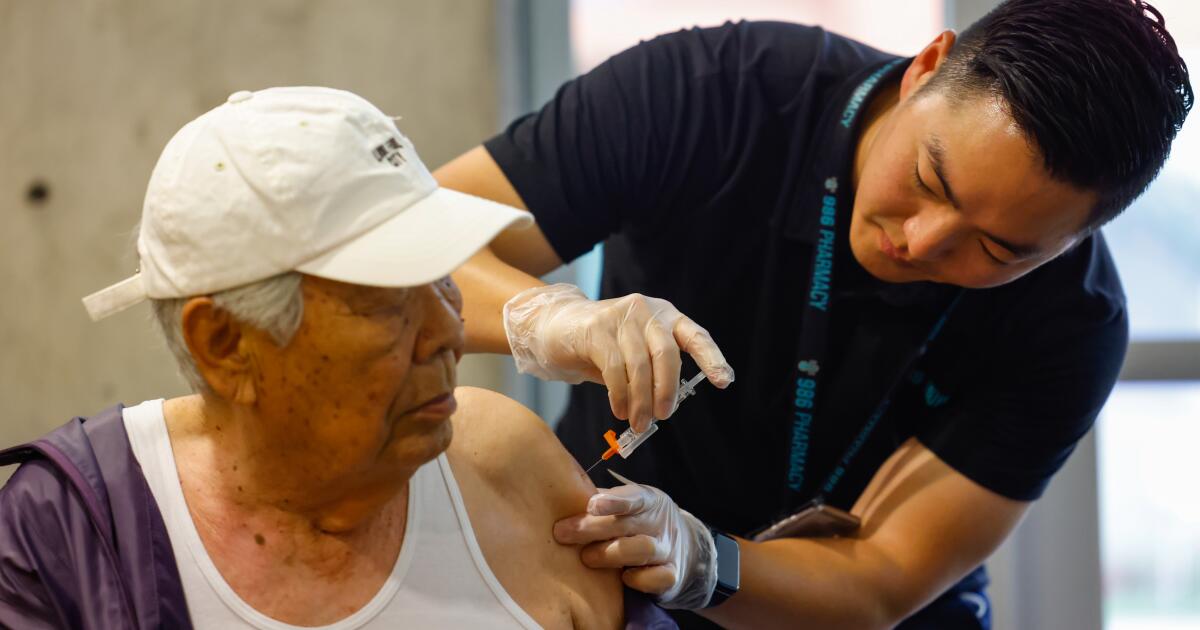
New COVID-19 vaccines are expected to be available as soon as this week, a promising development amid California’s potent and enduring summer wave of the disease.
The U.S. Food and Drug Administration authorized the distribution of the updated Moderna and Pfizer COVID-19 vaccines for the 2024-25 season on Thursday. And in preparation for winter, when COVID typically surges again, federal officials said Americans will soon be able to register to receive four free tests in the mail.
Major retailers — including CVS, Walgreens, Rite Aid, Ralphs, Vons, Pavilions, Albertsons and Safeway — are already accepting appointments for the new COVID-19 vaccines, or soon will. Kaiser Permanente expects to begin administering the shots by mid-September, and possibly earlier in some locations.
The new vaccines have been reformulated in hopes of providing optimal protection against the most commonly circulating coronavirus strains, a process that can be comparable to development of the annual flu shot.
The arrival of the latest vaccines comes amid a surprisingly powerful summer COVID wave — the strongest in terms of infections since 2022. Increased circulation of new hyperinfectious subvariants has sickened many Americans, ruined vacations and weddings and forced people to miss work.
Coronavirus levels in wastewater are considered “high” or “very high” in 45 states, including California, as well as in the District of Columbia. Coronavirus sewage levels were considered “moderate” in Michigan, New Jersey, Vermont and West Virginia; no data was available for North Dakota.
Earlier this year, some of the coronavirus subvariants that succeeded last winter’s dominant strain were collectively nicknamed FLiRT — a play on some of the technical terms for their mutations. That group included a strain officially known as KP.2.
A successor subvariant, KP.3, had a different mutation and so was nicknamed FLuQE — pronounced “fluke.” An even more contagious subvariant, KP.3.1.1, had a mutation that was deleted, giving it the unofficial moniker deFLuQE, or “de-fluke.”
For most people, September and October are the best months to get vaccinated against both COVID-19 and flu, according to the U.S. Centers for Disease Control and Prevention. Everyone age 6 months and older should receive updated COVID-19 and flu vaccines, and can get both during the same visit, the CDC said.
“The important part is getting it done,” CDC Director Mandy Cohen said at a briefing. “If September, from a calendar perspective, works better for folks, great. October gets you closer to the to the winter season. But the important part is getting it done.”
Dr. Cohen said Friday that peak winter hospitalizations for COVID-19, flu and respiratory syncytial virus, or RSV — a triple-header that has strained hospitals in the past — are expected to be similar to last year’s, or even slightly improved. But that forecast could prove overly optimistic, she said, if some assumptions end up being wrong — for example, if fewer people get vaccinated than expected.
COVID-19 continues to circulate at a very high level nationally and in California.
The rate at which coronavirus tests are coming back positive continues to rise. For the week that ended Aug. 14, 14.4% of reported coronavirus tests were positive in California. That’s higher than the peaks seen last summer and winter, and up from about 11% a month ago.
But depending on the region, “I think we are potentially seeing some indication of a plateauing of the summer increase in COVID-19,” said Dr. Demetre Daskalakis, who heads the CDC’s National Center for Immunization and Respiratory Diseases. Still, “we’re not out of the woods yet,” he added.
There are now 26 states, including California, where COVID-19 is projected to be “growing” or “likely growing.” That’s down from 44 states in those categories about six weeks ago, according to the CDC.
There are initial signs that the summer surge may be starting to peak in some areas, including Los Angeles County, although trends won’t be clear until there are a few weeks of sustained declines.
For the week that ended Aug. 18, there were an average of 421 coronavirus cases a day in L.A. County. The week prior, there were 484.
Out of all emergency department encounters countywide for the week that ended Aug. 18, 3.9% were related to the coronavirus, down from the previous week’s 4.3%. Last summer’s peak was 5.1%.
COVID hospitalizations are essentially flat. For the week that ended Aug. 17, a daily average of 478 coronavirus-infected people were in hospitals in L.A. County. The week before, there were 481. Last summer’s peak was 620.
“Given that this is just one week’s data, it’s too soon to know if these declines will continue or indicate if transmission has plateaued or peaked,” the L.A. County Department of Public Health said in a statement to The Times.
Coronavirus levels in the county’s wastewater are up, but that metric has a longer lag time than other indicators. For the 10-day period that ended Aug. 10, coronavirus levels in L.A. County sewage were measured at 87% of last winter’s peak. That’s up from the 10-day period that ended Aug. 3, when coronavirus levels were at 76% of the winter peak.
Overall, coronavirus levels in California’s wastewater have been largely flat in recent weeks.
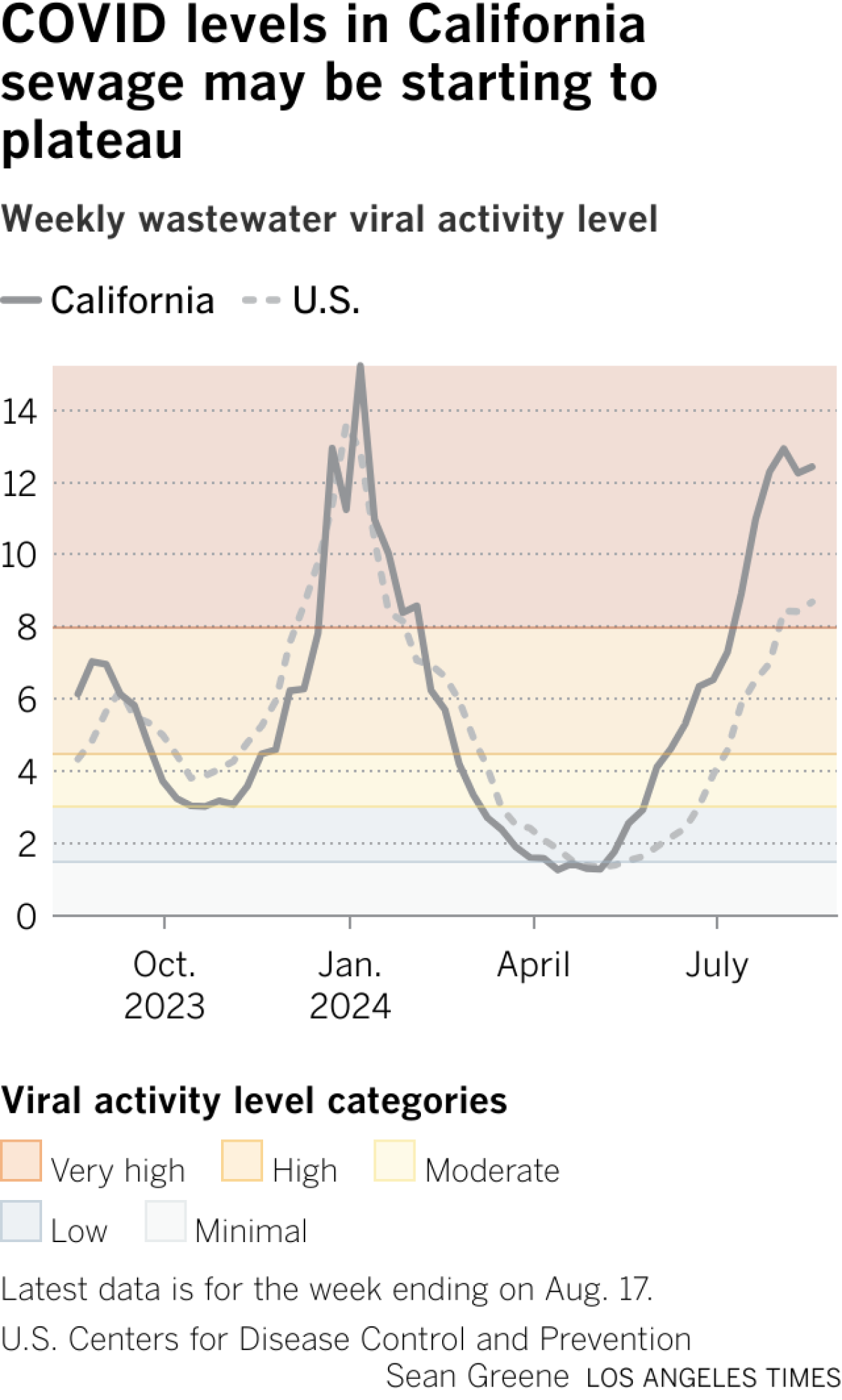
In general this summer, emergency room visits, hospitalizations and deaths from COVID have been rising, but, fortunately not as sharply as during earlier waves of the pandemic.
“While the COVID virus continues to mutate and change faster than the flu virus, our underlying immunity from prior vaccines and prior infections provides some protection,” Cohen said. “But we know that protection decreases over time, and certain groups continue to be at higher risk from COVID and other viruses, and we need to continue to protect ourselves and our loved ones.”
COVID remains more of a threat than the flu.
“In terms of what is hospitalizing more folks and what is killing more folks, COVID continues to be a more dangerous virus than flu,” Cohen said.
Nationally, at least 50,000 COVID-19 deaths have been reported since October, compared with at least 25,000 flu deaths. CDC estimates on flu deaths will be updated later this year.
That’s why it’s so important that people get freshly vaccinated heading into fall, doctors say. Those at highest risk include seniors and immunocompromised people who haven’t been vaccinated against COVID-19 in more than a year.
As of the end of last winter, just 29% of seniors nationally had received the previous COVID-19 vaccination, according to data on a subset of Medicare beneficiaries. As of July 31, 37% of California seniors had received at least one dose of that vaccine, which first became available last September.
It’s not just seniors who can be at risk. “Remember … 80% of the adults in the country have some sort of underlying condition that could put them at some sort of increased risk,” Cohen said.
And the very young can be vulnerable, too.
“When we look at who went to the emergency room for COVID, we actually saw that it was highest for those under the age of 5,” Cohen said of this summer’s wave. “We can’t forget that at every age group, there are risks, including our young children.”
Each new infection also carries the risk of long COVID — in which symptoms, sometimes severe enough to be debilitating, can emerge, persist, resolve and reemerge over a period of weeks, months or years.
“I have a tremendous empathy, having seen people struggle with long COVID in their 30s and 40s, people who you might think were otherwise low-risk,” Dr. Peter Marks, the FDA’s vaccine chief, said Friday. There are estimates that getting vaccinated can reduce the risk of developing long COVID by 50%, Marks said.
People who might want to consider getting the updated COVID-19 vaccine as soon as possible include those who are older or immunocompromised and haven’t been vaccinated in more than a year. Those groups are at highest risk for being hospitalized with COVID-19 now, said Dr. Peter Chin-Hong, a UC San Francisco infectious diseases expert.
“I would love them to get protected, if they would want to go and get the vaccine now,” Chin-Hong said.
Another consideration is whether you are about to go on a trip, or planning an unmissable event or experience.
“Right now, if they want to prevent infection, it’s a good time to get something, because it’s so closely matched to what’s going around,” Chin-Hong said of the new vaccine.
Getting the COVID-19 vaccine now will offer good protection against severe disease through the winter, he said.
Chin-Hong said the best protection against infection is within roughly six to eight weeks after getting vaccinated — though that window can be wider if the vaccine is a close match to circulating subvariants.
Marks said timing is a matter of personal choice, but he already has his own vaccine appointment scheduled.
“Getting vaccinated now probably gives you the maximum amount of protection that you can get against what’s currently circulating, and that will last for several months at least,” he said.
The many people who have recently had COVID-19 may wait for as long as three months to get vaccinated, according to the CDC, as an infection in many cases imparts strong, if fleeting, protection against the virus — at least for a few weeks or months. But there are some reasons to get the vaccine soon after an illness, such as if you, a family member or household member are at high risk of severe COVID illness, or if transmission is elevated where you live.
And for people who just got vaccinated against COVID over the summer with the older formula, they can wait two months before getting the updated one, Chin-Hong said, “so October would be fine for them.”
“To me, the sweet spot is always October,” he said, as it’s closer to the peak of the late fall and winter respiratory virus season, as well as major holidays like Thanksgiving, Christmas and the New Year.
Another measure health officials recommend, particularly when transmission is elevated, is testing when you feel sick, or before events — especially if medically vulnerable people are going to attend.
Starting in late September, free COVID tests from the federal government will be available for order at covidtests.gov.
The CDC has also simplified recommendations on who should get vaccinated for respiratory syncytial virus, or RSV. The agency now recommends that all adults age 75 and up, as well as those 60 to 74 at increased risk for severe RSV disease, get vaccinated. Those risk factors include having chronic heart or lung disease, a weakened immune system, certain medical conditions like severe obesity and severe diabetes, and living in a nursing home.
The RSV vaccine is not annual, meaning people who got one last year don’t need to get another one at this time, the CDC said. Those who didn’t can get it on the same visit as their flu and COVID shots.
An RSV vaccine is also available for expectant mothers at weeks 32 to 36 of pregnancy to pass protection on to their fetuses. An RSV antibody is available for babies and some young children, too.
“All of these vaccines prevent the worst of these infections,” Cohen said. “That means fewer visits to the doctor, fewer hospitalizations, and more time to enjoy the fall and winter with family and loved ones.”

California
California Islamic calligraphy artist preserves ancient tradition during Arab American Heritage Month

As Arab American Heritage Month is celebrated, one Northern California artist is keeping the centuries-old tradition of Islamic calligraphy alive, one carefully measured stroke at a time.
Sehar Shahzad is a student calligrapher. Before starting any project, Shahzad said “one of the first things that calligraphers learn is how to cut their pens.”
Her tools must be in pristine condition.
“Your instruments are just as important as anything else in this art,” she said.
Shahzad said that as a young girl growing up in Toronto, she took up Islamic calligraphy while reflecting on her religion.
“It’s not like I’d never seen it before, but it was my first time kind of trying it,” she said. “And there’s no other way to say it except that I just fell in love with it.”
Now married with three children, Islamic calligraphy is very much part of her life.
“I remember thinking that this isn’t something that I just want to learn for fun,” she said. “I really want to be able to master it.”
Shahzad said that every angle and curve follows strict geometric rules and is measured with dots.
“For example, this letter here was just a little bit too long, so we use these nuqtas to help us guide and understand how long that letter should be,” she said.
Like the Arabic language, Islamic calligraphy is read from right to left. Its bold simplicity requires precision and a deep understanding of proportion.
“When you’re creating a composition, it’s not only about the letter itself,” Shahzad said. “It’s about composition as a whole and making sure that everything balances together.”
Even though she’s still mastering her form, Shahzad’s work is featured in the prayer room of a Muslim cemetery in Napa and in the domes of mosques in San Jose, Hayward, and San Francisco.
Still, she considers her work on paper the most special.
“A form of meditation, a form of worship, requires focus, requires discipline, really brings me to a different space,” Shahzad said. “And I think that’s what I love most.”
Proving that in this fast-paced world, this millennia-long tradition is far from disappearing.
Shahzad’s work will be featured at the upcoming Light Upon Light art exhibit at the Tarbiya Institute in Roseville from April 24-26.

LOS ANGELES (KABC) — California Attorney General Rob Bonta on Tuesday highlighted what he called historic progress in the state’s fight against gun violence.
“California has achieved something historic with the lowest rates of firearm deaths, suicides and homicides on record,” he said during a press conference.
According to Bonta, in 2024, California saw the lowest numbers of firearm-related deaths since 1968. That also drove the state’s overall homicide rate to its lowest level on record in Centers for Disease Control and Prevention data, Bonta’s office said.
However, Bonta warned lawmakers that those gains could be at risk without continued investment.
“This progress is fragile,” he said. “It was driven in part by significant investments that are now declining or disappearing, and without continued and increased investment, we risk losing it.”
Bonta urged policymakers to continue advancing gun violence prevention efforts and education initiatives.
To learn more, click here.
Copyright © 2026 KABC Television, LLC. All rights reserved.
California
California lawmaker introduces bill to protect wildlife from euthanasia, create coexistence program

A Southern California state senator has proposed a new law that would prevent euthanasia in the state’s wildlife just a month after a mother bear was put down for swiping at a woman in Monrovia, feet away from where her two cubs were located.
The legislation, SB 1135, which was introduced by Sen. Catherine Blakespear (D-Encinitas), calls for the establishment of a state program that promotes the coexistence with wildlife and codifies a wolf-livestock coexistence and compensation program. The move comes two years after funding for a similar wildlife coexistence program expired.
“We can and must responsibly support people and wild animals to exist in a California where we are all under growing pressures and cumulative threats like extreme heat, frequent drought and intense wildfires that animals respond to by moving in search of resources to survive,” Sen. Blakespear said in a statement. “That means investing in science-based, situation-specific, proactive strategies to minimize negative interactions and prevent escalation to conflicts that pose risks for people and animals. SB 1135 proposes a program to better protect people, wildlife and communities.”
The proposed coexistence program, which would be allocated nearly $50 million through the state’s 2026-27 budget, would build on the previous version, which deployed trained regional human-wildlife conflict staff around the state. The absence was noted by CDFW leaders during a state Assembly meeting in January, according to Blakespear.
“Over the last five years, wildlife incident reports logged by the California Department of Fish and Wildlife (CDFW) increased by 31 percent and calls, emails and field contacts rose by 58 percent,” Blakespear’s proposal says.
She noted the recent headline across the state, including “Blondie,” the Monrovia mother bear who was captured and put down by wildlife officials in March after it swiped at a woman near the home it was living under with its two cubs.
The home in question belongs to Richard Franco. He, along with many other Monrovia residents, has documented his encounters with bears over the years, even setting up a system of trail cameras to track the bears’ movements.
“Getting to know her, you could see what a devoted mother she was,” Franco said. “She was always building a nest.”
Read more: Orphaned bear cubs taken to San Diego for care after mom is euthanized for attacking people
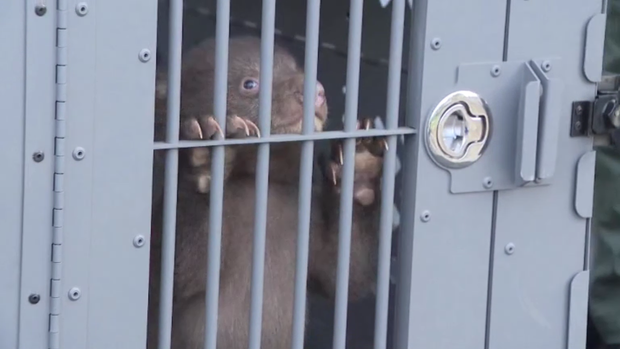
Franco and many of his neighbors were angered upon learning that CDFW officials had euthanized Blondie after her capture, which they credited to the fact that she had swiped at the woman days earlier and another person in 2025.
“Forcing them out, and then euthanizing the mom was just traumatic for us,” said one Monrovia couple. “It was just tragic, and there was no need for it; it was completely unnecessary.”
Situations like this are what caught Blakespear’s attention, leading to her proposal last week.
“It is really my desire to make sure that wild places stay wild, and not be having to resort to lethal measures like killing bears or killing wolves,” Blakespear said, while speaking with CBS LA. “We need to have a program that is up and going so we can be educating people.”
The program calls for focus on public education, maintaining a statewide incident reporting system and deploying devices like barriers, noise and light machines and other technology that would deter predators from places where they shouldn’t be.
SB 1135 passed on a 5-1 vote and will now be considered by the Senate Appropriations Committee.
-

 San Diego, CA2 minutes ago
Joseph Allen Oviatt – San Diego Union-Tribune
-

 Milwaukee, WI8 minutes ago
Milwaukee Brewers overpower Detroit Tigers to win 12-4
-

 Atlanta, GA14 minutes ago
What this food hall could mean for a south Atlanta neighborhood
-

 Minneapolis, MN20 minutes ago
Ellison, Minneapolis, St. Paul update lawsuit against Operation Metro Surge with new data
-

 Indianapolis, IN26 minutes ago
Indianapolis, Carmel area fails air pollution measures in new report
-

 Pittsburg, PA32 minutes ago
Callie DiSabato: Unregulated short-term rentals hurt Pittsburgh
-

 Augusta, GA38 minutes ago
Attention, shoppers: Augusta-area Walmarts to be remodeled in 2026
-

 Washington, D.C44 minutes ago
11 hurt after work vehicle collides with Silver Line train at Metro Center