West
California woman suspects relative was a serial killer after uncovering family secrets: ‘It shook me’

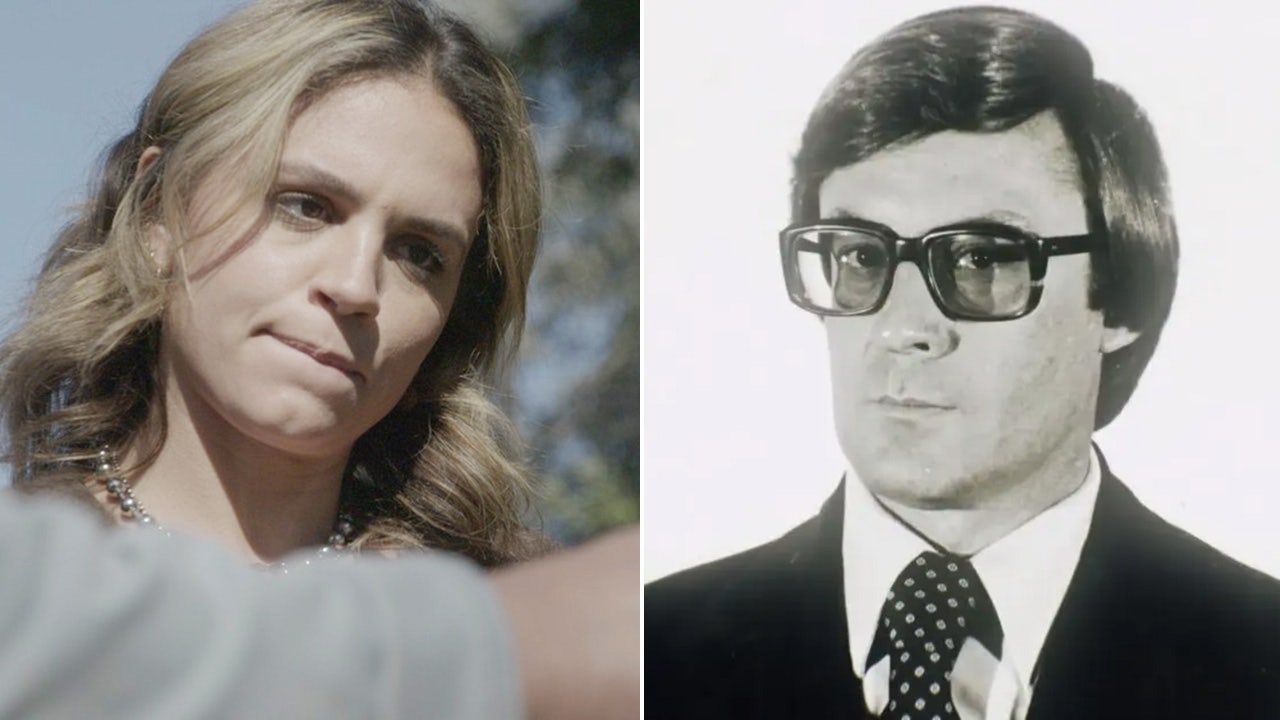
Sierra Barter has wondered if her step-grandfather could have been a serial killer.
“I remember my mom mentioned she Googled the Santa Rosa Hitchhiker Murders,” the 32-year-old told Fox News Digital. “She was freaked out about it. … And I was just like, ‘This is too much. I can’t think about this right now.’
“But then, maybe a couple of days later, I went, and I looked at it – really looked at it,” she shared. “It shook me. It is not a fun thing to imagine that somebody that you spent time with or that you have photos of yourself with … could have committed these kinds of crimes. … It’s an unsettling feeling.”
DEAD APPALACHIAN TRAIL HIKER, ‘MOSTLY HARMLESS,’ LEFT A TRAIL OF MYSTERY: ‘HE DIDN’T WANT TO BE FOUND’
Sierra Barter discovered a new side to her late step-grandfather, Jim Mordecai. (Max)
The California woman’s quest to uncover the truth is being explored in a new four-part documentary on Max, “The Truth About Jim.” It details how Jim Mordecai, a respected high school teacher and star football player, had a history of alleged physical violence and sexual assault against women and girls.
The docuseries features interviews with Mordecai’s daughters, extended family members, a private investigator and law enforcement.
Sierra Barter is hopeful for justice for the victims of the Santa Rosa Hitchhiker Murders. (Max)
Mordecai died in 2008 at age 67. Barter was 15 at the time. But there have always been rumblings about who Mordecai really was. And when Barter finally began asking questions, she wasn’t prepared for the answers.
“After he died, that’s when I learned the truth about what caused my mother to have a separation from my grandmother,” she said. “Then it started to make sense about why there was so much division in the family.”
Sierra Barter spoke to several women in “The Truth About Jim,” including her grandmother, Judy Mordecai, who has since changed her last name. (Max)
Growing up, Barter always knew that her mother, Shannon, detested Mordecai. She even went a full decade without speaking to her mother Judy, Mordecai’s third wife.
“It really started with Sierra talking to her family about Jim,” director Skye Borgman told Fox News Digital. “That’s when they opened up to her about how evil he was to so many women. … Jim’s family was traumatized. … And it was hard to hear stuff like that. But it was also very humanizing and very brave.”
FOLLOW THE FOX TRUE CRIME TEAM ON X
The documentary alleged Mordecai repeatedly raped one of his stepdaughters from the time she was 13 years old. Other family members and alleged victims claimed the patriarch terrorized them with threats and violence. Some women in the documentary alleged Mordecai viciously bullied them and that he preyed on teen girls.
Several of Jim Mordecai’s accusers spoke out in the documentary. (Max)
“Sitting down with my grandma was hard,” Barter admitted. “I’m very, very close to her. She was always milk and cookies grandma … but it was difficult to hear these things about someone I love so much. … But it was also such an honor to get to know her as a woman and understand how strong she was and what she went through.
“Hearing my aunt’s stories had a huge impact on me,” Barter added. “We were thankful we were free of Jim at that moment. … It was hard to hear how these women, women I shared giggles with, who dressed me up like a doll and all of that, were enduring such suffering behind closed doors. It was heartbreaking. … It was devastating to hear what was taken from them at the hands of their father.”
Sierra Barter looking at photos of Jim Mordecai. (Max)
Through conversations with loved ones, Barter made a disturbing connection between Mordecai and the Santa Rosa Hitchhiker Murders. The series of at least seven unsolved homicides involving young women took place in the North Bay Area between 1972 and 1973. Two other suspects include serial killers Ted Bundy and the Zodiac Killer. Three of the victims had been bound and two were hogtied.
Sierra Barter wondered if Jim Mordecai could have been the Zodiac Killer. However, the documentary showed there wasn’t any compelling evidence to support that claim. Barter still believes there may be a connection between Mordecai and the Santa Rosa Hitchhiker Murders. (Max)
The documentary alleged Mordecai frequently threatened to hogtie women and “throw them into a ditch.” He also allegedly threatened to kill one of his ex-wives when she asked for a divorce and said, “If you try to get the girls, I will slit their throats,” referring to their children.
Mordecai also kept a collection of cheap, random women’s jewelry.
Sierra Barter said she was stunned by her family’s revelations. (Max)
The documentary revealed Barter handed over some of Mordecai’s personal belongings containing possible DNA to the Sonoma County Sheriff’s Office. The investigation is still ongoing, it noted.
SIGN UP TO GET TRUE CRIME NEWSLETTER
Sierra Barter, her mother Shannon Barter (right) and grandmother Judy Mordecai (left) at a storage unit looking at Jim Mordecai’s knife. (Max)
“These cases are very old,” Barter admitted. “There’s a lot of evidence that isn’t there anymore. There’s a lot of follow-up that needs to happen. A lot of people have passed away. But I’m still hopeful. Maybe there’s a chance we can finally get some answers for these families.”
Sierra Barter driving in Santa Rosa. (Max)
At one point in the documentary, Barter wondered if there was a possibility Mordecai could have been the Zodiac Killer. The identity of the infamous murderer, who killed at least five people during the ‘60s, is still unknown today. However, the documentary showed that there wasn’t enough compelling evidence to link Mordecai to the crimes. Her theory ultimately unravels.
In 2021, a team of specialists who investigate cold cases, known as The Case Breakers, claimed the Zodiac Killer was Gary Francis Poste, who died in 2018. However, no one has ever been charged or identified in the murders.
San Francisco Police circulated this composite of the Bay Area’s “Zodiac Killer.” (Getty Images)
At the time, Fox News Digital reached out to the Vallejo Police Department and the FBI and unsuccessfully tried reaching out to relatives of Poste. The San Francisco Police Department said it was unable to speak about potential suspects in the Zodiac case because it remains an ongoing investigation.
Arthur Leigh Allen, who has been frequently listed as a suspect, died in 1992.
Barter is still waiting for answers. But she feels free of Mordecai and his shadow, she said.
GET REAL-TIME UPDATES DIRECTLY ON THE TRUE CRIME HUB
Sierra Barter said she “gained her family back” after the documentary’s release. (Max)
“I’m just really happy I gained my family back,” Barter said. “It’s not fun to have a fractured family. … But I’m grateful that I don’t have to live with Jim lurking in the sphere anymore. … And I’m so grateful to be surrounded by a group of women reminding me to speak up.
“There’s not a lot of Jim’s childhood that survived,” Barter reflected. “I can only assume that people who are hurt tend to hurt other people. But I don’t want to make excuses for him. There is always an opportunity to get help, which he did not choose to do. I’m not sure why he did the things that he did. I think he was feeling powerless, and that’s why he took his anger out on people and tried to take their power.
“The Truth About Jim” is available for streaming. (Max)
“But, frankly, I’m not so sure if I want to know why. I’m just thankful that these women are now speaking up against him. He’s not able to rest with the idea that he was this great man because we all know that he was not.”
“The Truth About Jim” is streaming on Max.
Read the full article from Here


This is the beginning of the Iditarod spring, signaled by the burst of sun and what used to be the long wait for dog teams to pass under the arch in Nome, the finish line a thousand miles away from Anchorage. For old-timers, it’s the story of the way Alaska used to be. What once was a 30-day wait has become about 10 days for winners to celebrate and the rest of us to shout, “Well done.”
My story is about family that welcomed immigrants from all over the world to be among the last groups of Indigenous people in the country, a life of taking good care of dog teams, and of parents who taught their children how to live in a wild, rugged frontier.
I came to be in a different age, a time of dog teams that ruled the trails to mining camps and where the salmon ran strongest — before the introduction of the snowmachine that revolutionized rural and Native Alaska.
For the Blatchford family, it is a recognition that some things will always stay the same and everything else changes. All four of my grandparents were noncitizens. My mother Lena’s parents of Elim were Alaska Natives, as was my dad Ernie’s mother, Mae, of Shishmaref. The name Blatchford comes from his father, the Englishman who was born in Cornwall and arrived in Nome during the gold rush. His brother, William, was one of the early immigrants, and by 1899 there was a creek just outside Nome named after him. He discovered gold. My grandfather, Percy, found gold, too, but it was a different kind of wealth, a finding that he had found home and never left.
I was born in Nome, delivered by an Iñupiaq Eskimo midwife in a one-room cabin where the frozen Bering Sea met the treeless tundra’s permafrost. Dad had a dog team. I like to think that the dogs were anxious for me to be born because it was hunting time for Dad to hitch them up and mush out to where the sea mammals, snowshoe hares, ptarmigan and other game thrived in the winter. My earliest memories are of dogs; all of them working as a team to bring home the game so we could have a fine meal cooked by Lena. In the Arctic, dogs were essential for family survival. If you didn’t hunt, you didn’t eat.
There are several memories that remain strong. I suppose I can call them lessons of the Arctic.
The first is to take care of the dogs and treat them well. Dog lovers all over the world know very well that a dog, whatever the breed, is loyal and will die to protect the one who feeds and pets it. If you don’t feed a husky, it won’t pull, and it could mean a long time before the family eats. When a dog team is hungry, it will race back home to be fed a healthy meal. Mother Lena must have been a great cook because Dad said the dog team always raced back to the edge of Nome, where Lena was waiting beside the propane stove. For Mike, Tom and me, our job was to take the rifle, shotgun and .22 into the cabin to be cleaned and oiled. Once that was quickly done, we unhitched the dogs and then fed the team.
All three of us boys had special responsibilities to Tim, Buttons and Girlie. Tim, the lead dog, was brother Mike’s pet; Tom had Buttons, and I had Girlie. We made sure they were healthy and well cared for. Dad would often comment that “Papa,” our grandfather Percy, the Englishman, took good care of his dog teams, being kind to the dogs and feeding them. Dad was the oldest of a large family that lived in Teller and later Nome.
“Papa” Percy was a prospector, fox farmer and a contestant in the All-Alaska Sweepstakes, the dog team race from Nome to the mining camp of Candle, a 400-mile race. He didn’t win, but he finished well, very well. The stories of the Sweepstakes have remained with the family for over a century. At a memorial service in Palmer for “Doc” Blatchford, Aunt Marge, without a question or a prompt, said that Papa took good care of his dogs.
Percy Blatchford was a legend in the Alaska Territory. As a teacher of Alaska newspapers, I would find headlines similar to one in the Fairbanks Daily News-Miner that blazed on the front page: “Blatchford Wins Solomon Derby.” There was even a story in The New York Times.
There’s probably no other sport in Alaska that brought Alaskans together like dog mushing. When old-timers would visit over strong coffee, dogs and dog team racing would come up. In the territory, there were few high schools and fewer gymnasiums, so the only team sport was dog mushing. It was something to talk about that was unique to Alaskans.
I used to travel in rural Alaska quite a bit. In the smaller communities, I would see the teams and would wonder how long they would power the engines that brought the mail and the foodstuffs down and up the trails. When I think of dog teaming, I think of the Iditarod and wonder, and then come to know, what the strength of the story would mean for bringing generations together from Papa Blatchford to his eldest son Ernie and to the fourth generation of Blatchfords in Alaska.
There are times when I think that old-time Alaska is gone. But then my faith and confidence in the old-time spirit are ignited when I see what others in the Lower 48 see. When I was walking in downtown Philadelphia, I looked up and saw on an ancient federal building a stamped concrete sculpture of a dog musher leaning into a blizzard. Such is the way I think of the Iditarod and the lessons I learned growing up with the dog team, preserved in my memories.
Edgar Blatchford is former mayor of Seward, Mile 0 of the Iditarod Trail.
• • •
The Anchorage Daily News welcomes a broad range of viewpoints. To submit a piece for consideration, email commentary(at)adn.com. Send submissions shorter than 200 words to letters@adn.com or click here to submit via any web browser. Read our full guidelines for letters and commentaries here.

PHOENIX (AZFamily) — Three Valley men have been sentenced for their roles in what prosecutors described as a “sophisticated fraud scheme” against an online shopping giant.
In a news release, the U.S. Attorney’s Office said Mughith Faisal, 29, of Glendale, was sentenced on Feb. 5 to 18 months in prison. His brother, Basheer Faisal, 28, of Glendale, was also recently ordered to spend 18 months in prison.
The feds said a third defendant in the case, Abdullah Alwan, 28, of Surprise, was sentenced to six months in prison after the trio pleaded guilty to wire fraud.
Prosecutors said the three were also each ordered to pay $1.5 million in restitution to Amazon.
According to federal officials, Alwan worked in Amazon’s logistics division and left the company in 2021 when he reportedly used his knowledge to manipulate rates for transportation deliveries assigned to Amazon’s third-party carriers.
The feds said Basheer and Mughith Faisal used “Blue Line Transport” to knowingly get to increased transport rates that Alwan would then input into Amazon’s system, ripping them off out of $4.5 million.
The FBI’s Phoenix Division helped in the investigation, which was then prosecuted by the U.S. Attorney’s Office for the District of Arizona.
See a spelling or grammatical error in our story? Please click here to report it.
Do you have a photo or video of a breaking news story? Send it to us here with a brief description.
Copyright 2026 KTVK/KPHO. All rights reserved.

SACRAMENTO, Calif. (FOX26) — California’s privacy watchdog has ordered PlayOn Sports to pay a $1.10 million fine and change how it handles consumer data after finding the company’s practices violated state law in ways that affected students and schools in the state.
The California Privacy Protection Agency Board issued the decision following a settlement reached by CalPrivacy’s Enforcement Division.
The decision is the first by the board to address privacy violations involving students and California schools.
Schools across the country use PlayOn Sports’ GoFan platform to sell digital tickets to high school sporting events, theater performances, and homecoming and prom dances, with attendees presenting tickets at the door on their mobile phones.
Schools also use PlayOn Sports’ platforms for other sports-related activities, including attending games, streaming them online, and looking up statistics about teams and players.
In California, about 1,400 schools contract with PlayOn Sports for these services.
[RELATED] X faces possible fines as EU probes Grok nonconsensual, sexualized deepfakes
GoFan is also the official ticketing platform for the California Interscholastic Federation, the governing body for high school sports.
According to the board’s decision, PlayOn Sports used tracking technologies to collect personal information and deliver targeted advertisements to ticketholders and others using its services.
The company allegedly required Californians to click “agree” to tracking technologies before they could use their tickets or view PlayOn Sports websites, without providing a sufficient opt-out option.
“Students trying to go to prom or a high school football game shouldn’t have to leave their privacy rights at the door,” said Michael Macko, CalPrivacy’s head of enforcement. “You couldn’t attend these events without showing your ticket, and you couldn’t show your ticket without being tracked for advertising. California’s privacy law does not work that way. Businesses must ensure they offer lawful ways for Californians to opt-out, particularly with captive audiences.”
The decision also describes students as a uniquely vulnerable population and warns that targeted advertising systems can subject students to profiling that can follow them for years, expose them to manipulative or harmful content, and develop sensitive inferences about their lives.
Instead of providing its own opt-out method, PlayOn Sports directed students and other users to opt out through the Network Advertising Initiative and the Digital Advertising Alliance, which the decision said violated the company’s responsibility to provide its own way for consumers to opt out. The company also allegedly failed to recognize opt-out preference signals and did not provide Californians with sufficient notice of its privacy practices.
“We are committed to making it as easy as possible for all Californians — from high school students to older adults, and everyone in between — to make the choice of whether they want to be tracked or not,” said Tom Kemp, CalPrivacy’s executive director. “Californians can opt-out with covered businesses, and they can sign up for the newly launched DROP system to request that data brokers delete their personal information.”
Beyond the $1.10 million fine, the board’s order requires PlayOn Sports to conduct risk assessments, provide disclosures that are easy to read and understand, and implement proper opt-out methods.
The order also requires the company to comply with California’s privacy law prohibiting the selling or sharing of personal information of consumers between 13 and 16 without their affirmative opt-in consent.

Will the rest of Austin allergies seasons be as bad as cedar this year?

New Alabama law to set screen time limits for kids in day care, pre-K and kindergarten

Opinion: Life lessons learned from mushing and old-time Alaska

3 men sentenced in Arizona for multi-million dollar scam against Amazon

Autopsies rule Arkansas mothers death a suicide; twin children’s deaths homicides

Florida High School Football Rankings: Top 25 teams – Oct. 21

Cleary's 21 help Le Moyne down Central Connecticut State 69-64 in OT

How old is Bo Nix? What to know about Oregon quarterback ahead of 2024 NFL Draft

99th annual Pony Swim held in Virginia

Indiana Members Credit Union announced as new anchor tenant at Bottleworks District

US submarine sinks Iranian warship by torpedo in a first since World War II

Which oil and gas facilities in the Gulf have been attacked?

Mojtaba Khamenei, son of former supreme leader, tipped to become Iran’s next head of state

Video: Senators Question Kristi Noem on ICE Immigration Tactics

Combustible Republican Senate primary in Texas heading into overtime
-

 World7 days ago
Exclusive: DeepSeek withholds latest AI model from US chipmakers including Nvidia, sources say
-

 Massachusetts1 week ago
Mother and daughter injured in Taunton house explosion
-

 Denver, CO1 week ago
10 acres charred, 5 injured in Thornton grass fire, evacuation orders lifted
-

 Louisiana1 week ago
Wildfire near Gum Swamp Road in Livingston Parish now under control; more than 200 acres burned
-

 Florida4 days ago
Florida man rescued after being stuck in shoulder-deep mud for days
-

 Wisconsin3 days ago
Setting sail on iceboats across a frozen lake in Wisconsin
-

 Maryland4 days ago
AM showers Sunday in Maryland
-

 Oregon5 days ago
2026 OSAA Oregon Wrestling State Championship Results And Brackets – FloWrestling