As grim as the political scene is in Israel today – with Prime Minister Benjamin Netanyahu’s coalition bulldozing through contentious and damaging legislation on the final days of the Knesset before the October election – the view on the other side of the world in Washington regarding Israel is just as worrisome.
West
California man who went by alias for 40 years arrested in woman's murder

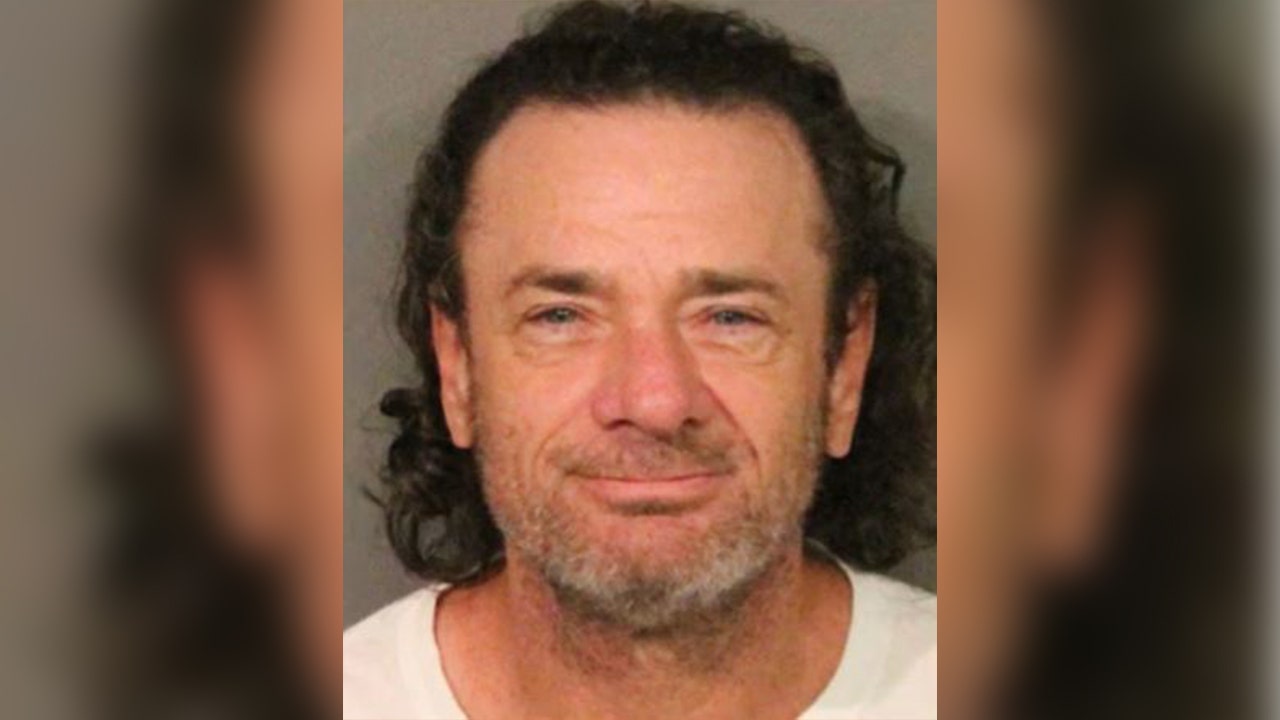
California detectives arrested a man who allegedly sexually assaulted and murdered an elderly woman in 1984, when he was just 19 years old.
Richard Moore had been living under the alias “Woody” or “Woody on Fairbanks,” the Sacramento News & Review reported, before he was arrested last month.
Now 59, Moore pleaded not guilty to charges of murder, kidnapping and rape in the death of 69-year-old Madeline Garcia, the Placer County District Attorney’s Office wrote in a press release. Moore was arraigned this week, authorities said on Monday.
Evidence collected at the scene on Atlantic and Branstetter streets in Roseville indicated that Garcia’s attacker dragged her into an alley, where she was murdered with repeated blows.
FBI UNCOVERS NEW LEAD IN MURDER OF NEW MEXICO MUSICIAN ‘TAKEN’ FROM MOTEL, MOM SAYS
Richard Moore, 59, was 19 when he allegedly killed Madeline Garcia. He was arrested in Los Angeles on June 27 and was arraigned on murder, kidnapping and rape charges this week. (Placer County District Attorney’s Office)
“She was brutally attacked,” Roseville Homicide Detective James Fujitani told the Sacramento News & Review in 2020, when the case remained cold. “It was such a violent attack that we found her false teeth in the gutter.”
Garcia’s body was shoved behind a dumpster, and her face was beaten almost beyond recognition, the outlet reported. Blood splatters every 20 or 30 feet indicated that the killer had attempted to move her several times, dropping her in the process.
“To me, it seemed like a murder of rage,” Garcia’s granddaughter, Sharon Garcia, told the outlet. “And if it was rage, you had to wonder, ‘Did this person know her?’”
Many in the neighborhood called Garcia “The Can Lady.” Each morning before daybreak, she would scour central Roseville to collect cans from trash bins, according to the outlet, often doing so atop a large tricycle.
However, the widow was not indigent. Her family knew her as “Grandma Garcia,” a Spanish American homemaker who loved cooking, gardening, crafting and the neighborhood children.
MOTHER OF ‘ANGEL BABY DOE’ CHARGED MORE THAN 20 YEARS AFTER NEWBORN FOUND DEAD ON SIDE OF ROAD IN TEXAS
Madeline Garcia was known as “the Can Lady” by neighbors for her eccentric habits in central Roseville, California, pictured. Her family knew the homemaker as “Grandma Garcia.” (David Paul Morris/Bloomberg via Getty Images)
Investigators with the Roseville Police Department and the FBI’s Sacramento Field Office reportedly ran bodily fluids preserved from the 40-year-old crime scene from a familial DNA sifting method, according to the outlet and the DA’s office, leading them to Moore.
Just weeks after Garcia’s murder, Moore was arrested for arson two-and-a-half blocks away from the site where the woman was found, the outlet reported.
FLORIDA’S TOP PROSECUTOR BETS ON DECK OF CARDS TO SOLVE STATE’S COLDEST CASES
“Ultimately, advancements in forensic techniques, coupled with investigative tenacity and teamwork resulted in the identification and apprehension of Richard Moore,” the City of Roseville wrote in a press release. (Roseville Police Department)
Moore was arrested in Los Angeles on June 27 by the Los Angeles Police Department and the FBI’s Los Angeles Field Office, according to the District Attorney’s office. He was appointed a public defender in court on Monday, and will next appear on July 22.
Moore was known as a helpful man who liked to ride his bike around Echo Park, sources in the Los Angeles neighborhood told the outlet. Last month, locals told the outlet, Moore found a lost cat and worked to find its owner.
“Credit goes to the cold case team,” Fujitani, the first detective on the case, told the Sacramento News & Review.
“He lived under the radar for years,” District Attorney Morgan Gire told the judge at Moore’s arraignment, the outlet reported. “He attacked the victim in the early morning hours, dragged her into an alley, sexually assaulted her, and then beat her to-death.”
“Today has been a long time coming – justice hasn’t stopped,” the district attorney said. “The defendant committed a heinous crime in 1984 … And anyone who can commit that kind of crime, no matter their age – no matter the time that has passed since the crime – represents a danger to our community. And it is imperative that people capable of committing these kinds of crimes do not remain free while their case is pending.”
The judge agreed, and Moore was jailed without bail.
“Ultimately, advancements in forensic techniques, coupled with investigative tenacity and teamwork resulted in the identification and apprehension of Richard Moore,” the City of Roseville wrote in a press release.
Terri Middlekauf, Garcia’s oldest granddaughter, said Moore’s arrest was “bittersweet.”
“It’s a bittersweet moment,” she told the Sacramento News & Review. “I can only hope my grandkids remember me the way that I remember her.”
Read the full article from Here

Continue Reading

BEAVER COUNTY, Utah — A massive community effort is underway as volunteers and Beaver County crews distribute thousands of sandbags to protect homes from the potential path of floodwaters.
After the Cottonwood Fires, residents have been waiting for weeks for relief to come in the form of rain, though officials now warn it may come all at once with an increased risk of flooding and debris flow.
Emergency Service Director Les Whitney believes that the fire has left plenty of debris to bring trouble for residents.
“We got a lot of water. We’re bringing debris with it, so tree branches, tree limbs, logs, lots of different size firewood, and that’s all in the creeks. We’re worried about that plugging up our bridges and stuff, so we have heavy equipment and excavators located in strategic places so that we can keep those bridges open,” said Whitney.
An estimated 140 homes and condominiums were spared from the flames, but remain in the paths of floodwaters.
Residents can also pick up sandbags at the Beaver County Sheriff’s Office or at the Beaver County Rodeo Fairgrounds.

Two events overnight Wednesday emerging from the US Capitol, one a vote and the other an interview, exemplified the rockslide – turning into an avalanche – of anti-Israel sentiment that has taken hold in the hallowed halls of decision-makers.
The degree to which both the Republican and Democratic parties are sharpening their claws against Israel and hyper-focusing on it to the exclusion of critical issues indicates that the long-standing US-Israel bond is in a real crisis.
Nearly half of the Democrats in the House of Representatives, 103, voted for an amendment to cut off aid to Israel. The amendment was defeated 314-104. It was sponsored by Rep. Thomas Massie (R-Kentucky), whose disagreement with his party on Israel is his signature issue. He recently lost the GOP primary to run for reelection in the November midterms.
Lest we breathe a sigh of relief that Republicans en masse voted against the amendment, US Vice President JD Vance demonstrated that Israel has just as much to worry about from the Right in the US.
Vance claims Israeli ‘influence campaigns’ affect US political decisions
In an interview with highly popular America First podcaster Joe Rogan, who has labeled Israel’s war efforts in Gaza as “genocide,” Vance suggested that shadowy Israeli “influence campaigns” exist in the US.
“I definitely think you have seen this very discreet, extremely well-funded campaign to try to derail the negotiation and try to derail the deal,” he told Rogan.
An article in Time magazine on Tuesday was “worth reading because it lists a bunch of people who have quite literally been paid by a former Trump campaign person, who was himself paid by certain elements within the Israeli government,” Vance said. “And those people are attacking me viciously for quite literally trying to accomplish the negotiation objective that the president set for the country.”
“Many of the people who were receiving that money were actually attacking me in completely dishonest ways,” he said. “You know, my response to that is: ‘Go to hell.’ I’m going to do what I have to do for the American people. I represent Americans first.”
Vance shares claim spread by far Right influencers linking Jeffrey Epstein to Israeli intelligence
Vance, who is seen as a prime contender to be the Republican nominee for president in 2028, also waded into the conspiracy surrounding Jeffrey Epstein, the late convicted sex offender. Epstein “clearly had connections to the highest levels of Israeli intelligence,” he said, reiterating a claim that has been refuted and discredited.
The embrace by such a senior Trump administration official of conspiracy theories about Epstein’s ties to Israeli intelligence, which have proliferated in the years since his death and often have veered into antisemitism, is part and parcel with Vance’s increasing alignment with the far Right base populated by the likes of Tucker Carlson, Nick Fuentes, and Candace Owens.
Taken separately, the vote in the House of Representatives and the Vance interview are worrisome signs that the “special” relationship between Israel and the US is on life support at best. Taken together, they should be an alarming wake-up call that the days of the “kishkes” identification test with Israel – as exemplified diversely by the late Lindsey Graham and former president Joe Biden – are long gone.
Although it’s easy to place the blame elsewhere – and there are a plethora of strong arguments to be made in retort to both Democratic and Republican detractors of Israel – we must also look inward and see what can be done to reverse the tide of sentiment against us.
We can surely criticize the headline-provoking gambit by US Rep. Ro Khanna (D-California) last week, who chose to only hear and see the Palestinian side of life in the West Bank. But we can also acknowledge that vigilante Jewish groups are patrolling the area in a heavy-handed and lawless fashion that creates potentially lethal friction points and does irreparable damage to Israel’s image.
We can criticize Rahm Emmanuel for haughtily coming to Israel and warning us about what needs to be done to repair the US-Israel relationship, while acknowledging that some of his points were spot-on and unfolding before our very eyes in the House vote and Vance interview.
Jerusalem can no longer ignore or downplay the growing trends in the US of having to endorse the “Israel is genocide” trope to become a candidate, or of blaming Israel for getting the US entangled in Iran. The unsettling news this week demonstrates that with stark clarity.

The National Weather Service in Riverton has issued a Flood Watch advisory for portions of central and northwest Wyoming, including Owl Creek, the Bridger Mountains, the Southwest Bighorn Basin, the Absaroka Mountains, and the Cody Foothills. This includes the cities of Cody, Thermopolis, Meeteetse, and Clark, and many areas near or partially in Fremont County. […]
-

 Pennsylvania3 minutes ago
Continued Legacy: Central Pennsylvania Auto Auction gears up for 25th anniversary of Classic Car Auction
-

 Rhode Island9 minutes ago
Would You Dare Step Inside the Scariest Porta Potty in Rhode Island?
-

 South-Carolina15 minutes ago
South Carolina Lottery Pick 3, Pick 4 results for July 16, 2026
-
 South Dakota21 minutes ago
South Dakota opera ‘Giants in the Earth’ finds new audience
-

 Tennessee27 minutes ago
State encouraging Paramount to come to Tennessee
-

 Texas33 minutes ago
Texas floods ravage through southwestern areas of state
-
Utah39 minutes ago
Beaver County residents set up thousands of sandbags ahead of flashfloods
-
Vermont45 minutes ago
VT Lottery Gimme 5, Pick 3 results for July 16, 2026

