
Connect with us

West

California man found 25 years after going missing discovered to be registered sex offender

Published

on

California man found 25 years after going missing discovered to be registered sex offender

A California man who was reported missing in 1999 was identified by his sister when his picture was printed in a USA Today article in April of this year, but the joyous discovery unveiled disturbing details. 

Tommy Manizak, the long-lost brother of Marcella (Marcie) Nasseri, is a registered sex offender who was convicted in 1993, according to the Lassen County Sheriff’s Department via USA Today.

Manizak served three years in county prison, Capt. Mike Carney said.

Details about the circumstances surrounding the case suggest that Manizak was reported as being fingerprinted, but Carney later learned it never actually happened, which kept police from being able to identify him, according to the reports.

CALIFORNIA MAN, WHO VANISHED 25 YEARS AGO, TO REUNITE WITH FAMILY AFTER PICTURE IN NEWS ARTICLE

Advertisement

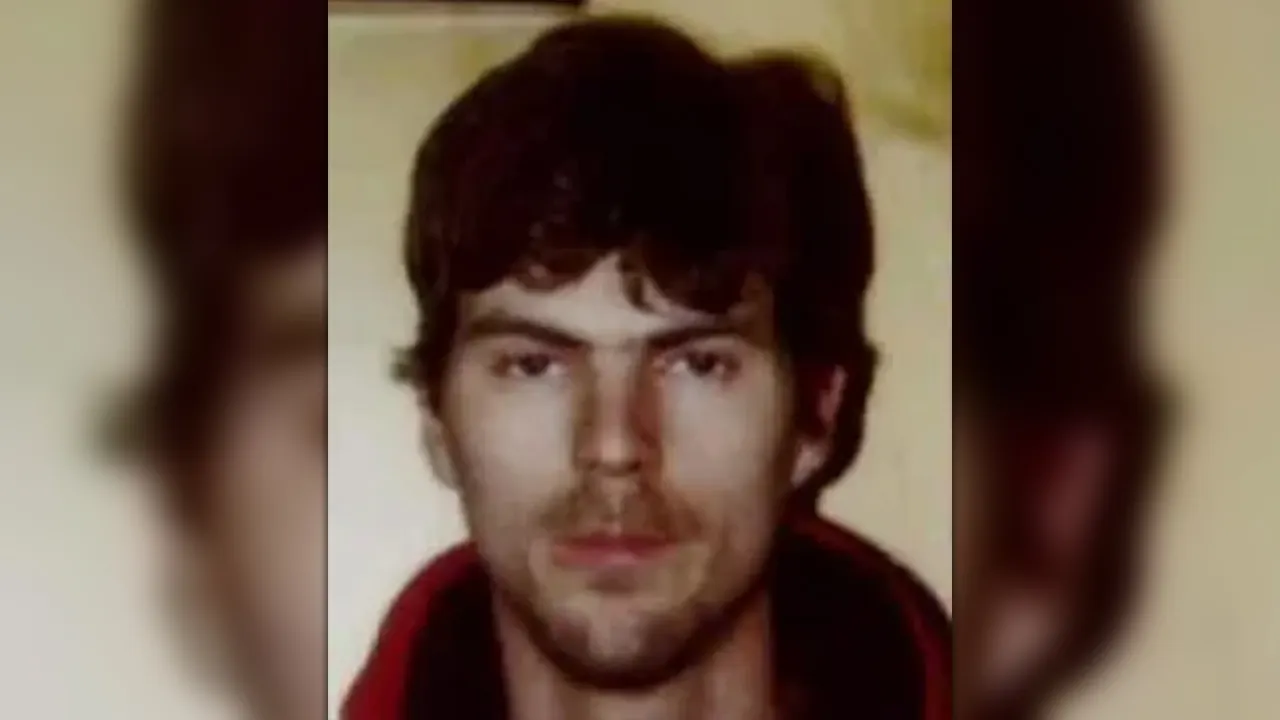
A California man who had been missing for 25 years was identified by his sister when she saw his photo in a news article, but the discovery unveiled disturbing details. (Megan’s Law Website)

LCSO received a call from Nasseri, who told sheriff’s deputy Derek Kennemore she had been sent the article and believed the man in the article was her brother, who had not been heard from since his disappearance 25 years ago. 

Manizak had been admitted to a hospital in the Los Angeles area, according to the sheriff’s office. Kennemore reached out and learned the man had been transferred to another hospital in July.

This triggered the police to run his fingerprints through the database, and he was found in the 1993 sex offender listing.

Tommy Manizak, who was missing for 25 years, is a registered sex offender who was convicted in 1993, according to the Lassen County Sheriff’s Department. (Lassen County Sheriff’s Office/Facebook)

Advertisement

“I guess he wasn’t cooperative when they tried to fingerprint him,” Carney told USA Today. “We were told that he was unable to walk and was unable to talk, so I don’t know what happened to him.”

MASSACHUSETTS MAN MISSING IN SOUTH CAROLINA AFTER HE VANISHED FROM HILTON HEAD FAMILY VACATION 

Manizak registered as a sex offender in Lassen County but when he left town he never registered in his new location, Carney said.

“He went to Oregon and after that, according to his family, he was just kind of a free soul and he just floated around,” Carney said.

While Nasseri is aware of the newly uncovered circumstances, describing what her brother did as “sickening and horrible,” she told USA Today she is still overjoyed to reconnect with him.

Advertisement

Manizak skipped town a few years after being released from jail and failed to reregister as a sex offender in his new city. (GoFundMe)

“But at the end of the day, he’s still my brother, and I’m not turning my back on my flesh and blood,” Nasseri said. “I love him and I’ve been looking for 25 years – all the other stuff is outside noise, he’s my brother and I love him.”

Read the full article from Here

Advertisement
Continue Reading
Click to comment

Leave a Reply

Your email address will not be published. Required fields are marked *

This site uses Akismet to reduce spam. Learn how your comment data is processed.

Alaska

Marten visits are a glimpse into mystery

Published

on

Marten visits are a glimpse into mystery


A trapper fresh out of the Cosna River country in Interior Alaska said he can’t believe how many martens he had caught in a small area so far this winter.

Friends are talking about the house-cat size creatures visiting their wood piles and porches. Could this be a boom in the number of these handsome woodland creatures?

Since the late 1970s, the University of Alaska Fairbanks’ Geophysical Institute has provided this column free in cooperation with the UAF research community. Ned Rozell is a science writer for the Geophysical Institute. Portions of this story appeared in 2000.


Source link

Continue Reading

Arizona

Here’s how to give public comment on future Colorado River plans

Published

on

Here’s how to give public comment on future Colorado River plans


PHOENIX — After years of negotiations, Arizona still doesn’t know what its long-term water future will look like, and now the federal government is preparing to step in.

States across the Colorado River Basin have failed to reach a deal on how to share the shrinking river after current operating rules expire in 2026. With no state-led agreement in place, federal officials are moving forward with their own plan, one that could bring steep cuts to Arizona’s water supply.

And for Arizonans, the clock is ticking to weigh in. Public comment remains open until March 2. To submit your comment on what the government should do, send your comments in email to crbpost2026@usbr.gov.

Additional information is available online. The project website can be accessed here, along with links to YouTube videos published by the government, recorded in January and February which walk through of the options available.

Advertisement

Many Arizona leaders have already offered their public comments, which are overwhelmingly negative.

“We were very disappointed with that document,” said Brenda Burman, the Central Arizona Project General Manager “If any of those alternatives were implemented, it would be very difficult, and perhaps devastating for Arizona.”

Arizona’s top Colorado River negotiator, Tom Buschatzke, echoed those concerns.

“None of those alternatives are very good for the state of Arizona,” Buschatzke said. “I’m not seeing how we’re going to break that stalemate.”

Congressman Juan Ciscomani also criticized the proposals, saying the impacts of Colorado River cuts extends into Pinal, and Pima counties.

Advertisement

“That’s not an acceptable solution for us,” Ciscomani said. “We want to play ball, but we want to make sure everyone across the board uses less and becomes more efficient.”

Some of the federal alternatives would reduce Arizona’s Colorado River supply by 40%, 50%, or in the most extreme case up to 70%.

Experts at ASU Kyl Center for Water Policy say part of the problem lies upstream.

“The reason for this current impasse is because the upper basin states have refused to take cuts in their Colorado River use,” said Sarah Porter, the center’s director.

Upper Basin states like Colorado and Utah rely on different water rules than Arizona and other Lower Basin states, complicating negotiations that have dragged on for years.

Advertisement

Arizona has already been living with cuts for several years. Since 2021, the state has faced an 18% reduction in Colorado River water deliveries due to a Tier 1 shortage declaration. Most of those cuts have fallen on Central Arizona Project users, including agriculture and some tribal communities.

Buschatzke argues that pushing Arizona into deeper reductions would violate long-standing Western water law.

“We will be protecting the state of Arizona,” he said. “And if that has to be litigation, it will be litigation.”

That means a lawsuit against the federal government, or upper basin states is now a real possibility if the final plan moves forward unchanged. The state legislature has put $3 million in a state fund for potential litigation on the Colorado River.

After the comment period closes, the federal government is required to review public feedback and issue a formal ‘Record of Decision’, likely sometime this summer. Advocacy groups say public feedback matters.

Advertisement

“I just encourage Arizonans to look at this document, understand what that means for your family, your businesses, and what it means for the future,” said Kyle Roerink of the Great Basin Water Network. “Then figure out if you want to advocate for one scenario over another.”

A new operating plan must be in place by October 1, setting the rules for how the Colorado River will be managed for years to come, and shaping Arizona’s water future in the process.

This story was reported on-air by a journalist and has been converted to this platform with the assistance of AI. Our editorial team verifies all reporting on all platforms for fairness and accuracy.


Source link

Advertisement
Continue Reading

California

More SoCal rallies for and against military action in Iran expected on Sunday and Monday

Published

on

More SoCal rallies for and against military action in Iran expected on Sunday and Monday


LOS ANGELES (KABC) — Worshippers across Los Angeles were met with an increased law enforcement presence on Sunday as police and sheriff’s deputies stepped up patrols outside mosques, synagogues and cultural landmarks following the strikes on Iran.

Local officials said there are no credible threats to Southern California, but the Los Angeles Police Department and the Los Angeles County Sheriff’s Department heightened visibility as a precaution to ensure communities stay safe.

More demonstrations tied to the attack on Iran are expected Sunday and Monday. Several protests were held across Southern California on Saturday.

READ MORE | Rallies for and against military action in Iran draw demonstrators across Southern California

Advertisement

While Iranian-Americans celebrated in Westwood, protesters gathered in downtown Los Angeles to oppose the Trump administration’s attacks against Iran.

While some groups gathered in downtown Los Angeles to protest the strikes, others assembled in Westwood to celebrate “the fall of the Ayotollah,” according to organizers.

Authorities said they will continue monitoring events as the region prepares for additional gatherings in the days ahead.

This is a developing story. This article will continue to be updated as more information becomes available.

Copyright © 2026 KABC Television, LLC. All rights reserved.

Advertisement


Source link

Continue Reading

Trending
