West
California health officials issue urgent warning to mushroom foragers after deadly poisoning outbreak

NEWYou can now listen to Fox News articles!
Health officials in California this week warned the public about foraging for mushrooms after a deadly outbreak struck the middle of the state.
The California Poison Control System has identified at least 21 cases of amatoxin poisoning that left one adult dead and several others, including children, with severe liver damage.
One might even need a liver transplant.
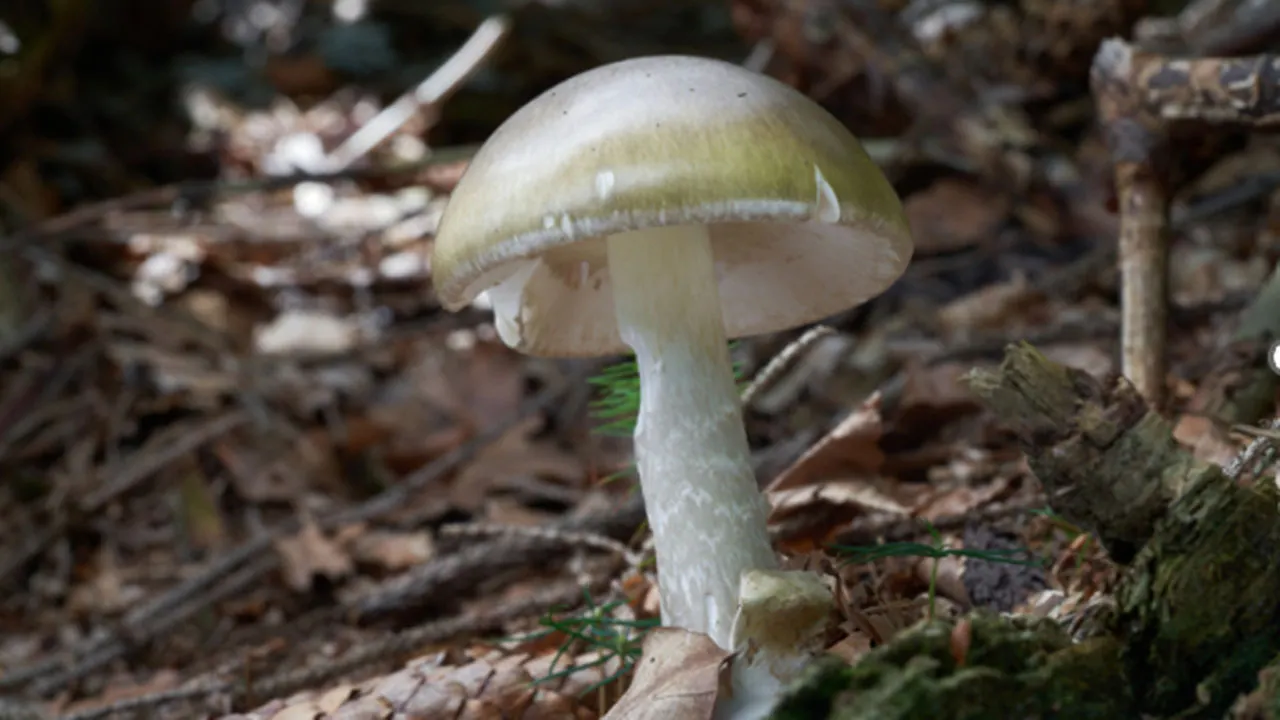
The poisoning was likely caused by the death cap mushroom, which is easily confused with edible mushrooms. Officials warned to also watch out for the destroying angel mushroom, which also grows in California.
WOMAN FOUND GUILTY IN MUSHROOM MURDER MYSTERY THAT LEFT THREE FAMILY MEMBERS DEAD AFTER MEAL
This undated photo provided by the California Department of Health shows a death cap mushroom. (California Department of Health via AP)
Residents in California’s Monterey County became sick after eating mushrooms found at a local park and another outbreak happened in the San Francisco area.
Symptoms can range from mild to moderate, depending on how much of the mushroom was consumed, and include stomach cramping, diarrhea, nausea, organ failure and liver damage and, in rare cases, death, the poison center said.
Even if gastrointestinal symptoms improve, serious complications can still occur, including liver damage, the poison control center warned.
Health officials in California this week warned the public about foraging for mushrooms after a deadly outbreak struck the middle part of the state. (Philippe Huguen/AFP via Getty Images)
CHATGPT DIETARY ADVICE SENDS MAN TO HOSPITAL WITH DANGEROUS CHEMICAL POISONING
“Death cap mushrooms contain potentially deadly toxins that can lead to liver failure,” Erica Pan, director of the California Department of Public Health, said in a statement. “Because the death cap can easily be mistaken for edible safe mushrooms, we advise the public not to forage for wild mushrooms at all during this high-risk season.”
Mushrooms grow in abundance during California’s rainy season — October through March — but the poison control center warned that “eating the wrong wild mushrooms can cause serious illness or even death.”
A destroying angel mushroom (Dea/P. Puccinelli/De Agostini via Getty Images )
CLICK HERE TO DOWNLOAD THE FOX NEWS APP
Hundreds of poisonings are reported to the center each year, most causing severe illness and sometimes death.
Half of the roughly 4,500 mushroom poisonings reported across the U.S. in 2023 were in children, according to the National Poison Data System annual report, who may pick and eat them while playing outside.
The Associated Press contributed to this report.
Read the full article from Here



San Francisco, CA
Sold-Out SF Marathon 2026: The Races, Routes and Road Closures (Plus How to Watch It All) | KQED

Everything you need to know about the 2026 San Francisco Marathon weekend on July 25-26, including the route, the road closures and whether it’s too late to sign up.
If you still want to sign up for the SF Marathon, you still have time. (AN Studio/Getty)
Keep reading for the 2026 SF Marathon route, which streets will be closed, where to find public transit changes and how to watch from the sidelines if you’re a spectator.
We’ll also give an overview of all the weekend’s events and races themselves if you’re feeling spontaneously athletic (or want to meet people) and decide to sign up for a race at short notice.
And important to flag — several of these races now allow dogs.
Jump straight to:
What is the SF Marathon route, and when are the races?
The 26.2-mile main event — the full SF Marathon — is on Sunday, July 26. The full marathon starts at 5:15 a.m. on Embarcadero Street at Market Street and finishes on Embarcadero Street at Howard Street.
You can check out a map of the entire course on SF Marathon’s Strava account, which also includes elevation levels and first aid/water stops.

Is it really too late to sign up for the full marathon and 1st half marathon?
Yes, the full marathon — and the popular 1st half marathon over the Golden Gate Bridge — are both sold out.
According to officials, the spots went out “faster than ever” this year. But you can still join the waitlist and hope for the best.
“Spots do open up,” the website reads. “Plans change, runners defer, and entries become available again. When they do, the right wait list is the best way to secure yours.”
What are my other options for races around the SF Marathon that weekend?
Your other options for races during the SF Marathon weekend that are still accepting sign-ups include:
The City Half Marathon (Sunday)
This is the race where you get to run through San Francisco’s neighborhoods. It’s 13.1 miles with a 3.5-hour time limit and starts at 8:30 a.m. from MLK Jr. Drive at Golden Gate Park to Embarcadero at Howard.
Race fee:$303.74
The Alexi Pappas SFM 10K (Sunday)
This race is named after the Bay Area’s own Olympian Pappas and is a flat 6.2 miles that starts at 7 a.m. from The Embarcadero at Market Street to the Embarcadero near Washington Street. Dogs are now welcome for this race.
Race fee: $164.04

5K race (Saturday option)
This 5k allows your dog to run with you along the Embarcadero waterfront. Starting at 8 a.m, this is a 3.1-mile course with an hour limit.
Race fee: $120.04
5K race (Sunday option)
Dogs are also allowed at this Embarcadero waterfront race, but the race isn’t a loop like the Saturday option, instead starting at The Embarcadero at Market St. and ending at Embarcadero at Washington Street. This 3.1-mile race starts at 9 a.m. and has an hour limit.
Race fee: $118.94
Looking for something more family-friendly and chill? There is Sebastian’s 1K Mad Dash on Saturday, which is a little under a mile. It starts at 9 a.m., starting and finishing at Embarcadero and Washington. The race fee is $28.75.
If you can’t make it to San Francisco, you can join the race virtually by registering on the SF Marathon’s app. It’s $110.15 to join, and you’ll need to download the SF Marathon tracking app to follow your progress.
Which streets will be closed to cars and public transit for the SF Marathon?
The SF Marathon website breaks down which city streets will be closed for races at what time, along with some recommended detours.
There will be closures along The Embarcadero, Fisherman’s Wharf and in the Marina District. However, rest assured that vehicle traffic on the Golden Gate Bridge, which is on the route, will remain open in both directions throughout the marathon.

A lot of SF Muni lines will also be rerouted due to marathon weekend events.
SFMTA has not yet updated its guidance for this year, but you can peek at the 2025 list of route alterations, changes and closures to get a sense of what’s to come.
Where can I cheer the SF Marathon runners on?
Are you a good friend cheering on a runner? Make sure you know which race they are running in, and then look at the above section to check out the times and routes.
You can also track a runner’s progress using the SF Marathon app using a bib number.
Where can I find my pictures and results after the race?
Participants will have their pictures emailed to them a few days after the event — or on the race results and photos page on the SF Marathon website.
I need to bail. Can I defer my SF Marathon registration until next year?
Bailing? The people on the waitlist will thank you!
You can defer your registration to next year for a $39 fee, and the last day to do so is July 24. (That’s also the last day to convert your in-person race into a virtual one, if your plans have unexpectedly changed.)
Keep in mind that registration is nontransferable, and you cannot give or sell your bib to someone else.
What will the weather be like in San Francisco for the marathon?
Check the weather forecast again before you head out, as San Francisco weather can turn on a dime — and keep in mind that the National Weather Service forecasts the weather a week out.
Historically, the temperature around the courses is usually around 64°F, according to the SF Marathon website.
Whether you’re planning to participate in a race or just spectate, be sure to drink plenty of water well before going out.

You can also be strategic about how to combat heat by cooling your body’s pulse points, such as your neck, inside your elbows, and behind your knees, to bring quick relief. In case things get toasty, KQED has a thorough guide on how to stay safe during a heat wave.
The full marathon has 14 hydration stations, which include water, electrolytes, medical assistance, and toilets. The SF Marathon encourages runners to bring refillable water bottles that are 50 gallons or less.
What’s the best way of traveling to the SF Marathon starting line that morning?
If you’re trying to get to the race for the full marathon’s 5:15 a.m. start time on Sunday, remember: BART service does not start early enough to get you there, and you’ll miss your race.
Instead, the SF Marathon will have shuttles from six BART stations to get you to the starting line. There is free parking at BART stations, and buses will run very early in the morning. Times are subject to change, but the list of BART stations with shuttles is currently:
- Bay Fair (San Leandro) at 3:50 a.m.
- Daly City at 4:05 a.m.
- El Cerrito Plaza at 4:05 a.m.
- MacArthur at 4:05 a.m.
- Millbrae at 4:05 a.m.
- Walnut Creek at 3:55 a.m.
Buses aim to arrive by 4:30 a.m. at the Main Start Line on the Embarcadero. You’ll need to purchase your bus ticket ahead of time, though.

For most food manufacturers, it makes more financial sense to bake, brew, cook or create their product somewhere where the square footage is a little less expensive, like a business park, and to sell it where the rent – and the foot traffic – is higher.
Kent Beidel, who owns a string of mountain-town ice cream parlors called Sundae, did the opposite when he opened his newest and, by far, his biggest location in downtown Denver.
“We wanted to be right in front of people and hear them say, ‘Oh my god, they make the ice cream right here,’” he explained. “It’s backward … it’s hard. But it’s unique, and it’s really cool.”
Sundae opened in early June in a 5,100-square-foot space that includes a retail shop, a waffle cone-making “theater” where people can watch the staff turn out fresh cones, a pint-mixing classroom and a commercial kitchen – visible to customers on three sides through glass windows – that could one day supply multiple stores around Denver.
Beidel is betting those attributes will help the business stand apart from the competition in Denver, where there are already several big names making and selling scoops in multiple locations.
But that’s not the only gamble he took. Sundae is located on Sixteenth Street, the 44-year-old pedestrian mall that has become both a symbol of the city’s urban decay since the pandemic and a beacon of hope for its future after a $175 million renovation.
“Sixteenth Street is interesting,” said Beidel, who has watched it change over the past year since he first signed his lease at 1600 Glenarm Place. “It’s coming back. It still has a way to go, but we are seeing momentum start to build. Even in the last month, the foot traffic and the feeling downtown has perked up. … We are getting great feedback.”
To help, the Denver Downtown Development Authority — as part of a much larger business incentive plan — loaned Sundae $750,000. “It’s a loan,” he said. “We have to pay it back. … But we couldn’t have done this location without that support.”
Beidel has been in the food business for 22 years. Before ice cream, he was the founder of Loaded Joe’s, a restaurant and coffee shop staple in Vail. But in 2016, he sold Loaded Joe’s and took over two former Marble Slab Creamery locations in Vail and Edwards, rebranding them as Sundae. In 2020, he opened a third shop in Glenwood Springs.
“That was our first chance to build from scratch and decide what it should look like,” he explained, adding that Glenwood, which includes a kitchen, eventually began making ice cream for Sundae’s next two locations in Basalt and Snowmass.
To make the ice cream, Beidel said he employs five pastry chefs to create recipes. So, rather than using cheesecake flavoring, for instance, for cheesecake ice cream, Sundae uses all the same ingredients you would use to make real cheesecake.
The cheesecake, by the way, is among Beidel’s favorite flavors, but Salted Cookies & Cream and Caramelized Banana are two of the most popular with customers. Classic chocolate, vanilla, and strawberry are also top sellers – “and always will be,” he added.
Next month, Beidel hopes to open the classroom, where people can learn how to make ice cream and then whip up some of their own flavors to take home. And down the road, he plans to open more locations.
But in the meantime, he’s focused on downtown. “Let’s say Denver does really become vibrant again. We have a great product and a great following in the mountains. So, it’s just a matter of time down here.”
Subscribe to our new food newsletter, Stuffed, to get Denver food and drink news sent straight to your inbox.


SEATTLE – High pressure continues early this week, leading to more sunshine and warmer afternoon temperatures. Skies will be sunny, warm and dry through the middle of the week.
High pressure continues early this week, leading to more sunshine and warmer afternoon temperatures.
What’s next:
Highs today in the low to mid 80s for parts of western Washington, with highs in central and eastern Washington getting close to 100 degrees. The coast and northern interior will remain in the 70s with mostly sunny skies.
Highs today in the low to mid 80s for parts of western Washington.
Fire Risk Levels
The Fire Risk Levels this week will continue to elevate as we see warming temperatures and increased chance of thunderstorms. East of the cascades is already dry and warm, so the increased chance of new fire starts will be something to watch with the storms.
The Fire Risk Levels this week will continue to elevate as we see warming temperatures and increased chance of thunderstorms. (FOX 13 Seattle)
Looking Ahead:
Temperatures will continue to warm for western Washington through midweek, before we see another low pressure system swing inland Thursday. This low will increase changes of showers and isolated thunderstorms on Thursday, and temperatures will be back to normal for this time of year. This cool down is short-lived as high pressure builds again and highs warm back up into the 80s by the weekend.
Temperatures will continue to warm for western Washington through midweek, before we see another low pressure system swing in Thursday.
MORE NEWS FROM FOX 13 SEATTLE
Seismologists track 100 earthquakes of magnitude 4.5 or greater
6-year-old Bellingham, WA boy dies from injuries after beach driftwood accident
Grandmother thwarts Pike Place kidnapping, Seattle police make arrest
‘Transfer Fire’ near Lake Chelan, WA hospital prompts evacuation notices
Here’s where WA wildfires are currently burning
Seattle office vacancy crisis shifts tax burden onto homeowners
Thurston County, WA couple desperate to find dog after Rover sitter vanishes
Husband of pregnant wife killed in Seattle sues King County homeless authority
To get the best local news, weather and sports in Seattle for free, sign up for the daily FOX Seattle Newsletter.
Download the free FOX LOCAL app for mobile in the Apple App Store or Google Play Store for live Seattle news, top stories, weather updates and more local and national news.
The Source: Information in this story came from the FOX 13 Seattle Weather Team and the National Weather Service.
-

 Videos56 minutes ago
New explosions near Iranian port cities, says state media | BBC News
-

 Los Angeles, Ca58 minutes ago
Big rig crash spills cinder blocks on 101 Freeway; lanes blocked in Tarzana
-
 Detroit, MI1 hour ago
How to watch ‘The Odyssey’ in IMAX, 70mm and more in metro Detroit
-

 San Francisco, CA2 hours ago
Sold-Out SF Marathon 2026: The Races, Routes and Road Closures (Plus How to Watch It All) | KQED
-

 Dallas, TX2 hours ago
Top 10 Dallas Cowboys of 2026: Rashan Gary is Complete EDGE Dallas Needed
-

 Miami, FL2 hours ago
Girl, 12, shot while sitting in parked car in northwest Miami-Dade, deputies say
-

 Boston, MA2 hours ago
GBH Daily: Come sail away
-

 Denver, CO2 hours ago
New ice cream shop with a ‘waffle theater’ bets big on downtown Denver

