West
California couple hikes up Hawaii volcano to escape carjacking, robbery

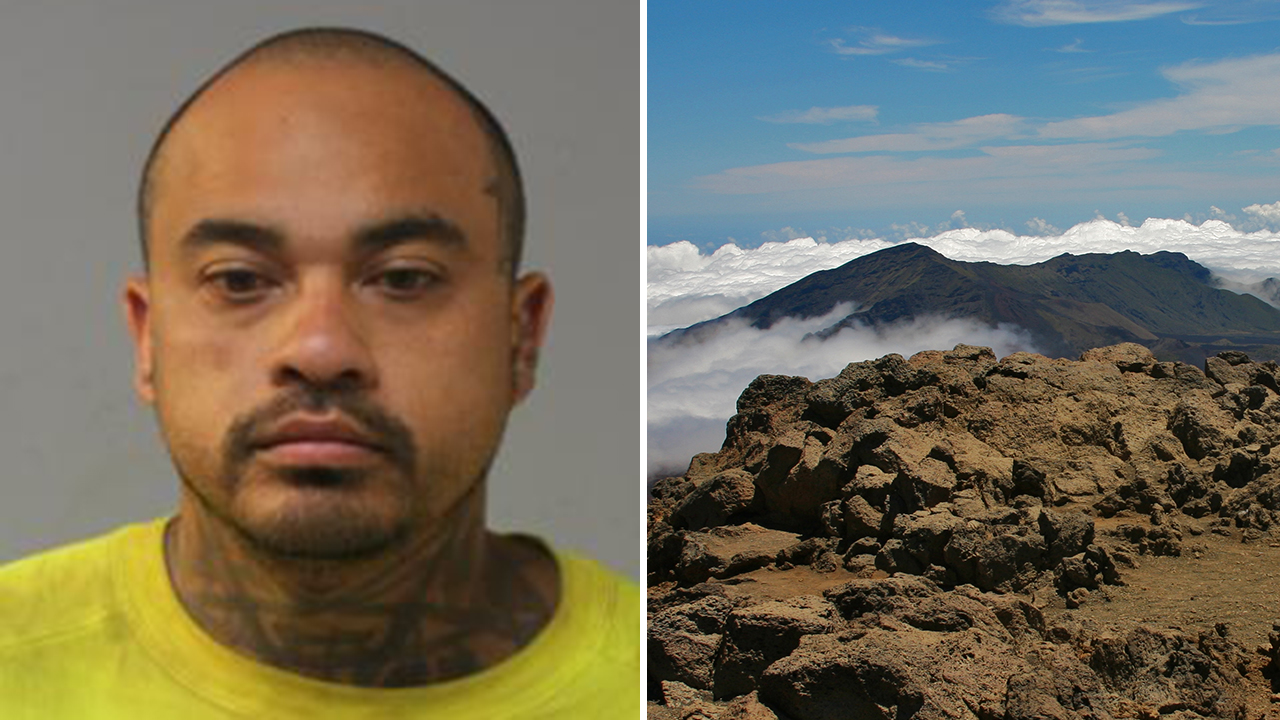
A California couple hiked up a volcano in Hawaii to escape an armed carjacker who “pointed a gun” at them, police say.
The startling incident involving the 29-year-old female and 31-year-old male victims happened along the Piilani Highway in Maui on June 4 as the pair were driving a rented Ford Mustang, the Maui Police Department told Fox News Digital in a statement.
“While driving, they were followed by a Toyota Tacoma with its headlights off, which they allowed to pass them,” police said. “Shortly after, the Tacoma reportedly came to a stop on the roadway, and the male driver exited, pointed a gun at the victims, and told them to get out of their car and start walking.”
“The responsible male drove off with the stolen Mustang, and the couple began to walk but then hid behind bushes and boulders on the side of the roadway as the male stopped the Mustang and started driving back toward them,” police continued. “The male reportedly returned to the area, calling out to the victims and asking them if they wanted the car back. He continued calling out and looking for the victims, during which time he fired at least one shot with the pistol, causing the couple to believe he was shooting at them.”
HAWAII TOURIST BITTEN BY SHARK WHILE SWIMMING, FOUND ‘BLEEDING PROFUSELY’
Suspect Christopher Helmer, left, and the summit of Mt. Haleakala in Hawaii. (Maui Police Department/Ted Soqui/Corbis via Getty Images)
Police say the couple later emerged from hiding and started hiking toward the summit area of the Haleakala volcano.
“Eventually, nearly 24 hours later, before reaching the summit, the couple was helped by a group of hikers and park rangers to get to the visitor’s center,” the Maui Police Department said.
THOUSANDS OF MILITARY FAMILIES AND CIVILIANS CONTINUE TO SUFFER HEALTH PROBLEMS FROM 2021 FUEL LEAK IN HAWAII
The rocky 10,000 ft. summit of Mt. Haleakala on Maui. (Ted Soqui/Corbis via Getty Images)
The alleged carjacker, identified as Christopher Helmer, 35, was taken into custody four days later without incident, according to police.
“At the time of his arrest, Helmer was operating the stolen Mustang and had a loaded firearm,” police added. “Following his arrest, further investigation resulted in the recovery of additional evidence linking him to the robbery and the recovery of the Tacoma, which was found to be a stolen vehicle.”
The Haleakala National Park ranges through five different climate zones. (Sergi Reboredo/VW Pics/Universal Images Group via Getty Images)
Helmer is now being held on $500,000 bail on charges including robbery and carrying or possessing a loaded firearm on a public highway.
Fox News’ Stepheny Price contributed to this report.
Read the full article from Here


Denver Broncos football is right around the corner.
As the 2026 World Cup nears its July 19 final, sports fans will soon begin turning their attention toward NFL training camps. The Broncos are set to open training camp on July 31 — two weeks from today — with the first of 14 practices open* to fans.
*Due to construction at the team’s facility, capacity at practice will be limited to approximately 1,000 fans, so (free) tickets are required to attend. Those tickets became available on July 1 and were quickly claimed. (Tickets are sometimes returned, though, so fans should check Ticketmaster for potential available tickets.)
Broncos training camp schedule
- Friday, July 31: 10 a.m.
- Saturday, Aug. 1: 10 a.m.
- Monday, Aug. 3: 10 a.m.
- Tuesday, Aug. 4: 10 a.m.
- Wednesday, Aug. 5: 10 a.m.
- Thursday, Aug. 6: 10 a.m.
- Friday, Aug. 7: 10 a.m.
- Saturday, Aug. 8: 10 a.m.
- Monday, Aug. 10: 10 a.m.
- Tuesday, Aug. 11: 10 a.m.
- Wednesday, Aug. 12: 10 a.m.
- Monday, Aug. 17: 10 a.m.
- Tuesday, Aug. 18: 10 a.m.
- Wednesday, Aug. 19: 10 a.m.
Fans should note that Denver’s practice schedule is subject to change due to weather. Be sure to check the team’s Twitter/X page for the latest updates on the practice schedule.
In addition to the open camp practices, the Broncos will play three preseason games in August, including two at home. After that, Denver will open the season against the Kansas City Chiefs on Monday Night Football on Sept. 14.
Social: Follow Broncos Wire on Facebook and Twitter/X! Did you know: These 25 celebrities are Broncos fans.

Letter to the Editor: Apartment Vacancy Rates Paint an Incomplete Picture
By David Malcolm | Voice of San Diego
In last Saturday’s “Politics Report,” Will Huntsberry tackled the thorny issue of apartment vacancy rates (apparently the highest in this century) and the impact on affordability. He also correctly wrote that the city of San Diego needs “strategies beyond build, build, build.”
What’s Really Happening
My company owns and operates apartment rental complexes in San Diego County (San Marcos, Encinitas, La Jolla, El Cajon and South Bay) and in Temecula (Riverside County). Here is what we are seeing.
Base rents are stable … but offers of two months’ free rent are common. That is a de facto 16.7 percent reduction on annualized rents. Reducing base rents is not possible in the face of rent control measures and, even more importantly, bank loan covenants. Thus, concessions like two months’ free rent are not hard to find.
Read more
New study shows promising step forward in improving Parkinson’s treatment
by Nicole Abrams | Times of San Diego
A small molecule was found to increase the benefits and reduce the side effects of the standard drug for Parkinson’s disease, according to a new study from UC San Diego startup called Sinopia Biosciences.
L-dopa or levodopa is the main treatment for Parkinson’s disease, but its benefits wane over time and can cause involuntary movements called dyskinesia. About 90% of patients with Parkinson’s disease develop dyskinesia in 9 or more years of using L-dopa, and 70% develop motor fluctuations in 9 or more years of using the drug, according to the study.
Read More
Alaska
New Partnerships With State of Alaska & University of Alaska Fairbanks Expand on Critical Minerals & Energy Innovation – CleanTechnica

Support CleanTechnica’s work through a Substack subscription, on Patreon, or on Stripe. Help us produce all of the high-quality, original content we publish week after week despite the challenges of content-scraping AI, antisocial media, inflation, and other hurdles.
NLR Laboratory Director Jud Virden Signs Partnership Agreements at Alaska Sustainable Energy Conference in Anchorage
The National Laboratory of the Rockies (NLR) signed two new memorandums of understanding (MOUs) on May 19 that aim to increase research and innovation in critical minerals, energy, and buildings in Alaska and the Arctic. These partnerships build on longstanding collaborations and are designed to tap into Alaska’s resources in a way that benefits both the state and the nation.
“Alaska faces unique challenges,” NLR Director Jud Virden said. “NLR is proud to partner with the state and its flagship university to develop and accelerate innovative solutions to Alaskan challenges and address our nation’s pressing needs in critical minerals, energy, and buildings.”
At the Alaska Sustainable Energy Conference, joined by U.S. Department of Energy (DOE) Assistant Secretary Audrey Robertson, Alaska’s governor Mike Dunleavy, and University of Alaska Fairbanks (UAF) leadership, Virden signed agreements that will make it easier for NLR to work with these key partners to scale solutions for the real world.
NLR is the only DOE national laboratory with a physical presence in Alaska, located adjacent to the University of Alaska Fairbanks campus. NLR’s Alaska research focuses on energy and building technologies in extreme climates and remote locations, as well as support for military, government, and communities in decreasing energy costs and improving reliability. Recent projects include an analysis of the state’s power grid to address declining natural gas supply within Alaska, an evaluation of methods to stabilize permafrost on military sites, and support for designing a secure, resilient facility on the Alaska-Canada border.
Through the MOU with the university, NLR gains access to UAF expertise in microgrids, engineering, and critical minerals—such as the Alaska Critical Minerals Collaborative, a research unit at UAF connecting government, industry, and researchers to advance critical mineral development across Alaska. The laboratory may also host students and fellows from UAF’s College of Engineering and School of Mines, Arctic engineering, geosciences, and other relevant programs, offering a training ground for the critical mineral workforce of the future.
On the flip side, NLR can provide access to advanced analysis tools, such as the ability to create digital twins of mines and microgrids with its Advanced Research on Integrated Energy Systems (ARIES) platform, and a wide range of capabilities in its new Energy Materials and Processing at Scale (EMAPS) facility that offers partners an entirely new model for “market-first” research: the ability to grow laboratory-scale innovations into scalable and validated market-relevant prototypes under a single roof.
“This partnership leverages the unique strengths of each of our organizations to create something that is greater than the sum of two parts,” UAF Interim Chancellor Mike Sfraga said.
NLR’s agreement with the state is complementary in approach, paving the way for NLR and the state to coordinate resources, share research, and boost Alaska energy and critical mineral production.
“This agreement helps turn Alaska’s resources and know-how into practical solutions,” Gov. Dunleavy said. “By formally partnering with federal researchers who are already based in Alaska, we can lower energy costs, build infrastructure that works in Arctic conditions, strengthen domestic supply chains, and create good-paying jobs, especially in rural and remote communities. It puts Alaska at the center of solutions that matter to both our state and the nation.”
Learn more about NLR critical minerals research and collaborations.
By Molly Rettig, NLR
Sign up for CleanTechnica’s Weekly Substack for Zach and Scott’s in-depth analyses and high level summaries, sign up for our daily newsletter, and follow us on Google News!
Have a tip for CleanTechnica? Want to advertise? Want to suggest a guest for our CleanTech Talk podcast? Contact us here.
Sign up for our daily newsletter for 15 new cleantech stories a day. Or sign up for our weekly one on top stories of the week if daily is too frequent.


CleanTechnica uses affiliate links. See our policy here.
CleanTechnica’s Comment Policy
-

 Boston, MA2 minutes ago
ICE Boston arrests Barbados national during targeted operations in Attleboro
-

 Denver, CO8 minutes ago
Denver Broncos training camp is 2 weeks away
-

 San Diego, CA20 minutes ago
Daily Business Report: July 17, 2026, San Diego Metro Magazine
-
 Milwaukee, WI26 minutes ago
‘You can see God’s hand in it’: How Milwaukee women are building a double Dutch community through sisterhood and fitness
-

 Atlanta, GA32 minutes ago
One Of Atlanta, Georgia’s Safest Suburbs Is An Irish-Inspired Town With Tasty Restaurants And Golf Greens – Islands
-
 Minneapolis, MN38 minutes ago
Roho Collective opens a gallery and business hub for artists of color
-

 Indianapolis, IN44 minutes ago
See inside Indianapolis Public Library’s upgraded, accessible bookmobiles
-

 Pittsburg, PA50 minutes ago
Pittsburgh’s air quality considered “unhealthy for everyone” on Friday due to wildfire smoke

