West
Boy, 12, dies at California's Wild Rivers water park in 'medical incident', police say


A 12-year-old boy died at a California water park on Saturday afternoon after experiencing a “medical-related incident.”
According to the Irvine Police Department, authorities and local fire officials responded to Wild Rivers water park in Irvine, California on Saturday afternoon.
Law enforcement said that they were called out for reports that a child needed medical aid.
Paramedics brought the child to the hospital, where they later died, police said.
OHIO MAN HOSPITALIZED AFTER BEING STRUCK BY ROLLER COASTER: POLICE
Irvine Police said the death did not appear to be water-related. (Gary Coronado / Los Angeles Times via Getty Images)
A Wild Water’s spokesperson confirmed to Fox News Digital that the 12-year-old boy “experienced a non-water, but medical related incident” at the park.
“We are deeply saddened to share that an incident occurred today at Wild Rivers. A 12-year-old boy experienced a non-water, but medical related incident outside one of our pools,” they said.
“Despite the swift response from our team and emergency services, he sadly passed away later at the hospital,” they said. “Our hearts go out to the boy’s family and loved ones during this difficult time. We ask that you keep them in your thoughts and prayers.”
TEEN ‘THOUGHT SHE WAS GOING TO DIE’ STUCK UPSIDE DOWN AFTER OREGON THEME PARK RIDE MALFUNCTIONS
The Irvine Police Department declined to provide any additional information on the incident.
A child died at Wild Rivers water park in Orange County on Saturday, police said. (Gary Coronado / Los Angeles Times via Getty Images))
The park, self-described as California’s premier water park, boasts of 20 water slides and attractions ranging from thrill rides and a wave pool to a lazy river.
Wild Rivers water park in Orange County first opened its doors in July 1986 and reopened in 2022 after an expansion.
Read the full article from Here


Utah’s Republican-controlled legislature is escalating its fight against the state’s anti-gerrymandering law after a series of court rulings threatened the congressional map that has long favored the GOP.
In the latest move, lawmakers passed a new rule over the weekend that blocks many voters from withdrawing their signatures from a petition that sought to repeal Proposition 4 ahead of a Monday deadline, undermining efforts by grassroots groups to preserve the reform. That could affect the result of the petition after some voters said they were misled by Republicans who asked them to sign.
The move comes as redistricting battles intensify across the US ahead of the midterm elections. Courts in several states are weighing lawsuits over congressional maps, while Donald Trump has urged Republican governors to redraw districts in ways that could strengthen GOP control of House seats.
On 25 August 2025, third district judge Dianna Gibson ruled that Utah lawmakers had unconstitutionally overridden Proposition 4, the 2018 voter-approved initiative that created an independent redistricting commission, set neutral mapping criteria and required greater transparency in the process.
Gibson sided with the League of Women Voters of Utah and Mormon Women for Ethical Government, striking down the state’s 2021 congressional maps and reinstating Proposition 4 as a binding law, which allows independent bodies to redraw the districts. The ruling aligned with public opinion as well, according to the conservative Sutherland Policy Institute, which found that 85% of registered Utah voters support involving an independent commission in redistricting.
Gerrymandering’s impact has been most severe in Salt Lake county, Utah’s youngest and most populous county, which heavily leans Democratic. The 2021 Republican-drawn maps split the county across all four districts, diluting urban Democratic votes and entrenching GOP dominance.
“Salt Lake county was chopped into pieces,” said Katharine Biele, president of the League of Women Voters of Utah. “This new map reunifies the county, so people there have a fair chance to be heard.” By consolidating the county into a single district, the revised map restored genuine electoral competition; it could also give Democrats a fair chance to win one of Utah’s four congressional seats in the midterm elections.
But the sense of optimism many in Salt Lake City felt in August has steadily faded as Republicans have passed layers of legislation aimed at weakening or repealing Proposition 4. After the district court ruling last year, Utah’s Republican leadership quickly rejected the decision. Some lawmakers even threatened to impeach Judge Gibson.
As it became clear that Proposition 4 could deliver an additional seat to Democrats, the fight drew national attention. Trump and JD Vance both weighed in, framing the dispute as part of a broader struggle over election rules, with Trump immediately taking to social media, calling the proposition “unconstitutional” and the judges part of the “Radical Left”.
“What’s really frustrating is seeing that instead of listening to the people, and to the courts who are trying to keep them in line, they’re just trying to change the rules,” said Elizabeth Rasmussen, executive director of Better Boundaries, an advocacy group that had been running an awareness effort urging petition signers to withdraw their signatures before the Republican’s latest legislation.
In late January, Utah Republicans passed legislation adding two seats to the state’s supreme court. The state’s governor, Spencer Cox, quickly signed the bill into law, expanding the court from five to seven justices. Critics argue the move amounts to court expansion aimed at blunting the impact of rulings related to Proposition 4.
“Disagreement with judicial decisions is normal,” Rasmussen said, referencing criticism from the Trump administration and frustration expressed by the governor. “But impeaching a judge because you lost is not. Trying to rewrite the rules after the fact is not. Court-packing is not how this system works.”
(The Guardian reached out to the Utah governor’s office for comment multiple times but had not received a response at the time of publication.)
In early February, with the deadline to file for re-election just over a month away, two Utah Republican members of Congress, representatives Celeste Maloy and Burgess Owens, filed a federal lawsuit challenging the state court’s order to reinstate the district court-approved map. They argued that the ruling violated the US constitution and asked the US district court for Utah to restore the map passed by the Republican-controlled legislature in 2021.
Later that month, a three-judge federal panel rejected the GOP-led effort to block the new House map. The judges denied Republicans’ request for a preliminary injunction, allowing the revised map to be used in this year’s election and giving Democratic candidates a potential opportunity to win a US House seat. (The Guardian reached out to the Utah GOP for comment in December but had not received a response as of publication.)
Biele, of the League of Women Voters of Utah, sharply criticized Republican lawmakers, calling the move an abuse of power. “Every time they lose, or get a ruling they don’t agree with, they change the rules so it works for them,” she said.
But in a final push to overturn Proposition 4, Utah Republicans announced last Monday that they had submitted enough verified signatures to qualify a repeal measure for the November ballot, with a deadline to verify on 9 March. Once verified, county clerks were expected to publish the names of signers, triggering a 45-day window during which voters could withdraw their signatures – a process later threatened by the weekend legislation to make it harder to do so.
Rasmussen, executive director of Better Boundaries, said the bill was pushed through with little public scrutiny. “This bill was obviously planned to pass as the clock ran out with very little public input,” she said. “It was introduced at 11pm on a Friday, the last night of the legislative session, and was signed into law only 12 hours later.” She added that the move reflects a broader problem.
“This type of legislative behavior is what happens when there aren’t any checks on power.”

A pair of bills signed into law last week aim to build out a more comprehensive system of literacy education across Wyoming’s public schools.
One mandates evidence-based practices and requires regular screenings for dyslexia, while the other enables the Wyoming Department of Education (WDE) to hire a dedicated literacy professional to oversee statewide compliance.
Gov. Mark Gordon’s signing of both bills on Friday was the latest accomplishment of an ongoing push for improved literacy standards. That push has been spearheaded by State Superintendent of Public Instruction Megan Degenfelder.
“Wyoming is not going to let a single child fall through the cracks,” Degenfelder said during a public bill signing last week. “We are not going to fall behind when it comes to ensuring that our children can read at grade level.”
The primary bill, Senate File 59, establishes a statewide K-12 program for teaching students to read that is built on “evidence based language and literacy instruction, assessment, intervention and professional development that supports educators, engages families and promotes literacy proficiency for all Wyoming students.”
The bill defines evidence-based strategies as those that conform to the science of reading, a term that will be defined and updated by Degenfelder’s office. Nationwide, it generally means putting academic research into practice in classrooms. SF 59 specifically prohibits the exclusive use of “three-cueing” — a strategy once widely employed to teach reading but which education experts now say is outdated and less effective than other strategies.
It also requires annual dyslexia screeners for students below the third grade, and testing for reading difficulties for all students.
The screeners are used to identify the severity of reading difficulties in order to direct “tiered” support that offers the most intensive interventions to the students most in need, while still providing “evidence based” language instruction to all students.
Each school district must formulate an individualized reading plan “for each student identified as having reading difficulties or at risk for poor reading outcomes.”
Districts must now report to the state annually regarding their literacy-related work. Any district where 60% or more of the students are struggling will be required to implement “summer literacy camps or extended supports, including after school support and tutoring.”
The bill also requires literacy related professional development for teachers and specialists “appropriate to their role and level of responsibility” related to literacy education.
SF 59 was backed by dyslexia advocates and literacy specialists.
Senate File 14, the other literacy bill signed into law Friday, appropriates $120,000 annually for the next two years for a full-time position at WDE “to assist school districts in implementing a reading assessment and intervention program and language and literacy programs.”
Both bills go into effect July 1.
West
‘Utterly unaffordable’: Study reveals how deep blue city’s minimum wage law is ravaging key industry
NEWYou can now listen to Fox News articles!
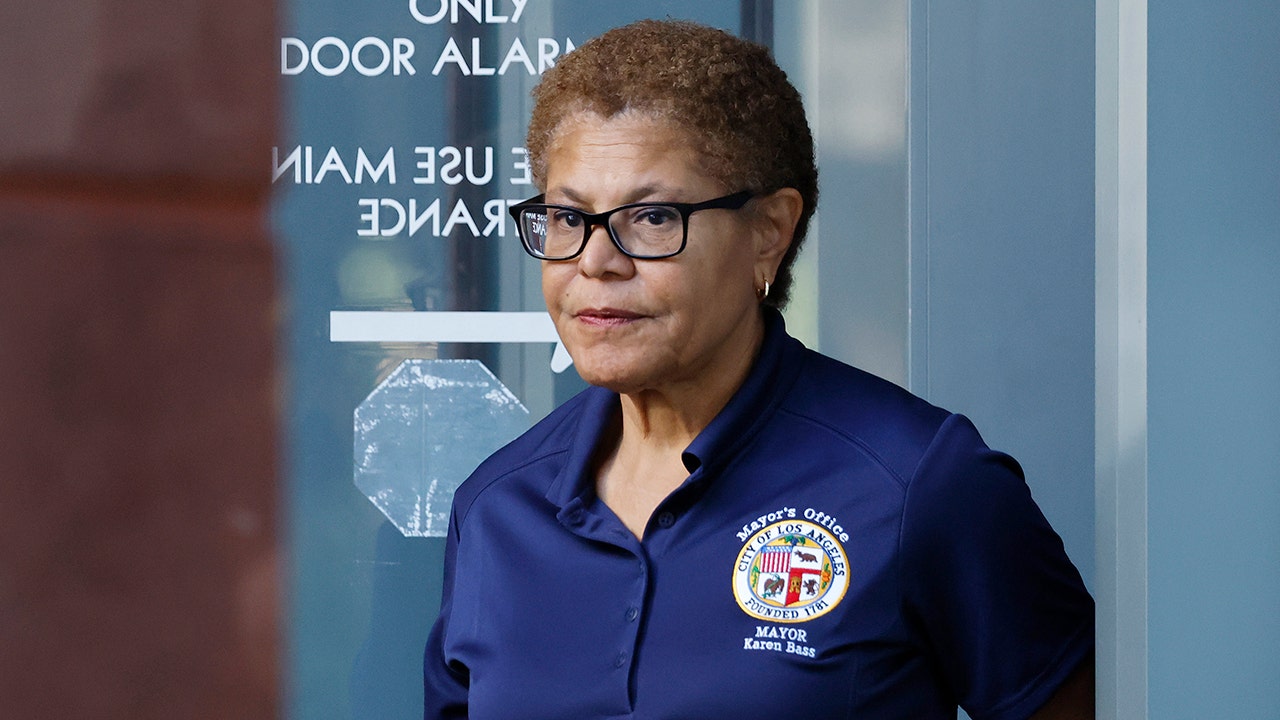
A phased-in minimum wage hike in Los Angeles that will mandate up to $30 per hour for hotel workers, signed into law by mayor Karen Bass, is already causing problems for the hotel industry and putting the squeeze on the working-class demographic that minimum wage laws are purportedly intended to help.
“The bottom line is the city of Los Angeles has forced a wage and benefits package on hotels that is utterly unaffordable at a time when Californians and Americans are laser focused on affordability,” Hotel Association of Los Angeles (HALA) President Dr. Jackie Filla told Fox News Digital in an interview this week.
HALA recently commissioned a study that found hotels have eliminated or expect to eliminate 6% of positions, roughly 650 jobs, since the Hotel Worker Minimum Wage Ordinance took effect in September 2025.
Mayor Bass signed the ordinance into law May 27, 2025, after it was approved by the Los Angeles City Council. The measure is often referred to as the “Olympic Wage” in reference to the sporting event being held in Los Angeles in 2028 and will raise pay for hotel and LAX airport workers up to $30 per hour by 2028.
POLITICIANS PUSH JOB-KILLING MINIMUM WAGE HIKES WHILE IGNORING THE DEVASTATING ECONOMIC REALITY
Los Angeles Mayor Karen Bass prior to speaking to media in support of journalist Don Lemon outside federal court on January 30, 2026 in Los Angeles, California. (Mario Tama/Getty Image)
The law has already resulted in a pay increase to $22.50 per hour in July 2025, and will continue to increase incrementally until it hits $30 in July 2028. Filla says she is urging elected officials from the city council to the mayor to make “amendments” to the ordinance to ease the burden on the hospitality industry.
“We are at the very beginning of the series of these increases and hundreds of hotel workers have already lost their jobs,” Filla said. “Even more are seeing their hours reduced. We’ve seen restaurant closures within hotels, parking is already getting more expensive, and improvements and the creation of new buildings altogether are being delayed or canceled. So taken together, these impacts should really sound alarm bells for our local policymakers.”
In many instances, the workers who lose their jobs are working-class or blue-collar individuals and Filla pointed out that many managers and general managers started off as cooks or dishwashers and advanced through executive training programs which now are less available due to financial shortfalls.
The study put out by HALA found that a significant number of the jobs lost have been labor-intensive positions like food and beverage, housekeeping, and parking.
MAYOR BASS FACING BLOWBACK OVER EXPLOSIVE REPORT THAT SHE ALTERED WILDFIRE REPORT TO DOWNPLAY CITY’S ROLE
Los Angeles, California (iStock)
The study also found that 62% of hotels expect staff hours to decrease in 2026, with three-quarters anticipating reductions of at least 10%.
The impact extends beyond hotel payrolls to subcontractors operating on hotel properties, according to HALA, and hotels reported that two-thirds of third-party providers plan to raise prices to offset wage increases, and one in five plan to cancel hotel contracts altogether.
CLICK HERE TO DOWNLOAD THE FOX NEWS APP
“Unlike typical layoffs that are occurring in other industries right now, these job losses, and it is 6% of jobs lost in a short period of time, were entirely policy-driven, caused by the mayor and city council,” Filla said. “And what is especially troubling about this is it didn’t have to happen. Hotels actually want to maintain and grow their workforce heading into these major events, but these dramatic cost increases. Just make that impossible.“
Fox News Digital reached out to Bass’s office for comment.
Read the full article from Here

In final address, Gov. Bill Lee credits TN economic, innovation gains

Most applicants for Texas school choice vouchers already attend private schools, state data shows

‘They’re trying to change the rules’: Republicans ramp up fight to stop new maps in Utah

Vermont highway shut down following rock slide

Virginia lawmakers criticize anti-redistricting mailer with Jim Crow-era images – WTOP News

Florida High School Football Rankings: Top 25 teams – Oct. 21

How old is Bo Nix? What to know about Oregon quarterback ahead of 2024 NFL Draft

Cleary's 21 help Le Moyne down Central Connecticut State 69-64 in OT

99th annual Pony Swim held in Virginia

Indiana Members Credit Union announced as new anchor tenant at Bottleworks District

Map: 2.3-Magnitude Earthquake Reported North of New York City

Trump stirs GOP primary drama with visit to Massie’s Kentucky home turf

Israeli air strike targets building in south Lebanon

Ed Martin, outspoken Justice Department lawyer, is formally accused of ethical violations | CNN Politics

Trump reveals top issues GOP should focus on to secure midterms victory: ‘I’ve never been more confident’
-

 Wisconsin1 week ago
Setting sail on iceboats across a frozen lake in Wisconsin
-

 Massachusetts1 week ago
Massachusetts man awaits word from family in Iran after attacks
-

 Maryland1 week ago
AM showers Sunday in Maryland
-

 Pennsylvania5 days ago
Pa. man found guilty of raping teen girl who he took to Mexico
-

 Florida1 week ago
Florida man rescued after being stuck in shoulder-deep mud for days
-

 Sports6 days ago
Keith Olbermann under fire for calling Lou Holtz a ‘scumbag’ after legendary coach’s death
-

 Virginia6 days ago
Giants will hold 2026 training camp in West Virginia
-

 Politics1 week ago
Mamdani’s response to Trump’s Iran strike sparks conservative backlash: ‘Rooting for the ayatollah’