


Arizona men’s tennis has won four consecutive conference championships. A fifth could be in store after the Wildcats took down the Big 12’s top ranked team on Sunday afternoon.
Arizona
What did we learn from Cardinals' joint practices with Colts?


WESTFIELD, Ind. — A lot of work was had across two days of joint practice between the Arizona Cardinals and Indianapolis Colts on Wednesday and Thursday.
But what were the biggest takeaways from Colts headquarters ahead of a Saturday night preseason game? Let’s dive in now that we’re fully dry:
Arizona Cardinals wide receivers came to play
There wasn’t a more consistent position group than Arizona’s wide receiving corps throughout practice.
Marvin Harrison Jr. continued to look as advertised with extended reps against another team, getting the better of starting cornerbacks Kenny Moore II, Jaylon Johnson and other Colts defenders regularly.
Marvin Harrison Jr. just shook Kenny Moore II out of the frame during 1-on-1s. #AZCardinals #Colts pic.twitter.com/FuCun9fgd2
— Tyler Drake (@Tdrake4sports) August 14, 2024
“I think it’s cool for him and all our receivers to go against different DBs,” head coach Jonathan Gannon said Thursday. “Kenny looks one way and the next guy (Harrison) goes against looks the complete opposite way. That’s good. That’s what it’s going to be week in and week out on Sunday. Good to get the exposure to that in these two days.”
As for in the slot, Greg Dortch continues to show off his confidence in a regular offensive role.
Much like Harrison, Dortch flashed his route-running, ability to separate and athleticism throughout joint work.
“My confidence has always been high,” Dortch said Thursday. “I’m very confident. I’m not the biggest guy — in fact, I’m probably the smallest guy out here — so I gotta bring some type of confidence to my game. Hopefully, when I play you can see it.”
Second-year pro Michael Wilson was his consistent self, while Dan Chisena continued to make plays after leading all Cardinals pass catchers with five catches for 63 yards in Saturday’s preseason loss to the New Orleans Saints.
It also looked like quarterback Kyler Murray’s chemistry with veterans Zay Jones and Chris Moore, who was also getting special teams looks, is developing.
And although he’s not listed as a wideout, tight end Trey McBride didn’t miss a beat through most of the practices outside of a dropped pass during two-minute drills.
Cause for concern?
The biggest negative from the past two days was Arizona’s inability to finish practices on a high note, specifically the first-team offense and defense.
Much like the first-team offense’s ending on Day 1, Murray and Co. looked out of sorts through two two-minute drills on Thursday.
Whether it was the incompletions, penalties or pressure from the Colts defensive line, Arizona was held out of the end zone. The weather didn’t help, but it was definitely not the ending Gannon was hoping for, especially knowing Murray won’t play in any of the remaining preseason matchups.
Arizona’s first-team defense wasn’t able to buck the late trend, either.
There was an uptick in the secondary’s play during Day 2. Garrett Williams, Starling Thomas V and Sean Murphy-Bunting had their moments during 7-on-7 work, but overall, it was a struggle trying to contain the Colts offense led by second-year pro Anthony Richardson.
During one last two-minute drill against Richardson and Co., the first-team defense could do little to keep the Colts out of the end zone. The drive started with a pair of first-down strikes to Michael Pittman Jr. and Adonai Mitchell before Murphy-Bunting got popped with a pass interference penalty to set up a short touchdown run by Richardson.
Arizona certainly added more talent to the roster with Murphy-Bunting and rookie Max Melton looking like integral parts of the defense moving forward. That doesn’t sidestep the fact that there’s still going to be a massive microscope on the Cardinals’ cornerback situation in 2024.
Now, there are still a few weeks to fine-tune things before the regular season. Gannon is hoping the lessons learned this week can translate over to when the bullets go live.
“You’re really not game planning like a game,” Gannon said Thursday. “(Offensive coordinator Drew Petzing) said it best in the offensive meeting. Maybe if we would have game-planned a little bit different (maybe it would have looked different), but we gotta have SOPs, standard operation procedures, and then we gotta be able to handle and think on the run, too, on different things, because that’s what a game can be.
“You’re not going to get every look and know what’s going on and be able to get to things that can handle that stuff. It’s a really good learning experience for our guys. That’s why I love these things.”
Trench work
Important pieces to Arizona’s defensive line brought it during the two-day stretch.
Rookie Darius Robinson was quick to stand out during Day 1 of practice. His forklifting of starting guard Quenton Nelson during 1-on-1s was a good example of what he brought to the table this week.
#AZCardinals DL vs #Colts OL drills:
-Rookie DL Darius Robinson vs 6x Pro Bowl OG Quenton Nelson pic.twitter.com/1Z6M1pUDbP
— Paul Calvisi (@PaulCalvisi) August 15, 2024
Khyiris Tonga also deserves some credit for his play, especially getting some extended looks throughout Day 2.
Khyiris Tonga vs. Josh Sills. #AZCardinals #Colts pic.twitter.com/mkhqpjSVYb
— Tyler Drake (@Tdrake4sports) August 15, 2024
Both Robinson and Tonga are vying for meaningful roles in the trenches.
Robinson’s biggest competition appears to be Bilal Nichols, Justin Jones and L.J. Collier.
Tonga meanwhile is battling alongside Roy Lopez, a player who has seriously impressed throughout training camp.
On the other side of the ball, Paris Johnson Jr.’s transition to left tackle seems to be on an upward trend with work still to be done. Seeing more consistency out of Evan Brown and Jonah Williams could further solidify a line that is expected to block for a top rushing attack in 2024, too.
Clayton Tune widens gap
When it comes to the QB2 battles between Tune and Desmond Ridder, the former remains out in front following two days of joint practice.
Both had their ups and downs, but Tune managed to at least move the ball down the field some during his final two-minute showing.
The same can’t be said for Ridder, who threw an interception on his first pass attempt in the two-minute drill, effectively ending his joint practice action with Tune taking over immediately following.
Tune wasn’t nearly on his mark like he had been — he was bailed out by Colts defenders on two risky throws that could have been picks — but hung in there.
Another strong preseason showing from Tune could solidify his spot as QB2 behind Murry.
Chippy yet disciplined
After seeing a few dustups in Arizona’s training camp work at State Farm Stadium, a lot of those around the team expected some tempers to flare.
There were some heated moments between the Cardinals and Colts but nothing that could be classified as fighting.
As for the chippiest part of the program? That belonged to the special teams, where DeeJay Dallas had a couple of collisions that didn’t sit well with the Colts.
“It got a little feisty but I think you expect that especially in Day 2 of joint practice,” linebacker Krys Barnes said Thursday. “I think we handled it pretty well even with it getting a little chippy. Thankfully they probably ended it right before it got out of hand. I think we got the work we needed.”
Still, no punches were thrown and no one was ejected, a big positive in the books of Gannon and Colts head coach Shane Steichen.


Will Arizona residents be able to see the SpaceX rocket launch planned today at the Vandenberg Space Force Base?
A SpaceX Falcon 9 rocket is launching today, March 24, from Southern California. Will it be visible from Arizona?
The two-stage rocket will be blasting off from the Vandenberg Space Force Base to help deploy to Earth orbit another batch of the commercial spaceflight company’s Starlink broadband internet satellites.
While a planned southern trajectory may make the rocket a little harder to spot for Arizonans, SpaceX will offer a livestream of the mission on its website.
Keep in mind that postponements due to weather or issues with rockets are common with spaceflight. If you’re going to try to spot the rocket launch, check back with azcentral.com for any updates on the mission.
In the meantime, here’s what to know about the launch from neighboring California, as well as when and where to potentially see the rocket in Arizona.
Is there a rocket launch today? Next mission from Vandenberg in California
SpaceX is working toward a Tuesday, March 24, launch from Southern California, with a four-hour launch window opening at 4:03 p.m. PT, according to a launch alert.
A Federal Aviation Administration operations plan advisory suggests a backup opportunity is available the next day if the launch were to be postponed.
Will SpaceX rocket launch be visible in Arizona? What to know about trajectory
The launch will take place from Space Launch Complex 4-East (SLC-4E) at the Vandenberg Space Force Base in Santa Barbara County.
Because the rocket is due to fly at a southern trajectory, it may not be easily visible from Arizona.
How to watch SpaceX launch livestream
Fortunately for those in Arizona interested in watching the launch, SpaceX also provides a live webcast of its missions.
The launch will be available to stream on the company’s website and its new X TV mobile app, beginning about five minutes before liftoff. SpaceX may also provide updates on social media site X.
What is the Vandenberg rocket launch? Falcon 9 to deploy Starlink satellites
SpaceX will launch its famous two-stage 230-foot Falcon 9 rocket, one of the world’s most active, to deliver 25 Starlink satellites into low-Earth orbit, an altitude nearer Earth’s atmosphere where they’re able to circle the planet quickly.
Where to watch SpaceX Falcon 9 in Arizona
Because of Arizona’s proximity to the launch site, there’s a good chance people there can see the spacecraft streak across the sky, especially at night or very early morning.
Here’s a list of some possible viewing locations compiled by The Arizona Republic, a USA TODAY Network publication.
- Dobbins Lookout, South Mountain, 10919 S. Central Ave., Phoenix, Arizona
- Papago Park, 625 N. Galvin Parkway, Phoenix, Arizona
- Fountain Hills, a town in Maricopa County, Arizona, which in 2018 was designated a Dark Sky Community with little light pollution
- Superstition Mountains, located 40 miles from metro Phoenix in Arizona
- Cave Creek, a town in Maricopa County about 30 miles north of Fountain Hills, Arizona
- Phoenix Sky Harbor International Airport, 3400 Sky Harbor Blvd., Arizona, which has a parking garage that is popular for plane-watching
- Black Canyon City, an unincorporated community in Yavapai County, Arizona
- Any mountain park in Arizona
- Estrella Mountain Regional Park, 14805 W. Vineyard Ave., Goodyear, Arizona
- Skyline Regional Park, 2600 N. Watson Road, Buckeye, Arizona
- White Tank Mountains, 20304 W. White Tank Mountain Road, Waddell, Arizona
- San Tan Mountain Regional Park, 6533 W. Phillips Road, Queen Creek, Arizona
- Monument Hill, a 150-foot slope on 115th Avenue, in Arizona
- Casa Grande, a city in Pinal County, approximately halfway between Phoenix and Tucson
- Avondale, a city in Maricopa County bordering Phoenix to the west
- Queen Creek, a suburb of Phoenix
Does Elon Musk own SpaceX? What to know about rocket company
SpaceX is the commercial spaceflight company that billionaire Elon Musk, the world’s richest man, founded in 2002 and leads as the CEO.
SpaceX is headquartered at Starbase in South Texas near the U.S.-Mexico border. The site, which is where SpaceX has been conducting routine flight tests of its 400-foot megarocket known as Starship, was recently voted by residents to become its own city.
As a major government contractor, SpaceX serves as the launch service provider for a variety of government missions both civil and military.
For the Department of Defense, SpaceX’s Falcon 9 helps launch classified satellites and other payloads into space. And for NASA, Falcon 9 most often helps propel astronauts to the International Space Station on SpaceX’s Dragon crew capsule – the only U.S vehicle capable of carrying NASA astronauts to orbit.
What is Starlink?
Starlink is SpaceX’s internet satellite business.
With nearly 10,000 satellites in its growing orbital constellation, Starlink has become a lucrative part of Musk’s business empire, serving millions of customers around the world.
SpaceX, which bills itself as the only satellite internet provider with its own reusable rocket capable of deploying the technology, has spent years delivering the satellites to orbit with a regular cadence of rocket launches from Florida and California.
Starlink satellites operate from low-Earth orbit, about 341 miles up, which is much closer to Earth’s atmosphere than other satellites. That not only allows Starlink satellites to offer high connection speeds than satellites further out in space, but to reach rural areas and regions where internet service is not readily accessible.
Eric Lagatta is the Space Connect reporter for the USA TODAY Network. Reach him at elagatta@usatodayco.com

Here are The Arizona Republic’s picks for the top 10 high school girls track and field athletes from the fourth week of the 2026 (March 16-21). Vote in our poll for the athlete you think had the best week. The poll closes on Friday, March 27, at 6 p.m. Print readers can find the poll online at azcentral.com/sports/high-schools.
Top Arizona girls track and field athletes
1. Ava Davis, Goodyear Millennium, sprints, So.
She won both the 100 (11.80 seconds) and 200 meters (24.02) at the Brooks Chandler Rotary Invitational on March 21, setting the state lead in both events.
2. Aulani Gleason, Gilbert Mesquite, sprints, Fr.
The burgeoning superstar is beginning to make a name for herself, running 54.70 to win the 400 at the Brooks Chandler Rotary Invitational on March 21 to move up to No. 2 in the state. Gleason is now No. 10 all-time in Arizona and becomes only the second freshman in state history to go under 55 seconds, per the MileSplit database. She also came in second in the 200, running 24.23 to move up to No. 2 in the state this season.
3. Brooke Zuluaga, Chandler Seton Catholic, throws, Sr.
She won the javelin at the Brooks Chandler Rotary Invitational on March 21, throwing 145-10 to set the state lead and move up to No. 3 in the nation.
4. Nicole Ripperdan, Queen Creek, mid-distance, Sr.
She won the 800 at the Brooks Chandler Rotary Invitational on March 21, running 2:10.64 to set the state lead. Historically, Ripperdan is tied for No. 10 all-time in Arizona.
5. Taylor Drewry, Chandler Basha, distance, Sr.
She won the 1,600 (4:56.25) and came in second in the 3,200 (10:31.81) at the Brooks Chandler Rotary Invitational on March 21, setting the state lead in each event She is the first in-state athlete this season to go under 5:00 in the 1,600.
6. Rebekah-Jhade Garrett, Phoenix North Canyon, hurdles, Sr.
She won the 100-hurdles at the Brooks Chandler Rotary Invitational on March 21, running 13.52 to retain her top state ranking.
7. Imani Galera-Young, Chandler, hurdles, Sr.
She won the 300-hurdles at the Brooks Chandler Rotary Invitational on March 21, running 42.67 to set the state lead and move up to No. 9 in the nation.
8. Kyra Hogarth, Chandler, jumps, Jr.
She won the pole vault at the Brooks Chandler Rotary Invitational on March 21, clearing 12 feet, 1 inch to set the state lead.
9. Milanni Pedraza, Tucson Catalina Foothills, distance, Jr.
She came in third in the 1,600 at the Brooks Chandler Rotary Invitational on March 21, running 4:57.65 to move up to No. 2 in the state.
10. Kylee Blair, Queen Creek, sprints, Sr.
She came in second in the 100 (11.90) and fifth in the 200 (24.40) at the Brooks Chandler Rotary Invitational on March 21, moving up to No. 3 in the state for both the 100 and 200.
11. Audra Huempfner, Gilbert Highland, distance, Sr.
She came in fourth in the 3,200 at the Brooks Chandler Rotary Invitational on March 21, running 11:00.86 to move up to No. 2 in the state.
12. Tatum Lee, Phoenix Desert Vista, throws, Sr.
She won both the shot put (38-3) and discus (134-3) at the Brooks Chandler Rotary Invitational on March 21, moving up to No. 3 in the state for the shot put.
13. Jaiden Ware, Chandler, jumps, Sr.
She won the long jump at the Brooks Chandler Rotary Invitational on March 21, hitting 18-6 to move to No. 5 in the state.
14. Christina Keller, Scottsdale Christian Academy, jumps, Sr.
She won the high jump at the Brooks Chandler Rotary Invitational on March 21, clearing 5-6.
15. Nora Fincher, Tempe McClintock, throws, So.
She came in fourth in the javelin at the Brooks Chandler Rotary Invitational on March 21, throwing 131-3 to move up No. 4 in the state and No. 2 in the nation for sophomores.
16. Lizzy Gannon, Phoenix Desert Vista, jumps, Sr.
She came in third in the triple jump at the Brooks Chandler Rotary Invitational on March 21, hitting 37-1 (+3.5 wind) to move up to No. 2 in the state for all-conditions.
17. Victoria Williams, Vail Cienega, throws, Sr.
She won the discus at the Thomas Meixner Lancer Invitational on March 20, throwing 130-11 to move up to No. 3 in the state.
18. Ella Bonnette, Gilbert Highland, distance, So.
She came in fourth in the 1,600 at the Brooks Chandler Rotary Invitational on March 21, running 5:04.58 to move up to No. 3 in the state.
19. Kennedy Frakes, Phoenix Xavier Prep, distance, Sr.
She came in sixth in the 3,200 at the Brooks Chandler Rotary Invitational on March 21, running 5:04.58 to move up to No. 3 in the state.
20. Maclane Clark, Gilbert Perry, hurdles, Sr.
She came in second in the 300-hurdles at the Brooks Chandler Rotary Invitational on March 21, running 44.05 to move up to No. 4 in the state.
Vote: Who’s No. 1?
Logan Stanley is a sports reporter with The Arizona Republic who primarily focuses on high school, college and Olympic sports. To suggest ideas for human-interest stories and other news, reach out to Stanley at logan.stanley@usatodayco.com or 707-293-7650. Follow him on X, formerly Twitter: @LSscribe.

No. 15 Arizona swept No. 2 TCU by a score of 4-0 to move to 16-3 and 4-0 in the Big 12. Clancy Shields’ program has won 11 consecutive matches after starting the year 5-3.
Four conference matches remain, including home tilts versus ranked ASU and UCF. Arizona has a one match lead over UCF in the wins column, while every other team has at least one lost.
Arizona’s win against TCU – played in 100 degree heat at LaNelle Robson Tennis Center – was one of the program’s biggest results since joining the Big 12. TCU was the NCAA Tournament runner-up last season and perennially advances deep into the postseason.
“I have so much respect for (TCU),” Shields said. “They’ve been top five for 10 years. They’re a model of consistency. And they didn’t go away. We could have ended this in two hours, and they pushed and clawed their way back into this and we found a way to finish it.”
Arizona earned the crucial doubles point to jump out to an early lead. Alejandro Arcila and Cole Stelse won their doubles match 6-3, and Filip Gustafsson and Glib Sekachov won theirs in a 7-6 (7-2) tiebreak.
Sekachov secured Arizona’s first singles point with a 6-3, 6-2 win on court No. 5. The Wildcats won the first set in five of six singles matches.
Arizona took control when Gustafsson held off a fierce comeback attempt from TCU’s Oliver Bonding to win his match 6-1, 7-6 (6-3) on court No. 2.
“I was really impressed with Filip being up a set and 4-1 and nearly letting the guy back in it and then finding a way to finish the tiebreak,” Shields said. “Same thing in doubles. Finding a way to get that win on No. 1 doubles to clinch that match. That’s really hard.”
Leading 3-0, Arizona thought it might get a clinching point from Jay Friend, who led Duncan Chan 6-3, 5-7, 5-3. The match pitted the nation’s No. 3 ranked singles player (Friend) vs. No. 7 Chan.
Before Friend could seal the deal, Zoran Ludoski won his match 5-7, 6-1, 6-2 on court No. 4.
“For Zoran to get the win, it’s cool, and there’s a lot of people getting wins on our team.” Shields said. “To find wins on the court and they don’t just come from Jay Friend is really cool.”
The victory marked Arizona’s third win over a Top 30 team in the past week, as the UA defeated No. 28 Columbia on Tuesday and No. 8 Baylor on Thursday. Arizona’s string of success puts the program in firm footing to host an NCAA Tournament pod for a third consecutive season.
Early on this season, Arizona’s trajectory wasn’t so bloomy. Arizona dropped non-conference matches to Oklahoma, LSU and San Diego.
The Wildcats had a monumental task in replacing All-American Colton Smith and the ultra-reliable Casper Christensen, both of whom were seniors last season. Arizona brought in Arcila, a blue chip recruit out of the Rafa Nadal Academy in Spain, and relied heavily on sophomores Sekachov, Ludoski and Gustafsson.
“It’s a really young team, it’s really exciting,” Shields said. “I’m just really proud of this team because they bought into the culture of what this place is and we kept working and kept getting better.”
Now that Arizona has hit its stride, Shields isn’t putting any limit on what this group can accomplish. Arizona is looking to break through in the postseason after falling in the Sweet 16 the last two years.
Competing in the gauntlet that is the Big 12 prepares Arizona for what’s in store in the postseason, Shields said.
“It’s a really gritty conference,” Shields said. “We have a lot of really tough conditions. The Pac-12 was a lot of talent but a little bit soft. The Big 12 is talent and grit and we fit in just right with that.”

Detroit, MI1 hour ago
Motown Museum in Detroit to Premiere New Psychedelic Soul Exhibit

San Francisco, CA1 hour ago
Pain at the pump: One gas station in S. San Francisco near $7 a gallon

Dallas, TX1 hour ago
H-E-B plans new store on the eastern side of Dallas-Fort Worth

Miami, FL1 hour ago
Motorcyclist killed in crash on Biscayne Boulevard, deputies say

Boston, MA2 hours ago
Another crop of Boston College NFL hopefuls get a chance to shine at Eagles’ annual Pro Day

Florida1 year ago
Florida High School Football Rankings: Top 25 teams – Oct. 21

Oregon2 years ago
How old is Bo Nix? What to know about Oregon quarterback ahead of 2024 NFL Draft

Connecticut2 years ago
Cleary's 21 help Le Moyne down Central Connecticut State 69-64 in OT

Virginia2 years ago
99th annual Pony Swim held in Virginia

Indiana2 years ago
Indiana Members Credit Union announced as new anchor tenant at Bottleworks District

News8 hours ago
See How the LaGuardia Plane Crash Unfolded

Politics10 hours ago
Mullin confirmed as DHS chief as lawmakers near solution on shutdown standoff

World11 hours ago
Von der Leyen clinches Australia trade deal

News11 hours ago
Trump administration places Christopher Columbus statue on White House grounds

News21 hours ago
See TSA Wait Times at Major U.S. Airports
-

 Detroit, MI6 days ago
Drummer Brian Pastoria, longtime Detroit music advocate, dies at 68
-

 Oklahoma1 week ago
Family rallies around Oklahoma father after head-on crash
-

 Georgia1 week ago
How ICE plans for a detention warehouse pushed a Georgia town to fight back | CNN Politics
-

 Alaska1 week ago
Police looking for man considered ‘armed and dangerous’
-

 Movie Reviews5 days ago
‘Youth’ Twitter review: Ken Karunaas impresses audiences; Suraj Venjaramoodu adds charm; music wins praise | – The Times of India
-

 Education1 week ago
Video: Turning Point USA Clubs Expand to High Schools Across America
-
 Science1 week ago
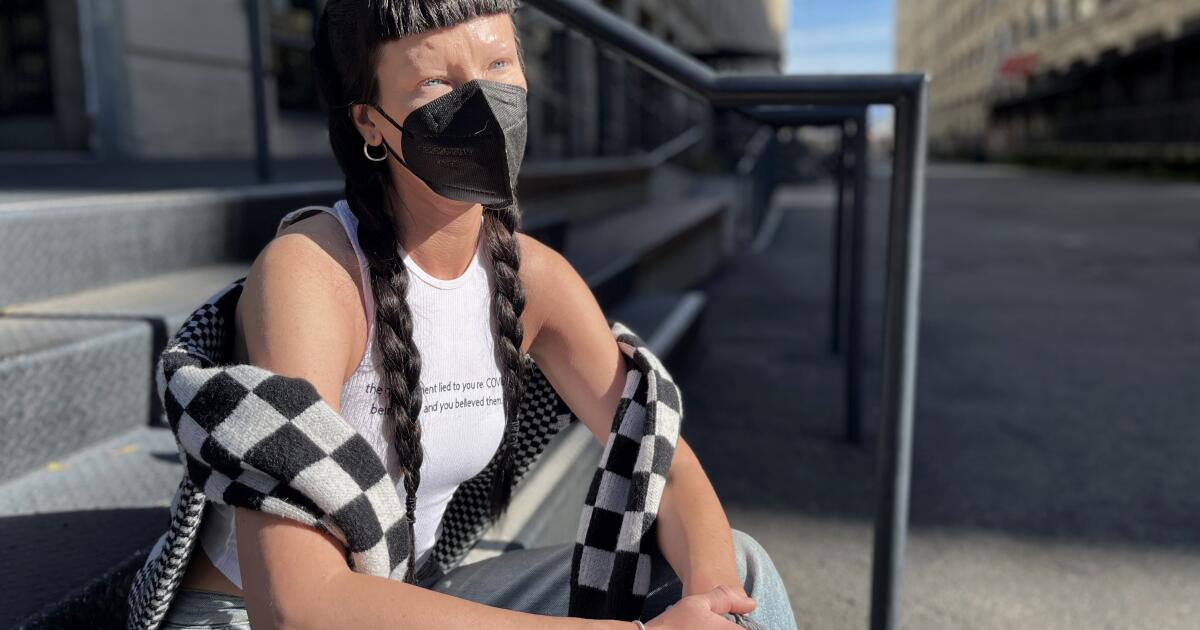
Long COVID leaves thousands of L.A. county residents sick, broke and ignored
-

 Sports3 days ago
IOC addresses execution of 19-year-old Iranian wrestler Saleh Mohammadi