Arizona baseball had won five of its last seven games, which included three road wins, entering Friday evening’s matchup with Kansas State.
Arizona
Tennessee baseball caps Astros Classic with 5-1 win over Arizona


Jay Abernathy threw out the tying run at left in the sixth inning, Cannon Peebles followed it up with a two-run home run in the seventh and Tennessee ended the Astros Foundation College Classic with a 5-1 win over Arizona at Daikin Park in Houston on Sunday.
The No. 3 Vols (11-0), who beat Oklahoma State and Rice in the previous two games, ran into their most significant challenge of the weekend against Wildcats (7-4), trailing early and clinging to a one-run lead for three innings.
TALK ABOUT IT IN THE ROCKY TOP FORUM
The back-to-back sequences orchestrated by Abernathy in left field and Peebles at the plate, were the difference.
Tennessee’s lineup accounted for 12 hits, and Andrew Fischer and Levi Clark hit consecutive solo home runs to put the Vols ahead for good in the fourth before Peebles provided the cushion.
Freshman right-handed pitcher Tegan Kuhns made his first career start, but it was Nate Snead out of the bullpen that was the headliner. He struck out three and allowed four hits in 3.2 scoreless innings, while Brandon Arvidson, Dylan Loy and Ryan Combs had strong relief outings to maintain the Vols’ lead.
Arvidson (1-0) earned the win for Tennessee.
Tegan Kuhns got off to a good start in his debut.
After Smith Bailey went 1-2-3 in the top of the first, Khuns followed suit, striking out the leadoff batter looking on a 94 MPH fastball before a couple of ground outs ended the inning scoreless.
Arizona got two hits in the second, the first a Adnoys Guzman double to the wall in center that was followed by Easton Breyfogle‘s RBI triple to put the Wildcats up 1-0 and give the Vols their first deficit of the weekend.
Kuhns was able to limit the damage there and strand a runner in scoring position, and Jay Abernathy singled through the right side with two outs for Tennessee’s first hit in the third.
Abernathy moved over to second by way of an error, but the Vols were unable to take advantage of it as Bailey got out of the inning with another strikeout.
Brandon Arvidson took over for Khuns in the third and delivered. He gave up a walk, but tossed three strikeouts, two swinging and one looking to strand a runner.
Tennessee’s lineup paid it off in the fourth. After two quick outs from Bailey, Andrew Fischer homered to right to draw the Vols even, then Levi Clark added to his impressive freshman campaign with another to left to put Tennessee up, 2-1.
Arvidson remained efficient in his short outing. He got two more outs in the fourth before Nate Snead entered. Snead allowed a walk, but kept the Vols ahead through four with his first strikeout.
Manny Marin led off the fifth with a single to left, then tried to get into scoring position during the next at-bat. He was thrown out in the process, and Tennessee came away empty-handed in the inning.
Arizona tried to get something going in the bottom fifth with Brendan Summerhill on first after drawing a walk. He pulled off a successful steal attempt after Cannon Peebles was unable to get a handle on the ball in the third.
Peebles got him back in the fifth, gunning a throw to Gavin Kilen at second to end the inning with the Vols still in front.
Tennessee threatened to add to its lead in the sixth, getting two on off of bloopers from Curley and Ensley, but Clark flied out to deep center to keep it a one-run game heading into the bottom half.
Arizona carried the momentum of getting out of that jam but putting the Vols in one with two on off of two hits and two outs when Guzman stepped up to the plate.
He singled through the left side and Garen Caulfield rounded third. His attempt at a game-tying run wasn’t even close. Abernathy fielded the ball in left and threw him out by about six steps to again get Tennessee out of trouble without any damage.
Not getting that run across haunted the Wildcats in the seventh. Cannon Peebles mashed a home run into the upper deck in right that scored two runs and swelled the Vols’ lead to 4-1.
Snead held Arizona off again in the bottom seventh and Dylan Loy did the same in the in the eighth. Tennessee added some insurance in the ninth off of a Kilen single to right that paid off runners on the corners and scored Abernathy to lead 5-1 with no outs.
The Vols went to Ryan Combs to finish it off and he did, sitting the Wildcats down in order in their last go-around to keep Tennessee unbeaten.
Tennessee will play two midweek games before its final non-conference series this weekend.
The Vols host Radford and Xavier in back-to-back games on Tuesday and Wednesday, with both games slated for 6 p.m. ET starts on SEC Network+ at Lindsey Nelson Stadium.
Tennessee then plays St. Bonventure in a three-game series beginning Friday in its last tune-up series before opening SEC play against No. 8 Florida the following week.


Due to significant injuries to the CB position last year which includes a shoulder surgery for Terrion Arnold, the Lions CB position scored a 6/10 need on my Lions Defensive Draft Need Rankings. Thus, an early-round selection of a young, healthy prospect like Keith Abney would not come as a surprise. He enters the draft with very low medical concern level.
Here is the excerpt from my medical report on Keith Abney:
(Ages in parentheses are at start of 2026 season and are factored into the concern level. Injury info and ages based on available public information are unverified and subject to update. Games played data courtesy of sports-reference.com.)
Keith Abney, CB (21) – Arizona State
Projected round 2-3. #43 on Jeff Risdon board Feb 19.
Concern level 0/10
There is an isolated report of a hand injury but no corroborating information. Even if the hand injury is true, that’s of minimal to no long-term concern.
His availability in his final two seasons has been perfect. Overall, Abney appears to be medically clean and is at an excellent age.
He finished college with 6 INT and 21 PBU.
For more Lions coverage, follow us on X, @TheLionsWire, and give our Facebook page a like. Follow Jimmy on X, @JimmyLiaoMD

In the first game of the series, Arizona (14-23, 5-11 Big 12) battled in a low-scoring affair but fell short in a 2-1 loss to Kansas State (24-12, 8-8 Big 12). The Wildcats from Tucson held the Wildcats from Manhattan at bay for a good majority of the night.
Given that Kansas State leads the Big 12 in conference play in batting, on-base percentage, and slugging, Arizona had a rather good performance, but it was not enough.
Owen Kramkowski pitched seven scoreless innings before allowing the first Kansas State run in the top of the eight. He finished with six strikeouts and kept the high octane Wildcats at bay.
“I thought the defense played well behind him too,” said head coach Chip Hale. “There’s a lot of ground balls, and we made plays where we were positioned in good places, and he was pitching in the eighth inning. That’s unbelievable.”
Garrett Hicks (3-1) came in to try and stop the bleeding for the Wildcats and did so by not allowing Kansas State to take the lead in the eighth. It was in the ninth when the lead was surrendered.
It took until the sixth inning but the first run was scored by Arizona. Andrew Cain singled to left field and after Maddox Mihalakis flew out, it was Beau Sylvester bringing Cain home with a triple through right center field.
Sylvester extended his hitting streak to eight games and it proved to be not enough to get Arizona to the finish line.
Kansas State tied the game at the top of the eight when back to back singles got runners on at first and third. Then a passed ball allowed the third base runner to come home.
Arizona had a chance to retake the lead in the bottom of the ninth after Cain singled to deep right field. With Sylvester back at the plate, it seemed like it was a perfect set up.
A wild pitch nearly got past Kansas State and Cain tried to take advantage of it and steal home. However, Kansas State was able to corral the pitch and get Cain out at home.
AJ Evasco started the ninth inning with a double for Kansas State and back to back fly outs eventually got him home to give Kansas State the lead and the win.
With eight players being left on base, Arizona will need to bring those runners in more often than not if they want to tie the series Saturday afternoon.
As a young team, the Wildcats have had to walk a very tight line between disappointment and dejection and will need to continue handling these losses with grace if it wants to turn a corner.
“It’s the way it goes, it’s baseball,” said Hale. “If we don’t handle it, we will come out tomorrow and won’t be ready to go, so hopefully they handle it.”

Over the last 75 years, hair shows have become a staple of Black culture in the U.S. These events celebrate textured hair through the creative, and often sculptural, styling of centuries-old techniques like braiding and barbering.
The biggest hair shows in the country take place in cities with a much larger Black population than Phoenix — like Bronner Bros. in Atlanta, which can bring in around 30,000 people semi-annually.
But as the Black community here grows and newer Arizona residents bring the culture with them, hair shows have started to pop up in town.
The fourth annual Arizona Fantasy Expo Hair Show will return Sunday in Phoenix.
Show producer Athena Ankrah attended the third annual Fantasy Expo Hair Show in Phoenix last April, and shares what she saw.
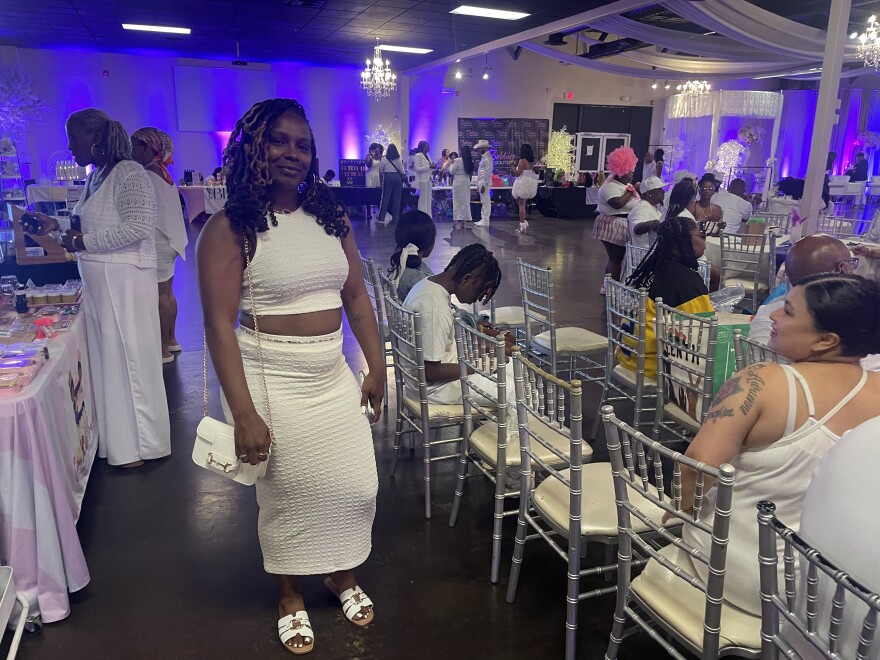
About 200 people crowd La Princesa event hall in north Phoenix on a Sunday evening in 2025. Music blasts from speakers on either side of a stage and flows into the dance floor below. There are people of all ages here. Most attendees are dressed in white, to match the all-white ball theme, but there’s no shortage of color atop models’ heads.
Lauren Jackson, 20, just graduated from a barber school in Phoenix.
We’re watching a competition between two barbers — who can shave the cleanest tapered fade the fastest — when she tells me her plans for the event she’s competing in: the loc battle.
“So I made a basketball hoop out of locs,” Jackson said.
Hair shows give local hair stylists, barbers and braiders the chance to show off their creative talents through showcases and competitions.
Some stylists had been working on their entries for more than a year leading up to the Fantasy Hair Expo. But that wasn’t the case for Jackson. The event’s organizers promoted the show at Jackson’s barber school shortly before that day.
“I’m like, OK, bet! … Mind you, this was a week before the hair show,” Jackson said.
Hair shows are a Black American tradition dating back about 75 years. The creative hair styling can be so eccentric, it’s almost performance art.
Because it’s not just the hair style on display. It’s a message conveyed through clothes, and sometimes choreography. And a chance to delight in hair textures and styles that have historically been a target of discrimination.
“A lot of us are like really creative and they’re styles that you just can’t do on a daily basis. So the hair show just kind of gives you the platform to just have fun with it, you know, just be really artistic,” Aisha Wesley said.
Wesley is a cosmetologist who organized the event with fellow cosmetologist and friend LaTricia Williams.
“I definitely think that the hair show is empowering to the community because it’s like, if nobody else accepts us, we accept us, right,” Wesley said. “I’ve had clients before that have had to come back and get their hair redone because their job was like, ‘you can’t wear that.’ You know? the hair show just kind of gives that freedom …”
“I can wear whatever I wanna wear,” Williams said.
That freedom and ingenuity was on display at the show.
Now, seeing 40 inches of dollar bills sewn into the bottom of a pixie haircut would have been enough.

But the same stylist, Cherie Nelson of Majestik Handzz Beauty Demand in Mesa, put together a whole crew of models with ’90s-inspired streetwear and exuberant hair to match.
Nelson put one model in vivid bubblegum pink afro puffs, and another with huge headphones over her ears — made entirely of braids.
And for the finale: A young woman crawls on stage, covered in wigs. She’s wearing crimped wigs from head to toe. Underneath, the leather catsuit, knee-high boots and afro wreath around her face gives her a sort of Janet Jackson lioness look.
She stalks downstage, rises to her feet and pulls the lion’s mane onto her shoulders to reveal bantu knots: sleek sectioned hair twisted into knots, a protective style dating back to Zulu women in South Africa.
The crowd is loving it.
“She went from hoodie, to a lion’s mane, to a jacket, to Catwoman – how do you do that?” the host said.
Finally, it’s time for Lauren Jackson’s event — the loc battle.
It’s all about who can craft the most creative and colorful style out of locs and accessories, with extra points for technique and details.
For the uninitiated, locs aren’t always dreadlocks. The term often refers to a more structured twist or coiling of hair rather than the Rastafari-style organic loc-ing of hair.
Loc specialists — also called locticians — can build their styles ahead of time, but on competition day they only have 30 minutes to attach everything to their model’s head and make any finishing touches.
“Y’all ready? Get set! Go!” the host exclaimed.
Anna Holly drove from San Francisco the night before to compete with her mom as her hair model.
“It was about 12 hours. But it wasn’t bad,” Holly said while laughing.
Despite the time constraint, Jackson’s entry is not insignificant.
She super-glued, painted and shaped synthetic hair onto a basketball hoop with about a foot tall backboard.
“So I bought a box of those, the sandwich bags, and I’m like, ‘well, I can use this.’ At Dollar Tree, they also had a hoop already made. So I basically wrapped the whole thing with locs,” Jackson said. “Then I took some orange loc hair and I wrapped that with the rim. And then I took some silver grayish lock hair as well for the, the net to the basketball hoop.”
“It was so hard, I’m not gonna lie. I stayed up like day and night trying to figure it out between school,” Jackson said.
And it’s functional, too — she brought a teeny tiny basketball to prove it.
“Now, if Steph Curry come out of there and shoot a 3? You won!” the host said.
Another loctician, Elisha Davis, has built a sea goddess look that’s essentially a huge halo of locs sticking straight up. It’s woven with seashells. The stylist and her model have matching glittery siren makeup. The design is minimal enough that you can really see the details.
“She sells seashells by the seashore. … Aphrodite ain’t playin’!” the host said.
And Holly is installing a replica of a famous landmark on her mother’s head.
“Is that traffic on her head, y’all? … It’s the Golden Gate Bridge!” the host said to cheers from the crowd.
Yes, the Golden Gate Bridge, made entirely of hair.
“I’m like, dang, I didn’t even know that was possible, y’all! And she had cars on the bridge!” Jackson said.
Master loctitian and cosmetologist Jai Davis is this event’s judge.
“I’m looking for detail, creativity. … I like integrity more than flash. I like skill more than flash,” Davis said.
It was a tight race. But a winner and runner-up are announced.
“This one was super, super hard, we had to go all the way down to details. We had to look at edges and fresh retwists because the creativity in this competition was so cold,” Davis said. “So, because we had to go down to detail and crispy edges. … We gon’ give it to the Golden [Gate] Bridge!”
So Jackson’s basketball hoop didn’t win.
But despite that, she said, “it was so worth it. If I can go back, I would do it all over again.”
And next time, she’ll be ready.
“Oh my God, I’m gonna do so much more next year. Oh my goodness, I can not wait for next year. ‘Cause I’m gonna do so much more,” Jackson said.
-

 Delaware6 minutes ago
State Police Arrest Dover Man for Assault and Aggravated Menacing in Dover – Delaware State Police – State of Delaware
-

 Florida12 minutes ago
SNAP benefits will be changing in Florida starting Monday
-

 Georgia18 minutes ago
Georgia on nobody’s mind: The Dawgs are under the radar, and that’s a compliment
-

 Hawaii24 minutes ago
Large section of Aloha Stadium demolished as project proceeds – West Hawaii Today
-
Idaho30 minutes ago
Idaho Lottery results: See winning numbers for Powerball, Pick 3 on April 18, 2026
-

 Illinois36 minutes ago
5 tornadoes confirmed in Illinois from Friday’s storms
-

 Indiana42 minutes ago
An Indiana district turned to voters to fund more preschool seats. Here’s what happened next.
-

 Iowa48 minutes ago
Vote: Who Should be Iowa’s High School Athlete of the Week? (4/19/2026)